
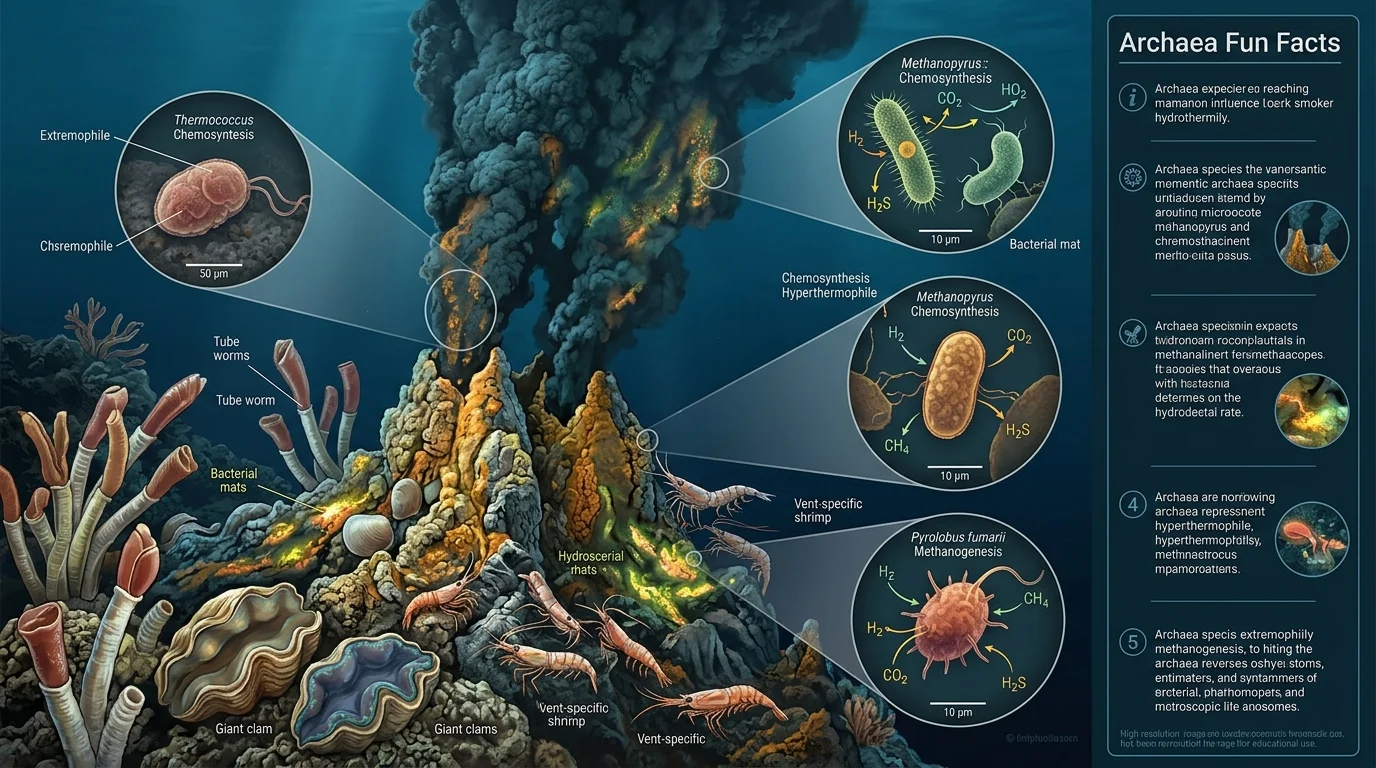
Archaea are ancient, single-celled microorganisms that form one of life’s three main domains. Renowned for surviving extreme environments like deep-sea hydrothermal vents and volcanic hot springs, archaea play vital roles in global chemical cycles, produce methane, and offer fascinating clues about the origins of life on Earth.
Imagine walking past a boiling, acid-filled hot spring and realizing that millions of tiny creatures call it home. These tough micro-organisms are called archaea, and they are easily some of the most fascinating life forms on our planet.
Discovering these top archaea fun facts will completely change how you view life on Earth. While they look a lot like bacteria under a microscope, these ancient microbes have a unique genetic blueprint.
Let’s explore the unbelievable world of these invisible powerhouses and see why scientists love studying them.
What Are Archaea? The Third Domain of Life
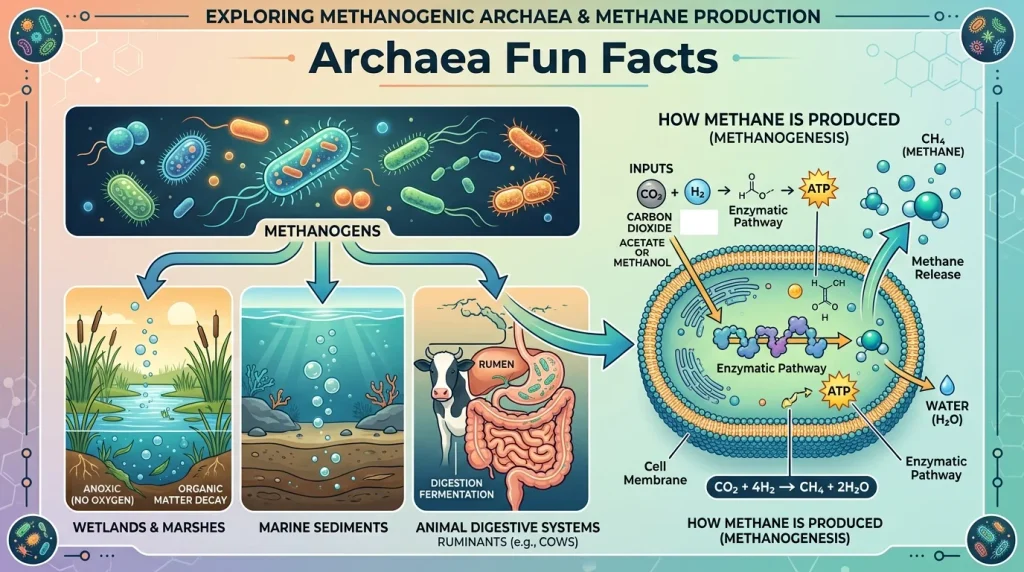
For a very long time, scientists thought all living things were either animals, plants, or bacteria. That all changed in the late 1970s when researchers looked deep into cellular genetics.
A Biological Plot Twist
A scientist named Carl Woese was studying the genetic makeup of single-celled organisms. He discovered a group of microbes that looked just like bacteria, but their internal machinery was completely different.
This led to the creation of the Three-Domain System. Life is now split into Bacteria, Eukarya (which includes humans, trees, and dogs), and Archaea.
Bacteria vs. Archaea: What’s the Difference?
While both are tiny single-celled organisms without a cell nucleus, their chemical makeup sets them apart.
- Cell Wall Chemistry: Bacteria build their walls with a chemical called peptidoglycan, while archaea use unique proteins and sugars.
- Membrane Structures: Archaea possess chemical bonds in their outer membranes that make them practically indestructible in heat or acid.
- Genetic Machinery: When archaea copy their DNA, they behave much more like human cells than bacterial cells.
Mind-Blowing Archaea Fun Facts
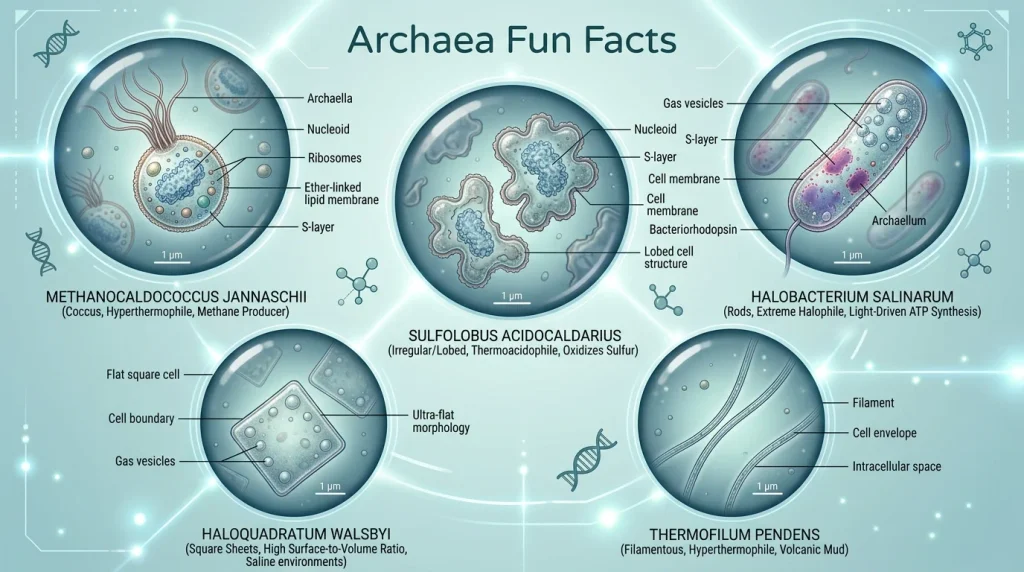
Now that you know what they are, let’s look at some unbelievable archaea fun facts that highlight just how incredible these little organisms really are.
1. They Are Natural Extremophiles
Many archaea thrive in places that would instantly destroy human cells. They love conditions that are super hot, intensely salty, or extremely acidic.
2. Some Love Pure Acid
Acidophiles are archaea that flourish in liquids with a pH close to battery acid. You can find them swimming around happily in runoff from abandoned copper mines.
3. They Can Live in Boiling Water
Thermophiles and hyperthermophiles thrive in scorching hot temperatures. Some species comfortably multiply at temperatures well above boiling, near deep-ocean thermal vents.
4. Halophiles Drink Salt for Breakfast
While most living things shrivel up in heavy salt, halophilic archaea require high salt concentrations to survive. They turn salt flats vibrant shades of pink, orange, and purple.
5. They Produce the Gas in Marshlands
Methanogens are a special group of archaea that produce methane gas as a byproduct of their digestion. They are responsible for the bubbling gas you smell in swamps and marshes.
6. You Have Millions Inside You Right Now
Archaea do not just live in wild environments. Methanobrevibacter smithii is a friendly archaeon that lives right inside the human gut, helping digest complex food.
7. They Might Be Our Ancient Ancestors
Genetic evidence suggests that complex cells (like ours) originally evolved from a symbiotic relationship involving an ancient archaeal host billions of years ago.
8. They Help Power the Global Nitrogen Cycle
Archaea in the ocean transform ammonia into nitrates. This process provides vital nutrients for plankton, supporting marine life across the globe.
How Archaea Compare to Other Life Forms
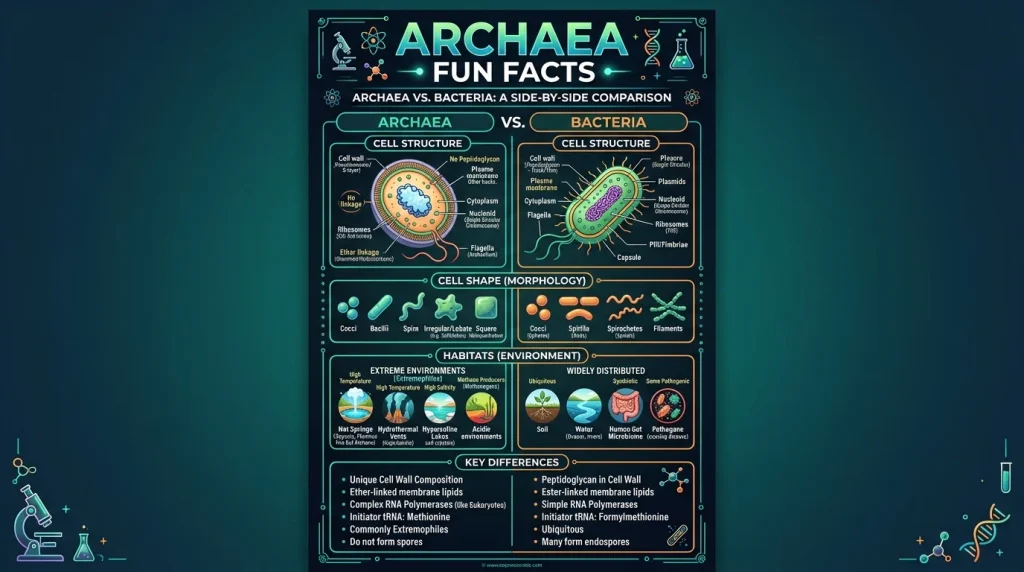
Archaea stand out as one of biology’s greatest puzzles because they bridge the gap between simple cellular life and complex organisms. Visually, they mimic bacteria with their microscopic, single-celled structures that lack a membrane-bound nucleus. However, when you look inside at their molecular machinery, archaea behave much more like complex plant and animal cells. Their unique cell walls contain special protein arrangements rather than standard bacterial compounds, and their cell membranes feature rare chemical bonds engineered to resist extreme breakdown. By combining the simple structural frame of a bacterium with the sophisticated genetic machinery of a higher organism, archaea form a unique branch of life on Earth.
Unique Cellular Architecture
Archaea construct their outer shells using pseudopeptidoglycan or protective protein layers instead of the standard peptidoglycan found in bacteria. Their cell membranes rely on ether-linked lipids rather than ester-linked lipids, creating an extraordinarily stable barrier that prevents the cell from dissolving under high heat, extreme salinity, or intense acidity.
Shared Genetic Machinery with Eukaryotes
Despite their simple single-celled appearance, archaea copy their DNA and synthesize proteins using enzymes that closely mimic those found in complex organisms (eukaryotes). Key processes like transcription and translation rely on complex multi-subunit RNA polymerases, making archaea genetically closer to humans and plants than to standard bacteria.
Metabolic Versatility and Extremophile Adaptation
Archaea possess metabolic pathways found nowhere else in nature, such as methanogenesis—the ability to generate methane gas from carbon dioxide and hydrogen. While many species thrive in ordinary soils and oceans, their specialized metabolic machinery allows specific extremophile lineages to fuel themselves in environments completely devoid of oxygen, sunlight, or organic matter.
Extreme Survival Strategies: How Do They Do It?
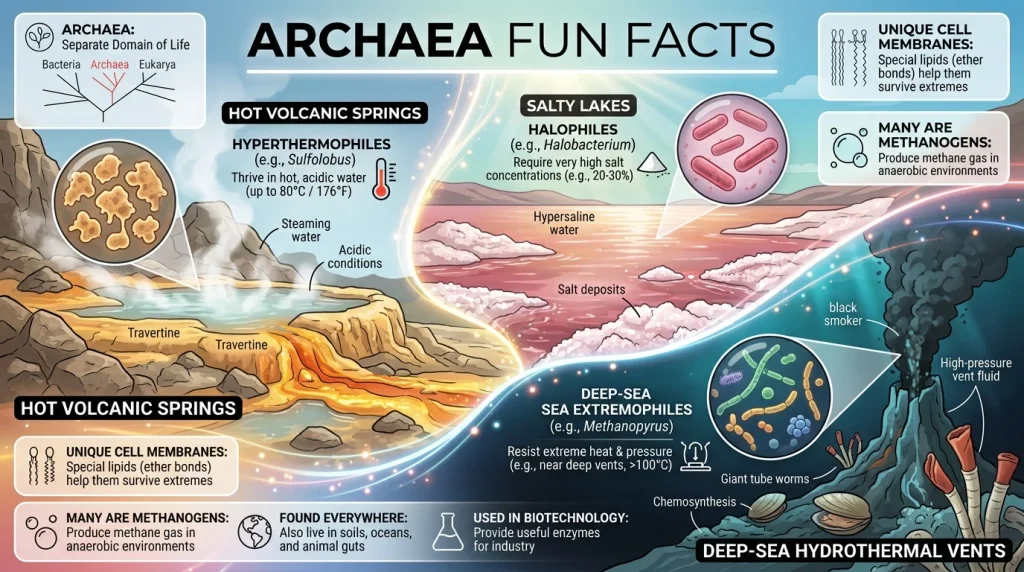
How do these tiny cells survive in conditions that would dissolve standard biological tissues? Their survival relies on specialized biochemical engineering.
Indestructible Cell Membranes
Normal cell membranes melt in high heat or fall apart in acid. Archaea build their membranes using unique ether linkages. These bonds hold the membrane tightly together even under extreme pressure and temperature.
Specialized Heat-Proof Proteins
When regular proteins get hot, they lose their shape and stop working—think of how an egg white turns solid when cooked. Archaea manufacture specialized proteins that lock together tightly, maintaining their shape in extreme heat.
MCQs
Test your knowledge of these incredible ancient microbes with this quick quiz!
- What are archaea?
A) Plants
B) Microorganisms
C) Insects
D) Fish - Where can some archaea survive?
A) Only in gardens
B) Extreme environments
C) Only in freshwater
D) Only on trees - Which environment can contain archaea that love high temperatures?
A) Hot springs
B) Snowfields only
C) Deserts only
D) Beaches only - What is the name for archaea that produce methane?
A) Methanogens
B) Herbivores
C) Predators
D) Fungi - Are archaea the same as bacteria?
A) Yes, they are identical
B) No, they are different groups
C) Only in oceans
D) Only when they are young - What is the main way archaea are usually seen?
A) With the naked eye
B) Using a microscope
C) With binoculars
D) With a telescope - Which habitat can contain salt-loving archaea?
A) Very salty lakes
B) Rainforests
C) Snow-covered mountains
D) Grasslands - What type of organism is an archaeon?
A) Single-celled organism
B) Multicellular plant
C) Mammal
D) Bird - Where can some methanogenic archaea live?
A) Oxygen-free environments
B) Only in sunlight
C) Only on dry rocks
D) Inside clouds - Which group includes archaea and bacteria?
A) Prokaryotes
B) Mammals
C) Reptiles
D) Flowering plants
✅ Answer Key
- B
- B
- A
- A
- B
- B
- A
- A
- A
- A
FAQs
What are archaea in simple terms?
Archaea are single-celled microorganisms that lack a cellular nucleus. Although they resemble bacteria under a microscope, their unique genetics and chemical makeup place them in a completely distinct domain of life.
Are archaea harmful to human beings?
No known archaea are pathogenic or cause diseases in humans. Instead, the species that live inside our bodies actively assist with digestion and help keep our internal ecosystems balanced.
Where can you find archaea in everyday life?
You can find archaea in everyday environments like garden soil, ocean water, and inside your gut. They also thrive in extreme spots like salt lakes, compost heaps, and marshy soils.
How old are archaea on planet Earth?
Archaea are among the oldest living lineages on Earth. Fossilized chemical signatures suggest that early archaea have existed for over 3.5 billion years, surviving multiple mass extinctions.
Can archaea survive in outer space?
Certain extreme archaea can survive radiation, extreme cold, and vacuum conditions similar to space. Scientists study them to understand if life could potentially exist on icy moons or Mars.
Conclusion
Exploring these archaea fun facts reveals just how diverse life on Earth really is. From deep-sea volcanic vents to our own digestive systems, these resilient microorganisms continue to shape our world in quiet, powerful ways.
Understanding archaea gives us a fresh perspective on biology, agriculture, and the search for life beyond Earth. Keep exploring the microscopic world around you, because there is always something amazing waiting to be discovered!

Ethan Danial is the creator and lead writer behind FunWhirls.com, a fun-focused platform dedicated to entertaining ideas, fascinating facts, funny moments, creative lists, and content that sparks curiosity. With a genuine love for discovering interesting and unexpected topics, Ethan enjoys turning simple ideas into engaging content that readers can enjoy, learn from, and share. His approach is centered on making every article easy to read, enjoyable, and worth coming back to.
At FunWhirls.com, Ethan Danial explores the lighter and more entertaining side of everyday life. He creates content for readers who love discovering something new, having a quick laugh, or simply taking a break from the ordinary. From curious facts to playful ideas and entertaining discoveries, Ethan aims to keep the content fresh, positive, useful, and engaging for readers of all kinds.