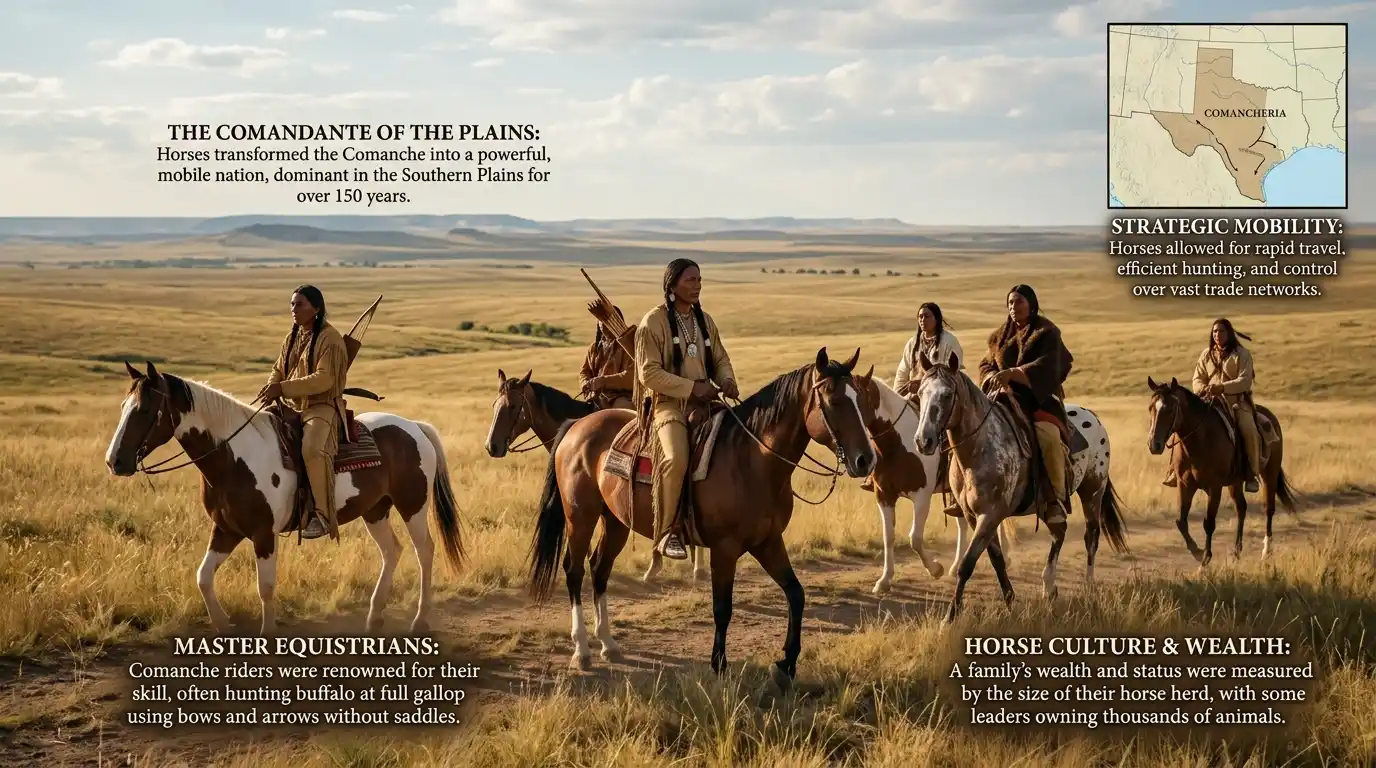
The Comanche are a Native American people originally from the Shoshone group of the Great Basin who migrated to the Southern Plains. Renowned as elite horsemen and fierce warriors, they built a vast territory known as Comancheria and played a monumental role in American frontier history.
Have you ever wondered what made the historical plains truly tick? Let us explore some amazing Comanche fun facts together.
History often feels like a dusty textbook, but the story of the Comanche people is full of thrilling adventures. Get ready to uncover incredible secrets about their lifestyle, culture, and legacy.
Who Were the Comanche People?
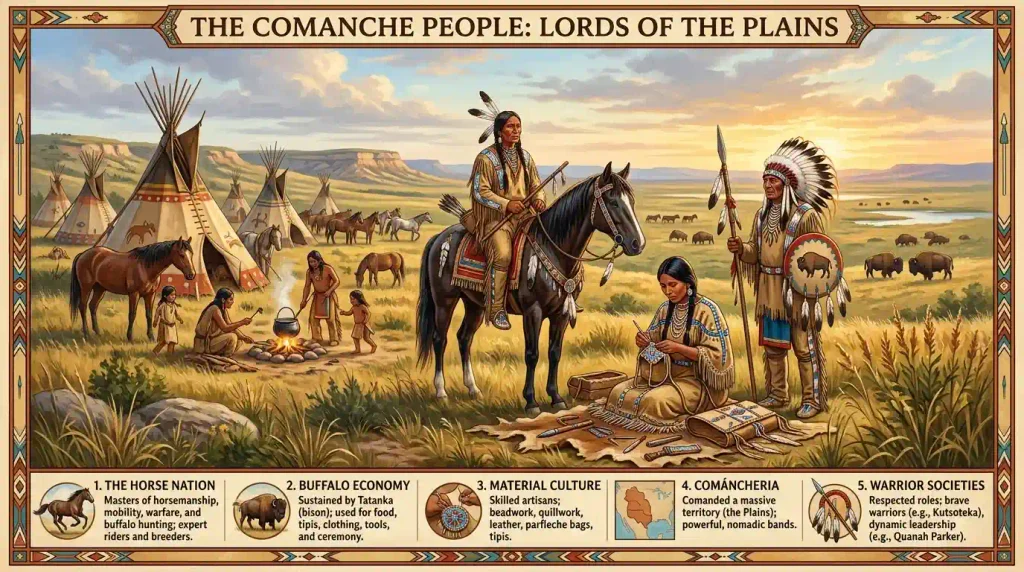
Every great story starts with a beginning, and the Comanche journey is nothing short of fascinating. Originally part of the Northern Shoshone crew in the Great Basin, they made a bold migration southward. They chose to call themselves Nʉmʉnʉʉ, which simply translates to “the human beings” or “the people”.
When they arrived on the Southern Plains, everything changed. Instead of staying put, they embraced a nomadic lifestyle centered entirely around vast open spaces. They eventually settled across parts of Texas, New Mexico, Oklahoma, Kansas, and Colorado, creating a powerful domain.
Masters of the Horse and Plains
If you picture a classic plains rider, you are likely imagining the peak of Comanche horsemanship. Long before modern training techniques existed, these riders had an almost magical bond with their animals. Children learned to ride almost as soon as they could walk.
This mastery gave them a massive advantage in hunting and traveling. They could slide down the side of a galloping horse to use its body as a shield while firing arrows with pinpoint accuracy. This incredible skill turned them into legendary figures of the American West.
Life Inside Comancheria
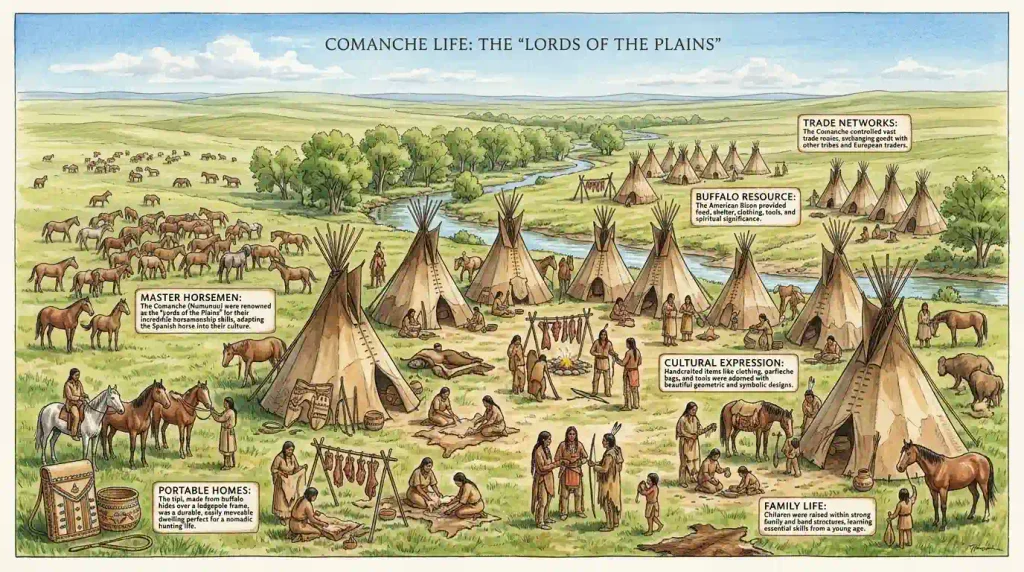
The territory controlled by the crew was so vast and influential that European powers and historians referred to it as Comancheria. Within this region, life revolved around community, seasonal movement, and respect for nature. Bison provided their primary source of food, clothing, and shelter.
Tepees made from strong bison hides could be packed up and moved in minutes. This mobility allowed families to follow massive animal migrations across the plains. Cooperation and shared responsibilities kept every village strong through changing seasons.
Society and Culture Overview
| Feature | Comanche Culture Detail |
| Original Name | Nʉmʉnʉʉ (The People) |
| Primary Language | Numic branch of Uto-Aztecan |
| Main Subsistence | Bison hunting and foraging |
| Core Territory | Comancheria (Southern Great Plains) |
Surprising Trivia You Never Knew
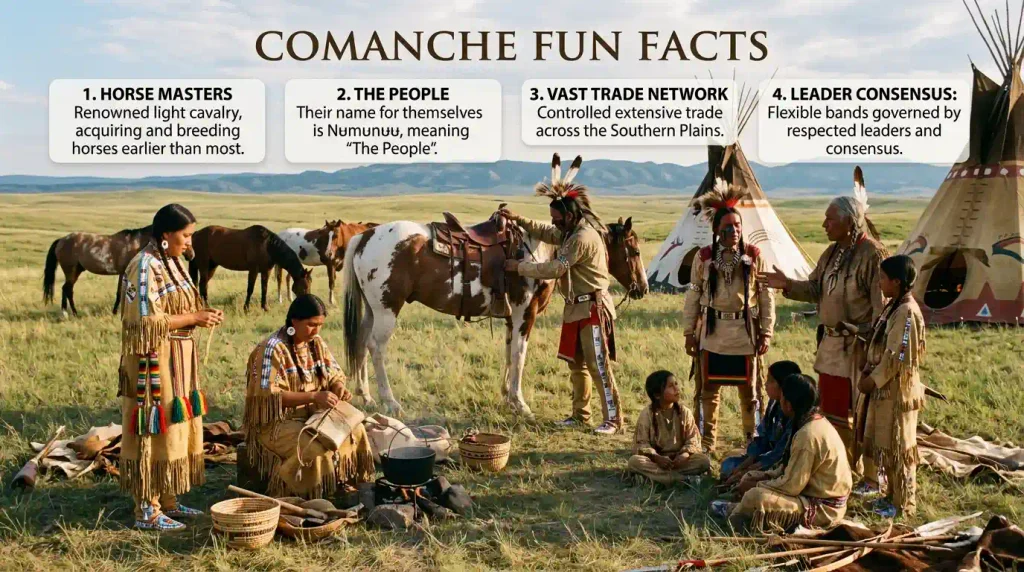
History is packed with little-known details that completely change how we view the past. For instance, the name “Comanche” came from a Ute word, kɨmantsi, meaning enemy. The Spanish adopted this term, and it stuck permanently.
Another fun detail involves their diplomatic and trading prowess. They built an expansive trade network across the plains. They exchanged horses, mules, and animal pelts with neighboring Native nations as well as French, Spanish, and American traders.
The Legacy of Quanah Parker
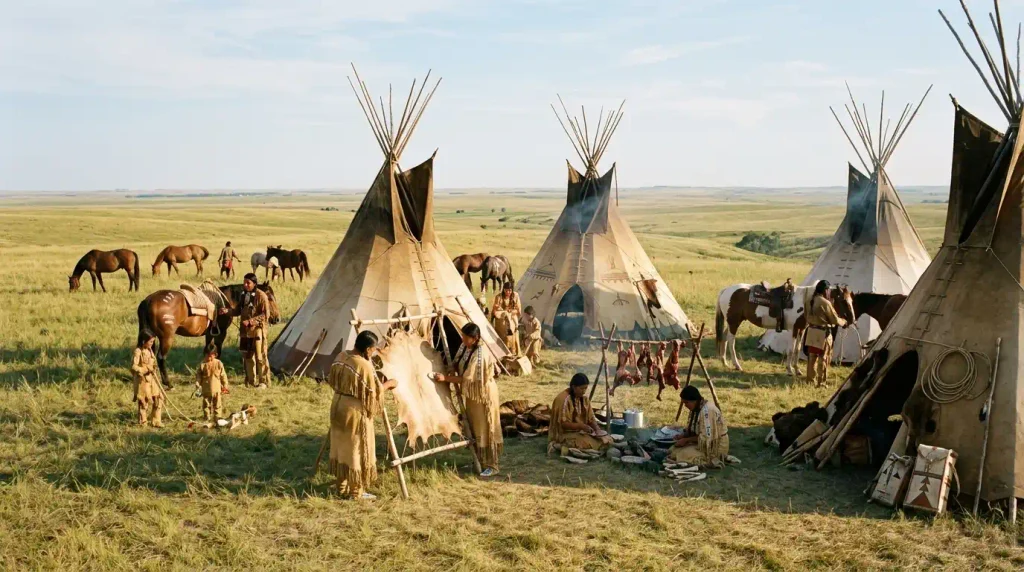
No look at this proud heritage is complete without mentioning Quanah Parker. As one of the most influential leaders in tribal history, he bridged two completely different worlds during a time of immense transition.
His leadership helped guide his people through turbulent reservation eras into modern times. Today, descendants maintain their vibrant culture through annual events like the famous Comanche Homecoming powwow in Oklahoma. Their rich history continues to inspire curiosity and admiration worldwide.
MCQs
Question 1: What does the word Nʉmʉnʉʉ mean in the native language?
A. The horsemen
B. The human beings
C. The plains wanderers
D. The bison hunters
Question 2: Which larger linguistic family does the language belong to?
A. Algonquian
B. Uto-Aztecan
C. Siouan
D. Athabaskan
Question 3: What term did European settlers use for the expansive territory controlled by the crew?
A. New Spain
B. Comancheria
C. The Great Basin
D. The Frontier Strip
Question 4: Where did the community originally migrate from before reaching the Southern Plains?
A. The Great Basin
B. The Atlantic Coast
C. The Pacific Northwest
D. The Florida Everglades
Question 5: Which animal served as the absolute backbone of their daily economy and survival?
A. Elk
B. Pronghorn
C. Bison
D. Bighorn sheep
Question 6: Where is the modern headquarters and main population center for the crew today?
A. Lawton, Oklahoma
B. Austin, Texas
C. Santa Fe, New Mexico
D. Denver, Colorado
Question 7: Who was recognized as a prominent leader guiding the community through the reservation transition period?
A. Sitting Bull
B. Quanah Parker
C. Geronimo
D. Red Cloud
Question 8: What did the original Ute term kɨmantsi mean, which inspired the name Comanche?
A. Great rider
B. Brave hunter
C. Enemy
D. Stranger from the north
Question 9: What major annual summer event brings members together in Walters, Oklahoma?
A. The Sun Dance
B. The Comanche Homecoming
C. The Buffalo Festival
D. The Autumn Gathering
Question 10: Which European group first documented the name in Spanish records around 1706?
A. French explorers
B. Spanish officials
C. British traders
D. Dutch merchants
Answer Key:
- B
- B
- B
- A
- C
- A
- B
- C
- B
- B
FAQs
What does the word Comanche mean?
The name originated from a Ute word meaning enemy, but members prefer their traditional self-name, Nʉmʉnʉʉ. This term translates directly to “the human beings” or “the people”.
Where did the Comanche live historically?
They historically inhabited a vast region known as Comancheria, stretching across parts of Texas, New Mexico, Oklahoma, and Kansas. This territory supported their nomadic lifestyle and bison hunting culture.
Are the Comanche still around today?
Yes, they thrive today as a federally recognized crew known as the Comanche Nation. Most enrolled citizens live in and around southwestern Oklahoma, maintaining their unique cultural traditions.
What language do the Comanche speak?
They speak a Numic language belonging to the larger Uto-Aztecan language family. It originally developed as a dialect of the Shoshone language before evolving independently.
What was the primary diet of the Comanche?
Bison meat served as the main protein source for their daily meals. They supplemented this diet with wild berries, roots, and foraged plants gathered across the plains.
Conclusion
Exploring the rich history of the Comanche reveals a story of incredible resilience, adaptability, and cultural pride. From their early days as skilled nomadic riders to their thriving modern community today, their impact on American history remains unforgettable.
Take some time to dive deeper into Native American heritage or attend a local cultural event to learn more. Share these fascinating facts with your friends and keep the spirit of discovery alive!

Ethan Danial is the creator and lead writer behind FunWhirls.com, a fun-focused platform dedicated to entertaining ideas, fascinating facts, funny moments, creative lists, and content that sparks curiosity. With a genuine love for discovering interesting and unexpected topics, Ethan enjoys turning simple ideas into engaging content that readers can enjoy, learn from, and share. His approach is centered on making every article easy to read, enjoyable, and worth coming back to.
At FunWhirls.com, Ethan Danial explores the lighter and more entertaining side of everyday life. He creates content for readers who love discovering something new, having a quick laugh, or simply taking a break from the ordinary. From curious facts to playful ideas and entertaining discoveries, Ethan aims to keep the content fresh, positive, useful, and engaging for readers of all kinds.