
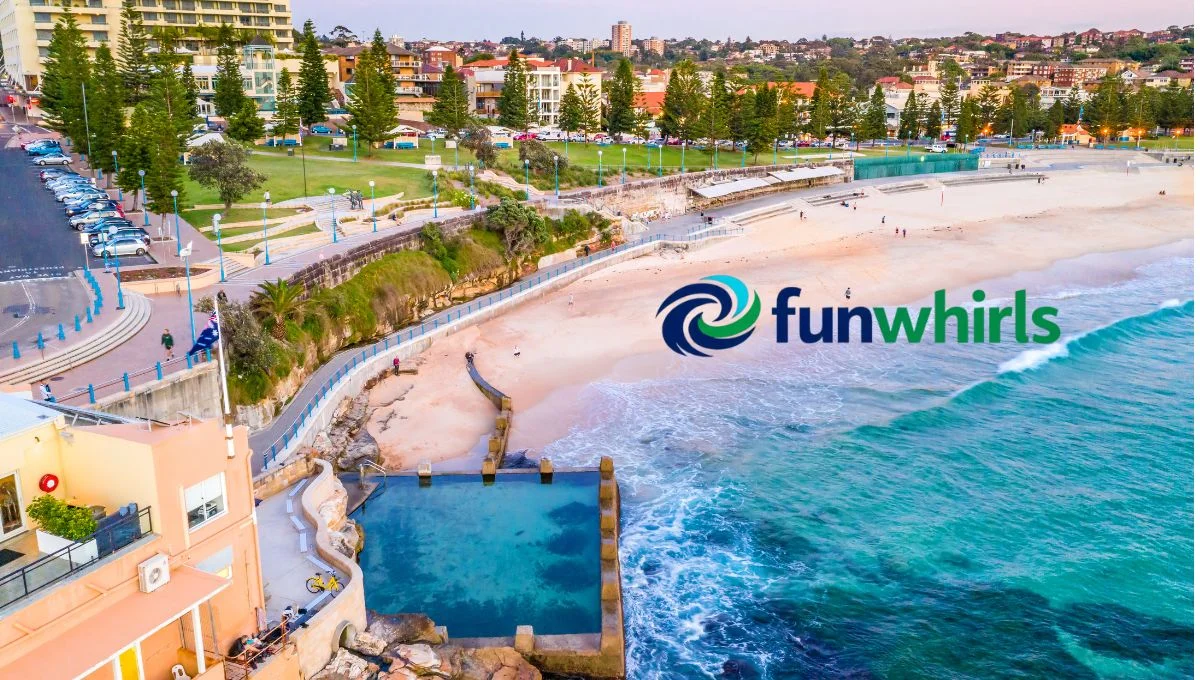
Exploring a surprising Australia fun facts list reveals a continent filled with unique wildlife like kangaroos, massive natural wonders like the Great Barrier Reef, and eccentric local traditions. These fascinating details highlight why Australia stands out as a world leader in biodiversity, quirky history, and unforgettable geographic beauty.
Have you ever wondered why a continent surrounded by ocean waters is also home to one of the driest inhabited deserts on Earth? Every classic Australia fun facts collection reveals something deeply fascinating about this massive island nation.
From hopping marsupials that outnumber human residents to pink lakes and massive fence lines, the Land Down Under never fails to surprise travelers. Exploring a fresh set of Australia fun facts gives you a brand-new appreciation for its unique culture and nature.
Whether you are preparing for an upcoming vacation or just love learning random trivia, these incredible insights will leave you amazed. Let’s look at the wild geography, quirky history, and extraordinary wildlife that make this country so special.
Wild and Mind-Blowing Geographic Wonders
When you look at a world map, Australia might look like a modest island sitting at the bottom of the globe. In reality, it is the sixth-largest country on Earth and the only nation that governs an entire continent.
The sheer physical scale of this landmass creates environmental conditions you cannot find anywhere else on the planet.
Understanding its geography helps explain why its climate, ecosystems, and human settlements developed in such unusual ways.
The Incredible Size of the Australian Outback
The Australian Outback covers roughly seventy percent of the nation’s total land area, forming a vast, arid interior region. Most of the country’s population lives along the coastlines, leaving the center remarkably quiet and empty.
If you drove straight across the Outback from east to west, you would cover thousands of miles of red dirt and clear skies.
Because water is scarce, human settlements in the interior are few and far between.
Cattle Stations Larger Than Entire European Nations
Because the soil in the Outback is dry, ranchers need massive amounts of land to feed their livestock herds. Anna Creek Station in South Australia is the largest working cattle property in the entire world.
This single property covers over five point eight million acres of land.
To put that size into perspective, this cattle station is larger than the entire country of Israel or the nation of Slovenia.
Lake Hillier and the Mystery of Pink Water
Along the southern coast of Western Australia sits Lake Hillier, a body of water that looks like bright bubblegum pink. Unlike other colored lakes that change shade with the weather, Lake Hillier retains its vibrant pink hue year-round.
Scientists discovered that the vivid color comes from special algae and microscopic organisms that thrive in high salt levels.
When you scoop the water into a clear glass bottle, it stays bright pink, creating a stunning visual contrast with the dark blue ocean nearby.
The Great Barrier Reef’s Space-Visible Greatness
Stretching over 1,400 miles along the coast of Queensland, the Great Barrier Reef is the largest living structure on Earth. It is composed of thousands of individual coral reefs and hundreds of islands supporting thousands of marine species.
The reef system is so massive that astronauts can easily identify its colorful outline from the International Space Station.
It plays a crucial role in ocean biodiversity, acting as a nursery and shelter for turtles, sharks, and colorful tropical fish.
The Vast Underground Town of Coober Pedy
In the scorching desert of South Australia lies Coober Pedy, a town where most residents live completely underground. Known as the opal capital of the world, this unique community was established after miners discovered valuable gemstones in 1915.
To escape brutal summer surface temperatures exceeding 115 degrees Fahrenheit, locals carved homes, churches, and shops directly into the sandstone hills.
These underground dugouts stay at a comfortable 75 degrees Fahrenheit year-round without requiring electric air conditioning systems.
Wildlife Secrets You Won’t Believe Are Real
Australia isolated itself from other landmasses millions of years ago, allowing its animal populations to evolve down unique evolutionary paths. Over eighty percent of the plants and animals living here exist nowhere else on Earth.
From pouch-bearing mammals to egg-laying creatures, Aussie wildlife continues to baffle evolutionary biologists.
Learning how these animals adapted to harsh environments gives us a glimpse into nature’s incredible creativity.
Kangaroos vs Humans: A Surprising Population Battle
If you think humans run Australia, the local wildlife numbers might make you rethink that assumption completely. Estimates suggest roughly fifty million kangaroos are hopping around the continent today.
With a human population of around twenty-six million people, kangaroos outnumber citizens by nearly two to one.
While they are beloved icons, large kangaroo populations can create challenges for drivers and farmers operating along country roads.
Wombats and Their Unique Cubic Droppings
Wombats are sturdy, burrowing marsupials that look like furry little bulldozers moving slowly through the bush. One of their most famous biological quirks is that they produce cube-shaped droppings naturally.
This unusual shape prevents their waste from rolling off steep rocks and logs in their hilly habitats.
Wombats use these elevated cubic markers to signal their territory to other animals without losing their boundary markers to gravity.
The Venomous Truth About Platypuses
When European scientists first saw a preserved platypus body in the late 1700s, they thought someone had stitched a duck’s bill onto a beaver. This egg-laying mammal remains one of the most unusual creatures on Earth.
Beyond its duck bill and webbed feet, male platypuses feature hollow spurs on their hind legs capable of injecting painful venom.
This venom is powerful enough to kill small animals and cause excruciating, long-lasting pain in human beings.
Quokkas: The Happiest Animals on Earth
Rottnest Island in Western Australia is home to the quokka, a small marsupial roughly the size of a domestic house cat. Quokkas have earned a global reputation as the happiest animals on Earth due to their facial muscle structure.
Their mouths naturally curve upward, making them look like they are constantly smiling warmly at visitors.
Because they have few natural predators on the island, quokkas are remarkably friendly and frequently approach tourists for close-up photos.
Koalas Are Not Bears and Have Fingerprints
Despite being commonly called “koala bears,” these tree-dwelling animals are actually marsupials with pouches for raising their young. They spend most of their lives high up in eucalyptus trees, sleeping up to twenty hours every day to digest tough leaves.
A surprising biological detail is that koalas have individual fingerprint patterns nearly identical to human fingerprints.
Even under advanced microscopic analysis, crime lab technicians can struggle to distinguish between a human fingerprint and a koala print!
Fascinating Engineering Marvels and Human Boundaries
Taming a massive, dry continent required early settlers and engineers to build infrastructure on a scale never attempted before. To protect livestock and connect isolated towns, workers constructed mind-boggling projects across thousands of miles.
These construction achievements reflect the immense physical challenges of living in the Aussie bush.
They also demonstrate how human creativity can adapt to extreme geographical obstacles.
The Dingo Fence: Longer Than the Great Wall of China?
During the late 1800s, sheep farmers in southeastern Australia faced massive financial losses from wild dingo packs attacking their herds. To solve this problem, authorities built a continuous wire mesh fence stretching over 3,500 miles across three states.
Known officially as the Dingo Fence, it remains one of the longest continuous artificial structures on Earth.
Worker crews still patrol and repair the fence daily to keep wild predators on the northern side of the barrier.
The Indian Pacific Railway and the Longest Straight Track
Traveling across the Nullarbor Plain by train offers passengers a rare view of flat, treeless landscape extending to the horizon. The Indian Pacific railway line connects Sydney on the east coast to Perth on the west coast.
As the train crosses the Nullarbor Plain, it runs along a single stretch of track that does not bend once for 297 miles.
This holds the world record as the longest completely straight section of railway track anywhere on Earth.
The Highway 1 Loop Surrounding an Entire Continent
If you enjoy long road trips, Australia offers the ultimate driving challenge known simply as Highway 1. This massive highway network loops around the entire edge of the continent, connecting every mainland state capital city.
Covering roughly 9,000 miles in total length, it is the longest national highway network in the entire world.
Driving the complete Highway 1 loop takes several months, taking travelers through tropical rainforests, coastal cliffs, and sweeping desert stretches.
The Sydney Harbour Bridge: The Coathanger of Australia
Opening in 1932, the Sydney Harbour Bridge is one of the world’s most recognizable steel arch bridges. Locals affectionately refer to the massive structure as “The Coathanger” because of its distinctive curved design.
It contains over 52,000 tons of steel held together by six million hand-driven rivets.
It remains the world’s tallest steel arch bridge, measuring 440 feet from water level to the top of its arch.

Quirky Historical Events and Legendary Oddities
Australian history is packed with strange events that sound more like satirical fiction than real historical records. From military campaigns against birds to political mysteries, the country’s past is anything but boring.
These historical events highlight the resilient, lighthearted humor that defines Aussie cultural identity today.
Let’s look at a few unbelievable historic moments that actually happened.
The Great Emu War of 1932
In 1932, wheat farmers in Western Australia faced an invasion of over twenty thousand large emus destroying ripe crops. Desperate for help, the farmers called upon the Australian military, which deployed soldiers armed with heavy machine guns.
Despite firing thousands of rounds of ammunition, the soldiers found it nearly impossible to hit the fast-moving, agile birds.
The emus scattered into small groups, easily dodging the heavy weaponry until the military finally surrendered and withdrew from the field.
The Prime Minister Who Vanished in the Ocean
In December 1967, sitting Australian Prime Minister Harold Holt went swimming at Cheviot Beach near Melbourne and vanished without a trace. Despite a massive military search operation, authorities never recovered his body or belongings.
Instead of sinking into solemn gloom, the nation reacted with a classic touch of dry Australian humor.
They named an official public swimming center—the Harold Holt Memorial Swimming Pool—in honor of their missing leader!
How Australia Invented the Boxed Wine Cask
Wine lovers around the world are familiar with boxed wine, but few know that this convenient packaging was invented in South Australia. In 1965, winemaker Thomas Angove patented a design that placed wine inside a flexible plastic bladder housed within a cardboard box.
This clever design prevented oxygen from spoiling the wine after opening, keeping it fresh for weeks.
A few years later, another Aussie inventor added the famous plastic tap, creating the modern wine cask used globally today.
Cultural Quirks and Everyday Aussie Life
Living in Australia comes with its own unique set of social customs, casual slang, and government regulations. Visitors are often surprised by how relaxed daily life feels, balanced by strict community standards.
Understanding these cultural habits will help you fit right in when chatting with locals at a neighborhood barbecue.
Why Australians Call Their Flip-Flops Thongs
If an Australian asks you to put on your thongs before heading to the beach, do not be alarmed or confused. Down Under, the word “thongs” refers exclusively to simple rubber flip-flop sandals worn on your feet.
Because the weather is warm, thongs are considered acceptable footwear for casual grocery runs, cafes, and backyard gatherings.
If you refer to them as flip-flops, locals will immediately spot you as an overseas tourist!
The Magic of Vegemite and How to Eat It Right
Vegemite is a thick, dark brown food spread made from leftover brewers’ yeast extract, vegetable seasonings, and spices. It has been a beloved breakfast staple in Australian homes for over a hundred years.
Unprepared tourists often make the mistake of eating a large spoonful directly from the jar, which tastes overwhelmingly salty.
The proper technique is to spread a thin layer over hot, buttered toast so the salty flavor blends smoothly with the rich butter.
Voting is Mandatory by Federal Law
While many democracies struggle with low voter turnout during major elections, Australia takes civic participation very seriously. Voting in federal and state elections is mandatory for every eligible citizen aged eighteen and older.
If a citizen fails to cast a ballot without a valid medical or legal excuse, the government issues a financial fine.
Because everyone must attend, voting days double as social community events featuring charity sausage sizzles outside polling places.
Summary of Key Australian Record-Breakers
To help you visualize how Australia compares to global benchmarks across nature, engineering, and wildlife, here is a quick overview of its most famous record-breaking facts.
Bizarre Aussie Inventions That Changed the World
Beyond great beaches and unique animals, Australian scientists and engineers have produced incredible technology used every day worldwide. Their inventions have saved millions of lives, improved global communication, and revolutionized medical treatments.
When faced with isolation, Australian innovators developed creative, practical solutions that reshaped modern life globally.
Here are three famous technological breakthroughs born on Australian soil.
The Black Box Flight Recorder
In the 1950s, Australian scientist Dr. David Warren lost his father in a commercial airplane crash without any explanation. Driven to prevent future tragedies, he designed an armored instrument that recorded cockpit voices and flight data during flights.
Known today as the flight recorder or “black box,” this device is installed on every commercial airplane globally.
It has helped investigators solve mysterious aviation accidents and dramatically improve commercial air safety standards for decades.
Spray-on Skin for Burn Victims
Dr. Fiona Wood, a plastic surgeon working in Western Australia, developed a revolutionary medical treatment known as spray-on skin. This technology uses a small sample of a patient’s healthy skin cells to cultivate a liquid cell suspension in a laboratory.
Surgeons then spray this living cell mixture over severe burn wounds to speed up tissue healing dramatically.
This invention reduces permanent scarring and shortens hospital recovery times for severe burn patients around the globe.
Wi-Fi Technology Born in Australian Labs
Every time you connect your smartphone or laptop to a wireless network, you are using technology pioneered in Australia. In the 1990s, radio astronomers working at the CSIRO government science agency were searching for tiny black hole signals.
While building equipment to process messy radio waves, they created a fast, reliable method for transmitting data wirelessly.
Their patented radio signal processing technique became the foundational building block for modern high-speed Wi-Fi technology.
Practical Tips for Exploring Australia Safely
If reading these amazing facts inspires you to pack your bags and head Down Under, keeping safety in mind is essential. The vast distances and intense climate mean visitors need to prepare carefully before venturing off beaten paths.
Following basic precautions ensures your adventure remains fun, safe, and memorable for all the right reasons.
Respecting the Intense Southern Sun
The sun in Australia feels significantly stronger than it does in North America or Europe due to atmospheric conditions. Sunlight carries high ultraviolet radiation levels, making painful sunburns happen in as little as fifteen minutes outdoors.
- Apply broad-spectrum SPF 50+ sunscreen every two hours, even on cloudy days.
- Wear wide-brimmed hats and polarized sunglasses to protect your eyes from glaring rays.
- Slip on lightweight, long-sleeved clothing when spending long afternoons outdoors.
- Drink plenty of fresh water throughout the day to remain properly hydrated in hot weather.
Navigating Wildlife Warnings with Confidence
While Australia has a reputation for hosting dangerous snakes, spiders, and marine creatures, actual animal attacks are remarkably rare. Most native animals are timid and will avoid humans unless they feel cornered or threatened.
- Swim only between red and yellow flags on beaches guarded by trained surf lifesavers.
- Check your shoes and boots before putting them on when camping in bush areas.
- Never touch or disturb blue-ringed octopuses or jellyfish washed up on coastal beaches.
- Maintain a safe distance when taking photos of wild kangaroos, wombats, or koalas.
Driving Long Distances Across the Outback
Driving through remote parts of the Outback requires a very different mindset than city highway driving. Towns can be separated by hundreds of miles without gas stations, cellular phone coverage, or mechanical repair shops.
- Carry extra fuel, engine oil, and at least ten liters of fresh drinking water per person.
- Avoid driving at dawn or dusk when wild kangaroos and emus frequently jump onto roads.
- Inform family or friends of your planned driving route before entering remote areas without cellular service.
- Pull over to rest immediately if you feel tired during long, straight desert driving stretches.

Practice Exercise
Test your understanding of Australian trivia, geography, and wildlife with this fun ten-question practice exercise!
- Which native Australian mammal is known for producing cube-shaped droppings?
A. Koala B. Wombat C. Kangaroo D. Tasmanian Devil - What makes Lake Hillier in Western Australia stand out visually?
A. It glows brightly in total darkness B. Its water is permanently bright pink C. It freezes completely during hot summers D. Its water tastes like fresh lemonade - What holds the record for the largest living structure on Earth?
A. Dingo Fence B. Great Barrier Reef C. Nullarbor Plain D. Blue Mountains Forest - Why are there roughly two kangaroos for every human living in Australia?
A. Kangaroos are raised on indoor farms B. Humans are legally banned from rural regions C. High kangaroo populations thrive across vast open lands D. Kangaroos were imported from South America recently - What unique feature does the male platypus possess on its hind legs?
A. Retractable sharp climbing claws B. Suction cups for walking underwater C. Venom-injecting hollow spurs D. Extra toes for fast sprinting - Which Australian military operation in 1932 involved soldiers battling large flightless birds?
A. The Great Emu War B. The Outback Cassowary Campaign C. The Desert Falcon Battle D. The Coastal Pelican Patrol - What is the traditional Aussie name for casual rubber flip-flop footwear?
A. Slides B. Thongs C. Sandals D. Stompers - Which vital aviation safety device was invented by Australian scientist Dr. David Warren?
A. Jet engine turbine B. In-flight radar dish C. Black box flight recorder D. Emergency inflatable slide - Why is voting mandatory for adult citizens in Australia?
A. It is required by federal law B. Citizens win cash prizes
es for voting C. Voting acts as a tax refund receipt D. It replaces annual jury service duties - What unexpected item is named in honor of the missing Prime Minister Harold Holt?
A. An international airport terminal B. A public swimming pool complex C. A national naval battleship D. A desert highway mountain pass
Answer Key
- B
- B
- B
- C
- C
- A
- B
- C
- A
- B
Frequently Asked Questions (FAQs)
1. What is the most surprising Australia fun fact detail about animals?
The most surprising animal detail is that male platypuses produce painful venom from spurs on their back legs. Additionally, wombats produce cube-shaped droppings to mark territory on rocks, while kangaroos outnumber human citizens across the continent by nearly two to one.
2. Is Australia considered an island or a continent?
Australia is officially classified as both the world’s smallest continent and its largest island landmass. Because it sits on its own tectonic plate and governs an entire continental area, geographers treat it as a distinct continental landmass rather than a typical island.
3. Why is Australia known as the Land Down Under?
Australia earned the nickname “The Land Down Under” because of its geographic position entirely within the Southern Hemisphere. Mapmakers historically placed the Southern Hemisphere at the bottom of world globes, placing Australia below the equator relative to European nations.
4. How big is the Australian Outback compared to other places?
The Australian Outback covers over 2.5 million square miles, making up roughly seventy percent of the continent. It is so vast that single cattle ranches in the Outback, like Anna Creek Station, are larger than entire European countries like Slovenia.
5. What should you do if you encounter wild animals in Australia?
If you encounter wild animals in Australia, maintain a respectful distance and avoid cornering or feeding them. Most native animals are naturally shy and will leave you alone if you give them plenty of space and remain calm.
6. Why do Australians love Vegemite so much?
Australians love Vegemite because it is a rich, savory yeast spread packed with vitamin B that has been part of Aussie food culture for generations. When spread thinly over hot buttered toast, it creates a comforting, salty flavor that locals adore.
Conclusion
Australia is a truly remarkable country filled with natural wonders, fascinating wildlife, diverse cultures, and incredible landscapes. Its unique geography and history make it one of the most interesting places to learn about.
The world of Australia fun facts shows just how much there is to discover about this amazing country. From its unusual animals to its famous landmarks, Australia offers countless facts that can surprise and entertain readers of all ages.
Learning Australia fun facts can also inspire curiosity about the country’s environment, people, history, and culture. Every new fact gives us another reason to appreciate the diversity and beauty of Australia.
We hope these facts have made learning about Australia more exciting and enjoyable. Keep exploring, keep learning, and discover even more amazing things about the Land Down Under!

Ethan Danial is the creator and lead writer behind FunWhirls.com, a fun-focused platform dedicated to entertaining ideas, fascinating facts, funny moments, creative lists, and content that sparks curiosity. With a genuine love for discovering interesting and unexpected topics, Ethan enjoys turning simple ideas into engaging content that readers can enjoy, learn from, and share. His approach is centered on making every article easy to read, enjoyable, and worth coming back to.
At FunWhirls.com, Ethan Danial explores the lighter and more entertaining side of everyday life. He creates content for readers who love discovering something new, having a quick laugh, or simply taking a break from the ordinary. From curious facts to playful ideas and entertaining discoveries, Ethan aims to keep the content fresh, positive, useful, and engaging for readers of all kinds.