Fun classroom games are structured, interactive learning activities designed to boost student participation, reinforce academic concepts, and foster social skills. Incorporating quick energizers, review games, and quiet focus activities creates an active environment where students absorb lessons faster and stay eager to learn every single day.
Keeping students fully engaged throughout a long school day can sometimes feel like a tough challenge. Integrating fun classroom games into your weekly lesson plans instantly changes the energy level in the room.
These active learning exercises turn complex subjects into memorable challenges that kids genuinely look forward to playing. Choosing the right fun classroom games helps you manage behavior effortlessly while reinforcing key educational concepts.
Let us explore a variety of dynamic, low-prep fun classroom games guaranteed to make your teaching stand out and bring learning to life.
The Hidden Power of Playful Learning
Introducing structured play into your daily routine does far more than just break up long lectures. When students play educational activities, their brains release dopamine, which improves memory retention and focus.
Movement and friendly competition keep minds active, making tough subjects much easier to understand. Playful learning creates a safe space where making a mistake simply feels like part of the process.
Transforming Energy into Focus
Kids naturally have abundant energy that needs a healthy outlet during school hours. Channeling that physical and mental movement into learning challenges prevents restlessness before it turns into a disruption.
Short activity breaks clean the brain’s slate, allowing students to return to quiet seatwork with fresh concentration. Over time, this rhythm creates a peaceful, productive room environment.
Building Social-Emotional Skills
Group activities naturally encourage communication, patience, and leadership skills among peers. Students learn how to share ideas clearly, listen to teammates, and celebrate shared victories together.
These collaborative moments help build strong friendships across different social circles. As trust grows within the room, quieter students feel much more confident speaking up.
Quick Low-Prep Warm-Up Activities
You do not need expensive supplies or hours of prep time to launch an exciting game. Simple, low-prep activities work wonders for morning meetings or warm-ups right after lunch.
Heads Up, 7 Up
This classic quiet game has kept students focused and quiet for generations. Seven designated students stand at the front while everyone else puts their heads down with thumbs raised.
- The seven chosen players walk around gently tapping one thumb each.
- Once everyone returns to the front, the tapped students stand up and guess who touched them.
- Correct guesses swap places with the tapper, keeping the cycle fresh and quiet.
It serves as a fantastic reward activity that encourages observation while keeping noise levels under control.
Four Corners
Four Corners gets students out of their chairs without causing chaotic noise. Assign a number or topic to each corner of the room, such as different vocabulary definitions or math answers.
One student closes their eyes and counts down while others move silently to a corner. The counter calls out a number, and anyone in that corner sits down until the next round.
Spark
Spark tests quick thinking, listening, and vocabulary recall in a fast-paced circle format. The teacher calls out a root word or topic, and students must quickly say a related word within three seconds.
If a student hesitates or repeats a word, they sit out for that round. It serves as an excellent brain break that sharpens vocabulary skills effortlessly.
Academic Review Games That Make Studying Fun
Reviewing for upcoming tests does not have to involve boring worksheets or tedious flashcards. Transforming study guides into interactive challenges makes study sessions exciting and memorable.
Classroom Jeopardy
Creating a Jeopardy-style grid on your whiteboard turns standard review questions into a high-stakes team competition. Categories can cover math formulas, history dates, science vocabulary, or reading comprehension details.
Dividing the class into four balanced teams encourages collaborative discussion before offering a final answer. Assigning point values creates excitement and teaches strategic decision-making.
Trashketball
Trashketball combines academic accuracy with simple physical skill. Divide the class into teams and pose a review question to the group.
- Teams discuss the question quietly and write their answer on a mini whiteboard.
- Every team with the correct answer earns one guaranteed point for their knowledge.
- One representative from each correct team gets to shoot a paper ball into a clean recycling bin for bonus points.
Setting up two shooting lines at different distances adds an extra layer of decision-making and fun.
Kahoot! and Digital Trivia
Interactive digital trivia platforms allow every student to answer questions simultaneously using tablets or computers. Instant visual feedback lets teachers see which concepts need further explanation in real time.
Vibrant music and colorful visual timers keep students intensely focused on every question. You can create your own custom quizzes or choose from thousands of pre-made educational decks.
Quiet and Mindful Games for Calm Focus
Not every game needs to involve running around or shouting answers. Quiet activities help bring energy levels back down after recess or physical education classes.
Silent Ball
Silent Ball is the ultimate tool for practicing self-control and hand-eye coordination in total silence. Students scatter around the room and toss a soft foam ball to one another.
If a player makes a bad throw, drops a catch, or makes any sound, they sit out for that round. The game ends quickly, allowing for multiple fast-paced rounds within ten minutes.
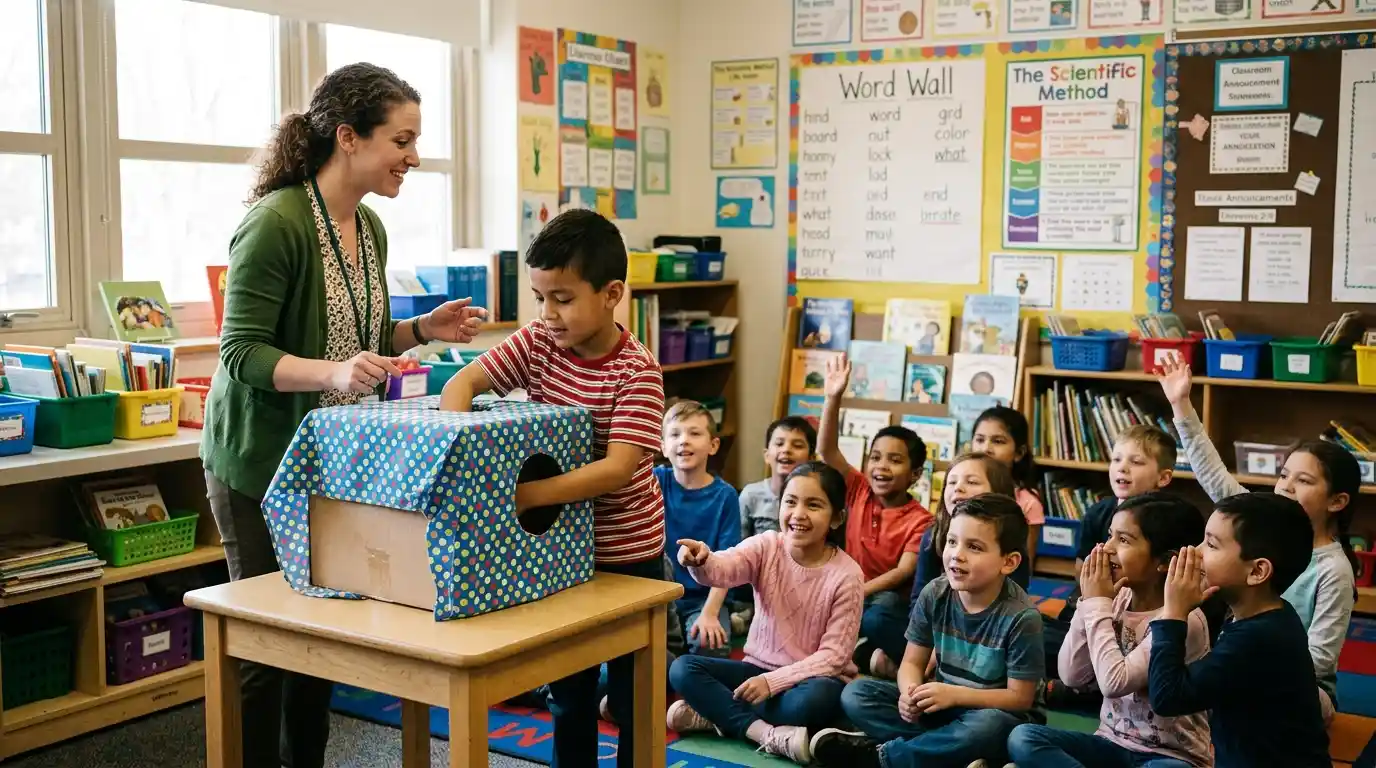
The Telephone Game
Telephone reinforces clear speech, active listening, and patience across a line of seated students. The teacher whispers a complex educational sentence to the first student in a row.
Each student whispers the phrase down the line exactly as they heard it. The final student recites the message out loud, usually leading to hilarious misinterpretations that highlight the importance of clear communication.
More Fun Classroom Games and Activities for Every Student
Not every class has the same age group, learning style, or energy level. Some teachers need funny activities for a quick break, while others need educational games for review, college activities, or simple games that can be started without preparation. The following ideas expand your options and make it easier to choose the right activity for your classroom.
Funny Classroom Games
Funny classroom games can create a relaxed atmosphere while still encouraging students to participate. Two Truths and a Lie, Telephone, and Charades are simple choices that can lead to plenty of laughter.
For a subject-based version, ask students to act out a vocabulary word, explain a funny scenario related to the lesson, or create an amusing sentence using a new term. These activities work particularly well when students need a short break from serious academic work.
Fun Classroom Activities for Students
Fun classroom activities can include movement, teamwork, discussion, creativity, and quick challenges. Teachers can try activities such as:
- Four Corners with subject-related answers
- Team trivia challenges
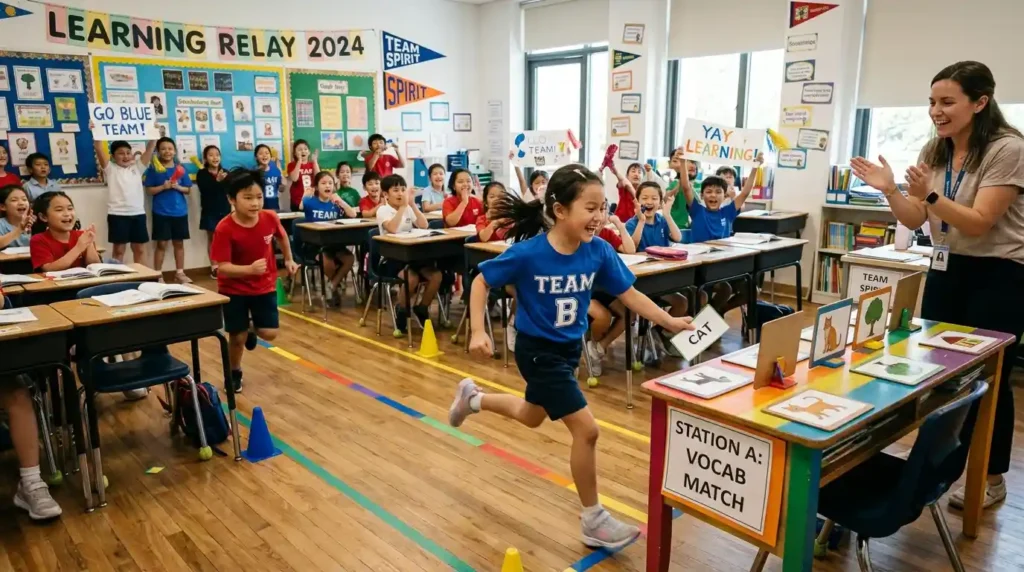
- Vocabulary races
- Classroom charades
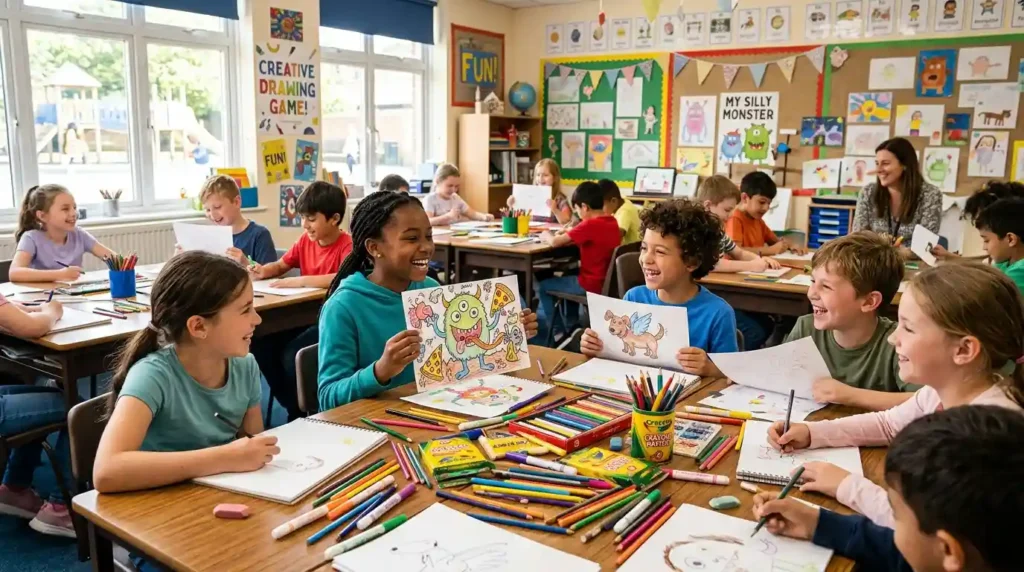
- Quick drawing challenges
- Mystery question rounds
- Partner discussion challenges
- Silent Ball
- Telephone
- Classroom scavenger hunts
These activities can be shortened or extended depending on the available class time.
Educational and Interactive Classroom Games
Educational classroom games are most useful when the game itself supports a learning objective. Instead of playing only for entertainment, teachers can connect questions, vocabulary, problem-solving, or discussion tasks to the current lesson.
Classroom Jeopardy works well for reviewing several topics at once. Trashketball combines academic questions with a simple physical challenge, while Spark can be adapted for vocabulary practice. Teachers can also turn ordinary questions into team competitions to make revision more interactive.
Quick Games to Play During Class
When only a few minutes are available, choose games with simple rules and little or no preparation. Spark, Four Corners, Silent Ball, and Telephone can all be started quickly.
A teacher can also ask a rapid-fire question, give students thirty seconds to discuss the answer with a partner, and then invite different students to respond. This type of quick classroom activity provides a mental break without requiring a long interruption to the lesson.
Fun Classroom Games for High School Students
High school students often enjoy activities that combine competition, teamwork, and academic challenges. Teachers can increase the difficulty of the questions while keeping the basic game format simple.
Jeopardy-style quizzes, team trivia, vocabulary challenges, debate-style questions, Trashketball, and timed problem-solving games can all be adapted for high school classrooms. For older students, questions should be connected to their current subjects rather than being too easy or childish.
Fun Classroom Games for College Students
College students can also enjoy classroom games when activities are connected to meaningful course content. The goal is to make the activity interactive while keeping it appropriate for adult learners.
Team Quiz Challenge: Divide students into small groups and ask questions about the current lesson. Teams discuss each answer before responding.
Speed Discussion: Give students a question and allow them a few minutes to discuss it with a partner before sharing their ideas with the class.
Vocabulary Challenge: Write important course terms on the board and ask students to define them, provide examples, or explain their connection to the lesson.
Two Truths and a Lie: Students create three statements related to a topic, with one statement being false. Other students work out which statement is incorrect.
Case Challenge: Give each group a short real-world scenario connected to the subject. Students discuss the problem and present a possible solution.
These activities can be used as teaching games for college students, review activities, or short breaks during longer lectures.
Games for Teachers and Students
Some classroom games work especially well when the teacher participates alongside the students. A teacher can join a trivia team, compete against the class, or become the person students must beat in a vocabulary challenge.
For example, in a Teacher vs. Students Challenge, the teacher asks a series of questions and keeps a running score. Students can win points for correct answers while the teacher earns points when students make an incorrect response. This format creates friendly competition and gives the whole class a shared goal.
Easy and Zero-Prep Classroom Games
When unexpected free time appears, teachers do not always have time to prepare materials. Zero-prep games solve this problem because they can begin using only the teacher’s voice and the classroom space.
Spark is useful for vocabulary and quick thinking. Four Corners can turn multiple-choice questions into a movement activity. Telephone requires only a group of students and a whispered sentence. Heads Up, 7 Up can also provide a structured activity when students need something quiet.
More Classroom Games for Students, Study, and Team Challenges
The best classroom games give students a chance to participate, think creatively, and learn from one another. Whether you teach elementary school, high school, or college students, you can use simple classroom games to make lessons more interactive. These activities work well for group learning, revision, classroom challenges, and short breaks between lessons.
Whole-Class Games to Play with Students
Whole-class games involve everyone instead of allowing only a few students to participate. They work particularly well when you want to build teamwork and keep the entire class engaged.
1. Question of the Day: Write a question related to the current lesson on the board. Give students a minute to think, then ask them to share their answers with a partner or the whole class.
2. Classroom Scavenger Hunt: Ask students to find objects, words, or clues connected to a lesson. For example, a science teacher can ask students to identify items that represent different materials, while an English teacher can ask them to find examples of specific parts of speech.
3. Pass the Question: Give one student a question and ask them to answer it before choosing another student to answer the next question. Keep questions connected to the lesson so that everyone practices recalling important information.
4. Team Word Challenge: Divide the class into teams and choose a topic, such as animals, geography, vocabulary, or science. Each team takes turns naming a related word without repeating previous answers.
These classroom games help students participate actively while giving teachers opportunities to check understanding.
Fun Study Games for Better Memory and Revision
Classroom study games turn revision into an active process rather than asking students to reread notes repeatedly. They can help learners remember important facts, understand difficult terms, and prepare for tests.
1. Flashcard Challenge: Prepare cards with questions on one side and answers on the other. Students work individually or in pairs to answer questions and review any cards they find difficult.
2. Match the Answer: Create two sets of cards, one containing questions or vocabulary terms and the other containing their answers or definitions. Students work together to match the correct pairs.
3. Beat the Clock: Give students a short list of questions and set a reasonable time limit. They earn points for correct answers, not simply for finishing first. This makes revision exciting without placing too much emphasis on speed.
4. Teach Your Teammate: Ask each student to explain a concept to a partner using simple language and an example. Partners can then ask questions to check their understanding.
These fun study games are useful for vocabulary practice, subject revision, and preparing for classroom assessments.
Classroom Games for High School Students
High school students often enjoy games that involve problem-solving, friendly competition, and real-world challenges. To keep activities appropriate for older learners, connect each game to their subjects and give students meaningful tasks.
1. Debate Challenge: Present a question related to literature, history, science, or current classroom topics. Divide students into groups and ask them to prepare arguments supported by evidence.
2. Mystery Problem: Give each team a short problem or scenario to solve. Students must discuss the available information, explain their reasoning, and present a solution to the class.
3. Subject Trivia: Prepare questions at different difficulty levels for subjects such as mathematics, biology, geography, and English. Award points for correct answers and encourage teams to explain how they reached their conclusions.
4. Vocabulary in Context: Choose several challenging words and ask students to use each word correctly in a sentence. Award points for accurate meanings, original examples, and clear explanations.
These educational classroom games for high school students combine academic practice with teamwork and active participation.
Classroom Games for College Students
College classroom games should respect students as adult learners while encouraging discussion, critical thinking, and practical problem-solving. Teachers can use these activities during lectures, seminars, and revision sessions.
1. Case Study Competition: Present a realistic situation connected to the course. Small groups analyze the problem, discuss possible solutions, and explain their recommendations.
2. Concept Mapping Race: Give each group a central topic and ask them to connect it to related ideas, definitions, or examples. Students must explain the relationships between the concepts rather than simply list terms.
3. Peer Teaching Challenge: Assign different concepts to small groups. Each group prepares a short explanation and teaches its topic to classmates using examples.
4. Quick Quiz Tournament: Prepare multiple-choice or short-answer questions from recent lectures. Teams discuss their responses before submitting them, allowing students to learn from one another.
These classroom games can make difficult course material easier to discuss and provide a useful break from long lectures.
Easy Classroom Games When Students Need a Break
Sometimes students need a short mental break rather than another lengthy activity. Easy classroom games can refresh attention without extensive preparation or long interruptions.
1. Would You Rather?: Present two suitable options and ask students to choose one. For example, students might choose between exploring space or studying the ocean. Invite them to explain their choices in one or two sentences.
2. Quick Draw: Give students a word or concept and ask them to draw it within one minute. Classmates guess the answer. Teachers can use vocabulary, historical events, scientific processes, or other lesson-related topics.
3. One-Minute Brainstorm: Choose a topic and ask students to write down as many relevant ideas as possible in sixty seconds. Students can compare lists with partners and identify the most useful answers.
4. Riddle Round: Read a suitable riddle or subject-related puzzle aloud. Give students time to think independently before discussing possible answers.
These quick games to play in class work best when teachers set clear time limits and connect the activity to the students’ age, interests, or current lesson.
How to Choose the Best Games for Your Classroom
The right classroom game depends on the learning objective, student age, available time, and number of participants. Choose flashcards or matching games when students need to review facts, team trivia for group revision, and discussion challenges when the goal is critical thinking.
For younger students, use simple instructions and short rounds. High school students often respond well to subject challenges and friendly competition, while college students may prefer case studies, debates, and peer teaching. If you have only a few minutes, choose activities that require little preparation and can end quickly.
Always explain the rules before starting, make participation accessible to different learners, and avoid activities that embarrass students or create unnecessary pressure. With thoughtful planning, classroom games and activities can make lessons more engaging while keeping learning at the center of every challenge.
Choosing the Right Classroom Game
The best game depends on the purpose of the activity. Use quiet games when students need to calm down, review games when preparing for an assessment, and movement activities when the class needs a short energy break.
Teachers should also consider the students’ age, class size, available space, lesson objective, and preparation time. A simple game with clear instructions can often be more effective than a complicated activity that takes too long to explain.
The main purpose of classroom games is not simply to fill spare time. Well-planned activities can encourage participation, reinforce learning, develop communication skills, and give students a more active role in the lesson.
Essential Classroom Game Categories Breakdown
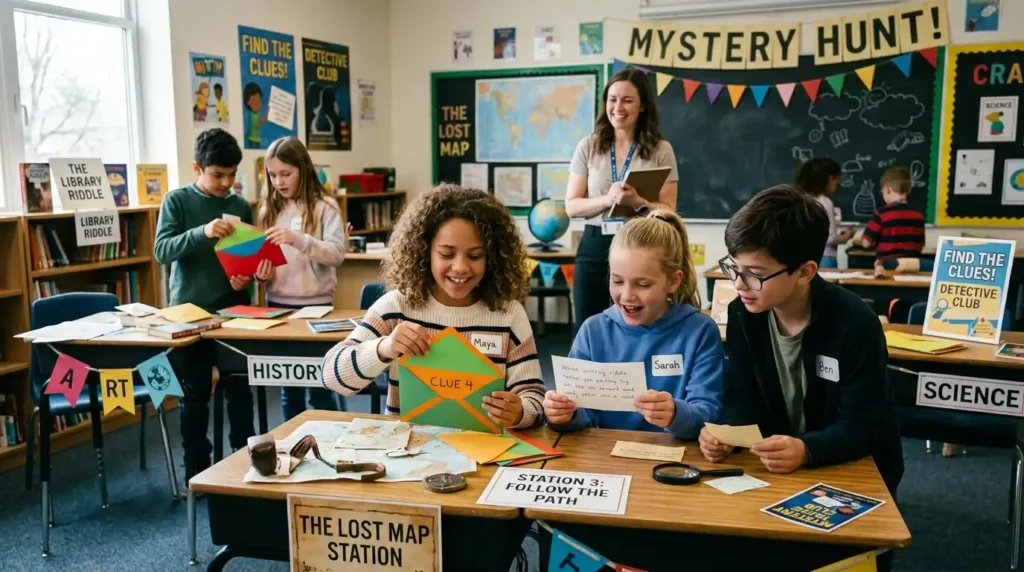
If you are looking for a quick breakdown of top activities, Heads Up, 7 Up focuses on behavior management and observation for the full class with zero preparation needed.
Trashketball works best for test prep and academic review with small teams, requiring just five minutes of setup time.
Silent Ball calms energy and improves coordination for the entire class, taking only a minute to start.
Classroom Jeopardy delivers comprehensive topic mastery for four to six teams and requires about ten minutes of simple prep.
Pro Tips for Seamless Game Management
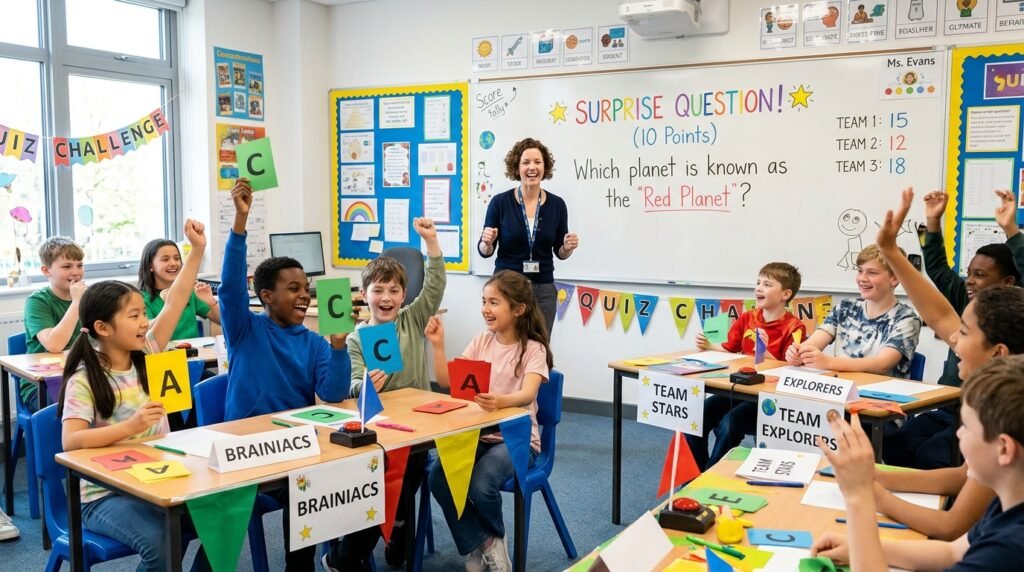
Running activities smoothly requires clear expectations and established boundaries before the fun starts. Setting simple rules keeps the environment positive, safe, and focused on learning goals.
Setting Clear Expectations First
Always explain the rules, scoring, and boundaries clearly before handing out materials or forming teams. Ask a student to demonstrate proper behavior so everyone understands what success looks like.
Establish a clear visual or auditory signal, such as a hand bell or lights toggle, that means instant silence. Knowing how to reset the room quickly prevents activities from getting overly loud or out of control.
Balancing Competition and Inclusion
Ensure every student gets a chance to participate regardless of their skill level or academic speed. Rotate team captains and speaker roles frequently so quieter students gain valuable leadership practice.
- Switch Teams Often: Mix up groupings weekly to prevent cliques and foster broad community connections.
- Focus on Effort: Award bonus points for great sportsmanship, encouragement, and creative problem-solving.
- Keep Rounds Short: Short, snappy rounds prevent losing teams from giving up early.
MCQs
Test your knowledge on implementing classroom activities effectively with these ten questions!
- What is the primary benefit of using movement-based games in the classroom? A. It eliminates the need for lesson plans B. It increases student focus and memory retention C. It keeps students quiet for the entire day D. It replaces all standard homework assignments
- Which game is specifically designed to reduce noise and calm energy levels? A. Trashketball B. Four Corners C. Silent Ball D. Classroom Jeopardy
- What equipment is necessary to play Trashketball? A. Full basketball hoop and leather basketball B. Paper balls, a recycling bin, and review questions C. Digital tablets and high-speed internet D. Whiteboards, markers, and giant foam dice
- In the game Heads Up, 7 Up, how do players know they have been selected? A. The teacher calls out their full name B. Someone gently taps their raised thumb C. A ball is tossed onto their desk. D. They hear a loud chime sound
- How does game-based learning help quieter students? A. It allows them to skip answering questions entirely B. It builds confidence through structured peer collaboration C. It forces them to give individual presentations daily D. It grades them strictly on physical speed
- What should a teacher establish BEFORE starting any new classroom game? A. A final exam date B. Clear behavioral expectations and a stop signal C. A list of physical prizes for every winner D. Individual student seating charts
- Which game encourages active listening through whispered messages? A. Spark B. Four Corners C. The Telephone Game D. Kahoot!
Answer Key
- B
- C
- B
- B
- B
- B
- C
FAQs
What are the best fun classroom games for quiet indoor recess?
Silent Ball, Heads Up 7 Up, and board games are fantastic fun classroom games for indoor recess. They keep students entertained and engaged without creating excessive noise that disrupts neighboring rooms down the hallway.
How do I keep fun classroom games from getting too loud?
Establish a clear sound limit and use a distinct visual or sound signal to pause play instantly. You can also introduce score penalties for noise, turning quiet communication into a winning strategy for teams.
Can fun classroom games be adapted for high school students?
Yes, high school students love competitive review activities like Jeopardy, trivia apps, and Trashketball. Simply increase the academic difficulty of the content while keeping the fast-paced, active game mechanics intact.
How much time should I set aside for a quick classroom brain break?
A quick brain break game should take between three and seven minutes. This short burst of physical or mental activity refreshes student focus without taking valuable time away from your core academic instruction.
What are the best zero-prep fun classroom games for sudden downtime?
Spark, Four Corners, and The Telephone Game are perfect zero-prep fun classroom games for unexpected free moments. You can launch them in seconds using only your voice and existing room layout.
Conclusion
Incorporating fun classroom games into your weekly teaching strategy transforms your room into an exciting, active learning hub. Whether you need to review complex material before a test, calm energy after lunch, or build strong social connections, there is an activity tailored for every situation.
Taking just five minutes to play a quick review or brain break pays massive dividends in student focus and overall classroom morale. Your students will stay eager to learn, participate more freely, and view your room as an inviting space where education comes alive.
Ready to light up your next lesson? Pick one of these simple activities today and watch your students engage with fresh energy and enthusiasm!

Ethan Danial is the creator and lead writer behind FunWhirls.com, a fun-focused platform dedicated to entertaining ideas, fascinating facts, funny moments, creative lists, and content that sparks curiosity. With a genuine love for discovering interesting and unexpected topics, Ethan enjoys turning simple ideas into engaging content that readers can enjoy, learn from, and share. His approach is centered on making every article easy to read, enjoyable, and worth coming back to.
At FunWhirls.com, Ethan Danial explores the lighter and more entertaining side of everyday life. He creates content for readers who love discovering something new, having a quick laugh, or simply taking a break from the ordinary. From curious facts to playful ideas and entertaining discoveries, Ethan aims to keep the content fresh, positive, useful, and engaging for readers of all kinds.