Bible fun facts reveal fascinating details about the world’s most published book, from its longest chapter (Psalm 119) and shortest verse (John 11:35) to obscure historical anecdotes. Learning these quick trivia bits provides engaging insights into ancient history, literature, and culture for readers of all backgrounds.
Have you ever wondered about the surprising secrets hidden within the pages of history’s most famous book?
Exploring bible fun facts is an exciting way to uncover incredible historical details, quirky language quirks, and fascinating cultural trivia.
Whether you are a lifelong scholar or just curious about ancient literature, these bible fun facts will give you a fresh and entertaining perspective.
The Big Picture: Mind-Blowing Numbers and Records
When you look at the Scriptures purely as a literary library, the sheer numbers behind its creation are staggering. These writers came from all walks of life, including kings, scholars, fishermen, herdsmen, and tax collectors.
Despite this incredible diversity in authorship and era, the entire collection maintains a remarkably cohesive narrative. It spans 66 individual books in standard protestant editions, divided into the Old and New Testaments. Let’s look at some of the most famous literary milestones hidden inside.
The Longest and Shortest Chapters
If you open the middle of the text, you will quickly encounter dramatic differences in chapter lengths. The longest chapter in the entire text is Psalm 119. It contains 176 verses and is structured as an acrostic poem based on the Hebrew alphabet.
On the flip side, Psalm 117 holds the record for being the shortest chapter. It consists of just two short verses. Interestingly, Psalm 117 is also located right near the physical center of the modern printed library.
Micro-Verses and Massive Passages
You might already know that the shortest verse in English translation is John 11:35, which simply reads, “Jesus wept.” It packs an enormous emotional punch in just two words. However, in the original Greek language, another verse actually holds the title for the fewest letters.
On the long end of the spectrum, Esther 8:9 holds the record for the longest single verse. In English translations, this massive verse often contains over 80 words as it details an official royal decree sent across the ancient Persian empire.
Ancient Tech: How People Recorded Text
Long before printing presses and digital tablets existed, people had to work hard to record words. They used natural materials and simple tools instead of modern paper and pens. They carefully carved, wrote, or scratched every word by hand.
Learning how people created ancient manuscripts makes these bible fun facts even more interesting. Some ancient documents have survived for thousands of years, making them amazing pieces of human history.
Papyrus, Parchment, and Clay
Early writers used papyrus scrolls made from reeds that grew along the Nile River. Later, they wrote on parchment, which they made from animal skin. They cleaned, dried, and smoothed the skin before writing on it.
- Papyrus sheets: Workers cut reeds into strips, placed them in crossing layers, and pressed them together to make flexible sheets.
- Long scrolls: Writers joined sheets of papyrus or parchment to create long scrolls that sometimes reached 30 feet.
- Clay tablets and stone: People carved short legal records, messages, and royal inscriptions into clay tablets and stone.
The Mystery of the Missing Originals
None of the original handwritten manuscripts, known to scholars as autographs, survive today. Because organic materials like papyrus rot quickly in damp environments, ancient documents decayed through regular handling and age.
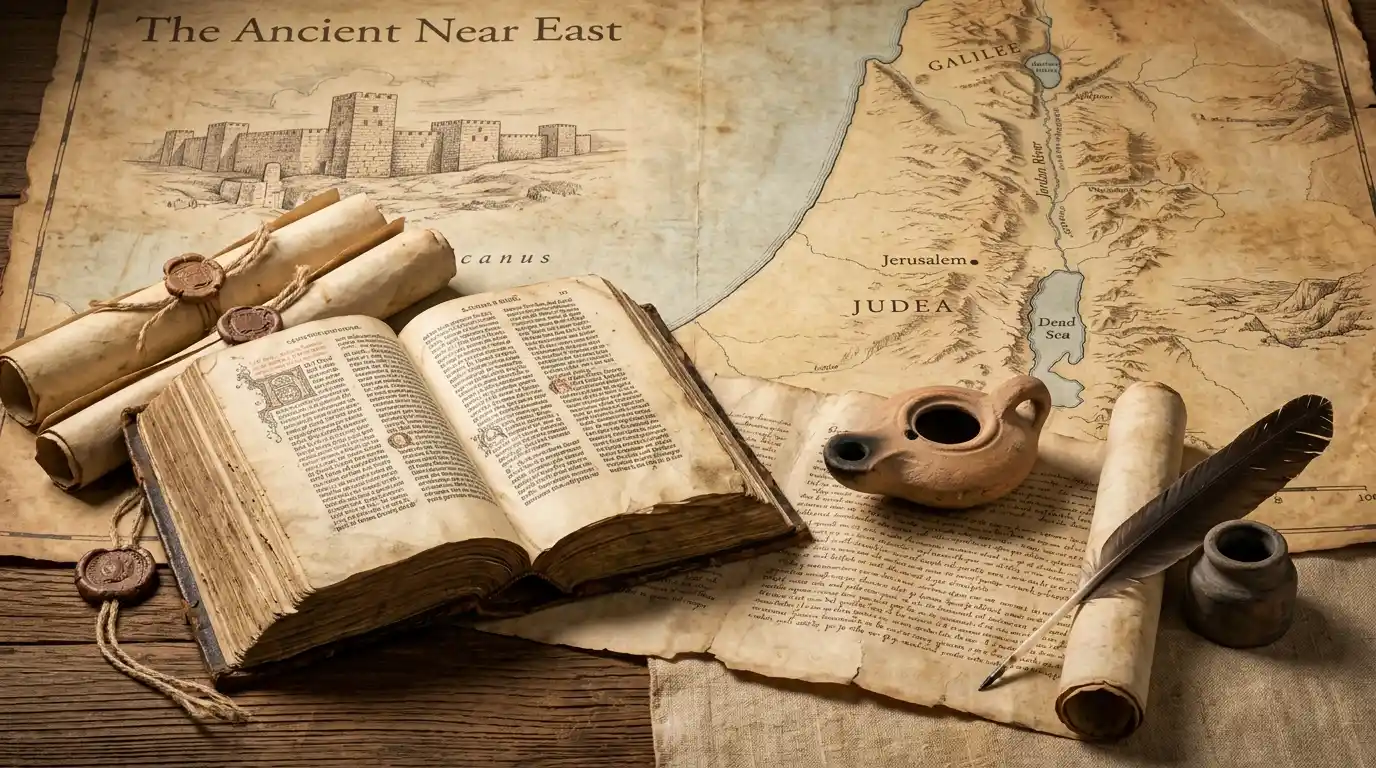
However, thousands of early hand-copied manuscripts survive today in arid climates like Egypt and the Judean desert. The discovery of the Dead Sea Scrolls in 1947 proved that scribes preserved text with remarkable mathematical accuracy over centuries.
Unexpected Animal Stories and Quirky Incidents
Ancient historical accounts are filled with unexpected animal encounters and unusual stories that shock modern readers. Beyond the famous tales of Noah’s Ark or Jonah’s large fish, there are several lesser-known literary moments featuring creatures big and small.
These lighthearted accounts remind us that the ancient world was deeply connected to nature and rural farm life.
Talking Animals and Grumpy Donkeys
Did you know there are only two instances of speaking animals in the entire text? The first is the famous serpent in the Garden of Eden. The second is a surprising story featuring a donkey in the Book of Numbers.
In Numbers chapter 22, a man named Balaam grows angry with his donkey and strikes it. The donkey is miraculously granted speech and asks Balaam why he keeps hitting her. It remains one of the most unexpected comedic and strange moments in ancient literature.
Honey, Bees, and Bears
In the Book of Judges, the strongman Samson solves a riddle involving wild bees nesting inside a lion’s carcass. He later eats honey straight out of the animal, violating ancient clean-living rules in a moment of reckless hunger.
In another unusual account found in 2 Kings, the prophet Elisha is mocked by a group of rude youths. Shortly after he curses them for their disrespect, two wild mother bears emerge from the woods to restore order.
Kings, Queens, and Rulers: Fascinating Figures

The historical narratives introduce dozens of colorful rulers, ranging from brilliant military strategists to eccentric royals. Many of these figures left behind fascinating historical footprints confirmed by modern archaeology.
The Youngest and Oldest Figures
Methuselah holds the legendary title for the oldest reported lifespan in the text, dying at the age of 969 years. While modern historians debate ancient age calculation methods, his name remains synonymous with extreme longevity.
On the leadership side, King Joash became ruler of Judah when he was only seven years old. Raised in secret inside a temple to protect him from royal rivalries, he took the throne as a young child with the help of wise advisers.
Royal Quirks and Unusual Battles
King Og of Bashan was legendary for his massive height and giant iron bedframe. According to Deuteronomy, his bed measured over 13 feet long and 6 feet wide.
Another famous ruler, King Ehud, was left-handed, which allowed him to hide a dagger under his clothes on the opposite side where guards never checked. His unique left-handed trait helped him defeat an oppressive enemy king in an unexpected surprise attack.
The Geography and Food of Ancient Times
The stories of the Bible took place in the Middle East, primarily around modern-day Israel, Jordan, Egypt, Iraq, and Turkey. The climate, landscape, and food supply played massive roles in everyday ancient life.
What Did Ancient People Eat?
The daily diet of ancient biblical figures was vastly different from our modern fast-food culture. People relied heavily on seasonal farming, local fruit trees, and domestic livestock.
- Olives and olive oil were used for cooking, lighting lamps, and skin ointments.
- Figs, dates, and pomegranates provided natural sweetness in a world without refined sugar.
- Barley bread was the main everyday staple food for working families and farm hands.
- Locusts and wild honey were eaten by John the Baptist as a wild desert diet.
Water and Desert Survival
Fresh water was the most valuable resource in the ancient Near East. Villages were built almost exclusively around natural springs, rivers, or deep hand-dug wells.
Contests over water wells were common motives for conflict between nomadic crews. Towns built complex underground water tunnels cut through solid bedrock to survive long enemy sieges.
Key Statistical Overview
To help put these unique facts into perspective, here is a breakdown of key literary metrics found within the text.
Hidden Names and Missing Words
Sometimes what is missing from a famous book is just as interesting as what is written on the page. There are several surprising structural quirks regarding names and titles within the collection.
Books That Never Mention God
It might shock you to learn that there are two entire books in the Old Testament that never explicitly mention the word “God.” These two books are the Book of Esther and the Song of Solomon.
Even though God is not named directly in Esther, the story is packed with subtle dramatic twists that suggest divine intervention behind the scenes. Song of Solomon, meanwhile, focuses heavily on romantic poetry and love between two young people.
Name Changes and Meaningful Titles
In ancient times, a person’s name carried deep personal meaning and often reflected their character or destiny. When someone experienced a major life shift, their name was frequently updated to reflect that change.
- Abram was changed to Abraham, meaning “father of a multitude.”
- Sarai was renamed Sarah, which translates directly to “princess.”
- Jacob was renamed Israel after wrestling through an entire night with a heavenly messenger.
- Saul of Tarsus became widely known as Paul during his missionary travels across the Mediterranean world.
Everyday Inventions and Ancient Everyday Life
Many everyday modern items and societal practices have roots in biblical antiquity. From ancient sanitation rules to basic real estate deals, the text records early human social developments.
Ancient Health and Quarantine Rules
Long before modern germ theory was understood, the Book of Leviticus outlined strict sanitation rules for ancient communities. These included handwashing in running water, isolating sick individuals, and washing clothes exposed to mold.
These early public health practices helped protect wandering desert communities from devastating infectious disease outbreaks thousands of years ago.
Early Property Contracts and Shoes
How did people close a business deal before paper contracts existed? In the Book of Ruth, property sales and marriage arrangements were finalized using a shoe!
To confirm an agreement, one merchant would take off his sandal and hand it to the other party. This public act served as an official legal signature in front of the city elders.
Surprising Translations and Language Quirks

The original text was not written in English. It was originally penned in ancient Hebrew, Aramaic, and Koine Greek. Translating these ancient tongues into modern English sometimes creates funny misunderstandings or wordplay.
The Apple in the Garden?
Most people picture an apple when thinking about the forbidden fruit in the Garden of Eden. However, the text never actually mentions an apple!
It simply refers to “the fruit of the tree.” The popular idea of an apple likely came from Latin translations where the word for apple (malum) was similar to the word for evil (malum). Artist depictions during the Renaissance popularized this visual connection worldwide.
Camel Through a Needle’s Eye
A famous saying describes a camel fitting through the eye of a needle to illustrate a tough situation. Some historians believe “the needle’s eye” referred to a tiny pedestrian gate in ancient Jerusalem’s city walls.
To pass through this small side door after hours, a heavy camel had to be completely unloaded and crawl through on its knees!
Practice Exercises
Test your knowledge with these fun trivia questions based on the article!
1. How many books are in the Protestant Bible?
A. 39
B. 66
C. 73
D. 27
2. What is the first book of the Bible?
A. Exodus
B. Psalms
C. Genesis
D. Matthew
3. Who built an ark according to the Bible?
A. Noah
B. Moses
C. David
D. Solomon
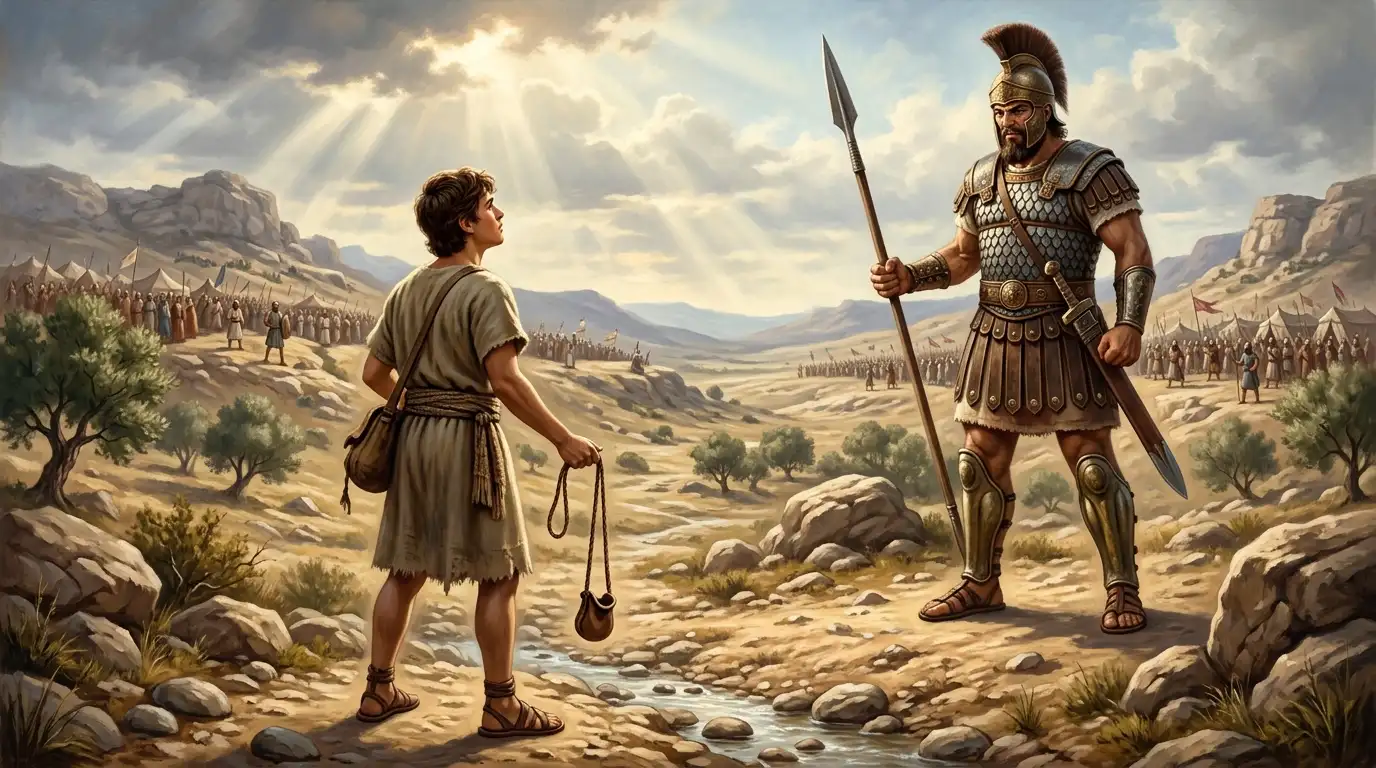
4. Which Bible book tells the story of David and Goliath?
A. Genesis
B. Revelation
C. Ruth
D. 1 Samuel
5. Who was swallowed by a great fish according to the Bible?
A. Elijah
B. Jonah
C. Peter
D. Paul
6. What is the last book of the New Testament?
A. Acts
B. Romans
C. Revelation
D. Hebrews
7. Who led the Israelites out of Egypt in the biblical account?
A. Moses
B. Abraham
C. Isaac
D. John
8. In which town was Jesus born, according to the Gospels?
A. Nazareth
B. Jerusalem
C. Jericho
D. Bethlehem
9. Which Bible book is especially known for its collection of songs and prayers?
A. Leviticus
B. Psalms
C. Joshua
D. Esther
10. Who was famous in the Bible for his great strength?
A. Samuel
B. Daniel
C. Samson
D. Timothy
Answer Key
- B
- C
- A
- D
- B
- C
- A
- D
- B
- C
FAQs
What are some of the most surprising bible fun facts?
Some of the most surprising facts include the existence of a talking donkey, two entire books that do not mention the word God, and the fact that no specific fruit like an apple is named in Eden. These obscure details highlight the richness of ancient historical writing.
What is the shortest verse in the Bible?
The shortest verse in English translations is John 11:35, which reads “Jesus wept.” It describes a moment of grief before the raising of Lazarus. In original Koine Greek manuscripts, 1 Thessalonians 5:16 is actually shorter by character count.
Which books do not mention God directly?
The Book of Esther and the Song of Solomon are the two books that do not explicitly mention God. Esther focuses on court drama and divine providence, while Song of Solomon celebrates marital love, romantic poetry, and natural human connection.
How many authors wrote the original biblical texts?
Over 40 different individual authors contributed to the text over a period of roughly 1,500 years. These writers included kings, scholars, fishermen, shepherds, and doctors writing across three continents in distinct cultural eras.
Was the forbidden fruit actually an apple?
The original text never identifies the forbidden fruit as an apple, calling it simply “fruit.” The popular apple image grew from Latin wordplays and Renaissance artistic interpretations over centuries of European art history.
What is the longest chapter in the text?
Psalm 119 is the longest chapter, boasting 176 individual verses. It is designed as an acrostic poem where consecutive sections begin with successive letters of the Hebrew alphabet.
Conclusion
Uncovering these bible fun facts gives us a fascinating glimpse into ancient history, language, and culture. From talking animals and giant iron beds to hidden wordplay, these surprising details show just how dynamic ancient literature truly is.
Whether you are looking to win your next local trivia night or simply want to appreciate history from a new perspective, exploring bible fun facts is always an enjoyable journey. Keep reading, stay curious, and share these remarkable historical facts with your friends today!

Ethan Danial is the creator and lead writer behind FunWhirls.com, a fun-focused platform dedicated to entertaining ideas, fascinating facts, funny moments, creative lists, and content that sparks curiosity. With a genuine love for discovering interesting and unexpected topics, Ethan enjoys turning simple ideas into engaging content that readers can enjoy, learn from, and share. His approach is centered on making every article easy to read, enjoyable, and worth coming back to.
At FunWhirls.com, Ethan Danial explores the lighter and more entertaining side of everyday life. He creates content for readers who love discovering something new, having a quick laugh, or simply taking a break from the ordinary. From curious facts to playful ideas and entertaining discoveries, Ethan aims to keep the content fresh, positive, useful, and engaging for readers of all kinds.