Boston is one of America’s oldest and most fascinating cities, packed with incredible history, quirky legends, and world firsts. From inventing America’s first subway and public park to hosting a bizarre historical molasses flood, these fascinating Boston fun facts highlight why Title Town is truly one-of-a-kind.
Have you ever wondered why Boston is called Beantown, or how a single city managed to host so many incredible historic firsts? Whether you are planning a weekend getaway or getting ready to dominate your next local trivia night, uncovering unique Boston fun facts reveals just how wildly entertaining this historic coastal hub really is.
Boston blends deep American colonial history with a surprisingly quirky personality. Beyond the famous cobblestone streets and world-class universities lies a city full of bizarre historical occurrences, strange local laws, and eccentric traditions that most casual tourists completely miss.
Let’s explore the hidden stories, record-breaking achievements, and unbelievable trivia that make Boston one of the most vibrant cities in the United States.
Revolutionary Firsts: How Boston Shaped American History

Boston has always been ahead of its time. Long before the United States officially became an independent nation, local leaders and visionaries in Massachusetts were already busy building institutions and systems that would set the standard for the rest of the country.
America’s First Public Park and Public School
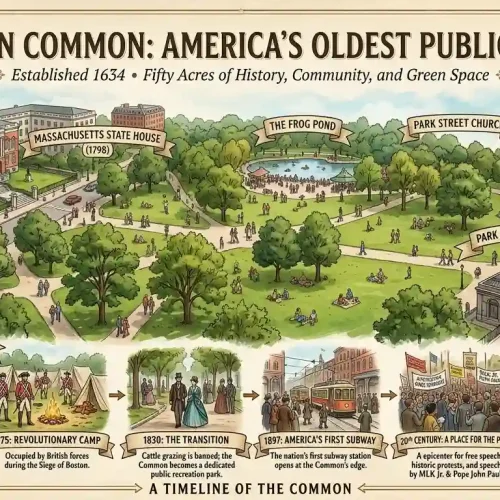
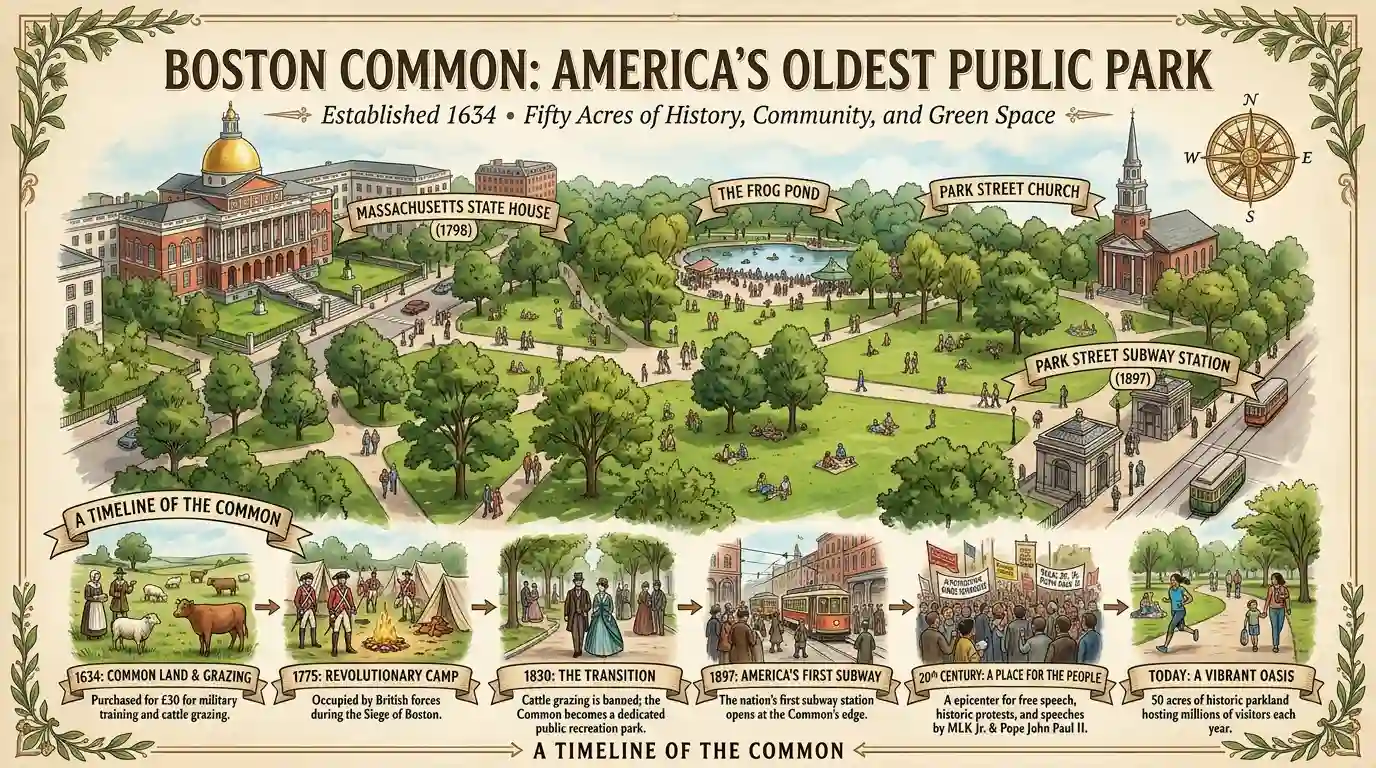
Did you know that Boston Common, established back in 1634, is officially the oldest public park in the United States? In its early days, the park wasn’t used for picnics or jogging. Residents actually used the green space to graze their cattle, and colonial troops even used it as a parade ground.
Just one year later, in 1635, the city established Boston Latin School. It holds the proud title of being the oldest public school in the nation. Famous historical figures like Benjamin Franklin, Samuel Adams, and John Hancock were all students here, although Franklin famously dropped out before graduating.
The Country’s Very First Subway System
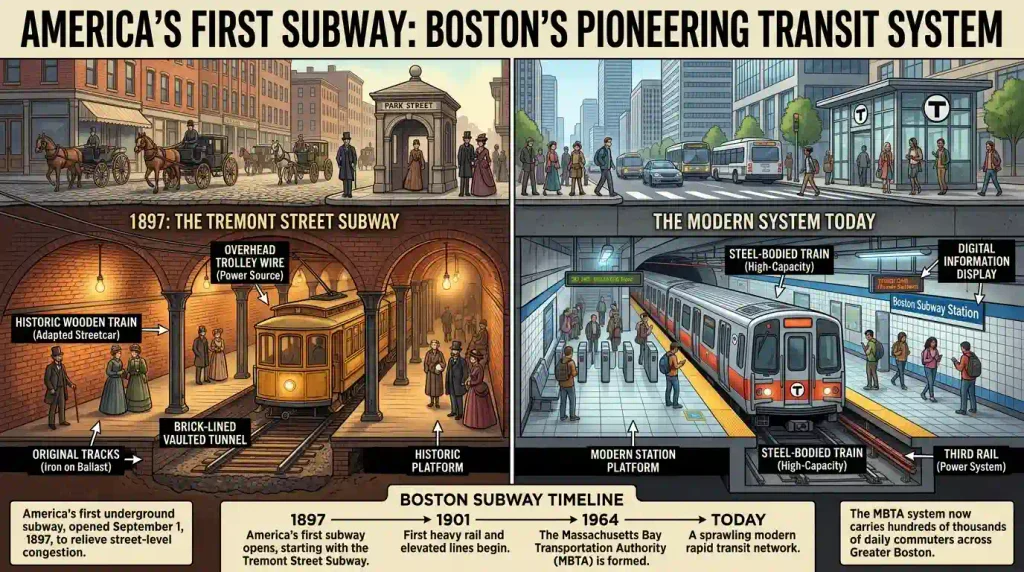
Traffic congestion in the late 19th century was just as frustrating as it is today. To solve the crowded streetcar chaos along Tremont Street, Boston opened the nation’s first subway system in 1897.
When the subway first opened, thousands of excited residents rushed down to catch a ride on the electric cars. The original route covered a small distance, but it paved the way for modern underground transit across North America.
The First Public Library with Free Borrowing
Boston Public Library, opened in 1848, was the first large free municipal library in the United States. It was also the first public library to allow regular citizens to borrow books and take them home without paying a fee.
Today, the McKim Building in Copley Square features incredible Italian Renaissance architecture, grand marble staircases, and millions of rare manuscripts, making it a masterpiece of design and accessibility.
The Mystery of “Beantown” and Bizarre Historical Events
Most people know Boston by its famous nickname, “Beantown,” but few realize where the phrase actually comes from. Additionally, the city’s past contains bizarre historical events that sound almost too strange to be true.
Why Is Boston Called Beantown?
The nickname traces back to colonial times when sailors and merchant ships traded rum, molasses, and beans. Native Americans originally taught early settlers how to cook baked beans using bear fat and maple syrup.
Colonial Bostonians modified the recipe by slowly baking navy beans in rich molasses for hours on end. Because the dish was so popular among residents and visiting sailors, the city quickly gained a reputation as the bean-baking capital of New England.
The Great Molasses Flood of 1919
One of the stranger Boston fun facts involves a literal tidal wave of sweet syrup. On a warm January afternoon in 1919, a massive industrial storage tank burst open in Boston’s North End neighborhood.
A massive wave containing over two million gallons of sticky molasses rushed through the streets at nearly 35 miles per hour. The unusual disaster destroyed buildings, trapped horses, and sadly claimed 21 lives. For decades afterward, residents claimed the neighborhood still smelled like sweet molasses on hot summer days.
The Revere Beach Coasting Tradition
Located just north of the city limits, Revere Beach opened in 1896 as America’s very first public beach. It quickly became an entertainment playground for city dwellers looking to escape summer heatwaves.
Thousands of families would board steam trains every weekend to enjoy the wooden roller coasters, oceanside arcades, and freshly fried seafood stands along the historic boardwalk.
Architectural Marvels and Geographic Quirks
Boston looks and feels noticeably different from other major American cities. Its layout, land area, and unique architectural features tell a story of constant expansion and clever engineering.
A City Built on Artificial Land
If you walk through Boston’s famous Back Bay neighborhood today, you are walking on land that did not exist 200 years ago. Originally, Boston was a narrow peninsula connected to the mainland by a tiny strip of marshy land.
During the 19th century, city engineers started a massive landfill project. They dumped millions of tons of gravel hauled by train from nearby hills directly into the shallow, swampy bay, creating hundreds of acres of prime real estate.
The Quirky Citgo Sign and Fenway Park
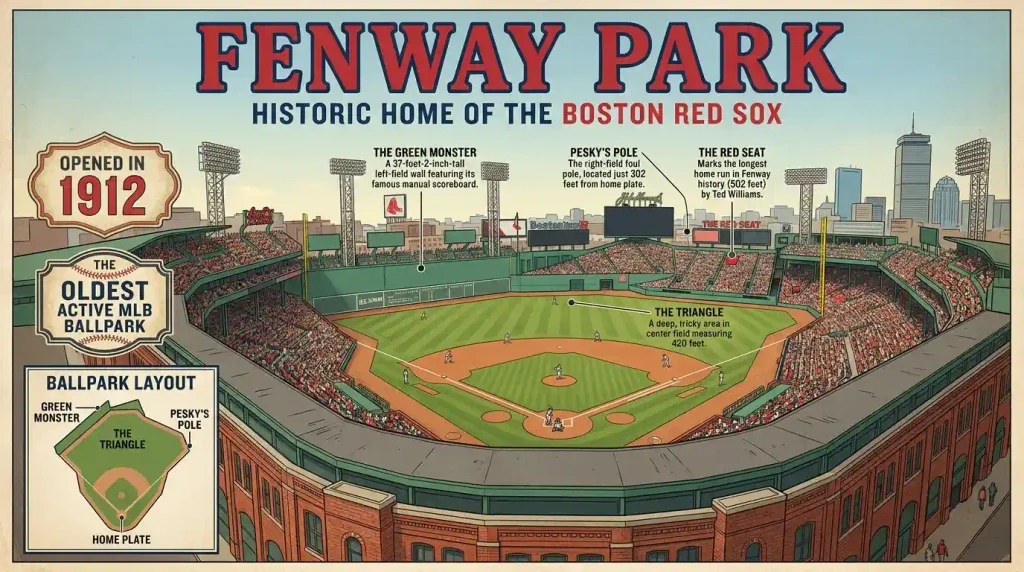
The famous red-and-white Citgo sign sitting above Kenmore Square has been a beacon for baseball fans and marathon runners since 1965. Despite being a commercial advertisement, it is considered an official Boston landmark.
Right down the street sits Fenway Park, opened in 1912, making it the oldest active Major League Baseball stadium in America. The stadium’s famous 37-foot-high left-field wall, nicknamed the “Green Monster,” was originally built to prevent neighborhood residents from watching games for free from nearby rooftops.
The Narrowest House in the City
Tucked away in the historic North End sits the famous “Skinny House.” Legend says the ultra-narrow house was built out of spite after two brothers inherited a plot of land. While one brother was away serving in the military, the other built a large home on most of the property.
When the soldier returned home, he built the four-story, 10-foot-wide house on the remaining sliver of land just to block his selfish brother’s view and sunlight.
Fast Facts Summary Table
Famous Inventions That Changed the World
Boston has always been a hotbed for brilliant minds, scientific breakthroughs, and creative inventions. You might be surprised to learn just how many everyday items and services originated right here.
The Telephone Was Born Here
In March 1876, inventor Alexander Graham Bell made the world’s very first successful telephone call inside his laboratory located in downtown Boston.
He famously spoke the words, “Mr. Watson, come here, I want to see you,” to his assistant sitting in the neighboring room. That brief conversation changed global communication forever.
Modern Anesthesia in the Ether Dome
In 1846, dentist William Morton performed the first successful public demonstration of ether anesthesia during a surgical operation at Massachusetts General Hospital.
Before this breakthrough, surgery was painful and terrifying. The historic amphitheater where the operation took place is still preserved today and is known around the world as the “Ether Dome.”
Tupperware, Chocolate Chip Cookies, and Candles
Massachusetts is home to several delightful domestic inventions. Ruth Wakefield invented the chocolate chip cookie in 1938 at the Toll House Inn, just south of Boston.
Additionally, Earl Tupper created the flexible plastic storage containers known as Tupperware in the Boston area during the 1940s, forever transforming how families save leftovers.
Quirky Laws, Traditions, and Local Culture
Every historic city accumulates a few weird rules and customs over the centuries. Boston is certainly no exception when it comes to quirky traditions and local habits.
Banning Christmas in Colonial Times
Back in the 17th century, the Puritans who governed Boston were extremely strict. In fact, between 1659 and 1681, celebrating Christmas was completely illegal in the city.
Anyone caught showing holiday cheer, hanging decorations, or taking the day off from work was fined five shillings. The Puritans believed the holiday was overly rowdy and lacked proper religious foundation.
Happy Hours Are Officially Illegal
If you are looking for discounted after-work drink specials, you won’t find them here. Massachusetts banned bar “happy hours” back in 1984 in an effort to reduce drunk driving.
While restaurants can offer daily food specials, lowering alcohol prices for specific hours of the day remains strictly against state law to this day.
The Famous Boston Accent
The distinct local accent is known for dropping the “R” sound at the end of words, turning “car” into “cah” and “park” into “pahk.”
This speech pattern actually originated from early English settlers who brought non-rhotic accents over from southern England, preserving a unique linguistic style over centuries.
Practice Exercises
Test your knowledge of these incredible Boston fun facts with this quick interactive quiz!
1. What was Boston Common originally used for?
A. Baseball games
B. Grazing cattle
C. Public markets
D. Shipbuilding
2. Which famous person attended Boston Latin School but left before graduating?
A. Benjamin Franklin
B. John Adams
C. Alexander Hamilton
D. Paul Revere
3. When did Boston open America’s first subway?
A. 1776
B. 1850
C. 1897
D. 1920
4. What flooded Boston’s North End in 1919?
A. Maple syrup
B. Molasses
C. Chocolate syrup
D. Corn syrup
5. Why was Boston’s Skinny House built?
A.Set a world record
B. Block a brother’s light
C. To save money
D. To fit in a narrow alley
6. Where did Alexander Graham Bell make his first successful telephone call?
A. New York City
B. Philadelphia
C. Boston
D. London
7. What medical breakthrough was demonstrated at Mass General in 1846?
A. Penicillin
B. X-rays
C. Ether anesthesia
D. Polio vaccine
8. Which holiday was banned in Boston from 1659 to 1681?
A. Thanksgiving
B. Halloween
C. Christmas
D. New Year’s Day
9. Why were happy hour drink discounts banned in Massachusetts in 1984?
A.Encourage coffee drinking
B. Reduce drunk driving
C. To help local breweries
D. To reduce noise
10. What is Fenway Park’s famous left-field wall called?
A. The Big Red Monster
B. The Green Monster
C. The Brick Wall
D. The Fenway Fence
Answer Key
- B
- A
- C
- B
- B
- C
- C
- C
- B
- B
FAQs
What is the most famous Boston fun fact?
The Great Molasses Flood of 1919 is easily one of the most famous and bizarre facts. A massive storage tank burst, sending a 25-foot wave of sticky molasses through the streets of the North End at 35 miles per hour.
Why is Boston called Beantown?
Boston earned the nickname “Beantown” because colonial residents routinely baked navy beans in sweet molasses for hours. This tasty dish became extremely popular among traveling sailors and merchants trading in Boston Harbor during the 18th century.
What was invented in Boston?
Boston is the birthplace of many world-changing inventions, including the telephone, ether anesthesia, the safety razor, and the chocolate chip cookie. It also launched America’s first public park, public school, and subway system.
Is Christmas really banned in Boston?
Christmas was officially banned by Puritan leaders between 1659 and 1681. Anyone caught celebrating, skipping work, or feasting on Christmas Day was forced to pay a five-shilling fine because Puritans viewed the holiday as disrespectful and unbiblical.
What is the oldest building in Boston?
The Paul Revere House, constructed around 1680, is the oldest remaining residential structure in downtown Boston. Located in the historic North End, it served as the home for famous American patriot Paul Revere during the Revolutionary War.
Why does Boston have a unique layout?
Boston’s confusing street layout exists because the city evolved organically from old 17th-century cow paths, coastal trails, and original shorelines. Furthermore, massive landfill projects in the 19th century completely altered the city’s natural geography.
Conclusion
Exploring these fascinating Boston fun facts reveals a city that is rich in history, quirky humor, and incredible human ingenuity. From historic revolutionary landmarks to bizarre molasses floods and game-changing medical discoveries, Boston’s unique charm continues to captivate millions of visitors every single year.
Whether you plan on walking the historic Freedom Trail, catching an afternoon game at Fenway Park, or grabbing a bowl of clam chowder, knowing these hidden stories makes exploring the city so much more rewarding.
Got a favorite Boston trivia fact we missed? Share this guide with your friends or start planning your next New England trip to experience these historic sights in person!
Would you like to explore specific Boston travel itineraries, or should we draft a social media promotional package for this article?
Ethan Danial is the creator and lead writer behind FunWhirls.com, a fun-focused platform dedicated to entertaining ideas, fascinating facts, funny moments, creative lists, and content that sparks curiosity. With a genuine love for discovering interesting and unexpected topics, Ethan enjoys turning simple ideas into engaging content that readers can enjoy, learn from, and share. His approach is centered on making every article easy to read, enjoyable, and worth coming back to.
At FunWhirls.com, Ethan Danial explores the lighter and more entertaining side of everyday life. He creates content for readers who love discovering something new, having a quick laugh, or simply taking a break from the ordinary. From curious facts to playful ideas and entertaining discoveries, Ethan aims to keep the content fresh, positive, useful, and engaging for readers of all kinds.