
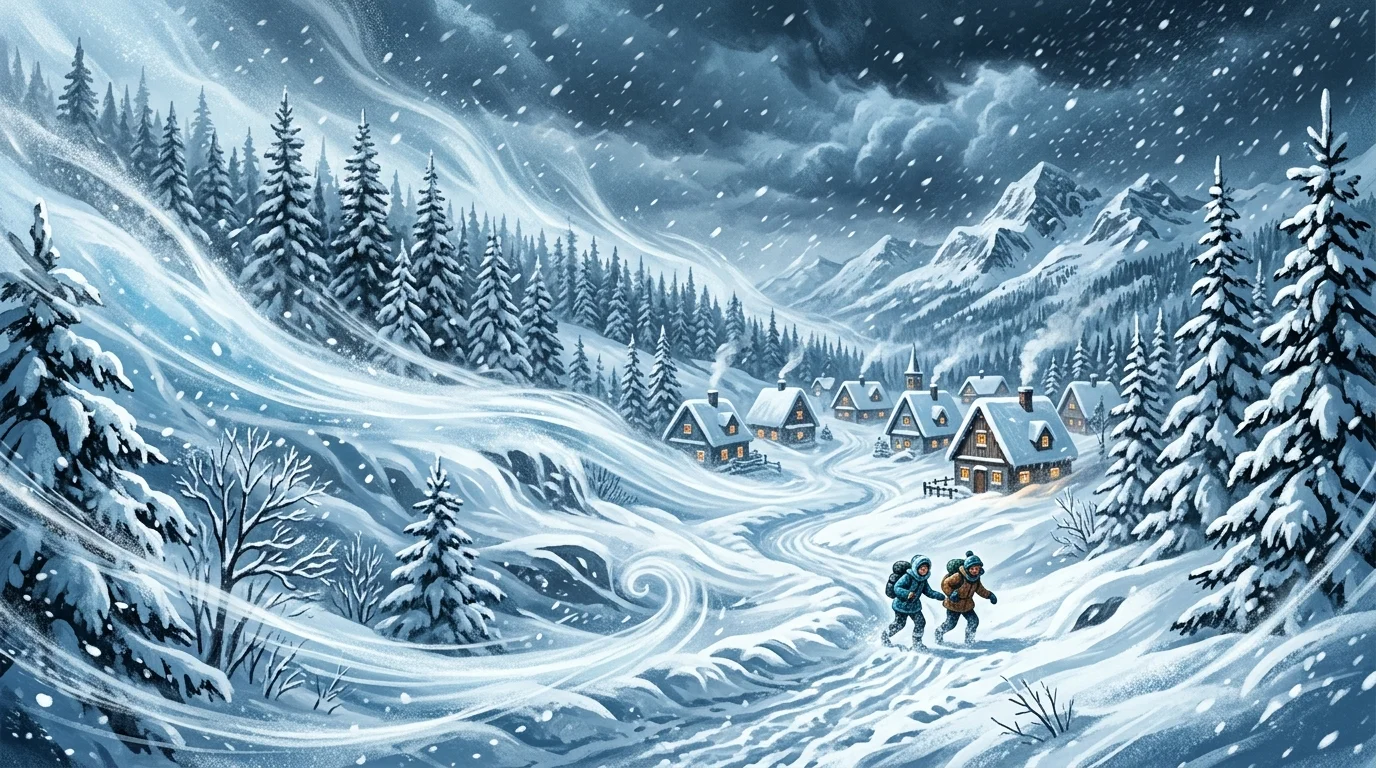
A blizzard is a severe snowstorm characterized by sustained winds of at least 35 miles per hour and blowing snow that reduces visibility to less than a quarter-mile for at least three hours. These powerful winter storms can drop heavy snow, create extreme wind chills, and halt entire regions.
Imagine looking out your window and seeing nothing but a blinding wall of white rushing past. Blizzards are among the most dramatic weather events on Earth, capable of turning busy cities into completely quiet, frozen landscapes in just a few short hours. Exploring these incredible blizzard fun facts reveals how much raw power and strange science lies behind every massive winter storm.
Whether you love cozying up indoors during a snowy afternoon or you are just fascinated by extreme nature, there is so much more to winter weather than just falling flakes. From historic storms that changed entire transportation systems to weird atmospheric tricks that create thunderous snow, learning these blizzard fun facts will completely change how you look at winter weather.
Let us explore the wild, cold, and surprising world of severe winter storms together. You will discover incredible facts about how these giant weather systems shape our planet and leave behind incredible stories.
What Exactly Makes a Winter Storm a True Blizzard?

Not every big snowstorm gets to call itself a blizzard. Meteorologists have very strict rules for when a regular snowfall officially turns into one of these intense meteorological events.
The Official Rule Book for Blizzards
To qualify as an official blizzard, a storm must meet three specific criteria at the same time for at least three full hours. If even one of these conditions is missing, meteorologists simply call it a heavy snowstorm.
- Sustained winds or frequent gusts of 35 miles per hour or greater.
- Falling or blowing snow that reduces visibility to less than a quarter-mile.
- Conditions that persist continuously for at least three hours.
Interestingly, temperature actually has nothing to do with the official definition. While blizzards are usually freezing, the definition focuses entirely on wind speed, reduced visibility, and duration.
Ground Blizzards: Snow Without Falling Snow
Did you know it can be a severe blizzard even when no new snow is falling from the sky? These rare winter storms are known as ground blizzards, and they happen when strong winds pick up loose snow that is already lying on the ground.
When powerful gusty winds sweep across flat terrain, they lift top layers of dry, powdery snow. This creates a blinding cloud near the ground that makes driving nearly impossible, even while the sky above remains completely clear and bright blue.
Why Whiteout Conditions Are So Dangerous
During a severe blizzard, you might experience a phenomenon known as a whiteout. This happens when the light coming through the clouds reflects off the snow in every single direction at once.
When a whiteout occurs, shadows completely disappear, the horizon vanishes, and you can no longer tell where the ground ends and the sky begins. It creates a strange optical illusion that makes people lose their balance and orientation almost instantly.
Mind-Blowing Atmospheric Science Behind Big Storms
The way these massive atmospheric engines build up energy is nothing short of incredible. Simple cold air meets warm moisture, setting off a domino effect that transforms entire continents into frozen landscapes.
The Strange Magic of Thundersnow
Hearing a loud clap of thunder during a summer rainstorm is totally normal, but hearing thunder during a heavy snowstorm feels almost magical. This rare phenomenon is known as thundersnow, and it only happens during the most powerful winter storms.
For thundersnow to occur, you need very specific conditions where warm air rises rapidly within a strong cold air mass. The snow dampens the sound, so you usually can only hear the deep rumble of thunder if you are within two miles of the lightning strike.
Lake-Effect Snow: Nature’s Snow Cannon
Regions located downwind of large bodies of unfrozen water often experience extreme local blizzards thanks to lake-effect snow. When freezing air travels over relatively warm lake water, it absorbs huge amounts of moisture and heat.
As this moist air moves over the cold land on the other side, it cools rapidly and dumps massive amounts of heavy snow in narrow bands. Cities near the Great Lakes can go from sunny skies to several feet of snow in just a few hours because of this effect.
Nor’easters: The Coastal Giants
Along the East Coast of North America, some of the most famous winter storms are called Nor’easters. These mega-storms get their name because their winds blow inland directly from the northeast.
Nor’easters draw immense power from the collision between freezing air coming down from Canada and warm, moist air rising from the Atlantic Ocean’s Gulf Stream. They can stretch for hundreds of miles, dumping record snow while causing severe coastal flooding.
Historic Storms That Changed History Forever

Throughout history, extraordinary winter storms have reshaped cities, altered historical events, and forced humans to invent clever new tools to stay safe and connected.
The Great Blizzard of 1888
In March 1888, a legendary storm paralyzed the northeastern United States, catching millions of people completely off guard after a period of unseasonably warm weather. Snow drifts reached up to 50 feet high, burying entire two-story houses.
This historic event was so disruptive that it convinced New York City planners to move their public transportation systems underground. The storm directly led to the construction of the famous New York City subway system to avoid future winter traffic jams.
The Schoolhouse Blizzard of 1888
Just two months before the East Coast storm, another notorious event known as the Schoolhouse Blizzard struck the American Great Plains in January 1888. The morning started out surprisingly warm, leading many children to walk to school without heavy winter coats.
Without warning, a sudden Arctic front rushed in, dropping temperatures by nearly 40 degrees in just a few hours while bringing blinding snow. Brave teachers worked tirelessly to keep their young students warm inside wood-frame schoolhouses until the storm passed.
The Armistice Day Storm of 1940
In November 1940, a severe winter storm swept across the American Midwest with incredible speed. Mild morning temperatures quickly plummeted into single digits, taking duck hunters, farmers, and travelers completely by surprise.
This tragic storm served as a major turning point for modern meteorology. It prompted weather services to establish round-the-clock forecasting stations to ensure communities would receive earlier warnings for sudden severe weather.
Comparing Famous Historic Blizzards
Comparing famous historic blizzards reveals how extreme winter weather has shaped human infrastructure, emergency response, and weather forecasting over time. From the Great Blizzard of 1888, which paralyzed the northeastern United States with multi-foot drifts and led to the creation of subway systems, to the 1993 “Storm of the Century” that impacted entire continents with hurricane-force winds, each major event showcases the terrifying force of winter storms. By examining differences in snowfall accumulation, record-low temperatures, casualty rates, and regional impacts across these landmark storms, meteorologists and historians gain critical insights into community resilience and changing climate patterns.
The Great Blizzard of 1888
Dropping up to 50 inches of snow across New York, New Jersey, Massachusetts, and Connecticut, the Great Blizzard of 1888 remains one of the most devastating winter storms in American history. Massive 50-foot snowdrifts immobilized cities, trapped residents in their homes, and brought telegraph and rail transport to a complete standstill. The catastrophic disruption forced major cities to bury their electrical grids and plan underground transit networks to avoid future paralysis.
The 1972 Iran Blizzard
Recognized as the deadliest blizzard in recorded history, the 1972 Iran Blizzard struck over a week-long period, dumping up to 26 feet of snow in rural regions. Entire villages were completely buried, severing communication, transportation, and emergency rescue lines across the country. The extreme temperatures and massive snowpack tragically claimed over 4,000 lives, underscoring the lethal vulnerability of isolated rural infrastructure to sudden climate anomalies.
The 1993 Storm of the Century
Stretching from Canada all the way to Central America, the 1993 “Superstorm” demonstrated the immense atmospheric scale a modern blizzard can reach. The system generated hurricane-force wind gusts, record-low barometric pressures, severe coastal flooding, and widespread snowfall across 26 U.S. states. Beyond causing billions of dollars in damage, this mega-storm served as a major turning point for modern satellite meteorology, showcasing the vital importance of early computer model predictions in saving lives.
How Wildlife and Nature Survive Massive Snowstorms

Humans rely on cozy blankets, wood stoves, and modern heating systems to stay comfortable during extreme weather. Animals, on the other hand, have developed remarkable survival strategies to weather the storm out in the wild.
Hunker Down and Save Energy
When a major storm approaches, many wild animals can feel the drop in atmospheric pressure long before the first snowflake hits the ground. Deer, foxes, and wild birds quickly seek shelter in dense evergreen forests or thick brush.
By staying completely still and lowering their heart rates, these animals preserve precious body heat and energy. Their natural fur or feathers trap a layer of warm air right next to their skin, acting like built-in insulated parkas.
Burrowing Under the Snowpack
Small mammals like mice, voles, and shrews actually use deep snow as a cozy blanket to stay warm. The layer of ground right beneath a deep layer of snow stays at a surprisingly steady temperature near freezing, regardless of how cold the air above gets.
Animals live in this hidden underground world, traveling through small tunnels to stay completely protected from howling winds and extreme wind chill temperatures.
How Trees Handle Heavy Snow Loads
Trees in cold climates have evolved clever structural features to survive heavy snowfall without snapping. Evergreen trees like pines and spruces have flexible, sloping branches that allow accumulating snow to slide off before getting too heavy.
Deciduous trees drop their leaves every autumn, which prevents snow from building up on their branches. Without leaves to catch blowing snow, high winds can pass through bare branches with much less force.
Surprising and Fun Facts About Cold Weather Mechanics
Winter weather is packed with fascinating atmospheric physics that seem to defy common sense. Here are some of the coolest fun facts about how ice and snow behave during giant storms.
No Two Snowflakes Are Exactly Alike
Every single snowflake that falls during a big storm is unique as it travels through the atmosphere. As a tiny ice crystal falls through the clouds, it encounters constantly changing temperatures, humidity levels, and wind speeds.
These tiny environmental changes alter how the crystal branches outward as it grows. Because no two ice crystals follow the same path through a cloud, every snowflake arrives on the ground with its own one-of-a-kind pattern.
Snow Is Actually an Incredible Acoustic Insulator
Have you ever noticed how peaceful and quiet the outdoors feel right after a fresh snowfall? Freshly fallen snow acts as a natural sound dampener because it contains tiny air pockets trapped between delicate ice crystals.
These tiny trapped air spaces absorb sound waves instead of reflecting them into the surrounding air. A layer of soft snow just a few inches deep can absorb a huge percentage of ambient noise, making whole towns feel magically quiet.
The Pemba Effect: Can Hot Water Freeze Faster?
A famous cold-weather trick involves throwing boiling water into subzero air during a winter storm to watch it instantly turn into a cloud of snow. Under certain conditions, warm or hot water can actually freeze faster than ice-cold water.
This unusual phenomenon is known as the Mpemba effect. Hot water evaporates rapidly as it enters cold air, creating tiny water droplets that freeze almost instantly in mid-air.
How Modern Cities Fight Back Against Big Snowstorms

Clearing snow from major cities during a severe storm requires precise logistics, massive machinery, and impressive teamwork. Urban areas use high-tech equipment to keep essential roads open and safe.
High-Tech Snowplows and GPS Systems
Modern snowplow fleets use real-time GPS tracking and specialized weather sensors built directly into city road surfaces. Dispatchers monitor road temperatures to decide exactly when and where to send out plow crews before roads freeze over completely.
Some giant airport plows feature massive blades that clear wide paths in a single pass, keeping runways open even during intense snowfall events.
Salt, Brine, and Clever Eco-Friendly Alternatives
To keep ice from bonding to pavement, road crews pre-treat major streets with liquid brine solution before snow starts falling. The salt lowers the freezing point of water, keeping roads clearer for much longer.
Because traditional rock salt can harm surrounding plants and rivers, many cities now mix salt brine with organic materials like beet juice or molasses. These sticky, sugary liquids help road salt adhere to asphalt while reducing overall environmental impact.
Moving Millions of Tons of Snow
When snow piles up too high along city streets, plows no longer have room to push it to the curb. Cities must haul millions of tons of excess snow out of downtown areas using heavy dump trucks.
Special snow melters capable of melting hundreds of tons of snow per hour process the excess slush, turning it into water that safely flows into city storm drains.
MCQs
- What is the minimum sustained wind speed required for a winter storm to be classified as an official blizzard?
A. 20 miles per hour
B. 25 miles per hour
C. 35 miles per hour
D. 50 miles per hour - How long must severe conditions persist for a winter storm to qualify as a blizzard?
A. At least 1 hour
B. At least 3 hours
C. At least 6 hours
D. At least 12 hours - What type of blizzard occurs without any new snow falling from the sky?
A. Coastal blizzard
B. Ground blizzard
C. Lake-effect blizzard
D. Flash blizzard - Which optical phenomenon makes the ground and sky blend completely during a severe storm?
A. Whiteout
B. Snow squall
C. Halo effect
D. Diamond dust - What storm inspired the creation of the New York City subway system?
A. The Schoolhouse Blizzard of 1888
B. The Great Blizzard of 1888
C. The Armistice Day Storm of 1940
D. The Superstorm of 1993 - What rare weather event involves thunder and lightning occurring during a snowstorm?
A. Thundersnow
B. Frost thunder
C. Cold flash
D. Ice rumble - Which natural feature acts as an energy source for Nor’easters off the US East Coast?
A. The Gulf Stream
B. The Arctic Circle
C. The Pacific Current
D. The Great Lakes - Why does freshly fallen snow make the outdoors sound exceptionally quiet?
A. Cold air slows down sound waves naturally
B. Trapped air pockets in snow absorb sound waves
C. Falling snow blocks wind currents from moving
D. Ice crystals alter radio wave frequencies - What is added to salt brine in some cities to help road treatments stick to asphalt better?
A. Orange juice
B. Beet juice
C. Maple syrup
D. Vegetable oil - What temperature requirement is listed in the official definition of a blizzard?
A. Below 32 degrees Fahrenheit
B. Below 0 degrees Fahrenheit
C. Below 15 degrees Fahrenheit
D. There is no official temperature requirement
Answer Key
- C
- B
- B
- A
- B
- A
- A
- B
- B
- D
FAQs
What makes a blizzard different from a regular snowstorm?
A blizzard requires sustained winds of at least 35 miles per hour and blowing snow that reduces visibility to under a quarter-mile for three or more hours. Regular snowstorms can drop heavy snow without reaching these high wind speeds or duration limits.
Can a blizzard happen when temperatures are above freezing?
While extremely rare, blowing snow can create blizzard conditions even if ground temperatures briefly sit near freezing. The official definition relies on wind speed, reduced visibility, and storm duration rather than a specific air temperature.
How do ground blizzards start without falling snow?
Ground blizzards occur when strong, gusty winds sweep across open areas and lift dry, loose snow already resting on the ground. These winds create thick clouds of blowing snow that obscure visibility near the surface, leaving clear skies above.
What is thundersnow and why is it so rare?
Thundersnow occurs when warm air rises rapidly inside a cold air mass during an unusually strong winter storm. It is rare because winter air usually lacks the unstable thermal convection required to produce lightning and thunder.
Why do cities use beet juice on icy roads before a storm?
Cities mix beet juice into road salt brine because its natural sugars make the liquid stickier so it adheres to asphalt better. This eco-friendly mixture lowers water’s freezing point while reducing the total amount of rock salt needed.
Is snow really a good insulator for wild animals?
Yes, fresh snow contains many tiny air pockets trapped between delicate ice crystals, making it a great natural insulator. Small animals construct subnivean tunnels under deep snow to stay warm and protected from bitter surface winds.
Conclusion
Exploring these blizzard fun facts reveals how intricate, powerful, and incredible winter weather systems truly are. From ground blizzards that sweep across open plains without dropping a single new flake to rare thundersnow events that light up freezing skies, these colossal storms demonstrate nature at its most dramatic.
Behind all the cold winds and deep drifts lies a captivating world of atmospheric science, historical events, and clever animal survival strategies. Understanding how these massive winter systems work makes appreciating the sheer power and beauty of our planet’s weather much easier.
Next time a cold front rolls in and snow begins to cover the ground, stay warm inside and remember all these awesome blizzard fun facts. What cool winter fact surprised you the most today?

Ethan Danial is the creator and lead writer behind FunWhirls.com, a fun-focused platform dedicated to entertaining ideas, fascinating facts, funny moments, creative lists, and content that sparks curiosity. With a genuine love for discovering interesting and unexpected topics, Ethan enjoys turning simple ideas into engaging content that readers can enjoy, learn from, and share. His approach is centered on making every article easy to read, enjoyable, and worth coming back to.
At FunWhirls.com, Ethan Danial explores the lighter and more entertaining side of everyday life. He creates content for readers who love discovering something new, having a quick laugh, or simply taking a break from the ordinary. From curious facts to playful ideas and entertaining discoveries, Ethan aims to keep the content fresh, positive, useful, and engaging for readers of all kinds.