
Bunnies are fascinating animals with amazing abilities, like leaping up to three feet high, rotating their ears 270 degrees, and communicating through joy jumps called binkies. Understanding these bunny fun facts helps you appreciate their complex social structures, unique digestive systems, and high intelligence in everyday life.
Have you ever wondered why your pet rabbit zooms around the living room and leaps high into the air without warning? Discovering bunny fun facts reveals the surprising secrets behind these adorable, long-eared companions and their wild relatives.
Bunnies are full of unexpected behaviors, complex social rules, and remarkable physical traits that make them far more than simple quiet pets. Learning these bunny fun facts will completely change how you view these charming creatures.
Let us explore the incredible world of rabbits together and uncover what makes them truly special.
The Anatomy and Physical Abilities of Rabbits
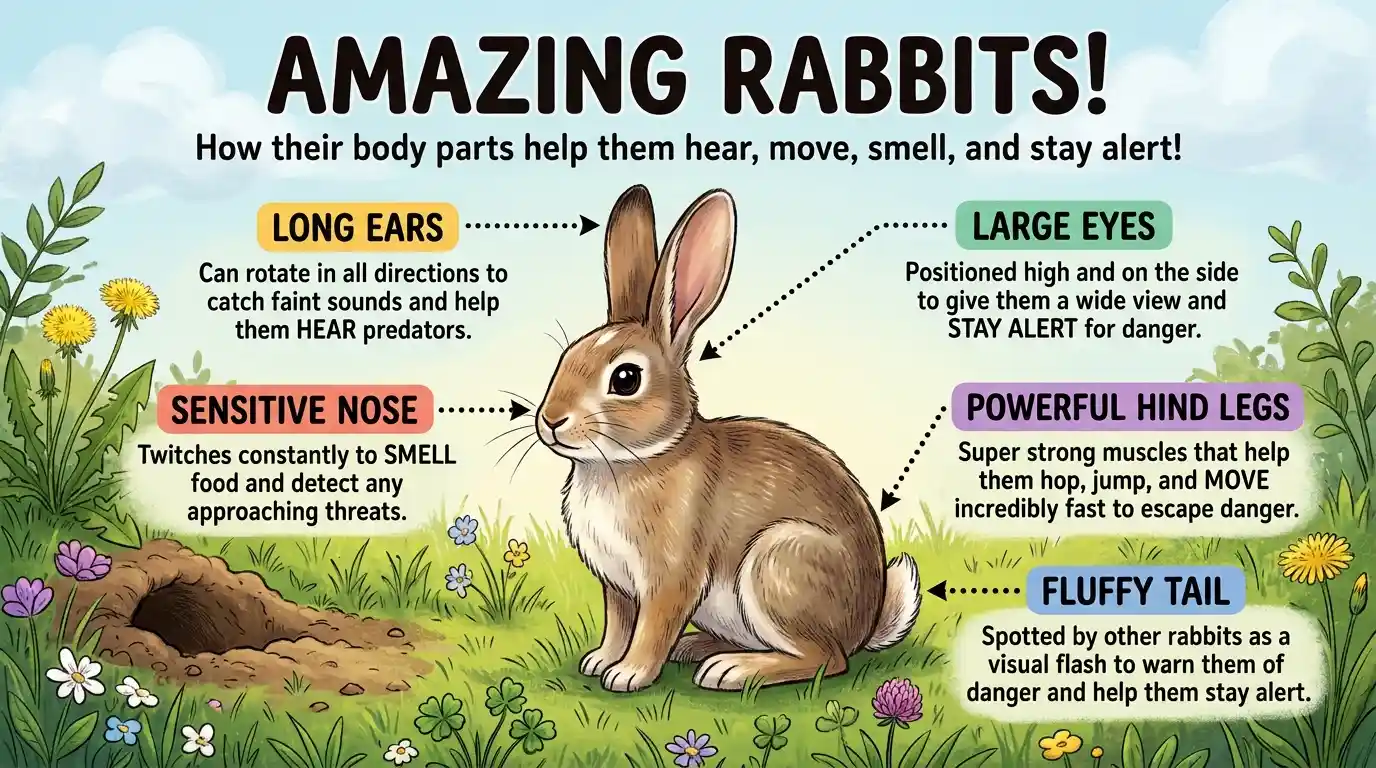
Rabbits possess incredible physical traits designed specifically for survival, speed, and environmental awareness. Their bodies are remarkably adapted to detect predators quickly and escape at high speeds across diverse landscapes.
Eyes That See Almost Everything
A rabbit’s eyes are positioned on the sides of its head, giving it nearly 360-degree vision. This wide field of view helps them spot predators from almost any direction while grazing in open fields.
However, this placement creates a tiny blind spot directly in front of their nose. They rely on their sensitive whiskers and keen sense of smell to identify objects right under their chins.
Independent Rotating Ears
A bunny can rotate its long ears up to 270 degrees to locate sound sources accurately. Each ear operates independently, allowing the rabbit to listen to two different sounds at the same time.
These large ears also serve a crucial role in regulating body temperature. Blood vessels in the ears expand and contract to release heat during warm weather.
Extraordinary Jumping Power
Rabbits possess exceptionally strong hind legs engineered for rapid acceleration and massive vertical jumps. A healthy rabbit can jump up to three feet high and leap horizontally across nearly ten feet in a single bound.
These powerful legs allow them to change direction instantly while sprinting, making it difficult for predators to catch them.
Fascinating Rabbit Communication and Body Language
Rabbits do not use loud vocalizations like dogs or cats to express themselves. Instead, they use a sophisticated language of subtle body movements, soft noises, and expressive behaviors.
The Joy of the Binkie
A binkie is an unmistakable display of sheer happiness where a rabbit leaps into the air, twists its body, and flicks its feet. Seeing a rabbit execute a binkie means it feels entirely safe, healthy, and happy in its environment.
Younger rabbits tend to perform binkies more frequently, but happy adult rabbits will also jump and twist when excited.
What Thumping Means
When a rabbit thumps one of its powerful hind legs hard against the ground, it is sending a clear alarm signal. In the wild, this thumping alerts the rest of the warren that danger is nearby.
In a home setting, thumping can mean your bunny feels scared, annoyed, or startled by a sudden noise or unfamiliar smell.
Tooth Purring vs. Tooth Grinding
Soft, gentle tooth clicking is often called a bunny purr, occurring when a rabbit feels relaxed while being petted. This gentle vibration indicates pure contentment and comfort.
In contrast, loud, harsh tooth grinding indicates severe pain, discomfort, or extreme distress. If you hear loud grinding, it is essential to inspect your rabbit immediately for health issues.
Surprising Diet and Digestive Habits

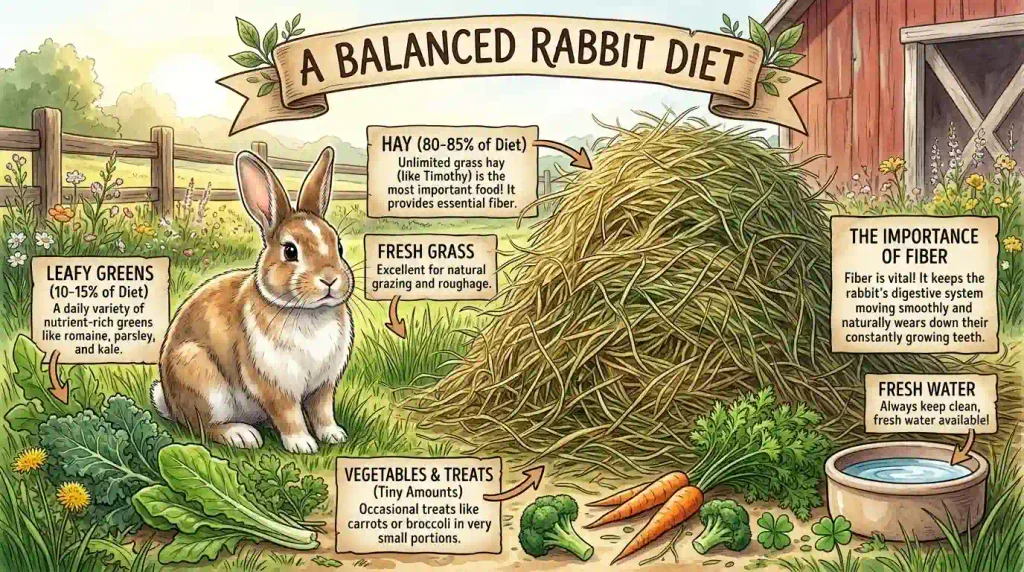
The digestive system of a rabbit is highly specialized to process tough, fibrous vegetation efficiently. Their dietary habits include some surprising behaviors that are essential for maintaining proper gut health.
The Science of Cecotropy
Rabbits produce two distinct types of droppings: hard round pellets and soft, nutrient-rich droppings called cecotropes. Cecotropes contain vital vitamins, protein, and beneficial bacteria produced in the rabbit’s cecum.
Rabbits eat these cecotropes directly to re-ingest and absorb essential nutrients that were missed during the first digestive pass.
Teeth That Never Stop Growing
A rabbit’s teeth grow continuously throughout its entire life at a rate of several inches per year. Chewing on coarse grasses, fresh hay, and untreated wooden toys naturally wears down their teeth to a safe length.
Without adequate hay, a rabbit’s teeth can overgrow, leading to painful dental spikes and severe feeding difficulties.
The Importance of Fresh Hay
Grass hay should make up at least 80 percent of an adult rabbit’s daily diet to ensure proper gut motility. Hay provides the necessary long fibers to keep the digestive tract moving constantly.
Inadequate fiber can cause a life-threatening digestive shutdown known as gastrointestinal stasis.
Wild Rabbits vs. Domestic Rabbits
While wild rabbits and domestic rabbits share similar physical appearances, they belong to distinct species with different behaviors, social habits, and life expectancies.
European Wild Rabbits and Domestic Breeds
All domestic pet rabbit breeds descend from the European wild rabbit species. Wild cottontails found in North America are entirely different species and cannot interbreed with domestic pets.
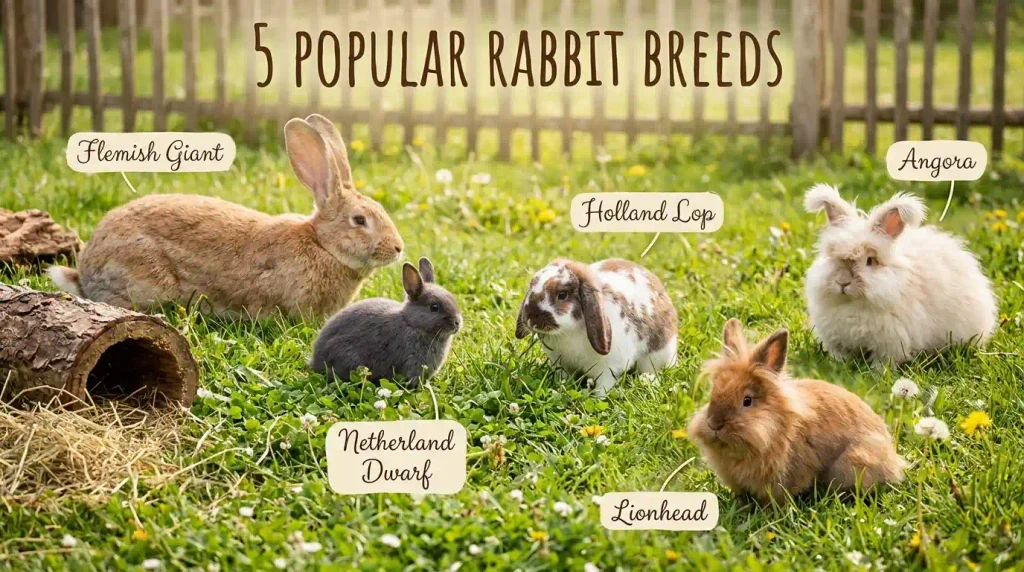
Domestic rabbits have evolved into dozens of unique breeds, ranging from tiny Netherland Dwarfs to massive Flemish Giants weighing over fifteen pounds.
Social Structures and Warrens
Wild European rabbits live in large, organized social communities underground within interconnected burrow networks called warrens. These social structures help them defend territory and raise young safely.
Domestic rabbits retain this strong social instinct and thrive when paired with a compatible, spayed or neutered rabbit companion.
Remarkable Reproduction and Infant Care
Rabbits are famous for their high reproduction rates, which serve as a critical survival strategy for a prey species in the wild.
Short Gestation and Large Litters
A female rabbit, called a doe, has a gestation period of only 28 to 32 days. She can become pregnant again almost immediately after giving birth to a litter of kits.
A single litter usually contains between four and eight kits, though larger breeds can give birth to over twelve babies at once.
Unique Mothering Habits
Mother rabbits visit their babies in the nest only once or twice a day for a few short minutes to nurse. This behavior is designed to protect the nest by not drawing the attention of local predators to the hidden babies.
Despite the brief visits, rabbit milk is extremely rich in nutrients, allowing kits to grow rapidly during their first weeks.
How to Keep Your Pet Rabbit Happy and Healthy
Providing proper care requires understanding a rabbit’s natural instincts, high intelligence, and complex physical needs.
Enrichment and Playtime
Rabbits are inquisitive animals that need daily mental stimulation to prevent boredom and destructive chewing habits. Providing cardboard tubes, chewing blocks, and forage mats keeps their minds active and sharp.
Daily exercise outside their enclosure allows them to stretch their legs, explore safely, and display natural behaviors.
Creating a Rabbit-Safe Home
Before letting a rabbit roam free, you must rabbit-proof the area by securing all exposed electrical cords and wires. Rabbits naturally chew on thin cords, which can cause severe electrical shocks or ruin household appliances.
Keep toxic plants, chemical cleaners, and small plastic objects completely out of reach from curious noses.
Practice Exercises
Test your knowledge about these fascinating bunny fun facts with the following multiple-choice questions!
What is the primary function of a rabbit’s large ears besides listening to sounds?
A. Assisting with balance while running
B. Regulating body temperature
C. Signaling mating readiness
D. Storing excess moisture
How far can a rabbit rotate its ears independently?
A. 90 degrees
B. 180 degrees
C. 270 degrees
D. 360 degrees
What does it mean when a happy rabbit leaps into the air and twists its body?
A. It is thumping
B. It is performing a binky
C. It is experiencing digestive stasis
D. It is marking its territory
Why do rabbits eat cecotropes directly?
A. To sharpen their growing front teeth
B. To clear hairballs from their stomachs
C. To re-ingest essential nutrients and vitamins
D. To clean their nests of unnecessary waste
Which statement best describes a rabbit’s field of vision?
A. They can only see directly in front of them
B. They have 360-degree vision with no blind spots
C. They have nearly 360-degree vision with a tiny blind spot in front of their nose
D. They are completely colorblind and see only in black and white
Part Two
How much of an adult rabbit’s diet should consist of fresh grass hay?
A. 20 percent
B. 50 percent
C. 80 percent
D. 100 percent
What is a female rabbit called?
A. A kit
B. A doe
C. A buck
D. A warren
How often does a mother rabbit typically visit her nest to nurse her babies each day?
A. Every two hours throughout the day
B. Once or twice a day for a few minutes
C. Continuously for the first two weeks
D. Only during nighttime hours for ten minutes
What sound indicates that a rabbit is relaxed and enjoying being petted?
A. Loud grinding of the back teeth
B. Sharp squeaking noises
C. Soft, gentle tooth clicking
D. Deep growling sounds
From which wild species do all domestic pet rabbit breeds descend?
A. Eastern Cottontail
B. European Wild Rabbit
C. Snowshoe Hare
D. Jackrabbit
Answer Key
B C B C C C B B C B
FAQs
Why do bunnies dig on carpet or blankets?
Digging is an instinctive behavior inherited from wild ancestors who dug burrows for shelter. Pet rabbits dig on soft surfaces like carpets, blankets, or pillows to fulfill this instinct, express extra energy, or mark their personal territory.
Can rabbits be trained to use a litter box?
Yes, rabbits can be easily litter-trained due to their natural instinct to eliminate in consistent spots. Placing fresh hay inside or directly above a shallow litter box encourages them to use the box reliably every day.
How long do domestic pet rabbits live?
Domestic pet rabbits usually live between 8 and 12 years when provided with proper indoor care, diet, and veterinary attention. Some well-cared-for rabbits can even live up to 15 years in a comfortable, low-stress environment.
Do pet rabbits get along well with cats and dogs?
Rabbits can live peacefully alongside cats and dogs if introduced slowly and supervised carefully. Because rabbits are natural prey animals, all interactions should be closely monitored to ensure the safety and comfort of your bunny.
Why do rabbits twitch their noses constantly?
Rabbits twitch their noses to move the sensitive sensory pads inside their nostrils, helping them sample scents in the air. A faster nose twitch usually indicates that the rabbit is highly alert, curious, or actively inspecting something new.
Is it safe to bathe a pet rabbit in water?
No, you should never give a rabbit a traditional water bath because it can induce severe shock. Rabbits groom themselves regularly, and wet fur takes a long time to dry, making them vulnerable to hypothermia and skin infections.
Conclusion
Exploring these captivating bunny fun facts shows just how unique, intelligent, and complex these small animals truly are. From their incredible 270-degree ear rotation to their expressive joyful binkies, rabbits continue to delight pet owners and animal lovers worldwide.
Understanding their natural behaviors and nutritional needs ensures that pet bunnies live happy, healthy lives by your side. Take time to observe your rabbit’s unique body language to build a deeper connection today.

Ethan Danial is the creator and lead writer behind FunWhirls.com, a fun-focused platform dedicated to entertaining ideas, fascinating facts, funny moments, creative lists, and content that sparks curiosity. With a genuine love for discovering interesting and unexpected topics, Ethan enjoys turning simple ideas into engaging content that readers can enjoy, learn from, and share. His approach is centered on making every article easy to read, enjoyable, and worth coming back to.
At FunWhirls.com, Ethan Danial explores the lighter and more entertaining side of everyday life. He creates content for readers who love discovering something new, having a quick laugh, or simply taking a break from the ordinary. From curious facts to playful ideas and entertaining discoveries, Ethan aims to keep the content fresh, positive, useful, and engaging for readers of all kinds.


