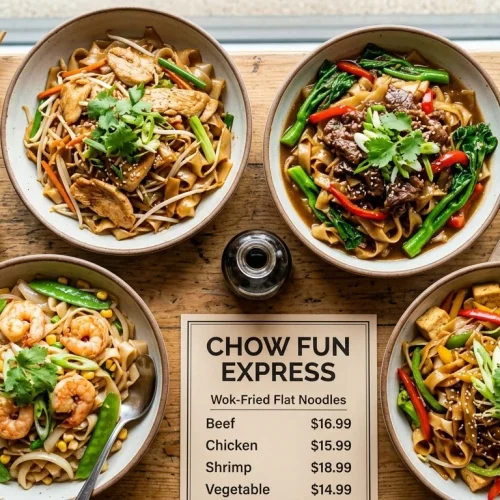
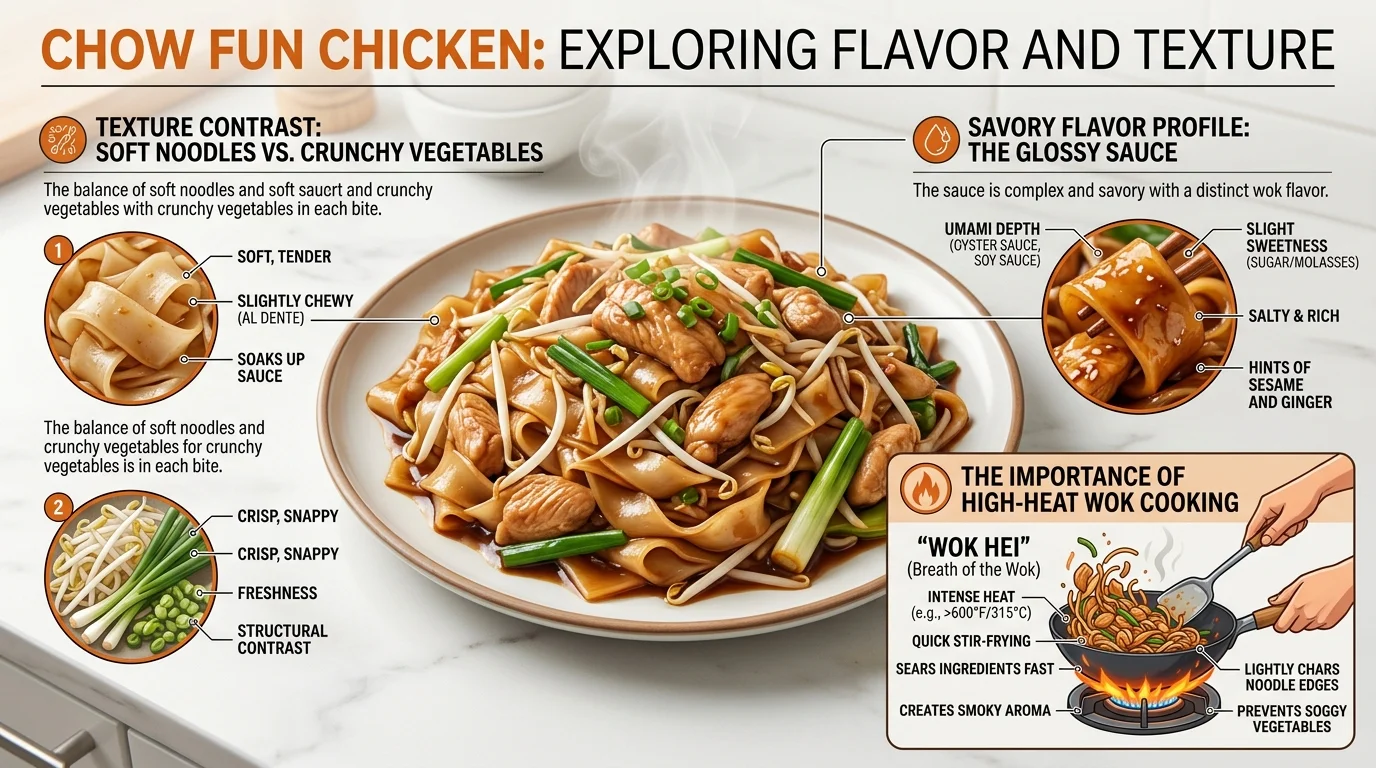
Chicken chow fun is a classic Cantonese stir-fried noodle dish made with wide, flat rice noodles, tender slices of chicken, crunchy bean sprouts, and scallions, all tossed together in a hot wok with a savory soy-based sauce.
Have you ever wondered why your favorite takeout noodles taste so irresistibly smoky and delicious? Making a steaming plate of chicken chow fun right in your own kitchen is easier than you think.
You do not need fancy restaurant equipment to recreate that magical smoky flavor at home. Let us walk through everything you need to know to master this comforting noodle dish.
What is Chicken Chow Fun?
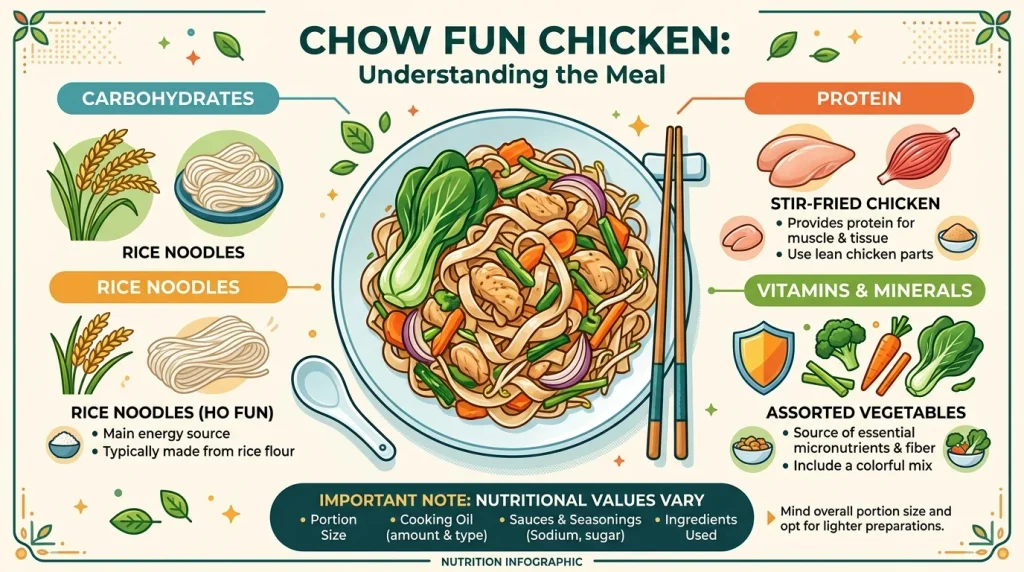
Chicken chow fun is a beloved Cantonese comfort food featuring wide, flat rice noodles tossed in a scorching hot wok. The term chow fun translates literally to stir-fried noodles, while the chicken adds a hearty, savory protein punch.
Unlike thin wheat noodles, these flat rice noodles have a wonderfully chewy texture. They soak up savory sauces like a sponge while holding their shape under high heat.
When you order this dish at a restaurant, you might notice a distinct smoky aroma. Chefs call this wok hei, or the breath of the wok, which comes from cooking over an intensely high flame. While home stoves cannot always match commercial burners, you can still achieve fantastic results with a few smart techniques.
Essential Ingredients for Authentic Chicken Chow Fun
Getting restaurant-quality flavor starts with gathering the right ingredients. Because this dish cooks very quickly, having everything prepped and ready before you turn on the stove is essential.
The Noodles and Protein
- Wide rice noodles: Fresh rice noodles yield the best texture, though dried wide rice noodles work well if soaked properly.
- Chicken breast or thighs: Slicing the meat thinly against the grain ensures tender bites every time.
- Marinade basics: A simple mix of light soy sauce, cornstarch, and a splash of oil keeps the chicken juicy.
The Aromatics and Veggies
- Fresh bean sprouts: These add a wonderful crunch that contrasts with the soft noodles.
- Scallions: Cut into long sections, they bring a fresh, slightly sharp bite.
- Yellow onion: Sliced thinly to add natural sweetness as it caramelizes in the wok.
How to Prepare Wide Rice Noodles
Working with flat rice noodles can be tricky if you have never tried it before. Fresh noodles are delicate and tend to break easily if they are cold or mishandled.
If you are using fresh noodles, gently loosen them with your fingers. If they feel stiff, microwave them for 20 to 30 seconds to make them pliable.
Never boil them like pasta, or they will turn into mush when you toss them in the wok.
The Secret to Tender Chicken
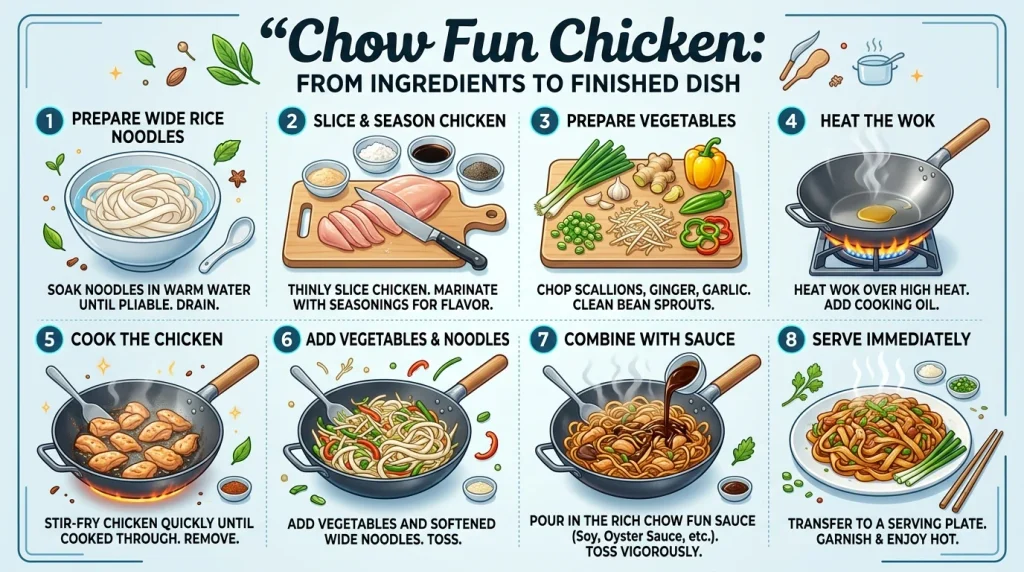
Tender chicken is the hallmark of great stir-frying. A simple kitchen trick called velveting helps keep the meat incredibly juicy.
- Slice your chicken into uniform pieces so they cook evenly.
- Toss the chicken with a teaspoon of cornstarch and a splash of soy sauce.
- Let it rest for 15 minutes before cooking to lock in moisture.
This thin coating protects the chicken from drying out under high heat. It also helps the savory sauce cling to every single piece of meat.
Step-by-Step Cooking Guide
Cooking chow fun is a fast-paced process that takes only a few minutes from start to finish. Staying organized is your best tool for success.
- Step 1 – Marinate Chicken: Toss your sliced chicken with soy sauce and cornstarch for a tender texture.
- Step 2 – Sear Chicken: Cook the chicken in a hot pan until just golden, then remove it.
- Step 3 – Char Noodles: Add your rice noodles to the pan and let them sear without moving them to get light golden spots.
- Step 4 – Toss and Serve: Return the chicken, add bean sprouts and sauce, and toss everything together quickly over high heat.
First, heat a large wok or skillet over high heat until it starts smoking slightly. Add a tablespoon of cooking oil and sear your marinated chicken until just cooked through, then take it out of the pan.
Next, add a bit more oil and toss in your onions and the white parts of the scallions. Add your prepared rice noodles and let them sear undisturbed for a minute to get light golden spots.
Finally, return the chicken to the wok along with the bean sprouts and your savory sauce mixture. Toss everything vigorously for one minute until the noodles absorb the sauce and turn a glossy brown.
Crafting the Perfect Stir-Fry Sauce
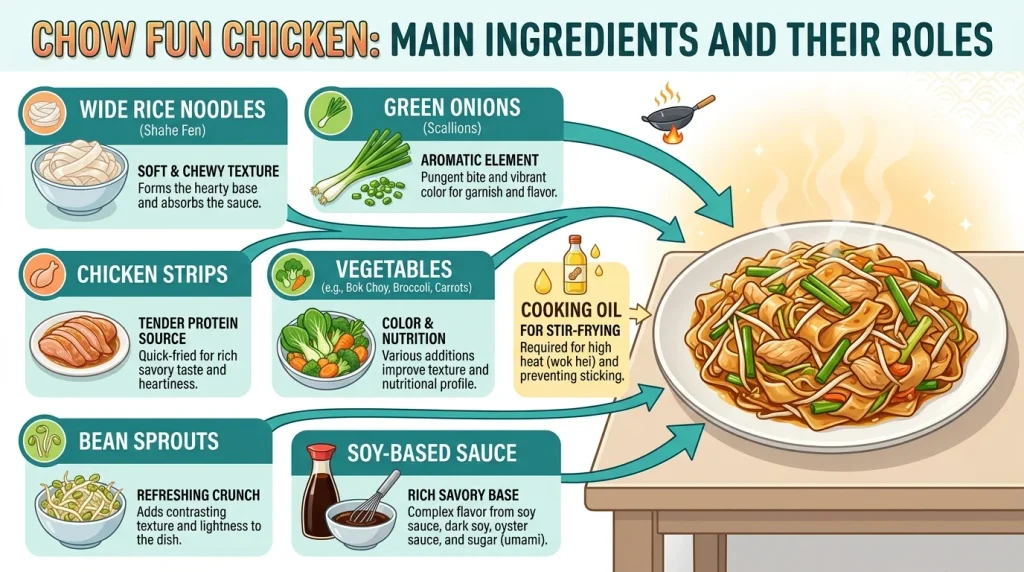
The sauce ties every single element of the dish together. You want a balanced blend of salty, sweet, and umami flavors that coats the noodles without pooling at the bottom of your plate.
- Light soy sauce provides the primary salty seasoning.
- Dark soy sauce gives the noodles their signature rich caramel color.
- Oyster sauce adds a deep, savory richness.
- A pinch of sugar rounds out the salty notes.
- A dash of sesame oil added at the very end brings a nutty aroma.
Common Mistakes to Avoid
Even experienced home cooks run into trouble when stir-frying rice noodles. Keeping a few pitfalls in mind will save your dinner.
- Overcrowding the pan: Cooking too many noodles at once makes them steam instead of fry.
- Skipping the prep work: Trying to chop vegetables while your wok is hot leads to burned food.
- Stirring too much: Constantly moving the rice noodles around prevents them from getting those delicious seared edges.
- Using cold noodles: Cold noodles from the fridge will snap and break apart instantly in a hot wok.
Customizing Your Chow Fun
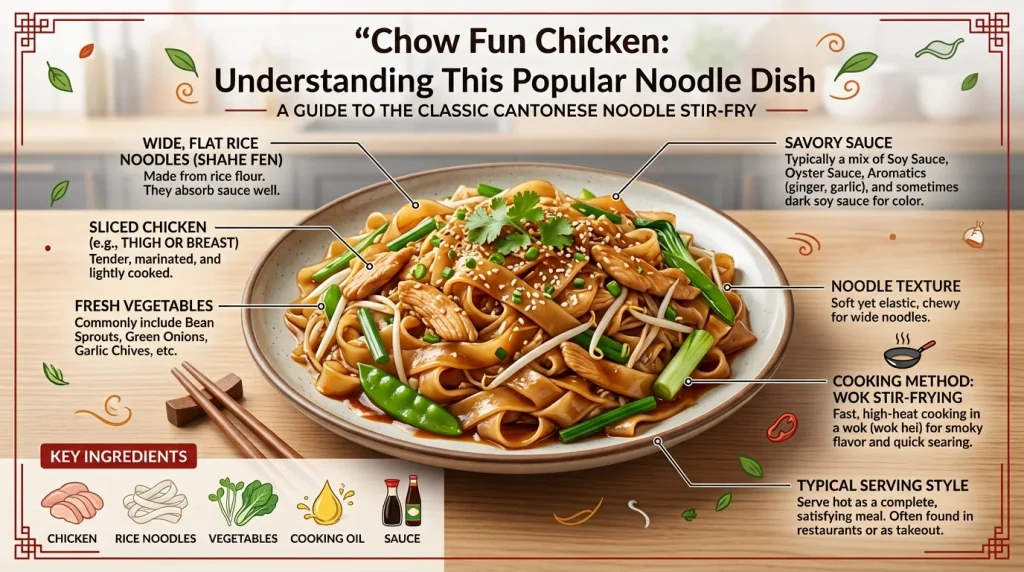
One of the best things about making stir-fry at home is the freedom to adjust ingredients to your personal taste. You can easily switch things up based on what is in your refrigerator.
- Swap chicken for sliced beef, shrimp, or firm tofu.
- Add baby bok choy or Chinese broccoli for extra greens.
- Toss in sliced bell peppers for a pop of color and sweetness.
- Adjust the heat level by adding chili oil or fresh bird’s eye chilies.
FAQs
Can I use regular spaghetti instead of rice noodles?
Using regular wheat pasta changes the authentic texture completely. Wide flat rice noodles are essential for capturing the traditional chew and flavor absorption of a true chow fun dish.
Why do my rice noodles keep breaking apart?
Rice noodles break easily when they are overworked or under-soaked. Handle them gently during prep and avoid stirring them constantly once they hit the hot wok.
How do I store and reheat leftover chow fun?
Store leftovers in an airtight container in the refrigerator for up to two days. Reheat them quickly in a hot skillet with a splash of water to restore moisture.
Can I freeze cooked chicken chow fun?
Freezing is not recommended for this dish because cooked rice noodles turn mushy and lose their pleasant texture once thawed. It is always best enjoyed fresh.
What causes noodles to stick to the wok?
Noodles stick when the wok is not hot enough or lacks sufficient oil. Always heat your pan thoroughly before adding oil and ingredients to create a natural non-stick surface.
How can I get smoky restaurant flavor at home?
Achieving a smoky flavor requires a very hot wok and letting the noodles sear undisturbed for a moment. Using a carbon steel pan over high heat yields the closest results to restaurant cooking.
Is chicken chow fun naturally gluten-free?
Standard soy sauce contains wheat, making regular chow fun unsuitable for gluten-free diets. You can easily make it gluten-free by substituting regular soy sauce with certified tamari.
Practice Exercise
1. What type of noodles are commonly used in Chow Fun Chicken?
A) Wide flat rice noodles
B) Egg noodles
C) Soba noodles
D) Glass noodles
2. What is the main protein in Chow Fun Chicken?
A) Chicken
B) Beef
C) Fish
D) Tofu
3. How are Chow Fun noodles typically cooked?
A) Stir-fried
B) Boiled only
C) Baked
D) Deep-fried
4. Which cooking equipment is commonly used to prepare Chow Fun Chicken?
A) Wok
B) Oven
C) Toaster
D) Slow cooker
5. What gives Chow Fun Chicken much of its savory flavor?
A) Sauce and seasonings
B) Sugar only
C) Fruit juice
D) Cream
6. Which vegetable is commonly found in Chow Fun dishes?
A) Bean sprouts
B) Strawberries
C) Bananas
D) Apples
7. What is a characteristic texture of wide rice noodles?
A) Soft and chewy
B) Hard and crunchy
C) Flaky
D) Creamy
8. Why is high heat useful when stir-frying Chow Fun Chicken?
A) It helps cook the ingredients quickly
B) It freezes the noodles
C) It removes all the vegetables
D) It turns noodles into bread
9. Which ingredient provides carbohydrates in Chow Fun Chicken?
A) Rice noodles
B) Chicken
C) Green onions
D) Bean sprouts
10. What can affect the nutritional value of Chow Fun Chicken?
A) Portion size and ingredients
B) Plate color
C) Table size
D) Restaurant lighting
🔑 Answer Key
- A
- A
- A
- A
- A
- A
- A
- A
- A
- A
Conclusion
Mastering chicken chow fun at home is a rewarding culinary adventure that brings takeout favorites right to your kitchen table. By focusing on smart prep, proper noodle handling, and high-heat stir-frying, you can create a dish full of vibrant flavor and texture.
Remember to keep your ingredients ready and let your wok get nice and hot for the best results. Grab your apron, fire up your stove, and enjoy cooking your very own delicious plate of noodles today!

Ethan Danial is the creator and lead writer behind FunWhirls.com, a fun-focused platform dedicated to entertaining ideas, fascinating facts, funny moments, creative lists, and content that sparks curiosity. With a genuine love for discovering interesting and unexpected topics, Ethan enjoys turning simple ideas into engaging content that readers can enjoy, learn from, and share. His approach is centered on making every article easy to read, enjoyable, and worth coming back to.
At FunWhirls.com, Ethan Danial explores the lighter and more entertaining side of everyday life. He creates content for readers who love discovering something new, having a quick laugh, or simply taking a break from the ordinary. From curious facts to playful ideas and entertaining discoveries, Ethan aims to keep the content fresh, positive, useful, and engaging for readers of all kinds.