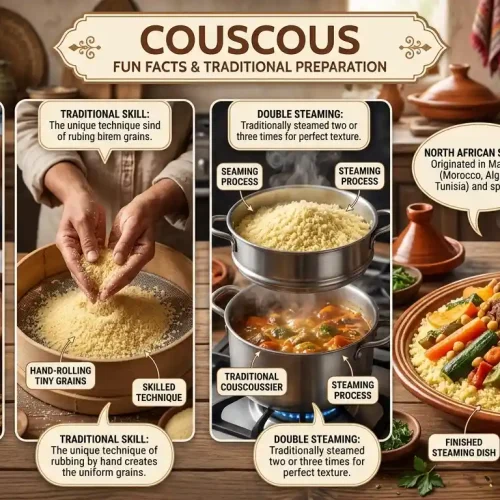
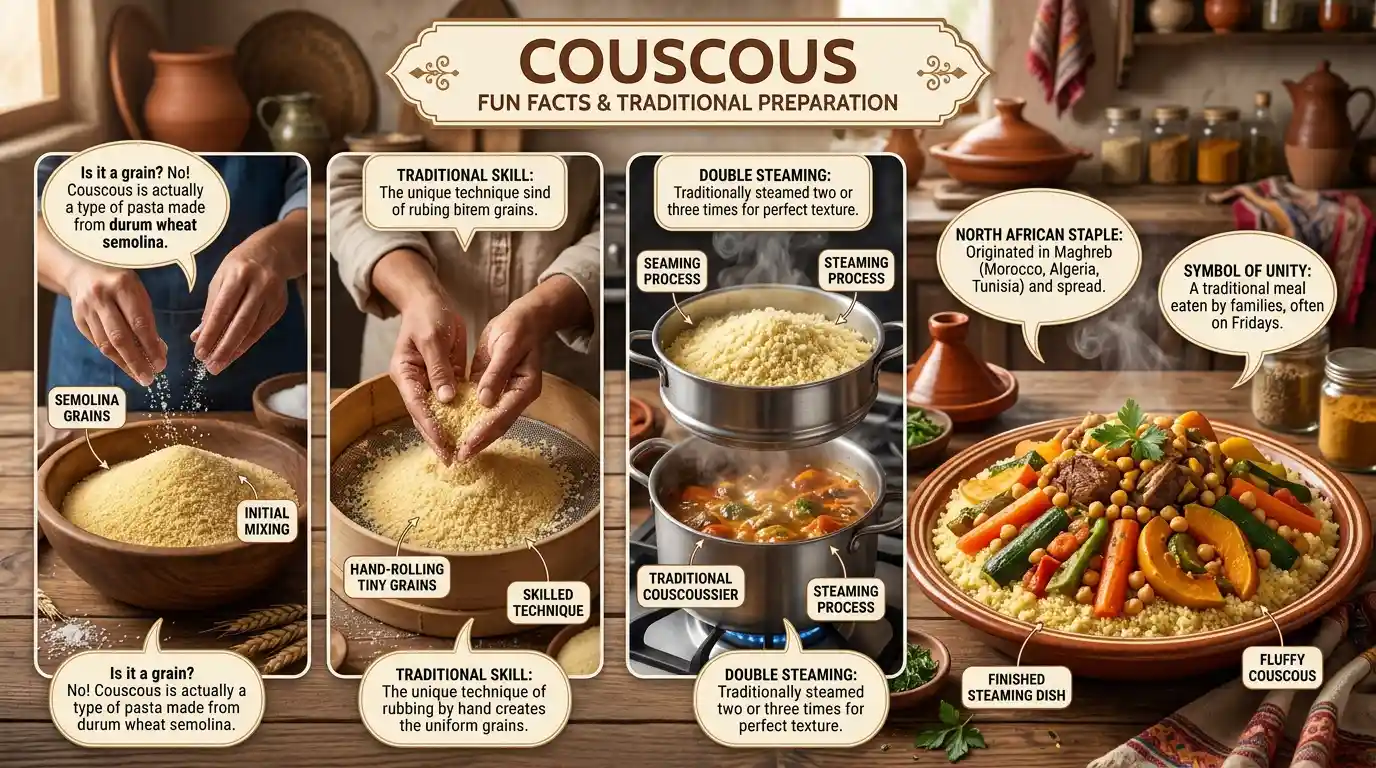
Couscous is actually a type of tiny pasta made from crushed durum wheat semolina rather than a grain, holding a rich history rooted deeply in North African culture, where it is considered a sacred symbol of hospitality and unity.
Have you ever looked at a tiny bowl of couscous and wondered what makes those little yellow grains so special? Most people think it is a whole grain like rice, but there are plenty of surprising couscous fun facts waiting to change how you see your dinner plate.
Let us explore some mind-blowing couscous fun facts together, starting with its true identity in the kitchen.
What Is Couscous Really Made Of?
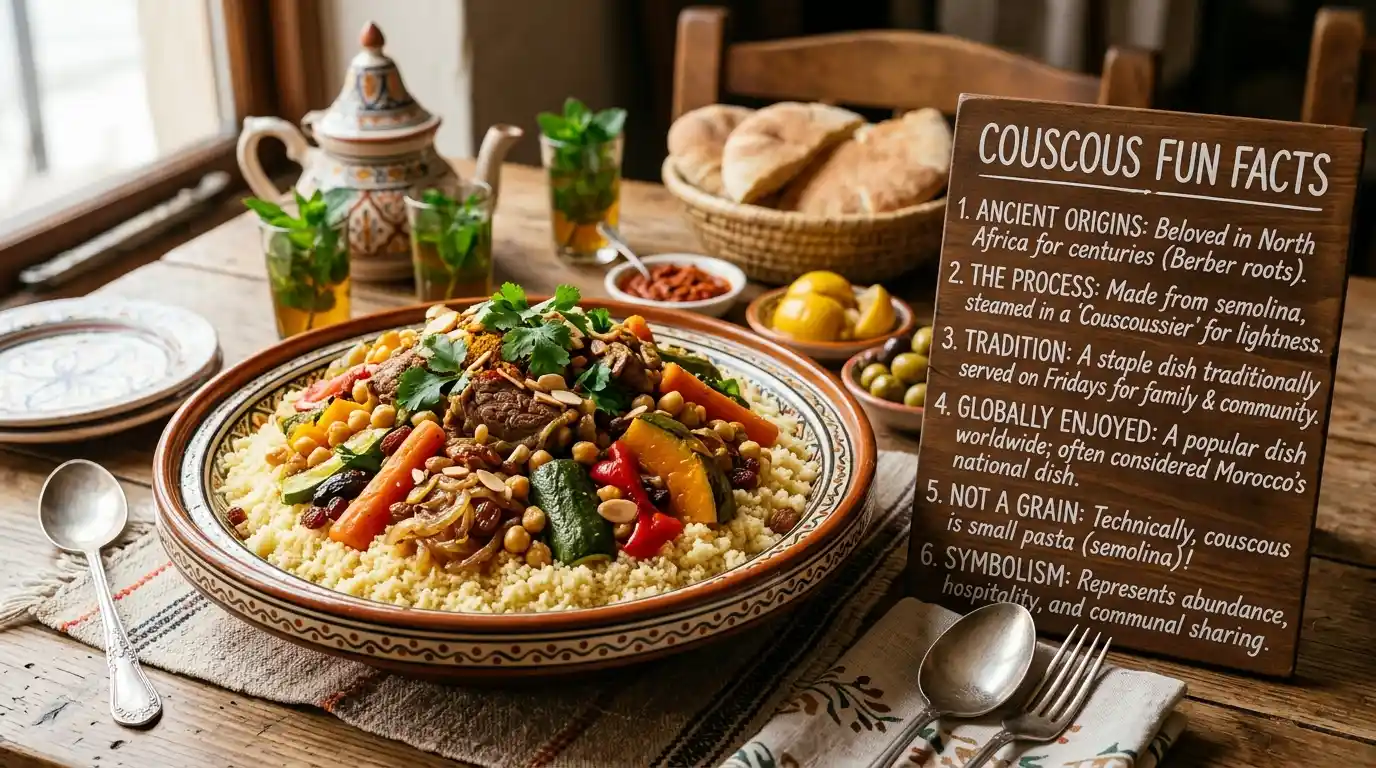
You might be surprised to learn that couscous is not a grain at all. It is actually a type of pasta made from crushed durum wheat semolina moistened with water and rolled by hand.
The Tiny Pasta Family
When you compare couscous to spaghetti or macaroni, it shares the exact same basic ingredients. The only difference is the unique rolling technique that shapes the dough into thousands of microscopic beads.
- Made exclusively from durum wheat semolina
- Shaped through traditional rolling and dusting processes
- Classified as pasta rather than a distinct cereal crop
A Rich History Rooted in North Africa
Long before modern supermarkets stocked cardboard boxes of instant grains, communities across North Africa spent hours crafting couscous by hand. Families gathered together to roll, sieve, and sun-dry the semolina in massive batches meant to last for months.
Traditions Passed Down Through Generations
Preparing traditional couscous was never just about cooking food. It was a communal event that brought entire neighborhoods and extended families into the kitchen.
- Originates from indigenous Amazigh populations in North Africa
- Dates back hundreds of years, with early written recipes appearing in medieval cookbooks
- Symbolizes hospitality, blessings, and unity during weddings and religious holidays
Surprising Nutritional Wonders
Beyond its comforting texture and ability to soak up rich sauces, couscous brings some impressive health benefits to your table. It offers a quick and reliable source of plant-based energy for busy weeknights.
Plant-Based Protein and Energy
A single cup of cooked couscous gives your body a solid boost of selenium and complex carbohydrates. It helps keep you full longer without weighing you down.
- Provides a good amount of selenium to support your immune system
- Contains plant-based protein to help build and repair muscles
- Digests easily, making it gentle on sensitive stomachs
Different Varieties Around the World
Not all couscous is created equal, and traveling across different regions reveals entirely different styles. From tiny Moroccan grains to giant Israeli pearls, each version offers a unique mouthfeel.
Moroccan vs. Israeli Couscous
While Moroccan couscous is tiny and cooks in mere minutes, Israeli couscous features much larger toasted balls that feel chewy and comforting like pearl pasta.
- Moroccan couscous is the smallest variety and cooks almost instantly with boiling water
- Israeli couscous, also known as ptitim, is toasted like rice and offers a chewy texture
- Lebanese couscous, or Mghrabiyeh, is much larger and requires a longer steaming process
The Art of Traditional Steaming
If you have only ever poured boiling water over instant boxed couscous, you have only experienced half the story. Authentic preparation relies on a specialized two-tiered pot called a couscoussière.
The Magic of the Couscoussière
The bottom pot holds a simmering stew of meat and vegetables, while the top pot holds the couscous. As the stew bubbles away, the rising steam gently fluffs and cooks the semolina, infusing it with incredible savory aromas.
- Uses indirect steam instead of boiling water for maximum fluffiness
- Prevents the grains from becoming sticky or gummy
- Allows the semolina to absorb rich flavors from the simmering broth below
How Couscous Conquered Global Kitchens
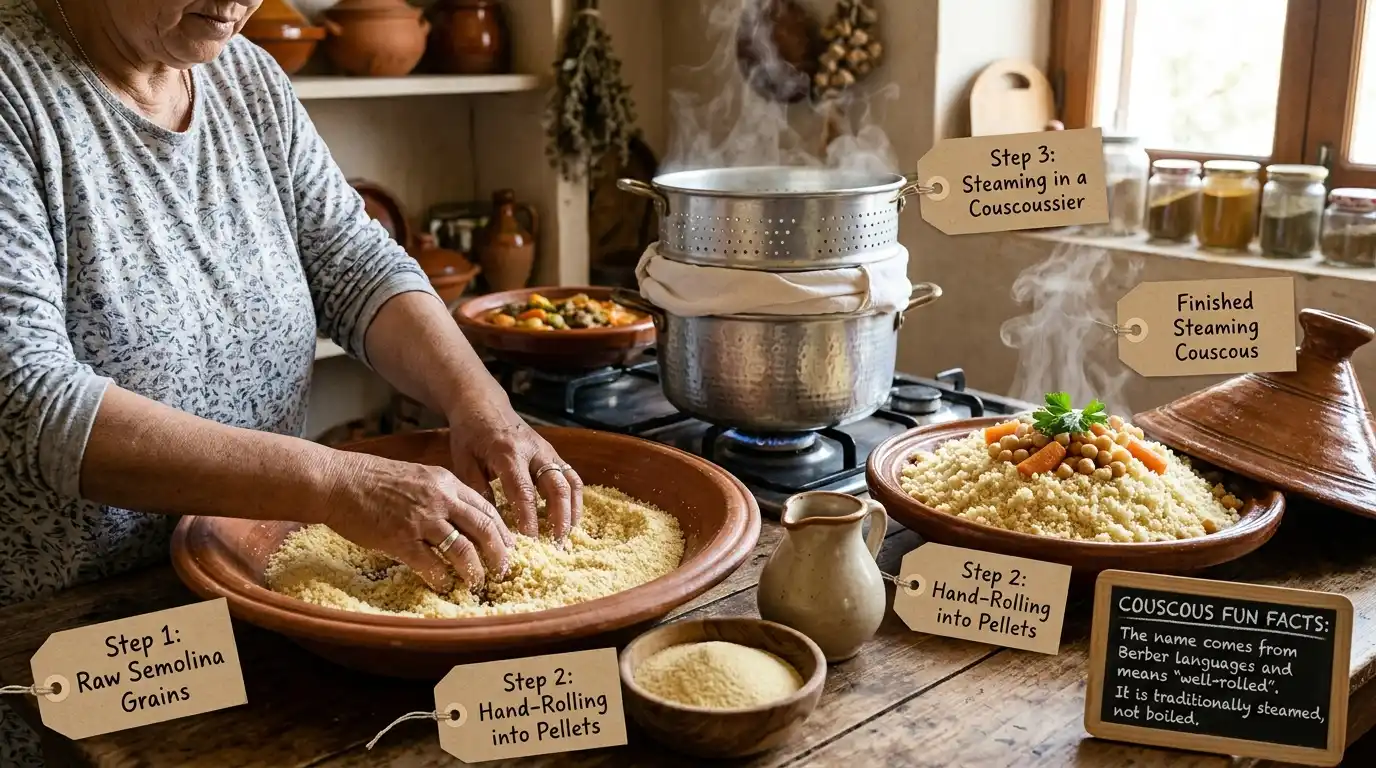
Couscous has traveled far beyond its North African origins to become a pantry staple worldwide. Chefs love how easily it adapts to both savory dishes and sweet breakfast bowls.
A Blank Canvas for Flavors
Because couscous has a mild and nutty flavor profile, it pairs wonderfully with almost anything in your refrigerator. You can toss it with roasted vegetables, fresh herbs, or even dried fruits and honey.
- Absorbs dressings, broths, and oils like a sponge
- Ready to eat in less than ten minutes when using quick-cook varieties
- Works brilliantly in cold summer salads as well as warm winter stews
Fun Culinary Secrets and Myths
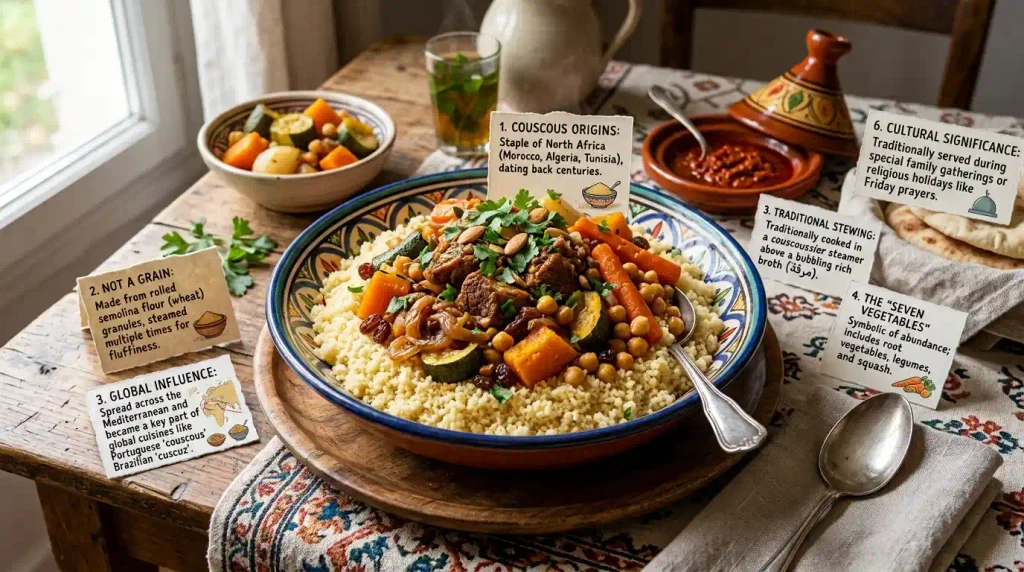
Every popular food item comes with its own set of quirky trivia and common misconceptions. Let us clear up a few myths about this beloved pantry staple.
Clearing Up Common Misconceptions
Many home cooks worry about ruining their batch, but making perfect couscous is much simpler than baking bread.
- It does not require boiling on the stove for standard boxed varieties
- Fluffing with a fork rather than a spoon is the secret to avoiding clumps
- Adding a touch of olive oil or butter before steaming keeps every grain separate
MCQs
- What is couscous traditionally made from?
A) Semolina
B) Rice
C) Corn
D) Potatoes - Couscous is especially associated with which region?
A) North Africa
B) South America
C) Northern Europe
D) East Asia - What does couscous look like when prepared?
A) Small fluffy grains
B) Large flat sheets
C) Long noodles
D) Round cakes - Which ingredient is commonly served with couscous?
A) Vegetables
B) Ice cream
C) Chocolate
D) Popcorn - What grain product is used to make traditional couscous?
A) Semolina
B) Oats
C) Barley
D) Rye - What type of dish can couscous be?
A) A savory meal
B) Only a dessert
C) Only a drink
D) Only a soup - Which kitchen tool is traditionally associated with steaming couscous?
A) Couscoussier
B) Toaster
C) Blender
D) Waffle iron - What can be added to couscous for extra flavor?
A) Herbs and spices
B) Candy wrappers
C) Ice cubes
D) Marshmallows - Couscous is commonly served with which type of food?
A) Stews and vegetables
B) Ice cream cones
C) Breakfast cereal only
D) Cakes - Why is couscous culturally important in many North African communities?
A) It is part of traditional food and communal meals
B) It is used mainly as a building material
C) It is a type of musical instrument
D) It is a traditional clothing item
Answer Key:
- A
- A
- A
- A
- A
- A
- A
- A
- A
- A
FAQs
Is couscous actually a type of pasta?
Yes, couscous is technically a form of pasta. It is made from crushed durum wheat semolina mixed with water, which means it shares the same foundational ingredients as traditional Italian spaghetti rather than whole grains like barley or rice.
Can people with gluten sensitivities eat regular couscous?
No, regular couscous is not safe for those with gluten sensitivities. Because it is made directly from durum wheat semolina, it contains high amounts of gluten and should be avoided on a strict gluten-free diet.
Why is fluffing couscous with a fork so important?
Fluffing with a fork separates the grains gently. Using a spoon or spatula can crush the delicate beads together, turning your light and fluffy side dish into a dense, sticky paste.
How long does cooked couscous last in the refrigerator?
Cooked couscous lasts for three to four days in the fridge. You should store it in an airtight container once it has cooled completely to keep it fresh and prevent drying out.
What is the easiest way to add flavor to plain couscous?
Cooking couscous in warm broth instead of plain water adds instant flavor. Stirring in olive oil, fresh lemon juice, herbs, or a pinch of cumin also elevates the taste immediately.
Why do some couscous packages require no stove cooking?
Instant couscous is pre-steamed and dried during commercial manufacturing. This factory process allows the tiny grains to rehydrate rapidly simply by absorbing boiling liquid under a covered lid.
Conclusion
Exploring these fascinating couscous fun facts shows just how much history and culture can fit into a single bowl. This versatile ingredient offers endless possibilities for quick weeknight meals and creative kitchen experiments.
Next time you cook up a batch, remember the traditional roots and clever techniques behind every little grain. Give it a try tonight and enjoy a delicious taste of global culinary history right at your own kitchen table!

Ethan Danial is the creator and lead writer behind FunWhirls.com, a fun-focused platform dedicated to entertaining ideas, fascinating facts, funny moments, creative lists, and content that sparks curiosity. With a genuine love for discovering interesting and unexpected topics, Ethan enjoys turning simple ideas into engaging content that readers can enjoy, learn from, and share. His approach is centered on making every article easy to read, enjoyable, and worth coming back to.
At FunWhirls.com, Ethan Danial explores the lighter and more entertaining side of everyday life. He creates content for readers who love discovering something new, having a quick laugh, or simply taking a break from the ordinary. From curious facts to playful ideas and entertaining discoveries, Ethan aims to keep the content fresh, positive, useful, and engaging for readers of all kinds.