Ape fun explores the playful behaviors, high intelligence, and surprising social antics of great and lesser apes. From laughing during play to using complex tools and solving puzzles, understanding ape playfulness highlights our shared evolutionary traits and reveals how primates learn, bond, and thrive in the wild.
Welcome to the fascinating world of ape fun! Apes are among the most intelligent and interesting animals on Earth. From their impressive communication skills to their playful behavior, there is so much to discover about these amazing creatures.
When it comes to ape fun, you can find plenty of surprising facts about chimpanzees, gorillas, orangutans, and bonobos. Their social lives, problem-solving abilities, and unique personalities make them truly fascinating to learn about.
Exploring ape fun is also a great way to understand how these animals live in their natural habitats. Many apes use tools, communicate with one another, care for their young, and form strong family and social relationships.
In this article, you will discover interesting facts, amazing abilities, unusual behaviors, and surprising details about apes. Get ready to explore the wild and wonderful world of these incredible animals!
What Makes Ape Fun So Special in Nature?
When we think of wild animals, we often picture them hunting, foraging, or defending their territory against rivals. However, great apes spend a massive amount of their daily lives engaged in recreational play, social humor, and joyful bonding.
Ape fun serves a critical evolutionary purpose across all primate species. Play helps young apes build muscular strength, test physical boundaries, and master complex social etiquette within their family groups.
It also acts as a mental release valve, reducing tension and strengthening emotional ties among troop members.
The Science of Primate Playfulness
Biologists classify play into three distinct categories: social play, object play, and locomotor play. Social play includes chasing, wrestling, and gentle biting with peers.
Object play involves investigating sticks, leaves, rocks, or fruits just to see what happens when manipulated. Locomotor play includes swinging from branches, performing backflips, or running in circles for pure enjoyment.
All three types of play stimulate brain development, encouraging flexible problem-solving abilities that prove essential later in adult life.
Do Apes Really Have a Sense of Humor?
Researchers observing wild and captive primates have documented clear signs of mischievous behavior and teasing. Young chimpanzees will often poke a sleeping adult, snatch an item, and run away while looking back to see if they are being chased.
This playful teasing demonstrates a basic understanding of another individual’s mental state. They anticipate how their companion will react to a harmless prank.
This playful deception shows that humor and lighthearted mischief have deep evolutionary roots shared across the hominid family tree.
The Fantastic Four: Play Style Across Great Ape Species
Not all great apes play in the same way. Each species has developed a unique social style that reflects its living environment, group structure, and overall temperament.
Observing these differences highlights how varied and adaptive primate personalities can be in the wild.
Chimpanzees: High-Energy Chaos and Laughter
Chimpanzees are the wild daredevils of the primate world. Their play style is fast, loud, energetic, and frequently accompanied by distinct vocal pant-laughs.
Young chimps love wrestling matches, tickle fights, and game tags through the forest canopy. They use play to establish social bonds that eventually mature into political alliances among adult group members.
Their intense curiosity also leads them to experiment constantly with objects, turning simple forest debris into makeshift toys.
Bonobos: Peace, Love, and Constant Play
Bonobos are famous for maintaining a peaceful, female-led society where play continues well into adulthood. Unlike chimpanzees, adult bonobos play with each other almost as frequently as juveniles do.
They engage in face-to-face social games, gentle grooming matches, and playful gymnastics to resolve group stress.
For bonobos, playful interactions act as a social lubricant, replacing aggression with mutual affection and cooperative harmony.
Gorillas: Gentle Giants and Heavyweight Wrestling
Despite their massive physical size, mountain and lowland gorillas are exceptionally gentle play partners. Adult silverbacks frequently allow tiny infants to climb all over their backs, beat on their chests, and pull their hair without showing annoyance.
Gorilla play often looks like slow-motion wrestling or playful tag around thick jungle foliage.
These gentle interactions allow young gorillas to gauge their own strength safely while building trust with the powerful leaders of their troop.
Orangutans: Solitary Play and Tree-Top Acrobatics
Orangutans spend most of their lives high above the ground in dense rainforest canopies. Because they are more solitary than African apes, their play often focuses on solo acrobatics and tool testing.
A young orangutan will spend hours hanging upside down by one foot, swinging on lianas, or weaving leafy umbrellas to shelter from rain.
When young orangutans do meet at fruiting trees, they engage in quiet, elaborate wrestling matches among the high branches.
Surprising Ape Fun Facts That Will Blow Your Mind
Beyond basic play, apes showcase behaviors that constantly surprise scientists and casual observers alike. Their mental sharpness and emotional depth mirror human traits in ways that feel uncanny.
Here are some of the most remarkable details discovered by researchers studying primate behavior in recent years.
Apes Can Produce Contagious Laughter
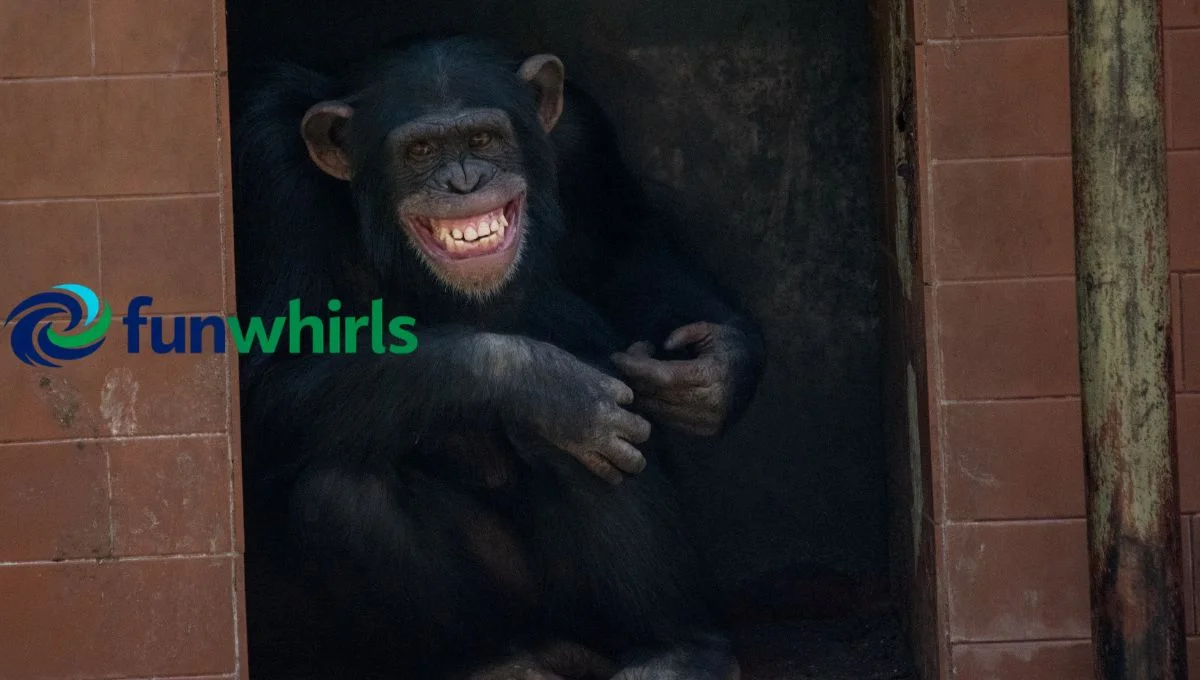
Just like humans, apes experience contagious laughter. When a chimpanzee hears another group member laughing during a tickle match, it often joins in without even being touched.
Audio analysis shows that primate pant-laughter shares acoustic frequencies with human chuckles.
This shared trait suggests that vocal laughter evolved millions of years ago in a common ancestor long before early humans developed spoken language.
Orangutans Use Medicinal Plants as Self-Care Spa Treatments
In the forests of Borneo, wild orangutans have been observed chewing specific medicinal plants into a soapy paste. They rub this herbal lather directly onto their arms and legs to soothe aching muscles.
This form of self-medication is passed down culturally from mothers to offspring over generations.
It shows that orangutans possess a rich understanding of natural chemistry, using forest resources to care for their bodies after heavy climbing sessions.
Chimpanzees Invent Fashion and Social Trends
In 2010, researchers at a wildlife sanctuary noticed a chimpanzee named Julie who randomly stuck a stiff blade of grass into her ear and wore it all day. Soon after, other chimps in the group began copying her, putting grass blades into their own ears.
This trend spread throughout the group and persisted for years, even after Julie passed away.
This harmless fashion trend proved that apes pass on arbitrary social customs, creating localized cultural traditions within specific troops.
Gorillas Sing and Hum While Eating Favorite Foods
Field researchers have recorded wild gorillas making soft, rhythmic humming and singing noises while dining on delicious plants.
These happy food songs occur most frequently when gorillas eat their absolute favorite meals, like fresh bamboo shoots or juicy wild fruits.
The singing signals to the rest of the troop that food is safe and abundant, sharing a sense of communal joy during mealtime.
Comparing Great Ape Characteristics and Play Styles
To help you understand how different ape species express playfulness and intelligence, here is a helpful breakdown comparing their key social traits, habitats, and favorite recreational activities.
How Apes Use Tools for Fun and Problem Solving
One of the clearest indicators of high primate intelligence is their natural ability to craft and use tools. While tools help them gather food, apes also experiment with tools purely for entertainment and mental stimulation.
Watching an ape master a new tool reveals a creative, inquisitive mind constantly looking for fresh challenges.
Fishing for Termites with Homemade Sticks
Chimpanzees famously craft specialized fishing rods out of slender tree twigs to gather protein-rich termites from underground mounds.
They carefully strip away leaves, trim the stick to an ideal length, and fray the tip to create a flexible brush that catches more insects.
Young chimps watch their mothers perform this task for years, practicing with small twigs until they master the delicate wrist movements required to succeed.
Cracking Nuts with Heavy Stone Hammers
In West Africa, wild chimpanzees use heavy stones as hammers and flat rock slabs as anvils to crack open tough palm nuts.
This requires precise physical control, balance, and spatial awareness. If a chimp hits the nut too hard, the edible meat inside gets crushed into dust.
Parent chimps often leave suitable hammer stones near anvil sites for juveniles to practice with, demonstrating early forms of intergenerational teaching.

Building Floating Rafts and Leaf Umbrellas
Orangutans are absolute masters of rainforest engineering. During heavy tropical rainstorms, they rapidly weave large palm leaves together to build protective umbrellas over their heads.
In sanctuary settings, orangutans have even been observed tying logs together with discarded ropes to build makeshift rafts, using long sticks to steer themselves across shallow streams.
Their spatial reasoning allows them to manipulate physical materials creatively to solve immediate environmental challenges.
Language, Symbols, and Communication Achievements
For decades, scientists have explored how far ape communication can go when provided with specialized visual or gestural tools.
While apes lack the vocal anatomy to produce human speech sounds, their capacity to process symbols, express desires, and share humor using sign language or lexigram keyboards has redefined animal psychology.
Washoe and the Gift of American Sign Language
In the late 1960s, a female chimpanzee named Washoe became the first non-human creature to learn American Sign Language (ASL). She learned over 350 individual signs and combined them to form original phrases.
Washoe used sign language not just to request food, but to joke around, express empathy, and describe objects in her surrounding environment.
When shown a swan for the first time, she combined two known signs to describe it as a “water bird,” showcasing flexible conceptual thinking.
Kanzi the Bonobo and Lexigram Magic
Kanzi, a famous bonobo studied by language researchers, learned to communicate using an electronic keyboard featuring hundreds of abstract, colorful symbols called lexigrams.
The ape did not just learn symbols through formal training; he picked them up naturally by watching researchers instruct his mother.
He could comprehend complex spoken English sentences, responding correctly to novel requests like “put the keys in the refrigerator” or “give the tomato a bath.”
Koko the Gorilla and Her Beloved Kittens
Koko the gorilla became a global icon for her mastery of modified sign language and her gentle affection for small companion animals.
When offered a pet for her birthday, Koko chose a small tailless kitten, naming him “All Ball.” She handled the fragile kitten with extreme care, carrying him on her back and cradling him like a human child.
Koko used signs to express grief when the kitten passed away, showing the profound emotional depth primates possess.
Conservation Challenges Facing Our Primate Cousins
While learning about playful ape behavior is deeply entertaining, it is vital to remember that all great ape species face severe threats in the wild.
Habitat destruction, poaching, and illegal wildlife trafficking have pushed many wild populations dangerously close to extinction. Protecting these intelligent animals requires active global effort and awareness.
Deforestation and Habitat Loss
The primary threat facing wild apes is the rapid loss of their natural forest habitats due to logging, agricultural expansion, and industrial mining.
In Indonesia, massive palm oil plantations have cleared millions of acres of ancient rainforest, isolating orangutan populations in small forest fragments.
Without large connected forests, apes struggle to find sufficient seasonal fruit trees and safe breeding grounds needed to sustain healthy populations.
Poaching and Illegal Wildlife Trade
Despite strict international laws, illegal poaching remains a major threat across Central Africa and Southeast Asia.
Adult apes are targeted for the illegal bushmeat trade, while infants are captured to be sold illegally as fascinating pets or entertainment props.
Rescuers working at local sanctuaries devote their lives to rehabilitating orphaned infant apes, teaching them the physical skills needed to return to the wild.
How You Can Support Primate Preservation
You do not have to be a wildlife biologist to make a positive impact on primate conservation efforts worldwide. Small, conscious everyday choices add up to big protection for wild habitats.
Here are simple, practical steps you can take today:
- Purchase products made with certified sustainable palm oil to protect Indonesian rainforests.
- Support reputable primate sanctuaries that rescue, rehabilitate, and protect orphaned wildlife.
- Choose certified eco-friendly paper and wood products to reduce deforestation in tropical regions.
- Share educational content to spread awareness about ape intelligence and conservation needs.
Simple Tips for Enjoying Primate Observation Responsibly
If you want to observe primates in person at local zoos, ethical sanctuaries, or during eco-travel trips, keeping a few best practices in mind ensures a safe and respectful experience.
Understanding ape body language helps you interpret their reactions while ensuring the animals remain relaxed and comfortable.
Respecting Personal Space and Glass Boundaries
When visiting apes in accredited zoological parks, avoid banging on glass windows, making sudden loud noises, or throwing food into enclosures.
Primate groups view direct eye contact and aggressive gestures as threats. Maintaining a calm demeanor allows the animals to engage in natural social play without feeling stressed.
Observing quietly with binoculars or a camera lens gives you a front-row seat to authentic social behaviors.
Recognizing Signs of Primate Happiness and Stress
Learning to read basic primate body language makes your observation sessions far more rewarding:
- Relaxed Play Face: An open mouth with bottom teeth covered indicates a friendly invitation to play.
- Pant-Laughing: Soft, breathy huffing sounds signal excitement during games and wrestling.
- Silent Bared-Teeth Display: Showing both upper and lower teeth is often a sign of fear or anxiety rather than a friendly smile.
- Chest Beating: Performed by gorillas to showcase size and confidence or relieve built-up energy.
Recognizing these subtle cues helps you understand what the animals are communicating to one another in real-time.
Choosing Ethical Ecotourism Destinations
If you plan to travel to Africa or Southeast Asia for wildlife treks, always select certified ecotourism operators that prioritize animal welfare over photo opportunities.
Responsible tours maintain strict physical distancing guidelines, limit group sizes, and require visitors to wear face masks to prevent the spread of human respiratory illnesses to wild apes.
Ethical tourism provides vital funding to local communities, making wild apes far more valuable alive than poached.
Practice Exercise (10 MCQs)
Test your knowledge about great ape behavior, intelligence, and fun facts with this quick ten-question practice quiz!
- What type of play involves investigating rocks, sticks, and leaves for fun?
A. Social play B. Object play C. Locomotor play D. Vocal play - Which great ape species is known for maintaining a female-led, peaceful society with frequent adult play?
A. Chimpanzee B. Gorilla C. Bonobo D. Orangutan - What vocal sound do chimpanzees make to signal joy during wrestling matches?
A. Deep roars B. Pant-laughter C. High squeaks D. Loud howls - Which ape species is primarily solitary and spends most of its life high in the forest canopy?
A. Gorilla B. Bonobo C. Orangutan D. Baboon - How did Washoe the chimpanzee describe a swan when seeing one for the first time?
A. Flying fish B. Water bird C. White duck D. Floating leaf - What plant-based self-care behavior was observed in wild Bornean orangutans?
A. Chewing leaves into a lather to soothe muscle aches B. Weaving leaf shoes to protect feet C. Using bark to brush teeth D. Burning dry leaves to repel insects - Which great ape group was observed starting a local fashion trend of wearing grass blades in their ears?
A. Mountain gorillas B. Chimpanzees C. Sumatran orangutans D. Bonobos - What vocalization do gorillas often make while eating their favorite meals?
A. Sharp barking B. Soft humming or singing C. Whistling D. Loud screaming - What is the main driver of habitat loss for orangutans in Indonesia?
A. Desert expansion B. Palm oil deforestation C. Urban highway building D. Glacier melting - What does a silent bared-teeth display typically communicate in primate body language?
A. Joy and contentment B. Extreme hunger C. Fear or anxiety D. Deep sleepiness
Answer Key
- B
- C
- B
- C
- B
- A
- B
- B
- B
- C
Frequently Asked Questions (FAQs)
What is the main difference between monkeys and apes?
Apes do not have tails, whereas almost all monkey species possess tails. Additionally, apes generally have larger physical bodies, broader chests, higher intellectual capacities, and more flexible shoulder joints that allow them to swing hand-over-hand through trees.
Do great apes laugh when you tickle them?
Yes, great apes like chimpanzees, bonobos, and gorillas do laugh when tickled in sensitive spots like their armpits or bellies. However, their laughter sounds like rhythmic, breathy panting rather than vocalized human chuckles.
How smart is a chimpanzee compared to a human child?
Cognitive testing shows that adult chimpanzees possess problem-solving skills, memory capacity, and tool-use abilities comparable to those of a human toddler aged 2 to 3 years. They can master complex tasks, understand symbolic gestures, and show empathy toward others.
Why do gorillas beat their chests?
Gorillas beat their chests to communicate their physical size, location, and confidence to other troop members or potential rivals. The hollow sound travels long distances through thick jungle foliage without requiring the gorilla to engage in dangerous physical fights.
Can apes learn to speak human words?
No, apes cannot produce human speech sounds because their vocal cords, throat structure, and tongue muscles are not designed for spoken words. However, they can learn visual language systems like sign language or lexigram keyboards to communicate fluently with humans.
What should I do if an ape makes direct eye contact at the zoo?
If an ape makes intense direct eye contact, gently avert your gaze and adopt a calm, neutral posture. Direct eye contact is often interpreted as a challenge or threat in primate culture, so looking away helps keep the animal calm and comfortable.
Conclusion
Apes are truly remarkable animals with impressive intelligence, emotions, and social skills. Their ability to learn, communicate, and solve problems makes them some of the most fascinating creatures in the animal kingdom.
The world of ape fun reveals just how unique these animals can be. From playful interactions to clever survival techniques, apes continue to amaze researchers and animal lovers around the world.
Learning about ape fun can also help us appreciate the importance of protecting apes and their natural habitats. Understanding their lives and challenges encourages greater respect for wildlife and nature.
We hope these facts have made the world of apes more exciting and interesting for you. Keep exploring, keep learning, and enjoy discovering more amazing facts about these incredible animals!

Ethan Danial is the creator and lead writer behind FunWhirls.com, a fun-focused platform dedicated to entertaining ideas, fascinating facts, funny moments, creative lists, and content that sparks curiosity. With a genuine love for discovering interesting and unexpected topics, Ethan enjoys turning simple ideas into engaging content that readers can enjoy, learn from, and share. His approach is centered on making every article easy to read, enjoyable, and worth coming back to.
At FunWhirls.com, Ethan Danial explores the lighter and more entertaining side of everyday life. He creates content for readers who love discovering something new, having a quick laugh, or simply taking a break from the ordinary. From curious facts to playful ideas and entertaining discoveries, Ethan aims to keep the content fresh, positive, useful, and engaging for readers of all kinds.