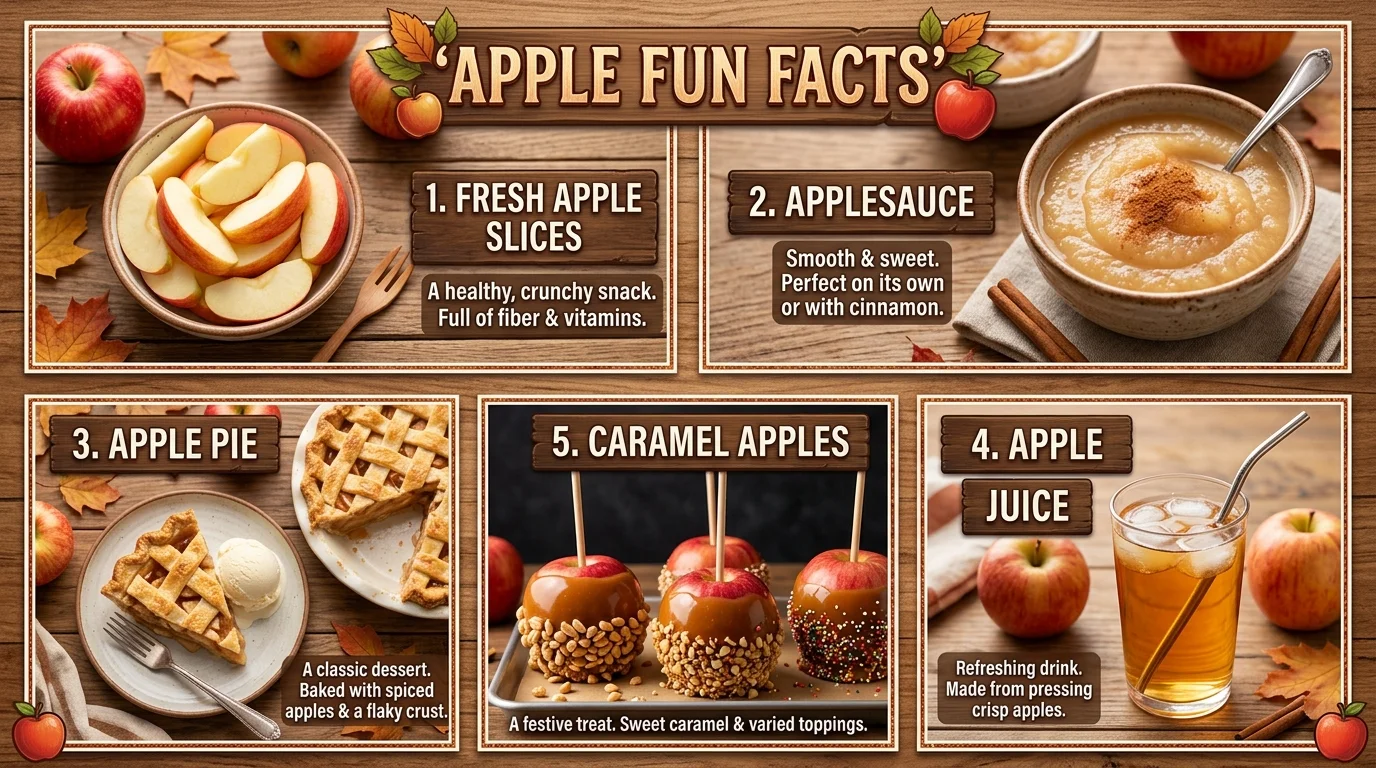
Apples are fascinating fruits belonging to the rose family, with over 7,500 varieties grown worldwide. Packed with fiber and antioxidant compounds, they float in water because they are 25 percent air. From ancient mythology to modern science, these delicious fruits hold a unique place in human history and culture.
Have you ever wondered why apples float in water or how a simple fruit shaped human history? Exploring apple fun facts reveals incredible secrets about one of the world’s most popular healthy snacks.
Whether you enjoy a crisp bite on an autumn afternoon or love baking fresh pies, these apple fun facts will completely change how you view your favorite grocery store trip. Let’s explore these amazing apple fun facts together!
The Surprising Origins and Science of Apples
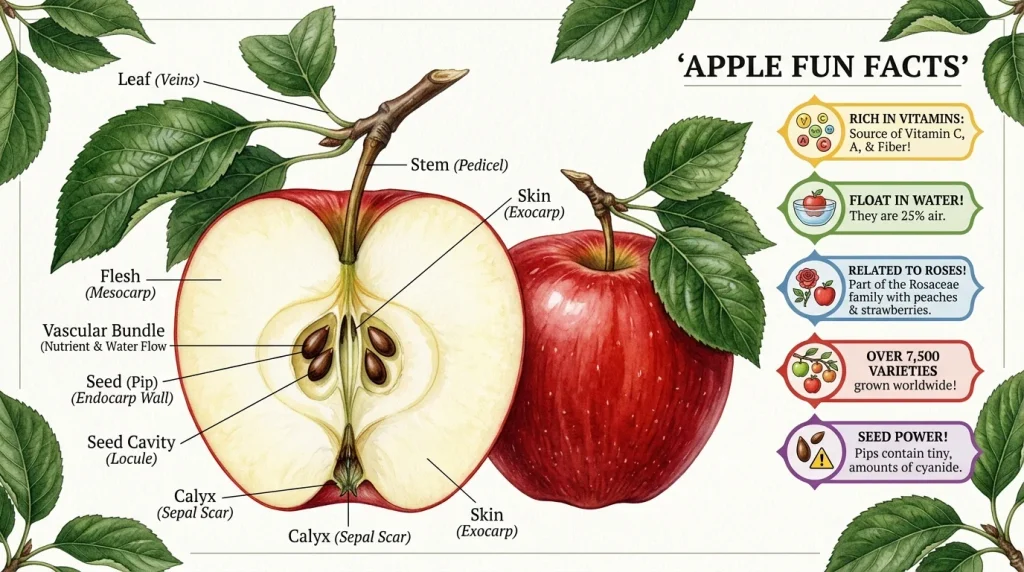
Apples are far more complex than most people realize. When you pick up an apple from the grocery store shelf, you are holding the result of millions of years of natural evolution and hundreds of years of careful agricultural engineering.
To truly appreciate this everyday fruit, we need to look closer at its botanical origins. You might be surprised to learn that your favorite crisp snack shares a direct biological connection with some of the most beautiful flowers in your garden.
The Botanical Connection to Roses
Did you know that apples are actually members of the rose family? Botanically known as Rosaceae, this plant family includes not only apples, but also pears, peaches, plums, cherries, strawberries, and raspberries.
If you look closely at an apple blossom in the spring, you will notice it looks remarkably similar to a wild rose flower. Both plants feature five distinct petals and a similar center structure. This shared family tree explains why apple blossoms carry such a sweet, beautiful fragrance before the fruit begins to form.
Why Apples Float in Water
Have you ever wondered why apples are so easy to bob for during Halloween games? The secret lies in the microscopic physical structure of the fruit itself.
An apple is actually made up of 25 percent air space between its internal cells. This low density makes the fruit lighter than water, allowing it to float effortlessly on the surface. Without these invisible internal air pockets, bobbing for apples would be an almost impossible party game!
The Incredible Variety Across the Globe
There are more than 7,500 known apple varieties grown across the globe today. If you decided to eat a different type of apple every single day, it would take you more than 20 years to try every single variety.
- Granny Smith: Sharp, tart, and famous for its bright green skin.
- Honeycrisp: Engineered specifically for an ultra-crispy texture and balanced sweetness.
- Red Delicious: Recognizable by its deep red hue and mild flavor profile.
- Fuji: Exceptionally sweet with a firm crunch that holds up well in storage.
From tiny crabapples no bigger than a cherry to massive Japanese Sekai Ichi apples that can weigh over two pounds each, the sheer variety of this fruit is truly staggering.
Fascinating Apple History and Culture
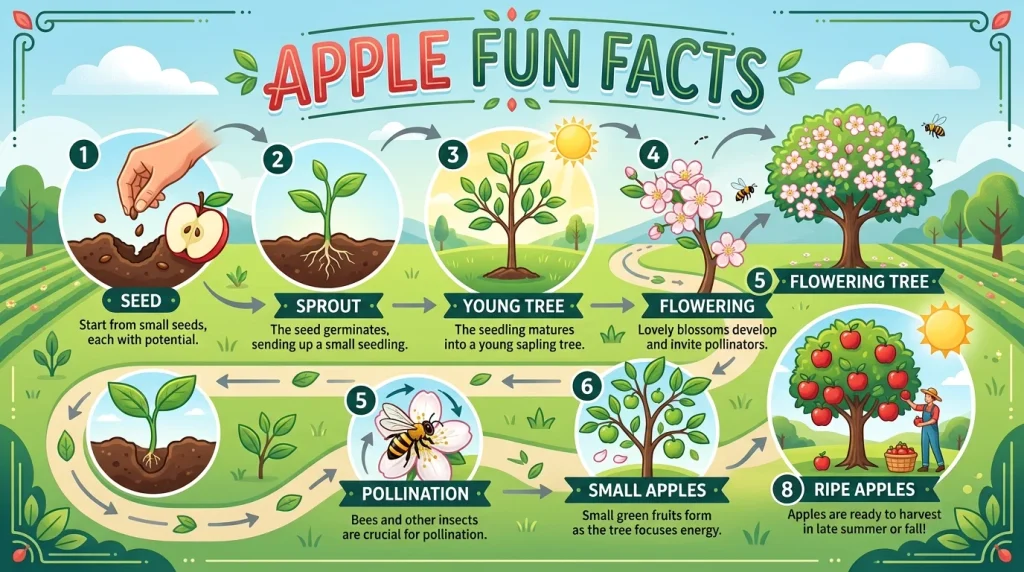
Apples have played a pivotal role in shaping human culture, folklore, and scientific discoveries for thousands of years. Long before modern grocery stores existed, ancient travelers carried apple seeds across vast continents.
Understanding the historical journey of the apple gives us a deeper appreciation for how deeply intertwined this simple fruit is with human civilization.
The Wild Ancestors from Kazakhstan
Scientists have traced the genetic origin of almost all modern domestic apples back to a single wild ancestor known as Malus sieversii. These ancient apple trees still grow wild in the Central Asian nation of Kazakhstan.
In fact, the former capital city of Kazakhstan, Almaty, derives its name from the local Kazakh word for “father of apples.” If you visit the mountain forests surrounding Almaty today, you can walk through wild fruit forests where original apple trees produce fruit of varying shapes, colors, and flavors.
How Apples Traveled across the Globe
Central Asian merchants traveling along the ancient Silk Road trade routes helped spread apple seeds westward into Europe and eastward into China. As travelers discarded apple cores along trade paths, new trees sprouted naturally, leading to natural hybridization.
Later, European colonists brought apple seeds and young saplings across the Atlantic Ocean to North America. The famous historical figure John Chapman, better known as “Johnny Appleseed,” traveled across the American frontier planting apple orchards. However, he planted most of these orchards to help settlers claim land rights and produce hard cider rather than fresh eating apples!
The Role of Apples in Human Discoveries
Apples have inspired some of the greatest breakthroughs in human scientific history. The most famous story involves Sir Isaac Newton in the late 17th century.
According to historical records, watching an apple fall from a tree at his childhood home in Lincolnshire inspired Newton to formulate his groundbreaking theory of universal gravitation. Whether the apple actually struck him on the head remains a matter of historical debate, but the falling fruit undeniably sparked a revolution in physics.
Apple Health and Nutrition Quick Facts
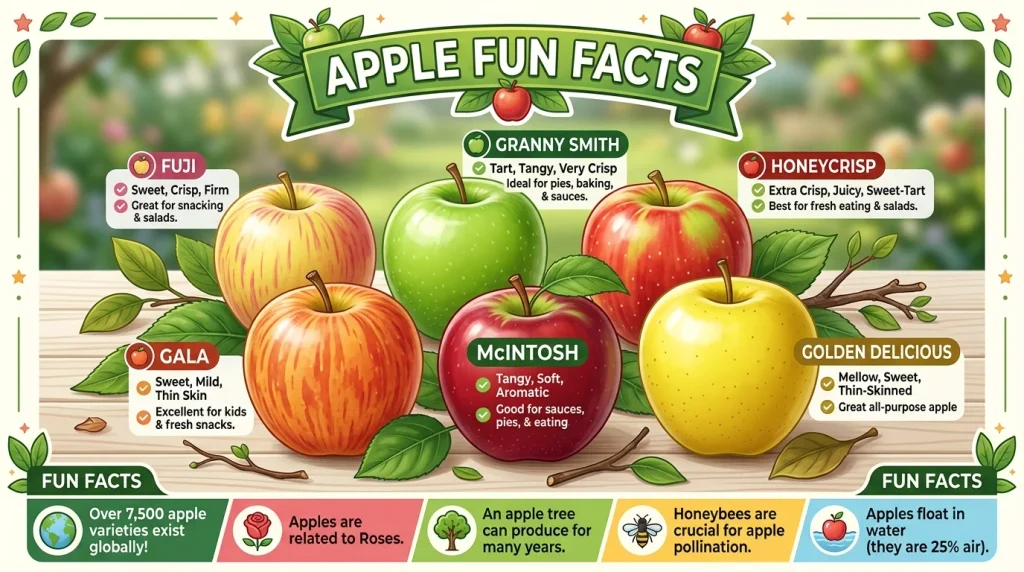
Here is a simple breakdown summarizing key nutritional details and interesting physical facts about apples.
MCQs
Test your knowledge on these apple fun facts with this simple quiz!
- Which part of an apple contains the seeds?
A) Skin
B) Core
C) Stem
D) Leaf - What color can apples naturally be?
A) Red
B) Green
C) Yellow
D) All of these - Where do apples grow?
A) On trees
B) Underground
C) On vines
D) In bushes - What develops into an apple after flowering?
A) Root
B) Fruit
C) Leaf
D) Branch - Which drink can be made from apples?
A) Apple juice
B) Coconut water
C) Lemonade
D) Milk - What is the crunchy outer layer of an apple called?
A) Skin
B) Core
C) Pulp
D) Root - Which of these is a popular apple dessert?
A) Apple pie
B) Sushi
C) Nachos
D) Hummus - What do apple trees produce before apples develop?
A) Flowers
B) Feathers
C) Shells
D) Fins - Which part connects an apple to the tree?
A) Seed
B) Stem
C) Core
D) Skin - Which of these is an apple variety?
A) Granny Smith
B) Blue Moon
C) Golden River
D) Green Starfish
✅ Answer Key
- B
- D
- A
- B
- A
- A
- A
- A
- B
- A
FAQs
Why do apples turn brown after being sliced?
Apples turn brown due to an enzymatic reaction that occurs when oxygen hits the sliced plant cells. The polyphenol oxidase enzyme reacts with oxygen, creating brown pigments. You can slow down this process by squeezing fresh lemon juice over the sliced surfaces.
Are apple seeds poisonous to humans?
Apple seeds contain small amounts of amygdalin, a chemical compound that converts to cyanide when crushed and digested. However, an adult would need to thoroughly chew and consume hundreds of seeds in a single sitting to experience harmful or toxic effects.
What is pomology?
Pomology is the branch of botany that focuses specifically on the study, cultivation, and production of fruit, including apples. Scientists who specialize in this field work tirelessly to breed hardier, sweeter, and more disease-resistant fruit tree varieties.
How long can apples stay fresh in cold storage?
When stored in commercial controlled-atmosphere cold rooms with low oxygen and temperature, apples can remain fresh for up to 12 months. This special storage technique allows growers to supply crisp fruit to grocery stores all year long.
Which country produces the most apples in the world?
China is by far the world’s largest producer of apples, harvesting tens of millions of metric tons each year. This accounts for more than half of the entire global annual supply of apples.
Do apple trees grow true to seed?
No, apple trees planted from seed do not grow true to their parent plant’s traits. Every seed produces a unique, genetically distinct hybrid tree, which is why commercial apple growers rely on grafting techniques to replicate exact varieties.
Conclusion
Exploring these apple fun facts reminds us just how remarkable everyday nature can be. From their surprising connection to garden roses to their historical role in helping Sir Isaac Newton understand gravity, apples are far more than a simple healthy snack.
Next time you pick up a crisp Fuji or Honeycrisp apple, share these cool bits of trivia with your friends and family! Which fun fact surprised you the most?

Ethan Danial is the creator and lead writer behind FunWhirls.com, a fun-focused platform dedicated to entertaining ideas, fascinating facts, funny moments, creative lists, and content that sparks curiosity. With a genuine love for discovering interesting and unexpected topics, Ethan enjoys turning simple ideas into engaging content that readers can enjoy, learn from, and share. His approach is centered on making every article easy to read, enjoyable, and worth coming back to.
At FunWhirls.com, Ethan Danial explores the lighter and more entertaining side of everyday life. He creates content for readers who love discovering something new, having a quick laugh, or simply taking a break from the ordinary. From curious facts to playful ideas and entertaining discoveries, Ethan aims to keep the content fresh, positive, useful, and engaging for readers of all kinds.