Direct Answer: Barcelona is a vibrant city famous for its whimsical architecture, sunny beaches, and rich Catalan culture. Fascinating barcelona fun facts reveal that its golden beaches are actually artificial, its iconic Sagrada Família has taken longer to build than the Pyramids, and its streets conceal secret subterranean Roman ruins.
Think you know everything about Catalonia’s sun-drenched capital? Beyond the tapas bars and crowded boulevards, Barcelona holds secrets that baffle even long-time locals.
Uncovering quirky barcelona fun facts makes exploring this historic Mediterranean metropolis vastly more exciting. From synthetic shores to unfinished cathedrals, every corner tells an unexpected story.
Whether you are planning your first visit or simply love trivia, these surprising insights will forever change how you view this iconic coastal destination.
The Wild Secrets Behind Barcelona’s Architecture
Walk down any street in Barcelona and you will notice something peculiar. Buildings bulge, balconies resemble bone structures, and colorful mosaics flicker in the sunlight. Architecture here is not just structural design—it is a living, breathing art form shaped by radical artistic movements.
Antoni Gaudí Was Not the Original Architect of Sagrada Família
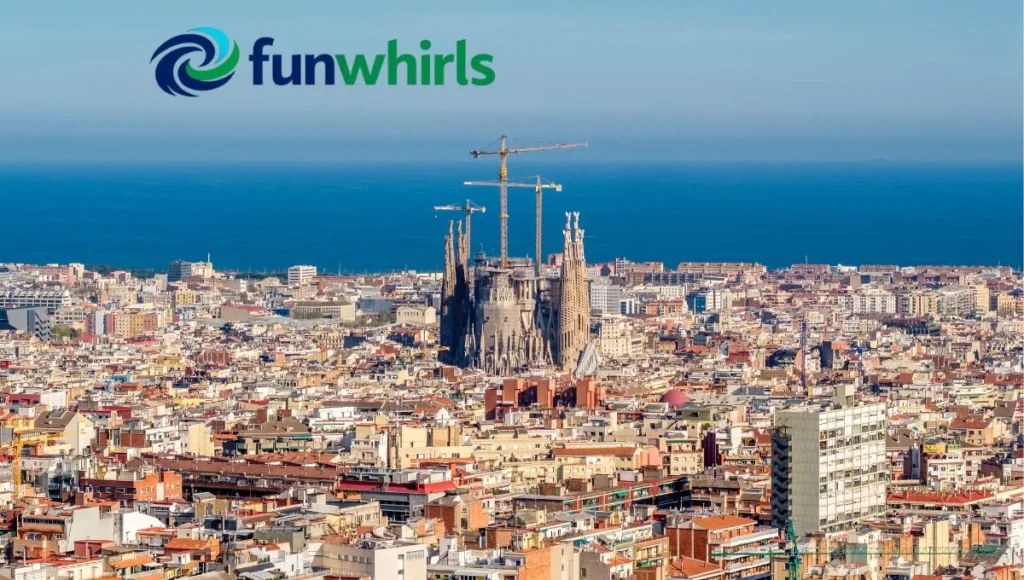
Most visitors assume the famous master Antoni Gaudí designed the legendary Sagrada Família from scratch. Surprisingly, another architect named Francisco de Paula del Villar actually started the project in 1882. He designed a traditional Gothic revival church before resigning after a year due to disagreements with developers.
When Gaudí took over in 1883, he completely redesigned the concept. He scrapped the standard blueprints and replaced them with his famous nature-inspired masterpiece. Today, learning these architecture barcelona fun facts helps travelers appreciate how close the world came to missing out on Gaudí’s signature vision.
- 1882: Construction begins under Francisco de Paula del Villar.
- 1883: Gaudí takes control and radically changes the design.
- 1926: Gaudí tragically passes away, leaving the church under 25% complete.
The Sagrada Família Is Taking Longer to Build Than the Great Pyramids
It sounds impossible, but it is entirely true. The Great Pyramid of Giza took roughly 20 years to construct using ancient engineering techniques. Meanwhile, Barcelona’s landmark cathedral has been under continuous construction for over 140 years.
Multiple historic events caused massive delays:
- The Spanish Civil War destroyed Gaudí’s original plaster models and blueprints.
- Construction relied entirely on private donations for decades.
- Complex modern engineering is required to craft intricate stone geometry safely.
Workers are currently aiming to finish the main towers soon. Once finished, it will become the tallest church tower in the entire world.
Casa Batlló Was Designed to Look Like a Slain Dragon
If you look closely at Casa Batlló on the famous Passeig de Gràcia, you will spot a terrifying creature. The roof is curved and covered in iridescent tiles that look exactly like the scaly back of a mythical beast.
This visual design tells the legend of Saint George (Sant Jordi), the patron saint of Catalonia.
- The arching roof represents the dragon’s spine.
- The single lance-like tower symbolizes the weapon plunged into the beast.
- The balconies resemble the skeletal remains of the dragon’s former victims.
The Truth About Barcelona’s Beaches and Coastline
It is almost impossible to picture Barcelona without imagining vibrant beach bars, golden sand, and sunny coastal shores. However, the city’s relationship with the sea was not always so picture-perfect.
Barcelona Had No City Beaches Until 1992
For hundreds of years, Barcelona turned its back on the sea. The coastline was entirely industrial, packed with dirty factories, warehouses, and old railway lines. Local residents rarely went down to the water for relaxation or leisure.
Everything changed when the city was chosen to host the 1992 Summer Olympic Games. Local planners launched an ambitious urban renewal project to reclaim the coast:
- Factories were demolished to create open coastal paths.
- Miles of golden sand were imported straight from Egypt.
- Modern boardwalks, palm trees, and neighborhood parks were installed.
Today, those artificial shores are considered some of the best urban beaches in the world.
Golden Sand Must Be Replaced Regularly
Because the beaches were created artificially, natural sea currents constantly erode the coast. Winter storms regularly pull tons of sand away into deeper ocean waters.
To keep the beaches wide and inviting, local authorities must pump new sand back onto the shore using massive dredgers every few years. Without constant human help, the famous Barceloneta beach would gradually wash away back into the Mediterranean Sea.
Mysterious Origins and Hidden Historical Secrets
The roots of human settlement in Catalonia run extremely deep. Behind the modern modernista cafes lie ancient secrets dating back thousands of years.
Legend Says Hercules Founded the City
Historians still debate who officially established the ancient settlement. One popular historical theory credits Hamilcar Barca, the famous Carthaginian general and father of Hannibal.
However, local folklore prefers a far more heroic myth. According to legend:
- Hercules joined Jason and the Argonauts on a quest for the Golden Fleece.
- Their ninth ship (“Barca Nona”) lost its way during a severe storm near the Catalan coast.
- The crew safely landed near Montjuïc hill and loved the region so much they built a city.
They named their new settlement Barca Nona, which slowly evolved into the modern name Barcelona over time.
Secret Roman Ruins Rest Beneath the Modern Streets
Long before modern towers were erected, the Romans built a fortified town named Barcino around 15 BC. You can still see towering remnants of this ancient settlement preserved across the Gothic Quarter.
- Four giant stone columns from the Temple of Augustus stand hidden inside a small residential courtyard.
- Ancient defensive stone walls are built directly into medieval apartments.
- An underground museum lets you walk along preserved Roman streets beneath the city pavement.
When walking through the Gothic Quarter, you are literally walking on top of two thousand years of continuous human history.
Odd Cultural Traditions and Quirky Local Customs
Catalan culture is uniquely independent, highly creative, and sometimes delightfully strange to outsiders. Understanding these interesting customs makes any trip far more memorable.
A Pooping Figure Belongs in Every Christmas Scene
If you visit Catalonia during the winter holidays, you will discover one of the most unexpected barcelona fun facts. Local families place a small figurine called the Caganer inside traditional nativity scenes.
This figurine depicts a traditional peasant wearing a red Catalan cap with his trousers pulled down, actively defecating on the ground.
- The tradition dates back to the late 17th century.
- It symbolizes fertilization, good luck, and hope for a rich harvest.
- Modern shops sell novelty versions shaped like famous politicians, singers, and football stars.
The Christmas Log That Poops Out Presents
The holiday eccentricities do not stop with tiny figurines. Catalans also celebrate Christmas with Tió de Nadal, a hollow wooden log styled with a painted smiley face and a red cap.
Starting in early December, children “feed” the wooden log every night with bread crusts, fruit peels, and water. They cover him with a warm blanket so he does not freeze.
On Christmas Eve, children hit the log with wooden sticks while singing special traditional songs. When they lift the blanket, they find the log has magically “pooped out” small candies, nuts, and toys for everyone.
People Build Human Towers Seven Stories High
During local street festivals, neighborhood groups perform an incredible tradition called Castells. Participants climb on top of each other’s shoulders to build massive human towers up to ten levels tall.
- Strong adults form the dense base (pinya) at the ground level.
- Nimble young adults form the middle elevated sections.
- A small child wearing a helmet climbs to the very top and raises four fingers to complete the tower.
This amazing tradition requires extreme trust, teamwork, and balance. UNESCO recognized Castells as an Masterpiece of the Oral and Intimate Heritage of Humanity.
Surprising Facts About Football and Local Passions
Soccer is far more than a sport in Catalonia—it is practically a passion that unites the entire region. The local club, FC Barcelona, carries deep historical weight.
FC Barcelona Was Started by a Swiss Businessman
Most people assume the city’s world-famous soccer club was created by native Spaniards. In reality, Joan Gamper, a sports enthusiast from Switzerland, founded FC Barcelona in 1899.
He placed an advertisement in a local sports newspaper looking for players interested in forming a team. Eleven enthusiastic players responded, leading to the creation of one of the most successful sports franchises in history.
The Team Slogan Means “More Than a Club”
FC Barcelona’s official motto is Més que un club. This phrase reflects how the team served as a symbol of regional identity and cultural freedom during tough political times in Spain’s past.
Supporting the team allowed locals to express their pride and unity safely. Today, Camp Nou stadium remains one of the largest and most legendary venues in global sports.
Urban Planning and Quirky Street Details
Barcelona looks remarkably unique from above. If you look at aerial photos, you will notice a neat octagonal grid pattern stretching across the city.
The Streets Have Cut Corners for a Very Smart Reason
In the mid-19th century, urban planner Ildefons Cerdà designed the iconic Eixample district. He wanted to make city life healthier, airier, and far more comfortable for everyday working residents.
He came up with a revolutionary design:
- Every block is built as an octagon with chamfered (cut-off) corners.
- The diagonal intersections allow far better visibility for drivers and streetcars.
- Sunlight and fresh sea air flow easily through wide, open street grids.
Today, these octagonal blocks provide convenient parking spaces for delivery vehicles and create cozy outdoor spaces for local sidewalk cafes.
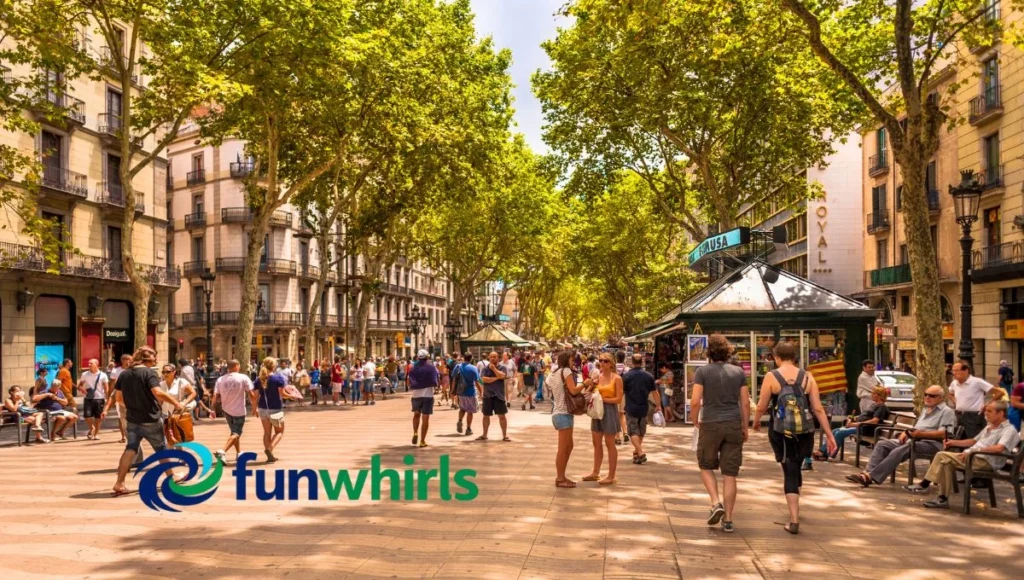
Las Ramblas Is Actually Five Different Streets Joined Together
The most famous boulevard in the city, Las Ramblas, is always packed with street performers, flower shops, and busy walking tours. But few visitors realize it is not a single continuous road.
It is actually a series of five distinct avenues connected end-to-end:
- Rambla de Canaletes: Famous for a drinking fountain where fans celebrate soccer wins.
- Rambla dels Estudis: Named after an old 16th-century university building.
- Rambla de Sant Josep: Known for lively outdoor flower stalls.
- Rambla dels Caputxins: Home to beautiful historic opera houses.
- Rambla de Santa Mònica: A lively stretch leading straight down to the harbor.
Because these five sections connect seamlessly, locals refer to the entire stretch as Las Ramblas in the plural form.
The Fountain That Guarantees You Will Return
At the top of Las Ramblas sits the Font de Canaletes, an ornate 19th-century drinking fountain topped with a streetlamp. Local legend says that anyone who drinks water from this fountain will fall in love with the city and safely return in the future.
If you want to ensure another visit down the road, make sure to take a small sip from this iconic landmark!
Famous Myths and Misconceptions
Because Barcelona attracts millions of visitors each year, several travel myths have spread over time. Clearing up these common misunderstandings will help you navigate the city like a seasoned local expert.
Flamenco Is Not Originally From Barcelona
Many tourists arrive expecting to see traditional flamenco performances on every corner. While you can easily find high-quality shows throughout the city today, flamenco did not originate in Catalonia.
Flamenco is a traditional art form rooted in the southern Spanish region of Andalusia. Catalonia has its own distinct regional dances, such as the Sardana, where people hold hands in a circle to symbolise unity and community pride.
Paella Is Not a Traditional Catalan Dish
Another common misconception is that paella is the city’s primary native dish. Paella actually originates from Valencia, located further south along the coast.
While local restaurants serve delicious seafood paella today, traditional Catalan cuisine focuses on different local dishes:
- Pa amb Tomàquet: Crispy toasted bread rubbed with fresh garlic, ripe tomatoes, and olive oil.
- Escudella i Carn d’Olla: A hearty meat and vegetable stew served during winter months.
- Fideuà: A delicious seafood dish made with small noodles instead of rice.
Environmental and Sustainability Secrets
Barcelona is actively working to become one of Europe’s greenest and most walkable urban spaces. City leaders use creative ideas to reduce traffic pollution and promote public health.
Superblocks Prioritize Walkers Over Cars
To fight air pollution and traffic noise, the city introduced “Superblocks” (Superilles). Planners group nine adjacent city blocks together and restrict through-traffic around the outer perimeter.
- Interior streets are reserved exclusively for pedestrians, cyclists, and local residents.
- Old parking spots are transformed into green parks, playgrounds, and bench seating.
- Noise levels drop drastically, giving neighborhoods a peaceful, village-like atmosphere.
This innovative concept is now being studied by urban planners around the world.
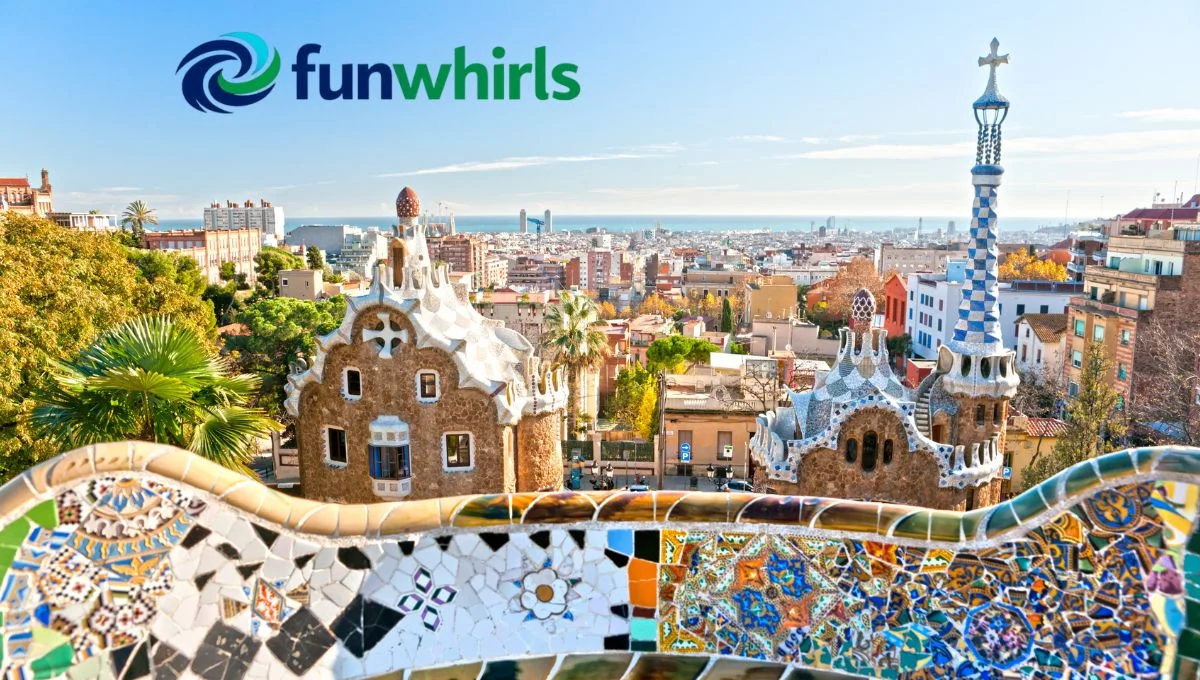
Park Güell Was Originally a Failed Housing Development
Park Güell is famous worldwide for its colorful mosaic benches and gingerbread-style gatehouses. However, it was never originally meant to be a public city park!
Count Eusebi Güell hired Antoni Gaudí to build an exclusive residential housing estate for wealthy families.
- The project planned for 60 luxury home plots set inside a quiet garden environment.
- High construction costs and poor transport links scared off buyers.
- Only two houses were ever completed before the project was completely abandoned.
The city later bought the land and opened it as a public park in 1926. Today, millions of visitors enjoy the stunning panoramic views from its grand terraces.
Essential Tips for First-Time Visitors
Now that you know these fascinating Barcelona fun facts, you are well-prepared to plan an unforgettable trip. Here are a few simple tips to keep in mind:
- Book Attractions Early: Popular spots like Sagrada Família and Park Güell sell out days in advance.
- Watch Your Belongings: Keep your bags closed and secure in crowded tourist areas to avoid pickpockets.
- Explore Beyond the Center: Visit quiet neighborhoods like Gràcia or Poblenou to experience genuine local daily life.
Practice Exercise (10 MCQs)
1. Which country is Barcelona located in?
A. Portugal
B. Spain
C. France
D. Italy
2. Which famous architect is closely connected with Barcelona?
A. Antoni Gaudí
B. Pablo Picasso
C. Salvador Dalí
D. Diego Velázquez
3. What is Barcelona’s famous unfinished basilica called?
A. Casa Batlló
B. Park Güell
C. Sagrada Família
D. Casa Milà
4. Which sea borders Barcelona?
A. Black Sea
B. Baltic Sea
C. Mediterranean Sea
D. Red Sea
5. Which football club is based in Barcelona?
A. Sevilla FC
B. Atlético Madrid
C. FC Barcelona
D. Real Madrid
6. Which language is officially recognized in Catalonia alongside Spanish?
A. German
B. Catalan
C. Italian
D. French
7. Which famous street is one of Barcelona’s best-known attractions?
A. La Rambla
B. Gran Vía
C. Oxford Street
D. Via Roma
8. Which Barcelona district is famous for its medieval streets?
A. Eixample
B. Barceloneta
C. Gothic Quarter
D. Gràcia
9. What architectural movement is strongly associated with Gaudí’s work?
A. Renaissance
B. Gothic Revival
C. Catalan Modernism
D. Baroque
10. Which area of Barcelona is famous for its beach?
A. Pedralbes
B. Gràcia
C. Barceloneta
D. Sarrià
Answer Key
B A C C C B A C C C
Frequently Asked Questions (FAQs)
What are three interesting barcelona fun facts for travelers?
Barcelona has artificial beaches created for the 1992 Olympics, street blocks designed with cut corners to improve light and traffic, and an unfinished cathedral that has taken longer to complete than the Great Pyramids.
Why is Barcelona architecture so famous worldwide?
The city features unique Modernist architecture led by Antoni Gaudí. His nature-inspired designs, colorful mosaic tiles, organic shapes, and dramatic structures create a visually stunning urban landscape unlike anywhere else on Earth.
Is paella originally from Barcelona?
No, paella originates from Valencia, located further south along the Spanish coast. While Barcelona offers delicious seafood rice dishes, traditional Catalan specialties include tomato-rubbed bread (pa amb tomàquet) and seafood noodles (fideuà).
What is the legend behind Font de Canaletes?
Local legend states that anyone who drinks fresh water from the Font de Canaletes fountain will fall in love with Barcelona and return to visit the city in the future.
Why does Sagrada Família take so long to build?
Construction relies entirely on private donations, lost original models during historical conflict, and complex geometric stone construction. Modern techniques are now accelerating progress toward finishing the remaining central towers.
How many streets make up Las Ramblas?
Las Ramblas is actually made of five distinct avenues connected end-to-end, which is why locals refer to the entire lively walking boulevard in the plural form.
Conclusion
Barcelona is a city full of surprising secrets, rich history, and vibrant traditions. Discovering these barcelona fun facts reveals a destination far deeper and more fascinating than standard travel brochures suggest.
From synthetic beaches and dragon-inspired buildings to unique holiday customs, every neighborhood offers something unexpected to discover. The city’s unique charm comes from its mix of ancient heritage and creative modern ideas.
Are you ready to experience these amazing sights in person? Start planning your Mediterranean trip today, and do not forget to take a quick sip from the Canaletes fountain!

Ethan Danial is the creator and lead writer behind FunWhirls.com, a fun-focused platform dedicated to entertaining ideas, fascinating facts, funny moments, creative lists, and content that sparks curiosity. With a genuine love for discovering interesting and unexpected topics, Ethan enjoys turning simple ideas into engaging content that readers can enjoy, learn from, and share. His approach is centered on making every article easy to read, enjoyable, and worth coming back to.
At FunWhirls.com, Ethan Danial explores the lighter and more entertaining side of everyday life. He creates content for readers who love discovering something new, having a quick laugh, or simply taking a break from the ordinary. From curious facts to playful ideas and entertaining discoveries, Ethan aims to keep the content fresh, positive, useful, and engaging for readers of all kinds.