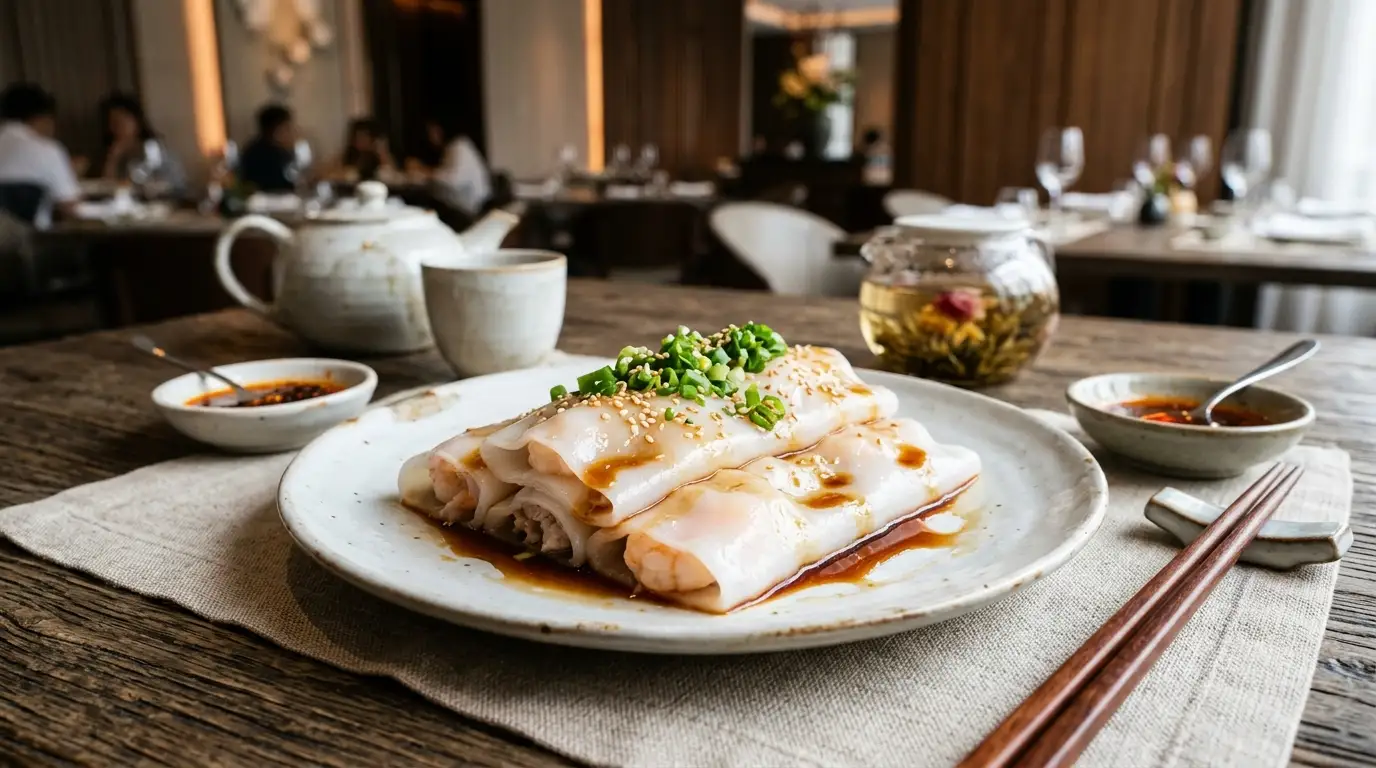
Making delicious cheung fun sauce at home requires balancing seasoned soy sauce, sesame paste, sweet hoisin, and chili oil. Drizzled over silky steamed rice noodle rolls, this savory-sweet condiment provides the signature Cantonese dim sum flavor profile. You can prepare an authentic, restaurant-quality blend in under ten minutes using simple pantry staples.
Have you ever wondered why dim sum rice rolls taste so utterly addictive? The secret almost always lies in the glossy, savory cheung fun sauce poured right over the top.
Creating authentic cheung fun sauce at home is surprisingly easy once you master a few fundamental balance tricks. Whether you prefer the sweet dim sum parlor style or the nutty street-food combination, this guide covers everything you need to know.
Get ready to transform simple steamed rice noodle sheets into a mouthwatering, restaurant-worthy feast using ingredients already sitting in your kitchen cabinet.
What Makes Cheung Fun Sauce So Special?
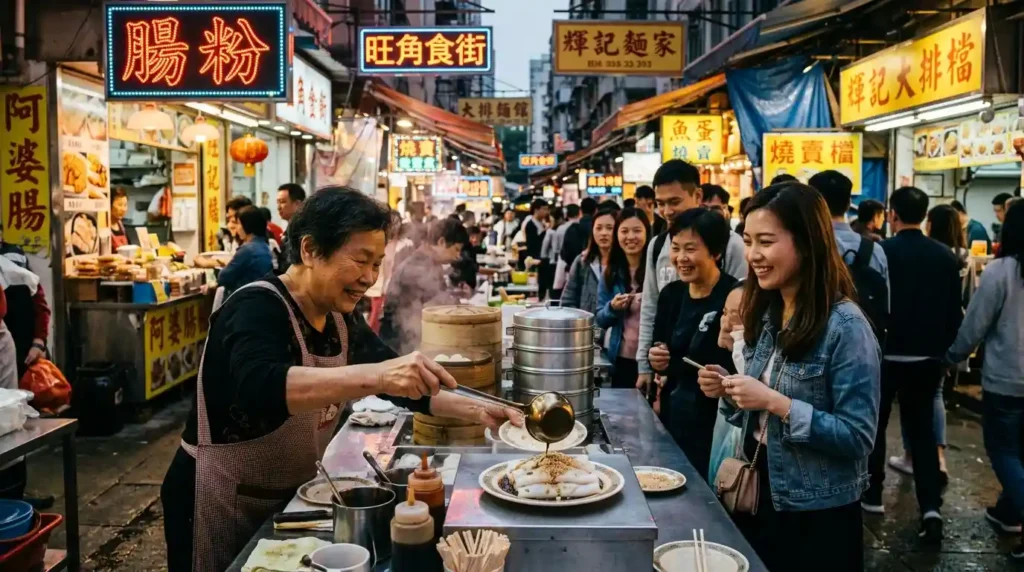
Cantonese street vendors and dim sum chefs consider their sauce recipes to be closely guarded secrets. The magic happens when simple liquid seasonings absorb directly into the warm, slippery layers of steamed rice noodles.
Without this rich liquid coating, steamed rice rolls can taste plain or overly starch-heavy. The sauce adds moisture, deep umami flavor, and a glossy shine that makes the dish look irresistible.
The Origins of Cantonese Rice Roll Sauce
Steamed rice noodle rolls, or cheung fun, originated in Guangdong province in Southern China before becoming a superstar dish in Hong Kong. Traditional street carts served plain rolled rice sheets drenched in a combination of sweet, salty, and nutty condiments.
As dim sum tea houses grew popular, chefs crafted a lighter, cooked sweet soy sauce specifically for filled rolls containing shrimp or BBQ pork. Both styles rely on precise flavor ratios to enhance rather than overpower the delicate rice noodle base.
Sweet Soy Sauce vs. Street Cart Mixes
Dim sum-style cheung fun sauce is liquid, warm, and built around a base of light soy sauce simmered with sugar and aromatic stocks. It flows easily into every fold of the noodle without clumping together.
Street cart-style sauce is thicker, bolder, and applied as a trio of distinct toppings: creamy sesame paste, rich hoisin sauce, and spicy chili oil. Mixing these contrasting textures creates a complex sweet and savory coating in every single bite.
Why Quality Pantry Staples Matter
Because this sauce contains only a few core components, choosing fresh, high-quality ingredients makes a dramatic difference in taste. Standard dark soy sauce alone can taste far too harsh and salty if you do not balance it properly.
Using toasted sesame oil, unrefined rock sugar, and authentic Chinese light soy sauce gives your sauce that signature smooth sweetness found in top Cantonese eateries.
Essential Ingredients for Authentic Flavor
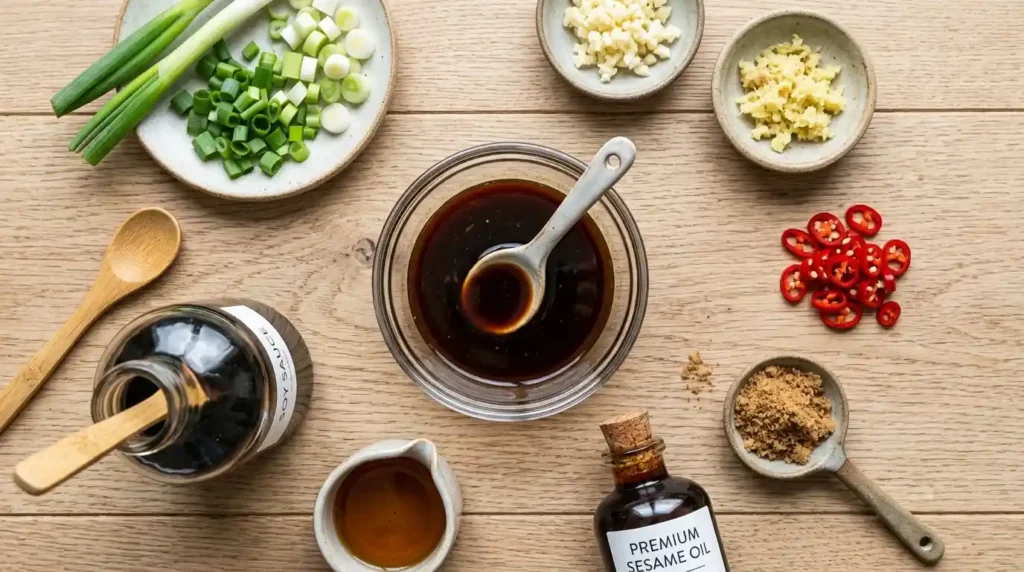
To build a memorable cheung fun sauce, you need to understand how each ingredient contributes to the overall flavor landscape. Balancing sweet, salty, umami, and nutty elements is the key to culinary success.
You can easily source all these ingredients at your local Asian grocery market or standard supermarket international aisle.
The Foundation: Soy Sauce Varieties
Light soy sauce supplies the essential salty base note and deep reddish-brown color without adding heavy viscosity. It provides the initial punch of umami that cuts through the neutral flavor of cooked rice flour.
Dark soy sauce is used sparingly, mainly to impart a dark, caramel-like luster and a subtle earthy sweetness. Adding just half a teaspoon instantly elevates the visual presentation of your finished dish.
Sweetening Agents: Rock Sugar and Beyond
Traditional Cantonese cooks prefer yellow rock sugar over refined white table sugar because it melts down smoothly and leaves a brilliant shine. Rock sugar offers a gentle, subtle sweetness that never tastes cloying or artificial.
If you cannot find rock sugar, light brown sugar or palm sugar makes a fantastic substitute. Brown sugar adds a faint hint of molasses that pairs wonderfully with warm soy sauce.
Aromatics and Flavor Boosters
Fresh ginger slices, scallion whites, and whole star anise create an aromatic background note when simmered into the soy mixture. Straining these solids out before serving leaves you with a clean, perfume-like herbal finish.
A small splash of toasted sesame oil added right at the end locks in a rich, nutty fragrance. Never boil sesame oil for long periods, as high heat can turn its delicate flavor bitter.
Master Recipe: Classic Dim Sum Sweet Soy Sauce
This classic sweet soy Cheung Fun sauce recipe mimics the light, sweet liquid served at high-end dim sum parlors. It takes less than ten minutes to prepare on your stove and stays fresh in the refrigerator for weeks.
Pouring this warm, aromatic liquid over freshly steamed shrimp or beef rice rolls creates an instant classic meal.
Ingredients List
To prepare a standard batch yielding about one cup of sauce, gather the following simple items:
- 1/2 cup water or light vegetable stock
- 3 tablespoons light soy sauce
- 1 tablespoon dark soy sauce
- 2 tablespoons rock sugar (crushed) or brown sugar
- 1 green onion (cut into two-inch pieces)
- 2 thin slices of fresh ginger
- 1 teaspoon toasted sesame oil
Step-by-Step Cooking Instructions
- Add the water, light soy sauce, dark soy sauce, and crushed rock sugar into a small saucepan set over medium heat.
- Toss in the green onion pieces and ginger slices to infuse their fresh aromatic oils directly into the heating liquid.
- Gently bring the mixture to a slow simmer while stirring occasionally until the sugar completely dissolves.
- Reduce the heat to low and let the liquid gently bubble for three to four minutes so the flavors meld together.
- Turn off the burner, remove the pan from the heat, and stir in the toasted sesame oil.
- Pour the mixture through a fine mesh strainer to remove the ginger and green onions before serving warm.
Pro Tips for Perfect Texture and Balance
Always taste your sauce with a plain piece of cooked rice noodle rather than off a metal spoon. Metal spoons can make soy sauce taste sharper and saltier than it actually tastes on food.
If your sauce feels too salty, stir in an extra tablespoon of warm water or stock. If it lacks depth, let it simmer for two extra minutes to concentrate the natural sugars.
The Iconic Street-Cart Combo Sauce
Hong Kong street carts are famous for serving plain rolled rice sheets cut into bite-sized pieces and smothered in thick, colorful sauces. This style focuses on bold contrast and rich textures.
Recreating this street food classic requires layering three distinct store-bought or homemade pastes right before eating.
Creamy Chinese Sesame Paste
Chinese sesame paste is made from toasted unhulled sesame seeds, giving it a dark color and deep, nutty flavor. It is much stronger and nuttier than Mediterranean tahini, which uses raw unhulled seeds.
To make it pourable, whisk two tablespoons of sesame paste with one tablespoon of warm water and a drop of sesame oil until smooth and creamy.
Sweet Hoisin and Red Sweet Sauce
Hoisin sauce delivers a sweet, tangy, and spiced flavor profile that cuts through the richness of nutty sesame paste. Street vendors often dilute hoisin slightly with warm water to help it drizzle smoothly over the noodles.
Some vendors also add a drizzle of red sweet sauce made from fermented rice, sugar, and red food coloring for extra visual flair.
Spicy Chili Oil and Toasted Seeds
No street cart plate is complete without a spoonful of crispy chili oil or spicy garlic paste. The heat cuts through the sweet, heavy toppings and awakens your taste buds.
Finish the entire dish with a generous shower of toasted white sesame seeds for a delightful crunch in every bite.
Regional Variations and Flavor Twists
While Hong Kong and Guangdong set the global standard, different regions across Asia have developed unique takes on rice roll sauces. Exploring these regional tweaks keeps your homemade meals exciting and varied.
You can easily customize basic sauces by adjusting sweetness, acidity, or spice levels according to your personal taste.
Malaysian and Singaporean Style Chee Cheong Fun
In Malaysia and Singapore, local cooks often serve rice rolls with a rich, dark sweet sauce made from fermented shrimp paste or black sweet sauce. The flavor profile leans heavily toward sweet and intensely umami.
Pickled green chilies are frequently served alongside the sauce to provide a sharp, vinegary crunch that resets your palate between bites.
Vietnamese Bánh Cuon Dip (Nước Chấm)
Vietnam has its own version of steamed rice rolls called Banh Cuon, served with a dramatically different dipping sauce. Instead of thick soy sauce, they use Nước Chấm, a light fish sauce dressing.
This dip combines warm water, lime juice, sugar, fish sauce, minced garlic, and sliced red bird’s eye chilies. It tastes light, tangy, sweet, and incredibly refreshing.
Modern Fusion Sauces
Modern home cooks love experimenting by mixing Western pantry items into traditional Cantonese sauce bases. Adding a spoonful of smooth peanut butter to hot soy sauce creates an instant, velvety shortcut to street-style sesame sauce.
Others like adding a splash of aromatic black vinegar to give sweet soy sauce a bright, fruity kick that pairs brilliantly with rich pork fillings.
How to Pair Sauce with Different Fillings
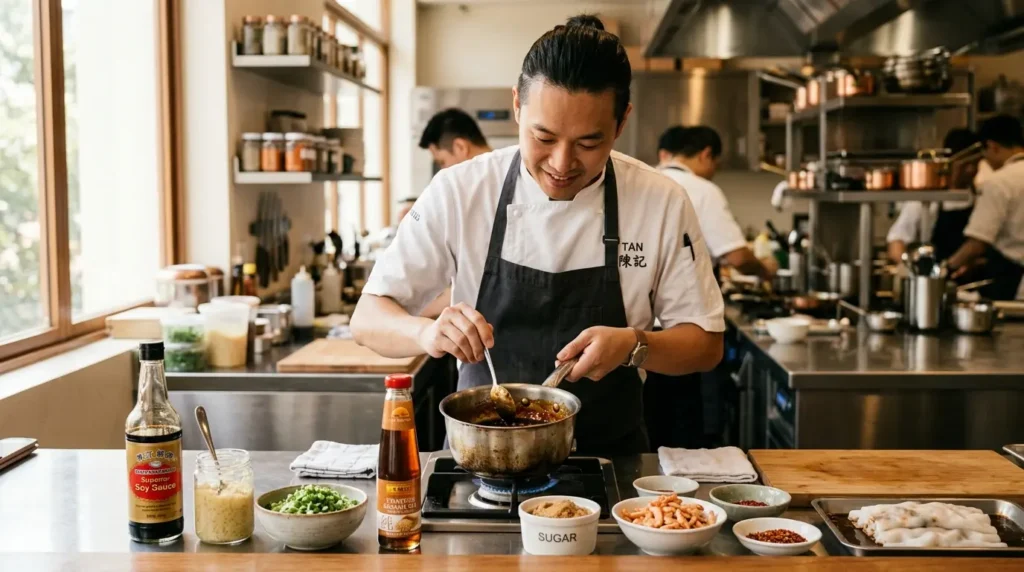
Matching the right cheung fun sauce to your specific rice roll filling elevates a good snack into a sensational dining experience. Not every filling works well with every sauce combination.
Understanding flavor pairings helps you serve balanced plates that impress your family and friends.
Succulent Shrimp Fillings
Fresh, bouncy shrimp fillings have a delicate seafood sweetness that can get lost under heavy, thick sauces. Stick exclusively to the warm, thin Dim Sum Sweet Soy Sauce for shrimp rolls.
The light liquid coats the thin rice wrapper without masking the fresh flavor of the sweet seafood inside.
Savory BBQ Pork (Char Siu)
Char Siu pork brings a smoky, sweet, and savory profile to steamed rice rolls. A slightly thicker sweet soy sauce infused with extra star anise pairs exceptionally well with this filling.
You can also drizzle a small line of hoisin sauce over the top to complement the red marinade used on the roasted pork.
Crispy You Tiao (Zha Liang)
Zha Liang consists of a soft, silky rice roll wrapped around a crispy, golden Chinese fried dough stick. This contrast in textures demands a combination of both thin sweet soy sauce and thick sauces.
Pour sweet soy sauce over the base, then top with zigzag drizzles of sesame paste and chili oil for maximum crunch and flavor.
Storing and Reheating Homemade Sauces
Making large batches of cheung fun sauce saves precious time during busy weeknight dinners. Storing your homemade creations properly keeps them tasting fresh and safe for future meals.
Follow these simple food safety and storage guidelines to get the longest shelf life out of your sauces.
Refrigeration Best Practices
Store cooked sweet soy sauce in a clean, airtight glass jar or squeeze bottle inside your refrigerator. Because of its sugar and salt content, it stays fresh for up to three weeks.
Thick sesame or hoisin paste mixtures should be stored separately in smaller containers and used within one week for optimal flavor.
Reheating Without Losing Flavor
Always warm your sweet soy sauce slightly before pouring it over freshly steamed rice noodles. Cold sauce will quickly chill hot rice rolls, ruining their delicate, soft texture.
Microwave small portions for ten to fifteen seconds, or warm the jar in a small bowl of hot water before serving.
Freezing Guidelines
Thin, soy-based sauces freeze surprisingly well for up to three months in small freezer-safe containers. Simply thaw the liquid overnight in your refrigerator and reheat it gently on the stove.
Avoid freezing thick sesame paste sauces, as the oils will separate and create a grainy texture upon thawing.
Fun Historical Facts About Rice Roll Sauces
Food history is packed with surprising trivia, and the story of Cantonese dim sum is no exception. Learning about the culture behind the cuisine makes every meal taste even better.
Here are a few entertaining facts about rice rolls and their famous sauces that you can share at your next dinner party!
Why Is It Called “Intestine Noodle”?
The direct translation of “cheung fun” literally means “pig intestine noodle” in Cantonese! Do not worry—there are absolutely no animal intestines used in making the dish.
The funny name comes purely from the long, rolled, and wrinkled appearance of the plain steamed rice sheets before they are chopped and sauced.
The Street Vendor Whistle Secret
In mid-century Hong Kong, street vendors pushed heavy wooden carts equipped with built-in steamers through busy neighborhoods. They attracted customers by blowing loud steam whistles and banging metal ladles against sauce pots.
Locals knew instantly that fresh, hot rice rolls drenched in rich sesame and sweet sauce were ready for purchase right outside their doors.
The Royal Blessing Legend
Legend has it that during an inspection tour of Southern China, the Qianlong Emperor of the Qing Dynasty tasted steamed rice rolls for the first time. He enjoyed the soft texture and flavorful sauce so much that he praised the dish publicly.
His royal praise helped spread the popularity of the dish from small rural villages into high-end urban restaurants across the empire.
Common Mistakes to Avoid
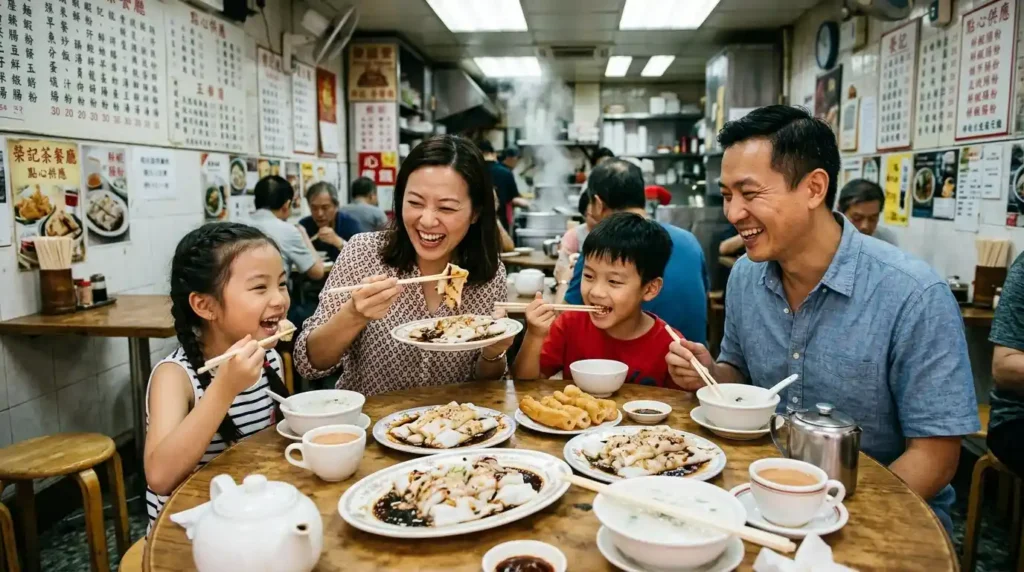
Even experienced home cooks occasionally run into trouble when preparing Asian sauce recipes for the first time. Avoiding a few common traps ensures your sauce turns out perfectly every single time.
Keep these troubleshooting points in mind as you head into the kitchen.
Boiling the Sauce Too Long
Simmering your sweet soy sauce for too long evaporates the water content and concentrates the saltiness to extreme levels. You want to dissolve the sugar and infuse the aromatics, not reduce the liquid into a thick syrup.
Keep your burner set to low heat and remove the pan from the stove as soon as the rock sugar melts completely.
Using Plain White Sugar Exclusively
While white sugar adds sweetness, it lacks the depth, roundness, and rich mouthfeel provided by rock sugar or brown sugar. Plain sugar can leave your sauce tasting sharp and overly commercial.
If you must use white sugar, balance it by adding a quarter teaspoon of honey or molasses to round out the flavor profile.
Pouring Cold Sauce Over Hot Noodles
Pouring cold sauce directly out of the fridge onto fresh, piping-hot rice rolls causes the delicate starch sheets to harden and turn chewy.
Always make sure your sauce is warm, or at least at room temperature, before dressing your plate.
MCQs
- Cheung fun is commonly associated with which cuisine?
A) Mexican
B) Chinese
C) Italian
D) French - What is Cheung fun?
A) Rice noodle rolls
B) Fried chicken
C) Sweet bread
D) Potato chips - What is a common ingredient in Cheung fun sauce?
A) Soy sauce
B) Chocolate syrup
C) Mustard
D) Apple juice - What does soy sauce mainly add to the dish?
A) Saltiness and umami
B) Sweetness only
C) Sourness only
D) Spiciness only - Which ingredient can add sweetness to Cheung fun sauce?
A) Sugar
B) Lemon
C) Garlic
D) Pepper - Cheung fun sauce is usually served with what?
A) Rice noodle rolls
B) Pizza
C) Pasta
D) Tacos - Which ingredient can add extra aroma to the sauce?
A) Sesame oil
B) Ice cream
C) Orange juice
D) Butter - Cheung fun is especially popular as what type of meal?
A) Dim sum
B) Dessert
C) Salad
D) Soup - What can chili oil add to Cheung fun sauce?
A) Heat
B) Creaminess
C) Sweetness
D) Coldness - What is the main purpose of Cheung fun sauce?
A) To add flavor to the rice noodle rolls
B) To make the noodles crunchy
C) To freeze the noodles
D) To replace the noodles
Answer Key
- B
- A
- A
- A
- A
- A
- A
- A
- A
- A
FAQs
Can I make cheung fun sauce gluten-free?
Yes, you can easily make a gluten-free version by replacing standard light and dark soy sauces with certified gluten-free tamari or coconut aminos. Keep the rest of the rock sugar and aromatic ingredients the same for great results.
What is a good substitute for Chinese sesame paste?
Smooth, natural unsweetened peanut butter mixed with a few drops of toasted sesame oil makes the best quick substitute. It offers a similar creamy texture and rich, nutty flavor profile that mimics authentic street cart sauces quite well.
Is cheung fun sauce served hot or cold?
Dim sum sweet soy sauce is traditionally served warm or at room temperature alongside freshly steamed hot rice rolls. Serving the sauce warm preserves the delicate, melt-in-your-mouth texture of the warm rice flour sheets during your meal.
Why is my homemade sauce too salty?
Your sauce is likely too salty because it simmered too long and reduced, or your light soy sauce brand has high sodium levels. Simply stir in a few tablespoons of warm water or unsalted stock to dilute the saltiness instantly.
Can I make the sauce without rock sugar?
Yes, you can substitute rock sugar with light brown sugar, raw cane sugar, or palm sugar in equal amounts. These alternatives dissolve quickly and add a pleasant caramel flavor note that works wonderfully in sweet soy recipes.
What is Zha Liang sauce?
Zha Liang sauce is a combination of sweet soy sauce poured over crispy dough-filled rice rolls, often drizzled with sesame paste, hoisin, and chili oil. This multi-sauce combination provides the ultimate balance of sweet, salty, and nutty flavors.
Do I need to cook street cart sesame sauce?
No, street cart sesame and hoisin sauces do not require cooking. You simply whisk the concentrated pastes with warm water and sesame oil in a bowl until smooth and drizzlable before applying them directly over hot rice rolls.
Conclusion
Mastering a classic cheung fun sauce recipe is the ultimate secret to unlocking authentic Cantonese dim sum flavors right in your home kitchen. Whether you love the elegant warmth of sweet soy sauce or the bold indulgence of street cart sesame and hoisin pastes, crafting these sauces takes minimal effort.
With simple pantry staples like light soy sauce, rock sugar, and aromatic ginger, you can transform plain rice noodles into a spectacular meal that rivals your favorite local tea house.
Now that you know the history, ratios, and insider secrets, it is time to grab your saucepan and start simmering! Whip up a batch of delicious homemade sauce today and share this guide with your favorite food-loving friends!

Ethan Danial is the creator and lead writer behind FunWhirls.com, a fun-focused platform dedicated to entertaining ideas, fascinating facts, funny moments, creative lists, and content that sparks curiosity. With a genuine love for discovering interesting and unexpected topics, Ethan enjoys turning simple ideas into engaging content that readers can enjoy, learn from, and share. His approach is centered on making every article easy to read, enjoyable, and worth coming back to.
At FunWhirls.com, Ethan Danial explores the lighter and more entertaining side of everyday life. He creates content for readers who love discovering something new, having a quick laugh, or simply taking a break from the ordinary. From curious facts to playful ideas and entertaining discoveries, Ethan aims to keep the content fresh, positive, useful, and engaging for readers of all kinds.