
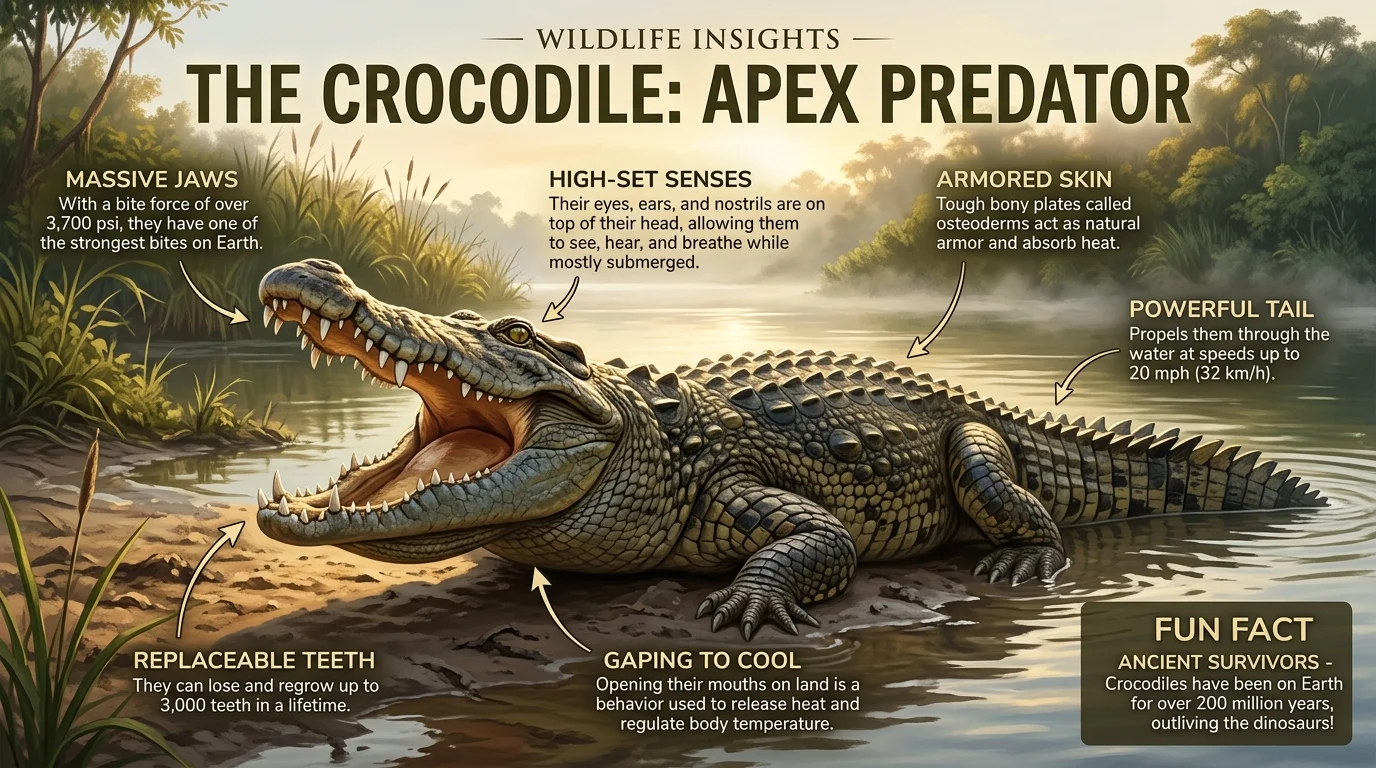
Crocodiles are ancient reptiles that have roamed Earth for over 200 million years, surviving the extinction that wiped out the dinosaurs. These formidable predators possess the strongest bite force of any living animal, can go months without food, and use sophisticated hunting strategies like using sticks to lure nesting birds.
Have you ever looked at a crocodile and wondered what secrets are hiding behind those ancient, unblinking eyes? These prehistoric creatures have been swimming through our planet’s rivers and swamps long before humans ever walked the earth.
Exploring crocodile fun facts opens up a world of fascinating adaptations, surprising behaviors, and evolutionary triumphs. Let us dive right in and uncover what makes these armored reptiles so utterly captivating.
The Evolutionary History of Crocodiles
Ancient Survivors of the Dinosaur Age
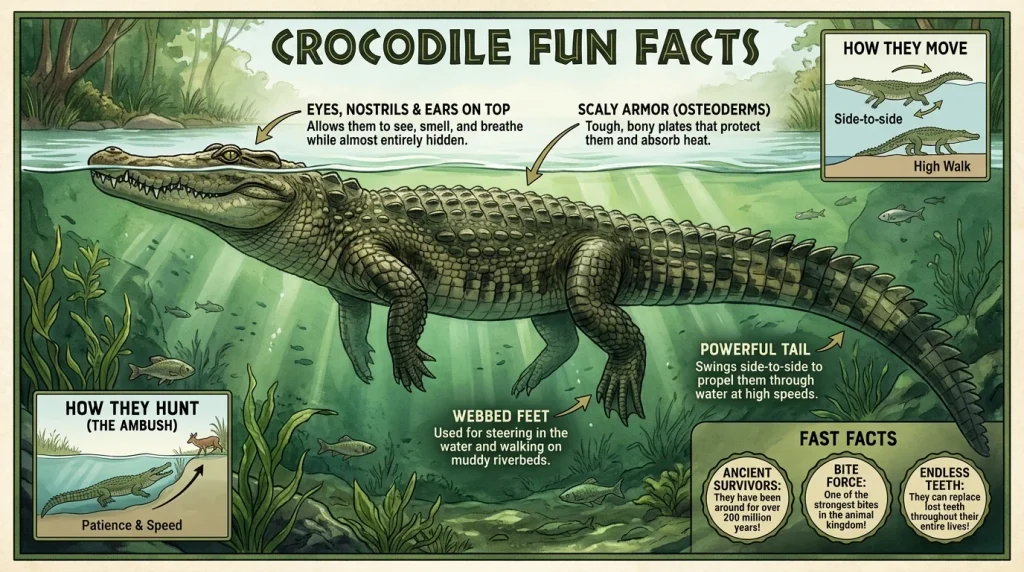
Crocodiles are true living fossils that watched the dinosaurs come and go. Their ancestors first appeared around 240 million years ago, surviving major mass extinction events that reshaped the planet.
Why Their Body Design Remained Unchanged
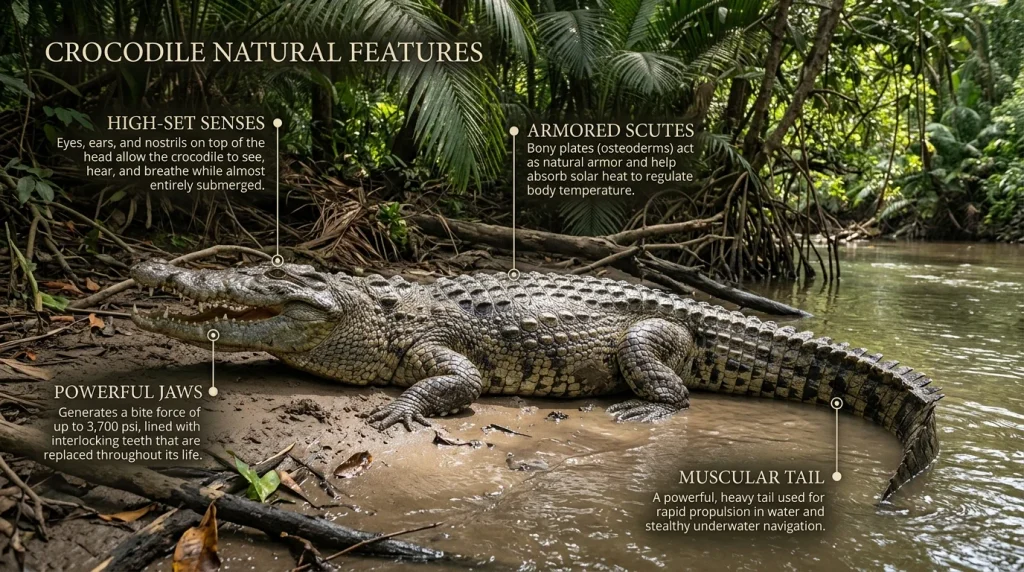
Nature rarely messes with perfection, which explains why modern crocodiles look remarkably similar to their ancient relatives. Their low-slung bodies, powerful tails, and armored scales proved ideal for both aquatic stealth and terrestrial survival. This timeless blueprint allowed them to outlast countless other species through changing climates and shifting continents.
Physical Power and Unique Anatomy
The Strongest Bite in the Animal Kingdom
When a saltwater crocodile clamps down, it exerts an astonishing force of nearly 3,700 pounds per square inch. To put that into perspective, human jaws generate roughly 150 pounds of pressure. This crushing power lets them crack turtle shells and take down large prey with ease.
How They Breathe and Swim Underwater
Crocodiles possess a special flap of tissue called the palatal valve at the back of their throats that seals shut when they submerge. This stops water from flooding their lungs, allowing them to wait patiently underwater while keeping their nostrils exposed at the surface.
The Secret Behind Their Tears
People often use the phrase “crocodile tears” to describe fake sadness, but it actually has a literal basis in fact. When these reptiles eat, excess air bubbles push through their tear ducts, causing their eyes to water genuinely.
Surprising Behaviors and Social Lives
Do Crocodiles Actually Cry?
While they do produce physical moisture when feeding, it has nothing to do with emotional regret. It is simply a physiological reaction to the way their jaws move while chewing or crunching food.
Smart Hunters and Tool Users
Recent scientific observations reveal that crocodiles are far more clever than many give them credit for. During nesting season, some species balance small sticks on their heads to trick wading birds looking for building materials. When a bird swoops in to grab the twig, the hidden crocodile strikes.
Communication and Family Life
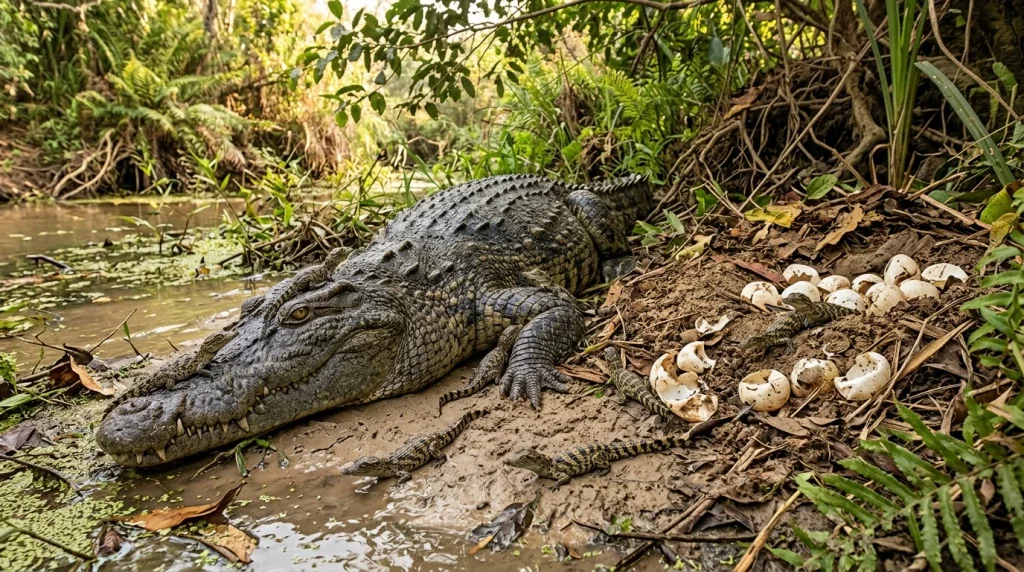
Mother crocodiles are surprisingly gentle with their hatchlings, carrying them safely in their massive mouths to the water. Before hatching, babies even communicate by making clicking noises from inside their eggs to signal their mother.
Extraordinary Survival Adaptations
Surviving Months Without Food
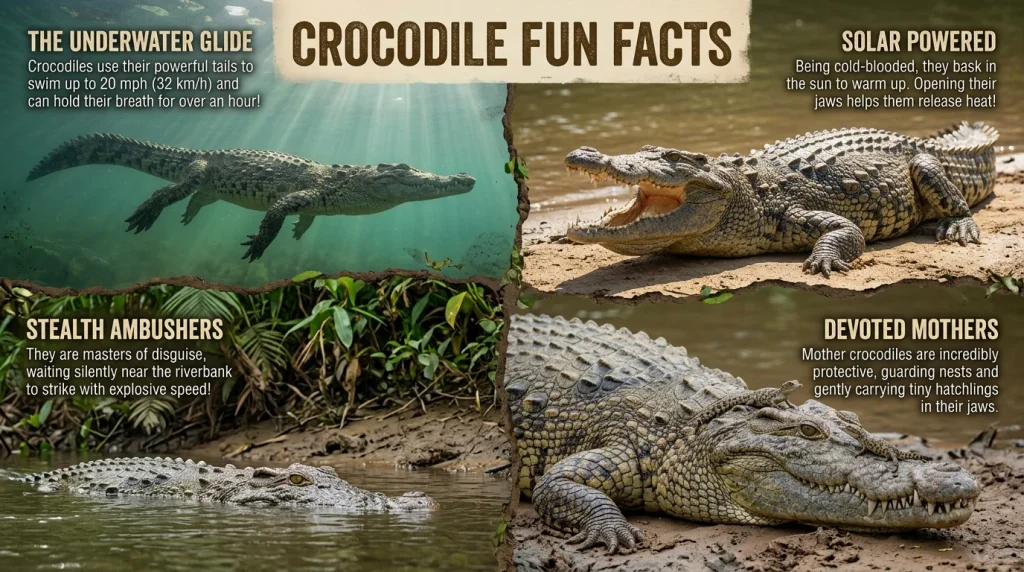
As cold-blooded animals, crocodiles do not need to burn energy constantly to maintain body heat. Their slow metabolism means a large meal can sustain them for months at a time, making them ultimate survivalists during times of drought.
Swallowing Stones for Ballast
If you peek inside a crocodile’s stomach, you will likely find a collection of heavy rocks known as gastroliths. These stones act as natural ballast, helping them control their buoyancy and dive deeper beneath the water surface with ease.
Sleeping with One Eye Open
Crocodiles practice unihemispheric slow-wave sleep, meaning one half of their brain stays awake while the other rests. This clever trick lets them keep a vigilant eye open for potential threats or passing prey even while resting on a muddy riverbank.
Where to Spot Crocodiles in the Wild
Exploring Australian Habitats
Northern Australia offers some of the best opportunities to see massive saltwater crocodiles in their natural mangrove habitats. Guided river cruises provide safe vantage points to observe these apex predators basking in the sun.
Encountering African River Giants
Rivers and lakes throughout sub-Saharan Africa serve as home to the formidable Nile crocodile. Witnessing the annual wildebeest river crossings reveals the raw power and survival instincts of these magnificent animals firsthand.
Protecting American Wetlands
The southeastern United States, particularly Florida and Louisiana, hosts thriving populations of crocodilians. National parks and protected wildlife reserves allow visitors to appreciate these creatures while learning about local conservation efforts.
MCQs
- What type of animal is a crocodile?
A) Reptile
B) Mammal
C) Bird
D) Amphibian - Where do crocodiles usually live?
A) Rivers, lakes, and wetlands
B) Deserts
C) Mountain peaks
D) Arctic ice - What covers most of a crocodile’s body?
A) Scales
B) Feathers
C) Fur
D) Wool - What do crocodiles use their powerful jaws for?
A) Catching and eating prey
B) Flying
C) Digging tunnels only
D) Climbing trees - How do crocodiles control their body temperature?
A) By using their environment
B) By growing fur
C) By sweating heavily
D) By flying into the sky - What helps a crocodile move through water?
A) Its strong tail
B) Its wings
C) Its horns
D) Its feathers - Which sense can be highly useful to crocodiles when hunting?
A) Sight
B) Hearing only
C) Smell only
D) None of these - What do baby crocodiles hatch from?
A) Eggs
B) Seeds
C) Cocoons
D) Pouches - Why do crocodiles often lie still near the water?
A) To conserve energy and watch for prey
B) To grow feathers
C) To learn to fly
D) To hide from sunlight permanently - Which feature helps protect a crocodile’s body?
A) Tough scales and bony plates
B) Soft fur
C) Feathers
D) Thin skin
Answer Key:
1-A, 2-A, 3-A, 4-A, 5-A, 6-A, 7-A, 8-A, 9-A, 10-A
FAQs
How long do crocodiles live in the wild?
Crocodiles enjoy a remarkably long lifespan, often living between 70 and 100 years in the wild. Their slow aging process and lack of natural predators once they reach adulthood allow them to thrive for decades.
Can crocodiles run fast on land?
They can sprint in short bursts of up to ten miles per hour on land. However, they tire out very quickly, meaning humans can easily outrun them over longer distances.
Do crocodiles eat humans regularly?
Attacks are relatively rare and usually happen when humans enter their territory or ignore safety warnings. Most of their diet consists of fish, birds, and mammals that come down to drink at the water’s edge.
How do crocodiles regulate their body temperature?
Crocodiles are ectothermic, meaning they rely on their environment to warm up or cool down. They bask in the sun with open mouths to release excess heat or slip into cool water when temperatures rise too high.
Are alligators and crocodiles the same animal?
Alligators and crocodiles belong to different biological families and live in different environments. Alligators prefer freshwater habitats and have wider, U-shaped snouts, whereas crocodiles favor saltwater and have pointed, V-shaped snouts.
How fast can crocodiles swim underwater?
They can reach swimming speeds of up to twenty miles per hour using their powerful tails. Their streamlined bodies make them remarkably agile swimmers in both rivers and open ocean waters.
Conclusion
Uncovering fascinating crocodile fun facts reveals just how resilient, intelligent, and finely tuned these ancient reptiles truly are. From their incredible bite strength to their clever hunting strategies, they remain masters of survival in a changing world.
Taking time to appreciate these magnificent creatures helps us respect the diverse wildlife sharing our planet. Next time you spot a crocodile resting by the riverbank, you will know the incredible history and power resting just beneath the surface.

Ethan Danial is the creator and lead writer behind FunWhirls.com, a fun-focused platform dedicated to entertaining ideas, fascinating facts, funny moments, creative lists, and content that sparks curiosity. With a genuine love for discovering interesting and unexpected topics, Ethan enjoys turning simple ideas into engaging content that readers can enjoy, learn from, and share. His approach is centered on making every article easy to read, enjoyable, and worth coming back to.
At FunWhirls.com, Ethan Danial explores the lighter and more entertaining side of everyday life. He creates content for readers who love discovering something new, having a quick laugh, or simply taking a break from the ordinary. From curious facts to playful ideas and entertaining discoveries, Ethan aims to keep the content fresh, positive, useful, and engaging for readers of all kinds.


