The best fun PE games boost physical fitness, teamwork, and active participation while keeping rules easy to understand. Activities like Capture the Flag, Pacific Island Tag, and Doctor Dodgeball keep kids moving, build motor skills, and ensure every student stays engaged throughout gym class.
Remember standing in gym class, praying you would not get picked last for dodgeball? Physical education has completely transformed since those stressful moments on the hardwood floor.
Modern teachers use creative, high-energy, fun PE games that focus on active movement, team spirit, and pure excitement. These activities make sure every child stays engaged without feeling left out.
Whether you coach a youth sports team or run an elementary gym class, incorporating fresh interactive ideas turns daily workouts into pure joy. Let us look at the best activities that keep kids moving, laughing, and building lifelong fitness habits!
Warm-Up Games That Get Energy Flowing Instantly
Starting gym class with static stretching often leads to bored glances and heavy sighs. Using interactive warm-ups gets heart rates up while firing up young minds for the main session.
These icebreaker movements focus on reaction speed, dynamic stretching, and spontaneous decision-making.
Rock, Paper, Scissors Tag
This active spin on the classic hand game brings immediate laughter and high-speed sprinting to your gymnasium floor. Players pair up along a center court line and play a standard round of Rock, Paper, Scissors.
The winner immediately becomes the tagger, while the loser turns and sprints toward their safe end zone line. If the runner reaches their safety zone before being tagged, they score a point for their team.
It turns basic sprint training into a thrilling mental reaction drill that kids ask to play every single day.
Traffic Light Sprint
Traffic Light Sprint teaches body control, sharp acceleration, and sudden deceleration through visual and verbal cues. The instructor holds up colored cones or calls out color signals while students move across the field.
- Green Light: Fast-paced sprinting straight ahead.
- Yellow Light: Gentle jogging or controlled skipping.
- Red Light: Instant freeze-frame stop on one foot.
If a student wobbles or steps forward after a red light call, they take three side-steps backward. It builds spatial awareness and teaches children how to absorb momentum safely.
PAC-MAN Maze Run
Using the painted lines already present on your basketball court, this activity recreates a classic arcade atmosphere. One or two designated ghosts chase the rest of the class across the floor.
However, all players must keep their feet directly planted on the painted lines of the court at all times. They can turn at intersections, but they can never step across open wood flooring.
This constant spatial recalculation keeps brains active while improving footwork and balance.
Team-Building PE Games for Elementary School
Elementary students thrive on imaginative play and simple scoring mechanics. Games that feature clear goals and quick turns keep young attention spans fully captivated.
These selections emphasize cooperation, motor control, and basic strategy without overwhelming young players with complex rules.
Pacific Island Tag
Pacific Island Tag combines tag mechanics with active rescue elements so no student sits on the sidelines for long. Two taggers hold soft foam pool noodles to identify themselves as island sharks.
When a student gets tagged, they must freeze in place, form a bridge with their arms, and shout for help. Free players can crawl safely under the frozen player’s arms to unfreeze them and bring them back into action.
Because rescue mechanics run constantly, every child stays physically active throughout the entire match.
Builders and Bulldozers
This chaotic, high-energy game splits your class into two opposing squads with opposite physical objectives. Set up twenty to thirty plastic cones randomly across the gymnasium floor, half standing up and half knocked over on their sides.
The Builders run around standing every knocked-down cone upright. Meanwhile, the Bulldozers move around gently tipping standing cones back onto their sides using only their hands.
After a two-minute timer expires, count the standing cones to declare a winner before swapping team roles.
Treasure Island Hoarders
Treasure Island Hoarders tests speed, coordination, and team resource management. Place a massive bucket filled with soft foam balls, beanbags, and plastic rings in the center of the gym to represent pirate treasure.
- Position four home bases in the four corners of the gym using hula hoops.
- One player from each corner team sprints to the center to steal one piece of treasure at a time.
- Players tag off with the next teammate in line to keep the relay moving.
- Once the central treasure runs out, teams can steal loot from neighboring home hoops!
The fast-paced relay nature keeps kids cheering while building sprint stamina and continuous teamwork.
High-Energy Gym Activities for Middle and High Schoolers
As students grow older, they desire deeper strategy, faster game paces, and friendly competition. Secondary PE activities should channel high energy into strategic group movement and skill execution.
These dynamic challenges test endurance, throwing accuracy, and tactical cooperation.
Ultimate Mat Ball
Ultimate Mat Ball upgrades basic kickball into a continuous, high-scoring spectacle. Lay four massive landing mats in the corners of the gymnasium to serve as giant safe zones.
When a kicker hits a soft rubber playground ball, they run to the first mat. Multiple runners can stand on a single mat safely at the same time, and they can choose when to sprint toward the next base.
Because no player is forced to run unless they want to, strategic teams launch mass group rushes that confuse defenders and score multiple runs at once.
Capture the Flag 2.0
Standard Capture the Flag gets a massive upgrade by introducing specialized player roles and designated jailbreak items. Divide your field into two halves with clear boundary markers.
Each team hides two flags and assigns defenders, attackers, and mid-court rovers. Placing soft foam dodgeballs along the center line allows attackers to pick up defense items to throw at opponent guards.
If an attacker gets tagged in enemy territory, they go to jail until a teammate sneaks across to grab a jailbreak hoop.
Doctor Dodgeball
Doctor Dodgeball replaces standard elimination mechanics with secret strategic roles. Before the game starts, each team secretly selects one player to be their designated “Doctor.”
When players get hit by a soft foam dodgeball, they must sit flat on the gym floor where they were struck. The secret Doctor can crawl over, tag frozen teammates on the shoulder, and instantly heal them back into active play.
If the opposing team figures out who the secret Doctor is and eliminates them, that team loses their ability to revive fallen teammates.
Minimal-Equipment Games for Any Space
You do not need thousands of dollars in commercial sports equipment to run an exceptional physical education program. Simple household or classroom supplies can create memorable physical challenges.
These budget-friendly activities work equally well in outdoor parks, empty cafeterias, or small blacktop play zones.
Hula Hoop Shipwreck
Hula Hoop Shipwreck turns a small blacktop area into an ocean survival game. Scatter twelve to fifteen hula hoops across the play area to act as wooden life rafts.
When the instructor shouts, “Stormy seas!” all students must jog, skip, or hop around the open space without stepping inside any hoops. When the leader calls, “Shipwreck!” everyone must quickly stand inside a hoop.
- Round 1: Maximum four players per hoop raft.
- Round 2: Remove three hoops; maximum three players per hoop.
- Round 3: Remove more hoops; players must balance on one foot inside shrinking rafts.
It encourages quick problem-solving, physical balance, and cooperative grouping under time pressure.
Beanbag Bocce Challenge
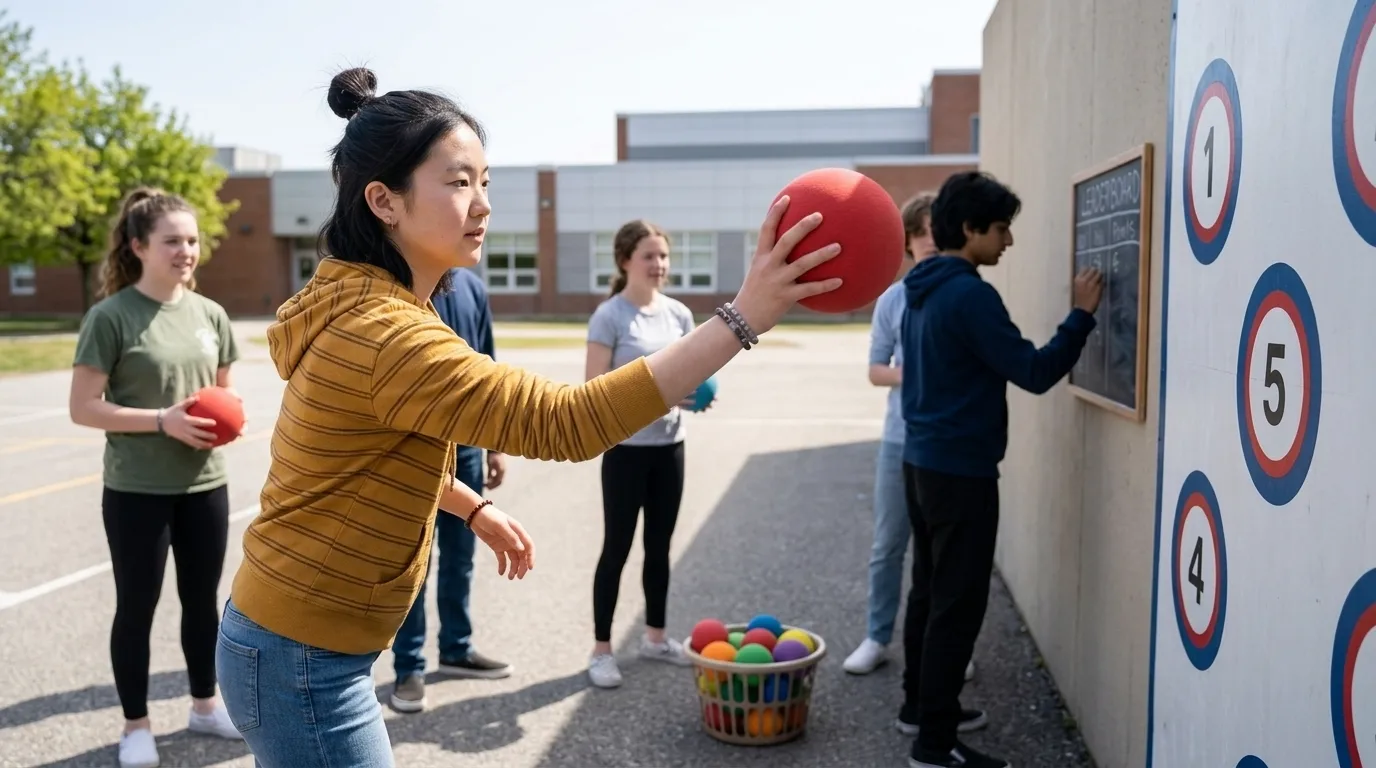
This quiet, strategic target-throwing activity works wonders for developing fine motor control and spatial judgment. Place one bright white pallino ball or beanbag in the center of a grassy area or gym floor.
Split students into small groups of three, giving each player two matching colored beanbags. Players take turns tossing their beanbags underhand, aiming to land as close to the white target as possible.
Knocking an opponent’s beanbag out of position is completely legal, adding a fun tactical element to every throw.
Newspaper Relay Race
Using only sheets of standard newspaper, this relay challenge introduces students to aerodynamic principles and persistent movement. Each runner places a flat sheet of newspaper across their chest without using hands, tape, or clips.
The runner must sprint forward fast enough that air pressure alone pins the paper against their chest until they reach the turnaround line.
If a player slows down, the paper drops to the ground, forcing them to stop, pick it up, and rebuild speed.
Inclusive PE Games for Mixed Ability Groups
Every child deserves to feel successful, valued, and energized in physical education regardless of their baseline athletic ability. Adapting rules to level the playing field creates an encouraging culture.
These inclusive designs ensure that agility, speed, or age differences do not prevent anyone from enjoying active play.
Sitting Volleyball
Sitting Volleyball drops the traditional net height and requires all participants to keep their bottoms in contact with the floor at all times. This completely levels the playing field between players with different running speeds or physical mobility levels.
Using a light beach ball or balloon slows down movement speeds, allowing players to focus on communication, passing, and team setups.
It builds impressive upper-body strength, quick reflexes, and deep empathy among all participating students.
Blindfold Navigator Obstacle Course
This pairing activity builds deep trust, spatial awareness, and clear communication skills. Set up a gentle obstacle course using soft cones, foam blocks, and flat agility rings.
One student wears a comfortable soft blindfold while their partner stands along the perimeter using only verbal instructions to guide them through the maze safely.
- “Take two small steps forward.”
- “Pause and lift your left foot over the yellow cone.”
- “Turn ninety degrees to your right and freeze.”
Roles switch once the course is completed, giving both partners practice in active listening and clear vocal direction.
Cooperative Parachute Waves
Parachute play is a timeless favorite because it requires absolute team coordination to achieve any movement goal. Spread twenty students evenly around the edge of a large colorful nylon parachute.
Place ten soft plastic balls or lightweight foam items on top of the fabric surface. The entire group must work together, lifting and lowering the parachute to keep the balls bouncing without letting any fall off the sides.
It removes personal win-loss pressure and replaces it with shared group success and rhythmic shoulder conditioning.
Adapting Games for Large Classes and Small Spaces
Teaching PE in a crowded indoor space or working with fifty students at once presents unique challenges. Without smart organization, big groups lead to long lines and idle wait times.
Structuring your physical layout effectively maximizes active time for every student.
Multi-Station Circuit Rotations
Instead of running one giant game where half the class waits for a turn, split your large group across four distinct micro-stations. Set five-minute countdown timers before rotating groups clockwise.
- Station A: Agility ladder footwork drills.
- Station B: Wall-rebound ball catching challenges.
- Station C: Jump rope cadence routines.
- Station D: Target beanbag accuracy throws.
This structure cuts down wait times to absolute zero while keeping noise levels manageable for instructors.
Side-Line Active Roles
In elimination-style games like dodgeball or knockout, sitting on the bench kills student momentum. Implement side-line active roles so eliminated players stay physically engaged while waiting to re-enter.
When a student steps out of the main court, they immediately move to a designated side exercise zone.
Completing ten jumping jacks, five lunges, or ten side-step bounces earns them the right to re-enter the game on the next rotation call.
Strategies to Encourage Lifetime Fitness Habits
Physical education is ultimately about teaching children that moving your body feels amazing. When kids view physical activity as fun rather than a forced chore, they carry healthy lifestyle habits into adulthood.
These teaching philosophies help shift gym class culture from forced performance to pure play.
Focus on Personal Bests Over Comparison
Avoid public scoreboards that compare individual athletic speeds across the class. Instead, track personal improvement metrics that celebrate individual growth over time.
Have students record how many skips, jump-rope rotations, or shuttle runs they can complete in thirty seconds.
When a child beats their own past score by two repetitions, they build authentic self-confidence that drives intrinsic motivation.
Use Gamification and Fun Themes
Transforming standard exercises into imaginative storylines unlocks surprising performance reserves in young children. Calling a plank a “drawbridge holding back water” makes core holding far more exciting.
- Standard Shuttle Run: Rebranded as “Super Hero Rescue Sprint.”
- Basic Push-Ups: Rebranded as “Rocket Ship Blast-Off Push-Ups.”
- Squat Holds: Rebranded as “Gorilla Jungle Crawl Stretches.”
Storytelling engages a child’s imagination, distracting them from physical fatigue while building movement stamina.
MCQs
Review key game rules, safety principles, and teaching strategies covered in this article with this multiple-choice practice quiz!
1. What does PE stand for?
A) Physical Education
B) Personal Exercise
C) Playing Events
D) Physical Entertainment
2. Which game involves running between cones?
A) Obstacle Course
B) Chess
C) Card Game
D) Drawing
3. What is commonly used in a relay race?
A) Baton
B) Pillow
C) Book
D) Plate
4. What skill can students practice during a target-throwing game?
A) Throwing accuracy
B) Reading
C) Writing
D) Singing
5. Which activity encourages teamwork with a large parachute?
A) Parachute Game
B) Bowling
C) Chess
D) Jump Rope
6. What can students use for a balloon challenge?
A) Balloons
B) Books
C) Bats
D) Shoes
7. Where are PE games commonly played?
A) Gym or sports field
B) Library
C) Kitchen
D) Office
8. What is an important part of PE games?
A) Physical activity
B) Sleeping
C) Watching TV
D) Sitting quietly
9. Why are team PE games useful?
A) They encourage teamwork
B) They stop communication
C) They avoid movement
D) They make players sit still
10. What should students follow during PE games?
A) Safety rules
B) Random instructions
C) No rules
D) Unsafe actions
Answer Key 🔑
- A) Physical Education
- A) Obstacle Course
- A) Baton
- A) Throwing accuracy
- A) Parachute Game
- A) Balloons
- A) Gym or sports field
- A) Physical activity
- A) They encourage teamwork
- A) Safety rules
FAQs
How do I stop competitive kids from dominating fun PE games?
Introduce rules that require team passes before scoring, like demanding three passes before launching a shot. You can also rotate leadership roles and give specialized responsibilities to quieter players to balance participation naturally.
What are the best fun PE games for rainy indoor days?
Activities like Builders and Bulldozers, Hula Hoop Shipwreck, and Silent PAC-MAN work incredibly well indoors. They keep safety high in tight spaces while using minimal gear and clear floor boundaries.
How long should a single PE game round last?
Keep individual game rounds short, lasting between three and seven minutes each. Frequent resets keep energy high, allow losing teams to reset their strategies, and give instructors quick teaching moments.
How do I manage large gym classes with over forty students?
Use multi-station circuit rotations or split the gym into two smaller side-by-side courts. Running two smaller simultaneous games doubles active participation and cuts down idle line-waiting time.
Are elimination-style games still acceptable in modern PE?
Elimination games are fine if you include fast re-entry mechanics. Avoid games where kids sit out for long periods; instead, let eliminated players perform short side-line challenges to re-enter play quickly.
How can I evaluate student performance without stressing them out?
Grade students on effort, sportsmanship, and personal growth rather than absolute athletic talent. Use simple observation rubrics that track participation, teamwork, and positive attitude during group play.
Conclusion
Physical education is at its best when movement feels like play rather than work. Incorporating these fun PE games into your regular curriculum guarantees higher student engagement, better team cooperation, and plenty of happy smiles.
Remember that great physical education is not about finding the next star athlete; it is about building confidence, fitness, and healthy habits for every single child in your room. Adapt rules as needed, celebrate effort, and keep the energy positive.
Now that you have fresh activities ready for your lesson plans, grab your whistle, head into the gym, and start playing! Which game will you introduce to your class first?

Ethan Danial is the creator and lead writer behind FunWhirls.com, a fun-focused platform dedicated to entertaining ideas, fascinating facts, funny moments, creative lists, and content that sparks curiosity. With a genuine love for discovering interesting and unexpected topics, Ethan enjoys turning simple ideas into engaging content that readers can enjoy, learn from, and share. His approach is centered on making every article easy to read, enjoyable, and worth coming back to.
At FunWhirls.com, Ethan Danial explores the lighter and more entertaining side of everyday life. He creates content for readers who love discovering something new, having a quick laugh, or simply taking a break from the ordinary. From curious facts to playful ideas and entertaining discoveries, Ethan aims to keep the content fresh, positive, useful, and engaging for readers of all kinds.