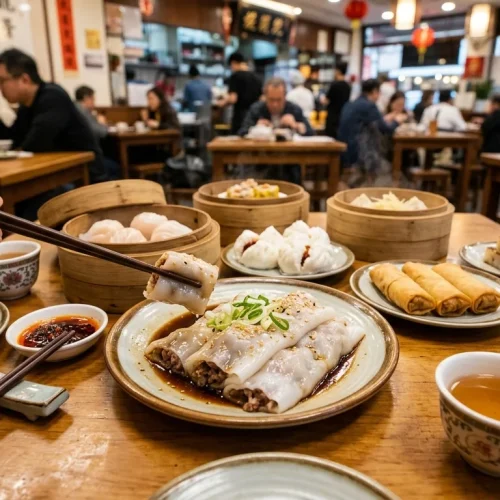
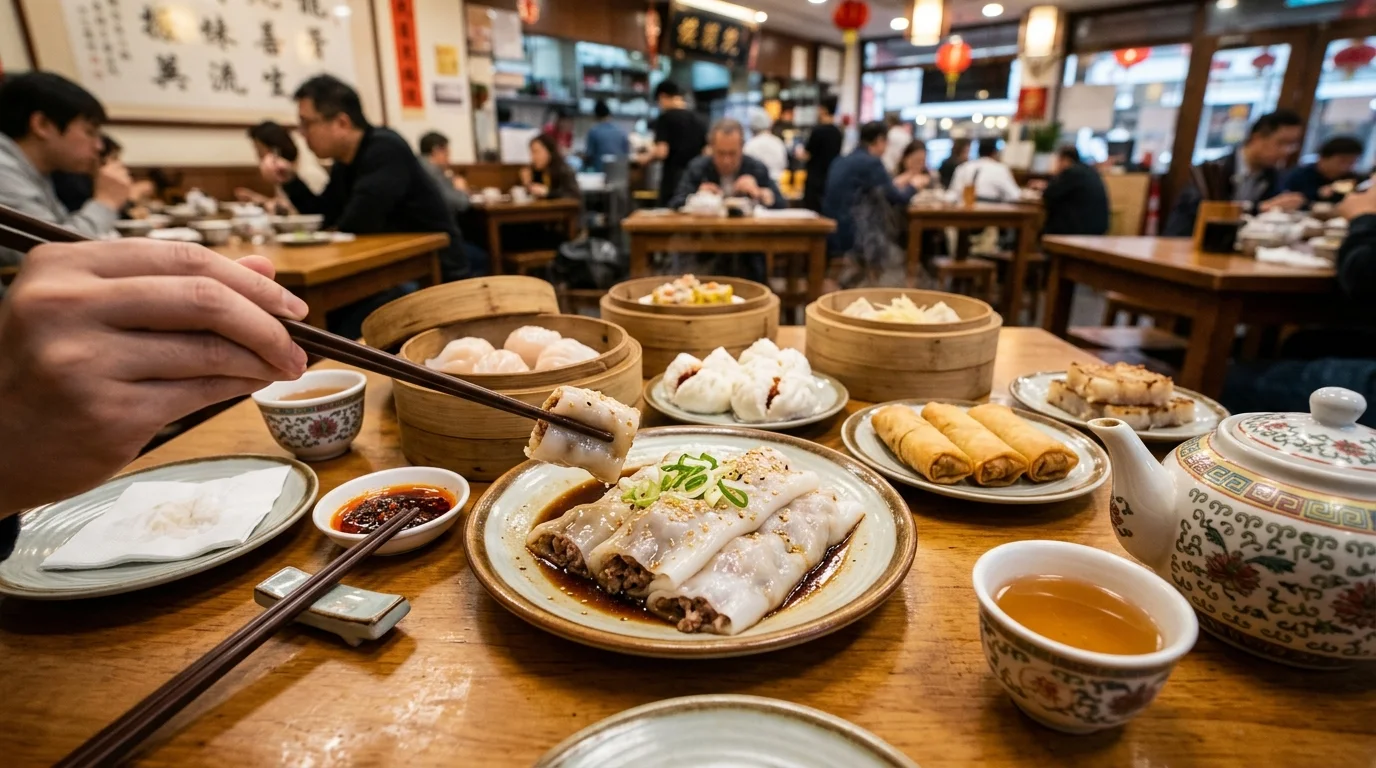
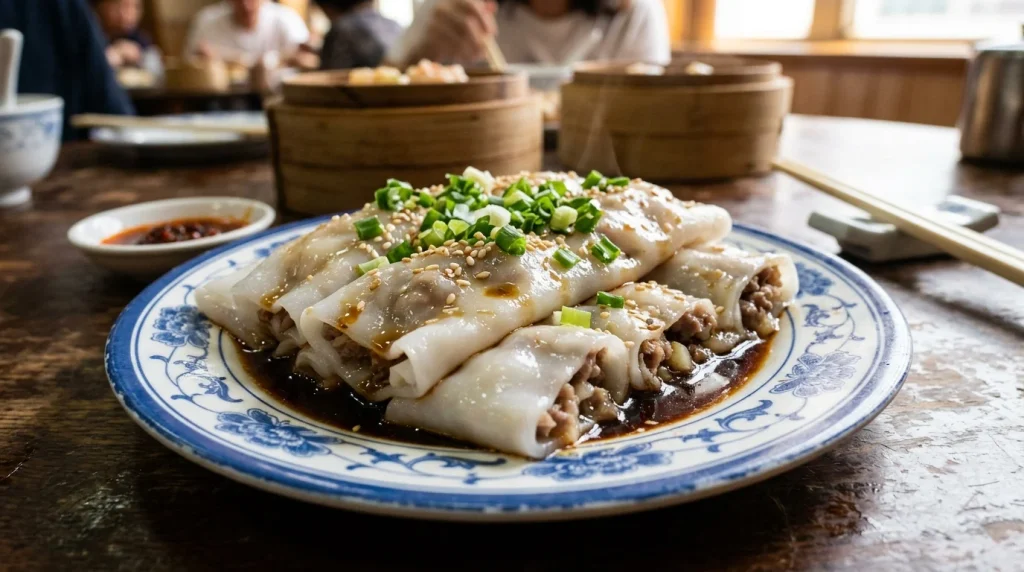
Beef cheung fun is a classic Cantonese dim sum dish featuring silky, tender rice noodle sheets wrapped around a savory, seasoned minced beef filling. Steam-cooked to perfection, these delicate rolls are drizzled with a sweetened, seasoned soy sauce, offering a delightful contrast of slippery noodle texture and rich, aromatic meat.
Have you ever sat at a dim sum restaurant, spotted the bamboo steamers rolling past, and immediately pointed at those glossy, silky noodle rolls? That incredible dish is beef cheung fun, one of the most beloved treasures of Cantonese cuisine.
If you have ever wondered how dim sum chefs get those rice sheets so incredibly soft and smooth, you are in the right place. Making these famous steamed beef rice rolls at home is much easier than you might think!
In this complete guide, we will break down every single step so you can make restaurant-quality steamed beef rice rolls right in your own kitchen. Grab your apron, and let us bring the authentic taste of dim sum home.
What Is Beef Cheung Fun?
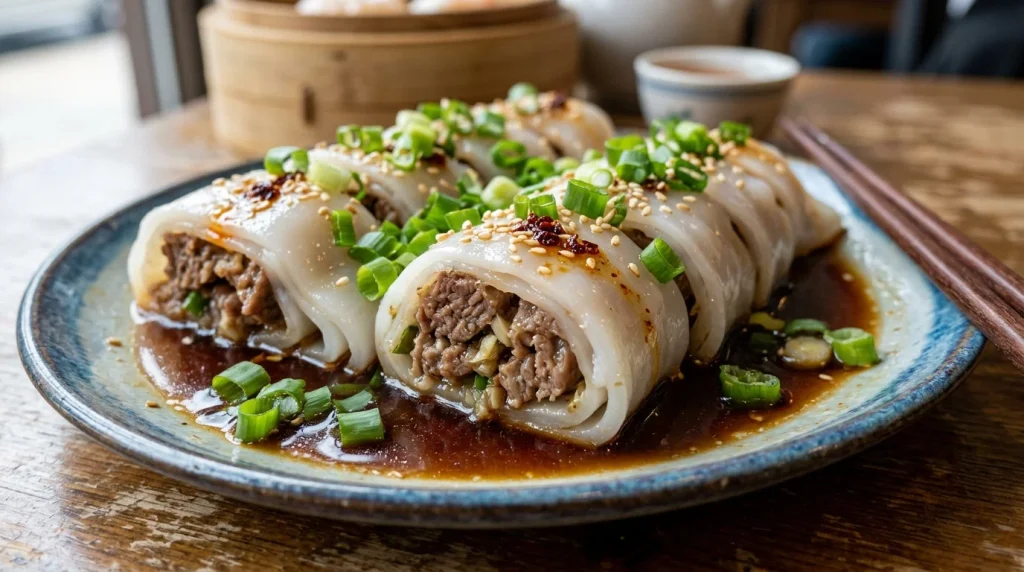
Beef cheung fun, often translated as steamed beef rice rolls, is a staple Cantonese dim sum dish. The word “cheung fun” translates literally to “pig intestine noodle,” but do not let the name fool you! It earned this nickname purely because the rolled rice sheet loosely resembles the shape of a small intestine.
The dish consists of a thin, translucent sheet made from rice flour and starch batter. This delicate sheet is stuffed with a seasoned beef filling, rolled up smoothly, and steamed until cooked through.
Before serving, the rolls are generously drenched in a homemade sweet soy sauce. The result is a savory, comfort-food bite that melts in your mouth with an unforgettable texture.
The History Behind the Rice Noodle Roll
Rice noodle rolls originated in Guangdong Province in Southern China and quickly became popular across Hong Kong. Street vendors and teahouses originally served plain steamed rice sheets topped with basic sauces as an affordable, filling snack.
Over time, creative chefs began adding delicious fillings inside the rolls before steaming them. Minced beef quickly became one of the top choices alongside shrimp and BBQ pork, transforming a simple street snack into an iconic dim sum staple enjoyed worldwide.
Why Is This Dim Sum Classic So Popular?
The real magic of this dish lies in its incredible contrast of textures and balanced flavors. You get the slippery, soft exterior paired with the juicy, aromatic meat inside.
- The rice sheet is tender, elastic, and smooth.
- The minced beef is seasoned with aromatics like ginger, cilantro, and mandarin orange peel.
- The signature sweet soy sauce ties every single bite together seamlessly.
Key Ingredients for Authentic Beef Cheung Fun
To build the perfect roll, you need to understand the three main components: the noodle batter, the savory beef filling, and the sweetened dim sum soy sauce. Let us break down what each part requires.
The Rice Noodle Batter Base
Getting the right texture for your rice sheet comes down to selecting the correct starches. Using only standard rice flour will make the noodle dense and snappy rather than soft and slippery.
- White Rice Flour: This forms the structural base of the noodle sheet.
- Tapioca Starch or Wheat Starch: Adding these starches gives the noodle its signature elasticity and glossy transparency.
- Cornstarch: A small touch helps maintain structural stability so the roll does not break easily.
- Water and Oil: Clear water hydrates the dry starches, while a tiny drop of neutral cooking oil adds gloss and prevents sticking.
The Seasoned Beef Filling
The beef filling should be tender, flavorful, and fine in texture so it steams evenly without creating hard lumps inside the delicate rice sheet.
- Lean Ground Beef: Choose a standard lean ground beef or mince your own steak freshly for the best flavor.
- Dried Tangerine Peel (Chenpi): This traditional ingredient provides a subtle citrus aroma that cuts through the richness of the meat.
- Cilantro and Water Chestnuts: Freshly chopped cilantro adds brightness, while finely diced water chestnuts add a pleasant crunch.
- Baking Soda and Water: A simple culinary trick used by dim sum chefs to tenderize the beef and keep it moist.
- Seasonings: Light soy sauce, sesame oil, Shaoxing wine, sugar, white pepper, and cornstarch bind everything together.
The Signature Sweet Soy Sauce
Never pour plain, unseasoned soy sauce directly over your cooked rice rolls! The sauce served at dim sum restaurants is specially prepared to be lower in sodium with a pleasant sweet note.
- Light Soy Sauce: Provides the core salty, savory base.
- Rock Sugar or Granulated Sugar: Adds essential sweetness to balance the saltiness.
- Water or Stock: Dilutes the strong soy sauce to make it light and smooth.
- Dark Soy Sauce: Adds a deep, appetizing dark color.
- Aromatics: Simmering the liquid with green onion, ginger, and cilantro stems infuses it with restaurant-grade flavor.
Step-by-Step Batter Preparation Secrets
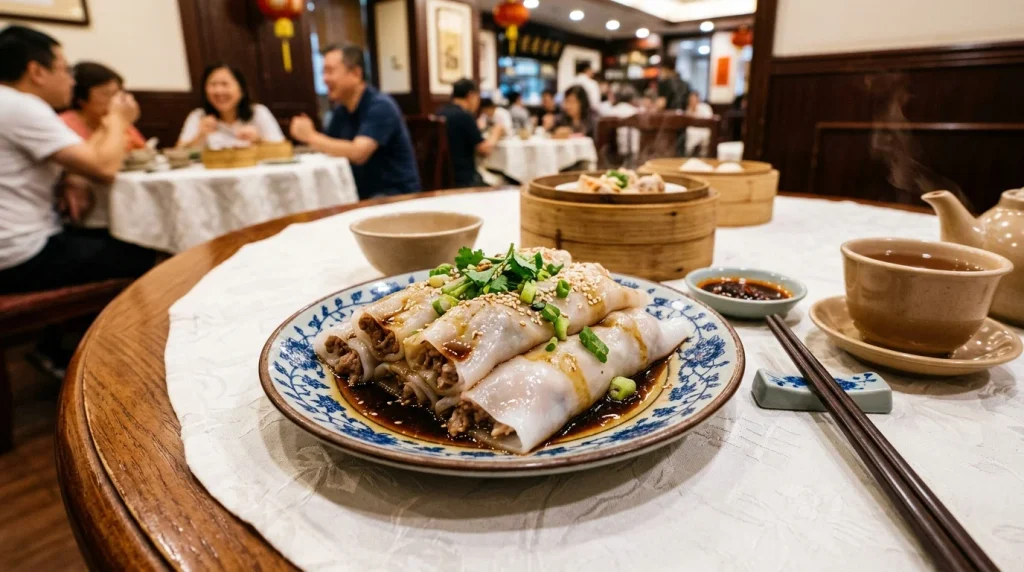
Making a silky rice sheet requires precision when measuring flour and water ratios. A small mistake can leave you with a rubbery noodle or a runny mess.
Getting the Flour-to-Water Ratio Right
The ideal batter needs to be quite watery, similar to the consistency of heavy cream or whole milk. A basic starting ratio is roughly one part combined dry starches to two-and-a-half parts water.
When you mix the ingredients, let the liquid rest on your counter for at least twenty minutes. This resting time allows the starch granules to absorb moisture fully, preventing your noodle from cracking during the steaming stage.
Why Starch Settles and How to Fix It
Starches do not dissolve in water; they remain suspended in liquid. This means that every single time you prepare to scoop batter into your steaming pan, you must stir it thoroughly from the bottom up.
If you forget to stir, the top layers of your batter will become too watery, while the bottom will turn into a thick sludge. Keep a whisk handy right next to your stove throughout the cooking session.
Preparing the Perfect Beef Filling
Tender beef inside a soft wrapper requires proper meat processing. Follow these simple steps to ensure your filling turns out light, juicy, and aromatic.
The Velvet Method for Tender Beef
Dim sum chefs use a process known as velveting to keep minced beef soft and springy after fast steaming.
- Mix ground beef with a half teaspoon of baking soda and two tablespoons of cold water.
- Stir vigorously in one direction using chopsticks or a fork until the meat absorbs all liquid and becomes sticky.
- Add Shaoxing wine, light soy sauce, white pepper, cornstarch, and sesame oil to set the flavors.
- Cover the meat and let it marinate in the refrigerator for thirty minutes before adding fresh herbs.
Adding Herbs and Aromatics
Once your marinated beef has rested, gently fold in your finely diced water chestnuts, chopped cilantro, and soaked, chopped tangerine peel. Do not overwork the meat at this stage, or it may lose its airy texture.
The tangerine peel offers an authentic Cantonese flavor note. If you cannot locate dried tangerine peel at your local market, a tiny pinch of fresh orange zest makes an acceptable substitute!
Essential Kitchen Equipment You Need
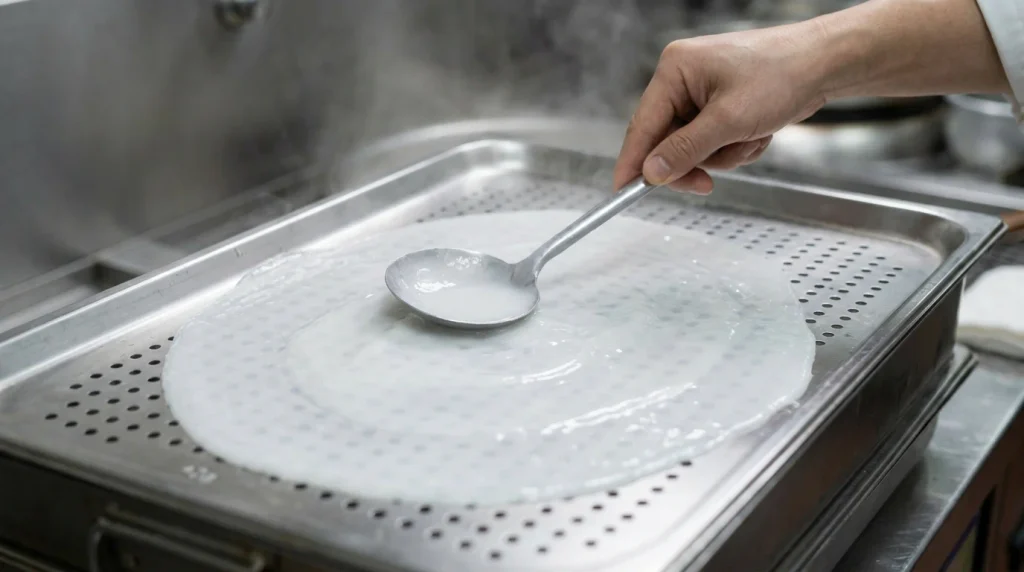
You do not need a specialized commercial restaurant setup to make delicious steamed rice rolls at home. Basic kitchen tools work wonderfully if used correctly.
Choosing the Right Steaming Pan
You need a wide, flat-bottomed pan that fits inside a large steamer or deep skillet.
- Stainless Steel Trays: Thin baking pans or stainless steel cafeteria trays transfer heat rapidly and evenly.
- Cake Pans: Square or round aluminum cake pans work well if you have a wide steamer basket.
- Non-Stick Pans: Small non-stick baking pans make removing the cooked noodle sheets exceptionally easy.
Alternative Household Tools That Work
If you do not own a traditional bamboo steamer, try using a wide wok or a large roasting pan filled with two inches of boiling water. Place a low metal trivet inside to keep your steaming tray elevated above the boiling liquid.
You will also need a bench scraper or a flexible silicone spatula. These tools allow you to lift, roll, and shape the cooked sheets smoothly without tearing them apart.
How to Cook Steamed Beef Rice Rolls
Now that your components and tools are ready, it is time to assemble and steam your rolls!
Preheating Your Steamer Setup
Bring water to a roaring boil over high heat inside your wok or steamer pot. High heat creates dense, fast steam, which is essential for setting the starch batter instantly.
Lightly grease your flat steaming tray with a thin layer of cooking oil using a pastry brush or paper towel. Pre-warm the greased tray in the steamer for thirty seconds so the batter starts setting the moment it touches the surface.
Pouring and Spreading the Batter
Give your batter a thorough stir from the bottom. Pour a thin, even layer onto your warm, greased tray, tilting the pan gently so the batter covers the entire bottom surface.
The layer should be very thin—roughly one to two millimeters thick. If the batter layer is too thick, your roll will feel heavy and gummy rather than delicate and silky.
Laying Down the Beef Filling
Crumble small, flattened pieces of the beef mixture across one half of the wet batter tray. Avoid placing huge lumps of meat, as thick portions take longer to steam through and can tear the rice sheet.
Cover the steamer with a tight lid immediately to trap high-pressure steam inside. Steam over maximum heat for roughly three to four minutes until the rice sheet turns translucent and bubbles up.
Rolling the Noodle Smoothly
Carefully remove the hot tray from your steamer using heat-resistant tongs. Place the tray flat on a heatproof counter space.
- Lightly grease your bench scraper or flexible spatula with vegetable oil.
- Gently loosen the edges of the cooked rice sheet from the sides of your tray.
- Push the scraper underneath one edge and gently roll the sheet forward over the cooked beef filling.
- Continue rolling until you form a neat, elongated tube.
- Use your scraper to slice the long roll into three or four equal, bite-sized portions.
Making the Sweet Dim Sum Soy Sauce
A great sauce turns good rice rolls into an extraordinary dining experience. Preparing this sauce takes less than ten minutes and completely elevates your home cooking.
Simple Ingredients and Measurements
To make a standard batch of sweet soy sauce, combine the following in a small saucepan:
- Quarter cup of light soy sauce
- One tablespoon of dark soy sauce
- Two tablespoons of rock sugar or brown sugar
- Half cup of water or plain vegetable stock
- One sliced green onion and a few cilantro stems
Simmering for Rich Depth
Place your saucepan over medium heat and stir until the sugar dissolves completely. Bring the mixture to a gentle simmer for five minutes to allow the fresh aromatics to infuse into the liquid.
Strain out the green onions and cilantro stems, then allow the sauce to cool down to room temperature. Drizzle this rich, aromatic sauce generously over your fresh, hot rice rolls right before serving.
Common Mistakes and How to Fix Them
Steamed rice rolls can be slightly tricky for beginners. Here are common troubleshooting tips to ensure your success.
Why Is My Noodle Sheet Tearing?
If your rice sheets break or tear apart while rolling, the problem usually stems from two issues:
- Batter Balance: Your batter may contain too much water or lack sufficient tapioca starch for elasticity.
- Layer Thickness: The layer of batter poured into your tray was too thin to hold the weight of the meat.
Why Is My Noodle Sheet Sticky or Gummy?
If your cooked sheets feel sticky or overly chewy, you might have used too much tapioca starch or cooked them with low steam heat. Always ensure your water is boiling vigorously before putting your tray into the steamer.
Additionally, avoid overcrowding your tray with excessive batter. Thinner layers steam faster and achieve a much cleaner texture.
Fun Variations to Try at Home
Once you master basic beef cheung fun, you can experiment with fun, creative filling variations to keep your meals exciting!
Shrimp and Beef Combination
Combine small peeled shrimp with seasoned beef inside a single roll. The combination of sweet seafood and savory beef creates a delicious dynamic found in modern dim sum teahouses.
Crispy Net Beef Roll
For an incredible texture contrast, wrap cooked beef inside a crispy fried spring roll wrapper or fried dough stick (youtiao) first. Then, roll the crispy core inside your soft rice noodle sheet. This combination of crispy and soft textures is wildly popular!
FAQs
Can I make beef cheung fun ahead of time?
It is best enjoyed fresh off the steamer because the rice sheets lose moisture as they cool. If you must store leftovers, place them in an airtight container in the refrigerator and steam them for three minutes to restore softness before serving.
Why does my beef filling feel tough after steaming?
Tough beef happens when you skip the velveting process. Always mix ground beef with a little baking soda and cold water first. This simple step keeps the meat tender, springy, and juicy during fast high-heat steaming.
What flour can I use if I cannot find tapioca starch?
Wheat starch or cornstarch makes a suitable substitute if tapioca starch is unavailable. Tapioca starch provides the best elasticity, but wheat starch will still give your rice sheet a nice translucent finish and smooth texture.
How do I stop the batter from sticking to the tray?
Brush a thin layer of neutral oil over your steaming tray before pouring the batter. Make sure you use high-heat steam and let the tray cool for ten seconds after removing it from the steamer before rolling.
Can I make this dish without cilantro?
Yes, you can easily omit cilantro if you do not like its taste. Substitute finely chopped green onions or chives to maintain a fresh herbal aroma inside your seasoned beef filling without altering the texture.
Is beef cheung fun gluten-free?
Standard recipes contain gluten due to soy sauce and Shaoxing wine. However, you can easily make a gluten-free version at home by substituting tamari or gluten-free soy sauce and replacing Shaoxing wine with dry sherry.
Practice Exercise
- What is Beef Cheung Fun mainly made from?
A) Rice noodles
B) Wheat bread
C) Corn tortillas
D) Potato slices - What type of meat is traditionally used in Beef Cheung Fun?
A) Chicken
B) Beef
C) Pork
D) Fish - Beef Cheung Fun is commonly associated with which cuisine?
A) Mexican
B) Italian
C) Chinese
D) Indian - How are Cheung Fun rolls commonly cooked?
A) Grilled
B) Steamed
C) Deep-fried
D) Roasted - What is the texture of the rice noodle wrapper?
A) Crispy
B) Crunchy
C) Soft and silky
D) Hard - Beef Cheung Fun is commonly served with what?
A) Soy-based sauce
B) Tomato ketchup
C) Chocolate sauce
D) Mustard - Beef Cheung Fun is often served as part of what type of meal?
A) Dim sum
B) Breakfast cereal
C) Barbecue
D) Pizza dinner - Which ingredient can commonly be used as a garnish for Beef Cheung Fun?
A) Green onions
B) Strawberries
C) Coconut flakes
D) Raisins - What is usually found inside Beef Cheung Fun?
A) Seasoned beef filling
B) Ice cream
C) Apple slices
D) Cheese - Which city is especially well known for Cheung Fun and dim sum culture?
A) Hong Kong
B) Madrid
C) Sydney
D) Cairo
✅ Answer Key
- A
- B
- C
- B
- C
- A
- A
- A
- A
- A
Conclusion
Mastering authentic beef cheung fun at home is a fun and rewarding cooking adventure. Once you get the hang of mixing starches and rolling sheets, you will be making restaurant-quality dim sum directly in your kitchen.
Remember to keep your steamer hot, stir your batter frequently, and velvet your beef filling for soft, juicy results every time. Pouring that warm, sweetened soy sauce over your fresh rolls makes every bit of effort worthwhile.
Now that you have all the insider tips and techniques, gather your ingredients and give this dim sum staple a try this weekend. Share your delicious homemade rice rolls with friends and family, and enjoy your culinary success!

Ethan Danial is the creator and lead writer behind FunWhirls.com, a fun-focused platform dedicated to entertaining ideas, fascinating facts, funny moments, creative lists, and content that sparks curiosity. With a genuine love for discovering interesting and unexpected topics, Ethan enjoys turning simple ideas into engaging content that readers can enjoy, learn from, and share. His approach is centered on making every article easy to read, enjoyable, and worth coming back to.
At FunWhirls.com, Ethan Danial explores the lighter and more entertaining side of everyday life. He creates content for readers who love discovering something new, having a quick laugh, or simply taking a break from the ordinary. From curious facts to playful ideas and entertaining discoveries, Ethan aims to keep the content fresh, positive, useful, and engaging for readers of all kinds.