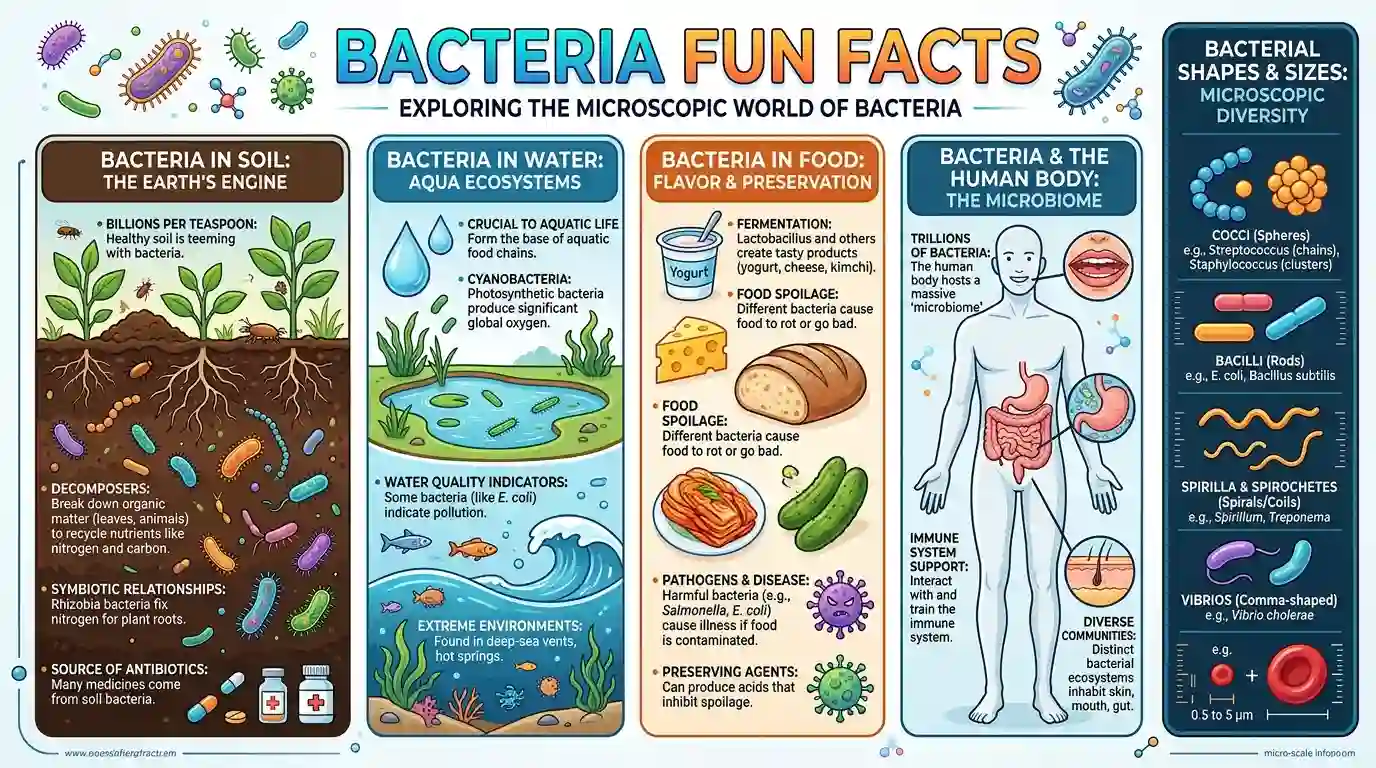
Bacteria fun facts reveal that these microscopic organisms have inhabited Earth for over 3.5 billion years. They help digest your food, create oxygen, make delicious cheese, and even produce rain. Far from being simple germs, bacteria are essential, highly adaptable creatures that make all human, animal, and plant life possible on our planet.
Have you ever wondered what invisible world is thriving right beneath your nose? Millions of tiny organisms are buzzing around you, inside you, and under your feet at this very second.
Exploring these amazing bacteria fun facts reveals that microbes are not just pesky germs making us sick. They are actually the secret superpowers keeping our entire planet alive and healthy.
Let us take a friendly journey into this microscopic universe and discover how these tiny creatures shape your daily life in ways you never imagined!
The Invisible Giants: Mind-Blowing Bacteria Fun Facts
When we think about life on Earth, we usually picture massive elephants, tall trees, or giant blue whales. However, the true rulers of our planet are far too small to see without a microscope. Microbes make up a massive portion of the total living weight on Earth, outnumbering animals by an astonishing margin.
How Many Microbes Actually Exist on Earth?
Scientists estimate that there are roughly five nonillion bacteria living on Earth right now. That is the number five followed by thirty zeros. If you tried to write that number down on a piece of paper, it would stretch across your entire desk.
If you weighed every single bacterium on Earth together, their total mass would outweigh all the fish, birds, and mammals combined. They live in deep ocean trenches, high in the sky, and everywhere in between. You are essentially walking through an ocean of invisible life every single day.
The Oldest Living Residents of Our Planet
Bacteria are true survivors that have been around far longer than dinosaurs or trees. Fossil evidence shows that early microbes were living in ocean vents over 3.5 billion years ago.
- They survived massive asteroid strikes that wiped out prehistoric creatures.
- They adapted to intense ice ages that froze entire continents.
- They continued to thrive while millions of other species went extinct.
Because they reproduce so quickly, they can adapt to environmental changes in a fraction of the time it takes larger animals. Their ancient history proves that microscopic life is the ultimate survivor on Earth.
Where Do All These Microbes Live?
It can be hard to picture just how common these tiny creatures really are. Here are a few places where massive numbers of bacteria gather:
- Your Body: Around 38 trillion bacterial cells live in and on you, easily outnumbering your human cells.
- One Gram of Soil: A single scoop of healthy dirt contains about 40 million bacterial cells that help plants grow.
- One Milliliter of Ocean Water: A single drop of seawater holds around 1 million bacteria that keep the oceans clean.
- The Entire Planet: All 5 nonillion bacteria combined outweigh every wild animal on Earth.
Single-celled life is everywhere. They are not isolated in far-off places; they fill every corner of our everyday world.
You Are Mostly Microbe: The Human Microbiome
You might think of your body as a purely human machine. However, your skin, mouth, and gut are bustling cities for trillions of microscopic guests.
Your body is a walking team effort where human cells and trillions of helpful bacteria work side by side every day.
The Microscopic Zoo Inside Your Gut
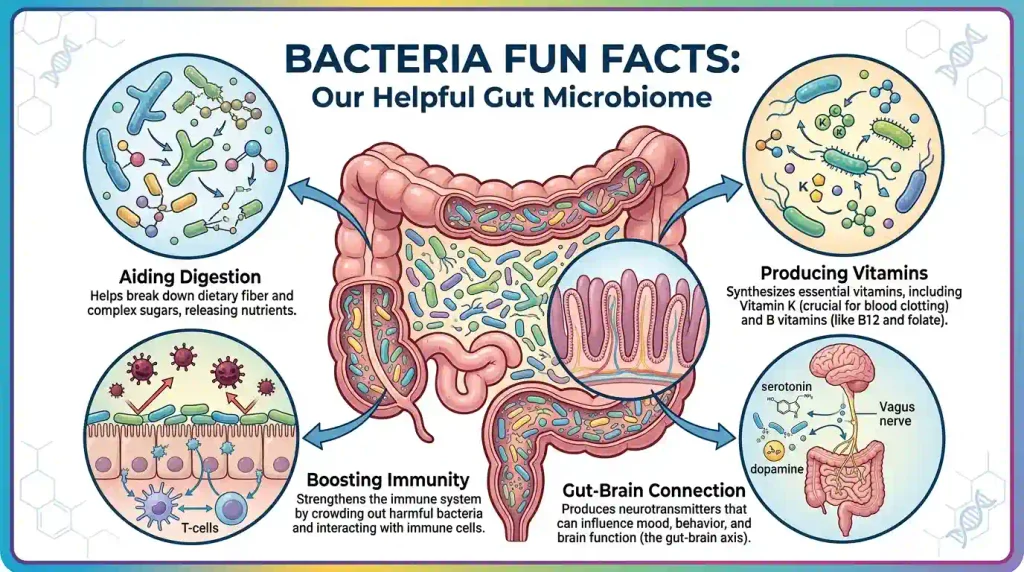
Your digestive tract is home to an incredible variety of bacteria that work hard for you every single day. They break down tricky fibers from vegetables that your body cannot digest on its own.
Without these helpful gut microbes, you would miss out on vital nutrients from your meals. They work constantly to turn complex food molecules into simple energy that your cells can absorb easily.
Your Skin Has Its Own Unique Ecosystem
Every square inch of your skin is covered in thousands of tiny organisms. Different areas of your body attract completely different types of microbes based on moisture and temperature.
- Your oily forehead hosts a totally different bacterial community than your dry arm.
- Your armpits create a warm, moist home where specialized bacteria flourish.
- The microscopic ecosystem on your left hand is often different from your right hand.
These skin inhabitants act like a living shield against dangerous invaders. By taking up space and consuming resources, good bacteria prevent harmful microbes from moving in and causing skin infections.
Unique Microscopic Fingerprints
Just like your physical fingerprints, your collection of internal microbes is unique to you. No two people on Earth share the same combination of microscopic species.
Even identical twins who share identical human DNA have different gut bacterial profiles. Your diet, daily environment, sleep habits, and stress levels all influence which bacterial strains thrive inside you.
Microbes with Superpowers: Surviving the Extreme
Some microscopic creatures enjoy a quiet life in soil, but others prefer living in places that would destroy ordinary life instantly. These extreme-loving organisms are called extremophiles, and their physical abilities sound like science fiction.
Living in Boiling Acid and Freezing Ice
Certain species flourish in boiling springs where temperatures reach well above the boiling point of water. Others thrive deep inside Antarctic glaciers, surviving under miles of solid ice without sunshine or fresh air.
They survive by creating specialized proteins that maintain their shape under intense heat or pressure. Studying these tough organisms helps scientists understand how life might survive on other planets, like Mars or Europa.
Radiation-Resistant Microscopic Warriors
One famous bacterium, known as Deinococcus radiodurans, can survive radiation levels thousands of times higher than what would be fatal to a human. Scientists often call it “Conan the Bacterium” because it is nearly impossible to destroy.
When extreme radiation shatters its DNA into hundreds of pieces, this tough microbe can stitch its own genetic code back together in just a few hours. This remarkable repair mechanism makes it a top subject for modern medical research.
Life at the Bottom of the Ocean
Miles below the surface of the sea, hydrothermal vents spew toxic chemicals and boiling liquid into pitch-black water. Sunlight cannot reach these depths, yet massive communities of bacteria thrive around these vents.
Instead of using sunlight as plants do, these deep-sea microbes eat toxic sulfur compounds coming out of the Earth’s crust. They form the base of an incredible ocean food web that supports giant tubeworms, crabs, and deep-sea fish.
Everyday Magic: How Bacteria Shape Our Daily Life
You interact with bacterial superpowers every single day without even realizing it. From the tasty food on your breakfast table to the fresh smell of clean rain, microbes shape your daily life in wonderful ways.
The Secret Behind Delicious Fermented Foods
If you enjoy yogurt, tangy sourdough bread, aged cheese, or crunchy pickles, you have bacteria to thank. Fermentation is a natural process where microbes consume sugars and transform them into flavorful compounds.
- Yogurt relies on special lactic acid microbes to turn milk into a thick treat.
- Swiss cheese gets its classic holes from microbes releasing harmless bubbles of gas.
- Sourdough bread gets its delicious sour bite from natural bacteria working alongside yeast.
These microbes preserve our food naturally while adding rich flavors and beneficial nutrients. Humans have used this microbial superpower for thousands of years to preserve fresh harvests without refrigeration.
Why Dirt Smells So Good After Rain
Have you ever stepped outside after a rainstorm and noticed a fresh, earthy aroma in the air? That delightful scent is actually created by a family of soil bacteria called Actinomycetes.
While living in dry soil, these hardworking microbes produce a tiny chemical compound called geosmin. When raindrops hit the dry dirt, small air bubbles trap the geosmin and release it into the atmosphere. Human noses are incredibly sensitive to this compound, allowing us to smell it even in tiny amounts.
Making It Rain from the Sky
Microbes do not just live on the ground; they travel high up into the atmosphere on gentle air currents. Once they reach the clouds, certain species play a surprising role in making weather happen.
These atmospheric microbes produce special proteins that allow water droplets to freeze around them at warmer temperatures than usual. This process forms ice crystals that grow heavy and fall back to Earth as fresh snow or rain. Microbes are literally natural weather makers!
The Ultimate Recyclers: Clean-Up Crew of Earth
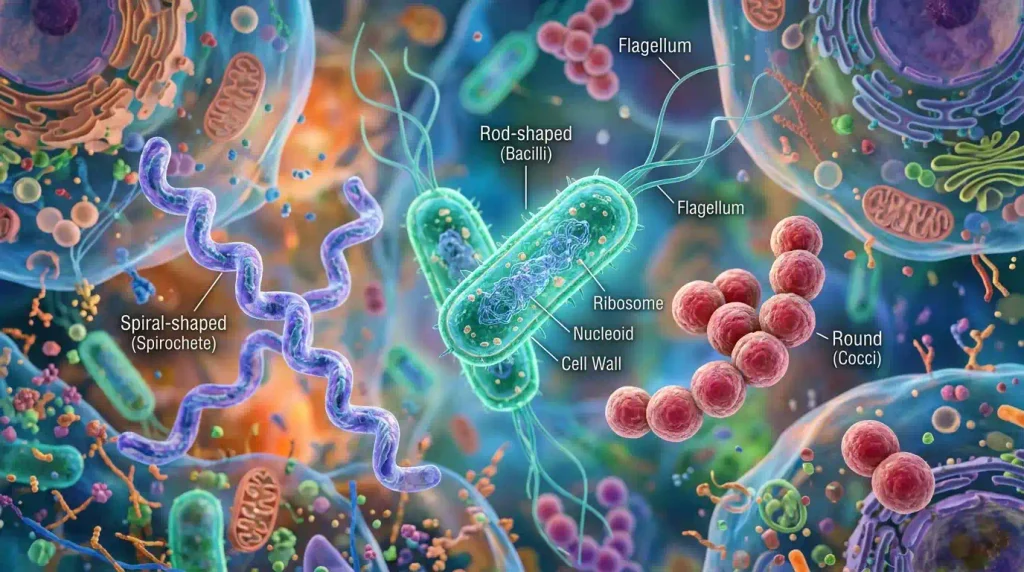
Without constant recycling, our planet would quickly run out of essential nutrients needed for fresh growth. Microbes act as nature’s ultimate clean-up crew, breaking down dead matter and renewing Earth’s vital resources.
Breaking Down Fallen Trees and Organic Waste
When a massive tree falls in a forest, it does not stay there forever. Bacteria, along with fungi, go straight to work breaking down tough wood fibers into rich soil.
They release natural enzymes that break apart complex plant structures into basic elements like carbon, nitrogen, and phosphorus. This process frees up vital nutrients, so young saplings can sprout and thrive.
Cleaning Up Pollution and Oil Spills
Some extraordinary bacteria have evolved a taste for synthetic pollutants, including toxic chemicals and crude oil. When oil spills happen in the ocean, specialized marine bacteria multiply rapidly to eat the petroleum hydrocarbons.
Scientists use this natural ability in a process called bioremediation to help clean polluted rivers, soils, and industrial sites. Instead of using harsh chemicals, we let these tiny creatures eat the pollution away naturally.
Turning Air into Plant Food
Plants need nitrogen to grow green leaves, but they cannot absorb nitrogen gas directly from the air around them. Luckily, soil bacteria form special partnerships with plant roots to solve this problem.
These helpful root bacteria pull nitrogen out of the air and convert it into a natural fertilizer that plants can easily absorb. In exchange, the plant shares sweet sugars produced through photosynthesis, creating a perfect partnership.
Surprising Ways Bacteria Communicate and Move
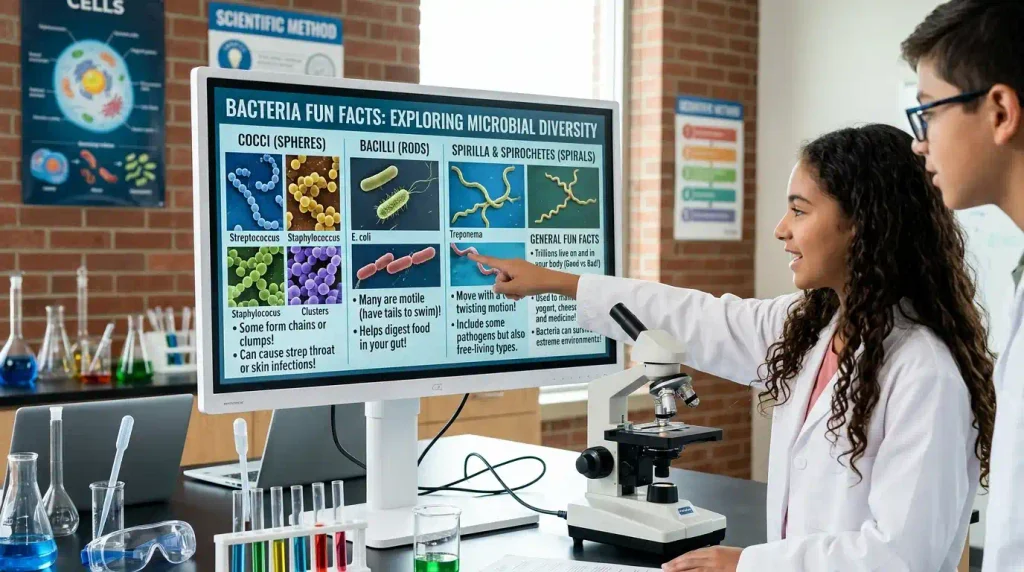
We often imagine bacteria as simple, mindless organisms floating helplessly through water or air. In reality, they have fascinating ways to sense their surroundings, work together, and move around.
Glowing in the Dark with Quorum Sensing
Certain bacteria can talk to each other using special chemical signals in a process called quorum sensing. When enough bacteria gather in one spot, they release a signal that tells the entire group to act together.
A famous example is the bobtail squid, which hosts glowing bacteria inside its body. When the bacterial population reaches a high density, all the microbes turn on their biological lights at the same moment. This light disguises the squid from predators swimming below, making it an incredible team effort.
Microscopic Motors and Propellers
Bacteria do not just float along aimlessly; many have tiny biological motors that propel them forward. These tail-like structures, called flagella, rotate like miniature boat propellers to push the microbe through liquids.
These natural motors can spin at thousands of revolutions per minute, allowing the tiny organism to swim toward food sources or away from danger. Relative to their tiny size, some bacteria swim faster than a cheetah runs!
Building Microscopic Cities Called Biofilms
When bacteria find a surface they like, such as your teeth or a river stone, they build protective microscopic communities called biofilms. They secrete a sticky, protective shield that glues the group securely to the surface.
Dental plaque is a classic example of a biofilm that forms on your teeth every day. This sticky shield protects the microbes inside from harsh environments, making them much harder to wash away.
Mind-Blowing Bacteria Quiz
Test your new knowledge with this quick 10-question practice exercise! Choose the best answer for each question below.
- What are bacteria?
A) Single-celled organisms
B) Planets
C) Minerals
D) Clouds - Which tool is commonly used to see bacteria?
A) Microscope
B) Telescope
C) Compass
D) Thermometer - Where can bacteria be found?
A) Almost everywhere
B) Only in deserts
C) Only in oceans
D) Only in plants - Which shape can some bacteria have?
A) Rod-shaped
B) Star-shaped only
C) Square-shaped only
D) Triangle-shaped only - What do some bacteria help humans do?
A) Digest food
B) Fly
C) See in the dark
D) Breathe underwater - Which food is commonly made with the help of bacteria?
A) Yogurt
B) Ice cubes
C) Popcorn
D) Chocolate bars - How do many bacteria reproduce?
A) By dividing into two cells
B) By laying eggs
C) By producing seeds
D) By forming flowers - What is the study of bacteria called?
A) Bacteriology
B) Astronomy
C) Geology
D) Botany - Are all bacteria harmful to humans?
A) No
B) Yes
C) Only at night
D) Only in winter - What can some bacteria help recycle in nature?
A) Organic matter
B) Plastic toys
C) Glass bottles
D) Metal cars
✅ Answer Key
1-A, 2-A, 3-A, 4-A, 5-A, 6-A, 7-A, 8-A, 9-A, 10-A
FAQs
Are all bacteria bad for human health?
No, the vast majority of bacteria are completely harmless or beneficial to humans. Only a small fraction of known bacterial species cause illnesses. Most microbes actively protect your skin, digest your food, and support your immune system every single day.
How do bacteria reproduce so fast?
Bacteria reproduce through a simple process called binary fission, where a single cell splits into two identical cells. Under ideal conditions with warmth and food, some species can divide every 20 minutes, growing exponentially into millions in hours.
Can bacteria live in space?
Yes, certain bacterial species can survive the vacuum, freezing temperatures, and intense radiation of outer space. Experiments outside the International Space Station showed that tough spores can lie dormant for years and wake back up when returned to Earth.
Why do bacteria make food spoil?
Bacteria break down complex organic compounds into simpler molecules to get energy for themselves. As they consume food, they produce waste products, sour acids, and gases that change the food’s taste, smell, and texture, causing it to spoil.
How do antibiotics kill bad bacteria without hurting human cells?
Antibiotics target specific structures that bacterial cells have, such as rigid cell walls, which human cells do not possess. This selective targeting allows the medication to destroy or disable foreign invaders while leaving your own human body cells unharmed.
What is the biggest bacterium ever discovered?
The largest known bacterium is Thiomargarita magnifica, which can grow up to two centimeters long. Unlike typical microscopic cells, this species is visible to the naked human eye and looks like thin, silvery threads resting on swamp leaves.
Conclusion
Exploring these fascinating bacteria fun facts proves that microscopic organisms are far more than simple germs. From shaping our daily weather to digesting our meals and recycling forest waste, microbes make life on Earth possible.
The next time you enjoy a spoonful of tangy yogurt, take a walk through a blooming garden, or smell fresh rain on dry soil, take a moment to thank the billions of microscopic workers around you.
Want to keep discovering the hidden wonders of our planet? Share these fun facts with a friend or family member today and spark a conversation about the invisible world all around us!

Ethan Danial is the creator and lead writer behind FunWhirls.com, a fun-focused platform dedicated to entertaining ideas, fascinating facts, funny moments, creative lists, and content that sparks curiosity. With a genuine love for discovering interesting and unexpected topics, Ethan enjoys turning simple ideas into engaging content that readers can enjoy, learn from, and share. His approach is centered on making every article easy to read, enjoyable, and worth coming back to.
At FunWhirls.com, Ethan Danial explores the lighter and more entertaining side of everyday life. He creates content for readers who love discovering something new, having a quick laugh, or simply taking a break from the ordinary. From curious facts to playful ideas and entertaining discoveries, Ethan aims to keep the content fresh, positive, useful, and engaging for readers of all kinds.