
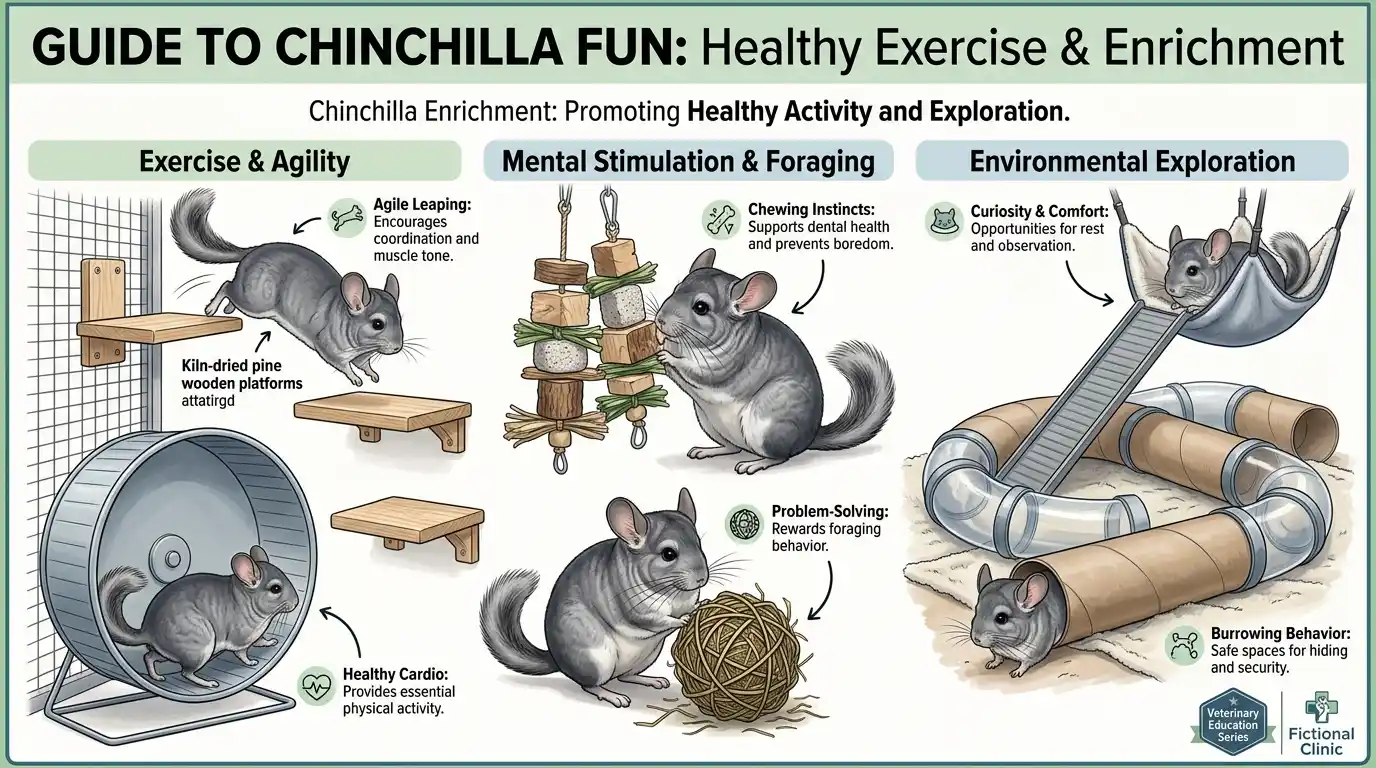
Chinchilla fun involves providing safe, engaging activities that stimulate your pet’s instincts. The best ways to entertain a chinchilla include offering daily dust baths, setting up safe exercise wheels, building cardboard obstacle courses, and using applewood chew toys to keep them happy and healthy.
Have you ever watched a tiny fluffball bounce off the walls of your living room like a little parkour expert? Creating genuine chinchilla fun is one of the most rewarding parts of owning these unique, energetic pets.
They are highly intelligent and curious creatures that need daily mental and physical stimulation to stay happy. Providing the right kind of chinchilla fun completely transforms your pet from a shy observer into an interactive, joyful companion.
You do not need to spend a fortune to keep them entertained, either. With a few safe household items and a little creativity, you can easily create the ultimate playground for your furry friend.
Understanding What Makes Your Pet Happy
Before you can plan the perfect activities, you need to understand how these animals operate in the wild. Chinchillas originally come from the rocky Andes Mountains in South America. They are natural prey animals, which means they love to hide, jump, and explore safely from high vantage points.
Because of this background, your pet is instinctively drawn to activities that mimic their natural habitat. Climbing, leaping, and chewing aren’t just hobbies for them; they’re essential for their physical and mental well-being. When you provide outlets for these behaviors, you will see their true personality shine.
The Crepuscular Schedule
You might notice that your pet sleeps for most of the afternoon and suddenly becomes a ball of energy in the evening. Chinchillas are crepuscular, meaning they are most active at dawn and dusk. Trying to force them to play in the middle of the day will usually just result in a grumpy, sleepy animal.
To maximize your bonding time, schedule your play sessions for the early evening or morning hours. When you align your activities with their natural body clock, they will be much more eager to interact. This is the absolute best time to introduce new toys or start a training session.
Setting Up the Ultimate Free-Roam Play Zone
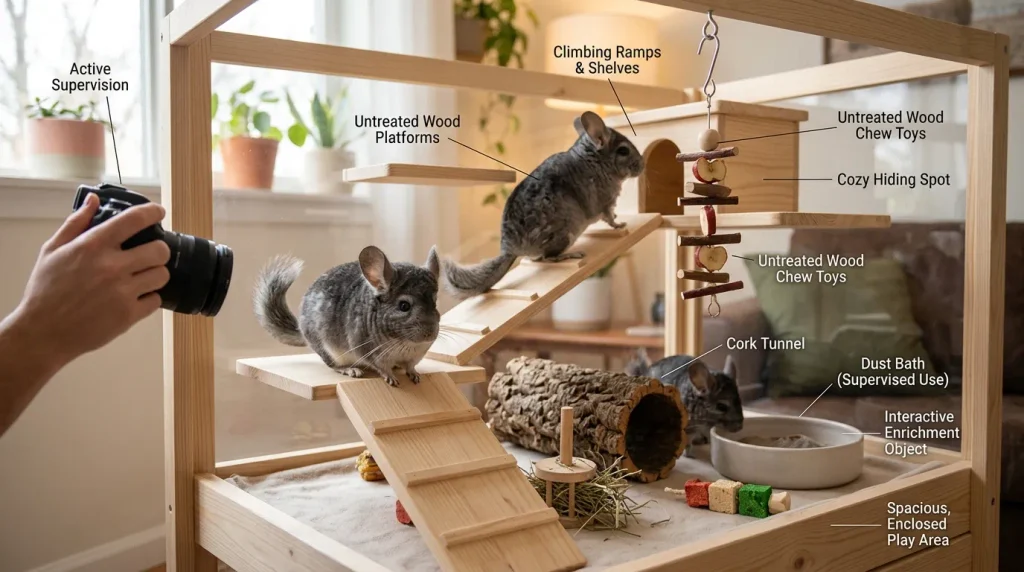
Letting your pet out of their cage is the highlight of their day, but it requires some preparation. Because they explore the world with their teeth, you must carefully evaluate any room they play in for hazards. Taking the time to properly proof a room ensures that playtime remains safe and stress-free for both of you.
Many owners choose a small, enclosed space like a bathroom or a hallway for playtime. These areas are usually easier to secure and have fewer places for a tiny animal to get hopelessly stuck. If you prefer to use a living room, investing in a heavy-duty wire playpen is a great alternative.
Hiding Cords and Wires
To a chinchilla, an electrical cord looks exactly like a delicious tree root waiting to be chewed. A single bite into a live wire can be fatal, so cord management is your top priority. You must move all electronics out of reach before opening the cage door.
If you cannot move certain wires, you need to cover them completely. You can purchase hard plastic cord concealers or PVC pipes from your local hardware store to shield vulnerable cables. Never trust a chinchilla to simply ignore a wire, no matter how well-behaved they usually are.
Blocking Off Dangerous Gaps
These animals possess incredibly flexible ribcages and can squeeze into spaces you would never imagine. If their head can fit through a gap, the rest of their body can likely follow. This means you need to block off areas under beds, behind refrigerators, and inside reclining chairs.
You can use rolled-up towels, cardboard boxes, or wooden planks to barricade these tempting hiding spots. If your pet manages to wedge themselves under a heavy sofa, coaxing them out can take hours and ruin the fun. A little prevention keeps the environment safe and keeps your blood pressure low.
The Magic of the Dust Bath
If you want to witness pure joy, simply hand your pet a bowl of bathing dust. Because their fur is so dense, they cannot use water to clean themselves without risking dangerous fungal infections. Instead, they roll aggressively in fine volcanic ash to absorb excess oils and remove dirt.
Watching them flip, spin, and dig in their bath is highly entertaining for owners. It is a fundamental part of their grooming routine, but they treat it like a spectacular game. You will quickly learn that offering the bath is the easiest way to make them incredibly happy.
How to Choose the Right Dust
You should never use regular playground sand or chinchilla “sand” for bathing. Sand is far too coarse and can severely damage their delicate fur or irritate their eyes. Always purchase high-quality commercial dust made specifically for chinchillas, which closely mimics the volcanic ash of their natural habitat.
The dust should feel as fine as baby powder when you rub it between your fingers. While it does create a bit of a mess in your home, the benefits to your pet’s health are entirely worth it. Keep a small handheld vacuum nearby for quick cleanups after they finish rolling.
Bathing Frequency and Timing
While they would happily bathe every single day, too much dust can dry out their sensitive skin. Offering the bath two to three times a week is usually the perfect balance for a healthy coat. Leave the dust bowl in their play area for about fifteen minutes before taking it away.
Many owners use the dust bath as a clever tool to end playtime. When it is time for your pet to go back into their cage, simply place the dust container inside. They will almost always hop right in to take their bath, saving you the hassle of trying to catch them.
Safe and Exciting Toys for Maximum Fun
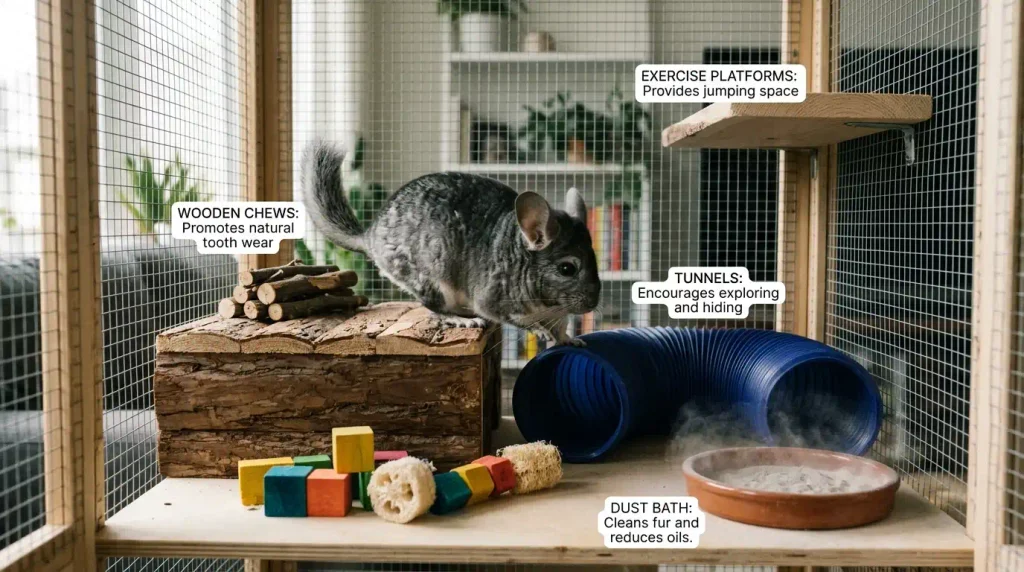
Chinchillas need to chew constantly because their teeth never stop growing throughout their lives. If they do not have appropriate toys, they will eventually develop painful dental diseases. Providing a variety of safe chewing options is the best way to keep them healthy and occupied.
The Best Woods for Chewing
Applewood is widely considered the gold standard for these animals. They absolutely love the taste, and the wood is hard enough to file down their back molars effectively. You can buy pre-cut apple sticks online or harvest them yourself if you have an untreated apple tree.
Other safe options include kiln-dried pine, willow, and pear wood. Always ensure that any wood you provide has not been treated with pesticides or harsh chemicals. Variety is key, so try mixing different types of wood in their cage to see which textures they prefer.
Preparing Natural Wood at Home
If you decide to cut your own branches, you cannot just hand them directly to your pet. Wild wood can harbor dangerous bugs, mold, or bacteria that could make them sick. You must scrub the branches, boil them for fifteen minutes, and then bake them in the oven until they are completely dry.
Pumice Stones and Loofah
In addition to wood, pumice stones provide an excellent, gritty texture that helps wear down their teeth. You can buy these stones in various shapes, and many come with small hooks to hang on the cage bars. Watching them eagerly tear into a fresh pumice block is highly satisfying.
Natural, unbleached loofah is another fantastic option for shredding. It has a completely different texture than wood or stone, which provides excellent sensory stimulation. They will happily rip a piece of loofah to shreds in a matter of minutes.
The Importance of a Safe Exercise Wheel
A running wheel is essential for burning off excess energy, especially late at night. However, you cannot use a standard plastic hamster wheel from the local pet store. A proper chinchilla wheel must be at least 15 inches in diameter to prevent severe spinal damage while they run.
The running surface must also be completely solid metal or wood. Wire mesh wheels are incredibly dangerous because their tiny toes can easily get caught and break while running at high speeds. Investing in a high-quality, specialized metal wheel is one of the best purchases you can make for their long-term happiness.
Interactive Games to Play Together
Once your pet feels comfortable with you, they will start looking to you for entertainment. Building a strong bond takes time, but playing simple games helps accelerate the process. Remember to let them lead the interaction and never force them to play if they want to rest.
The Bridge Game
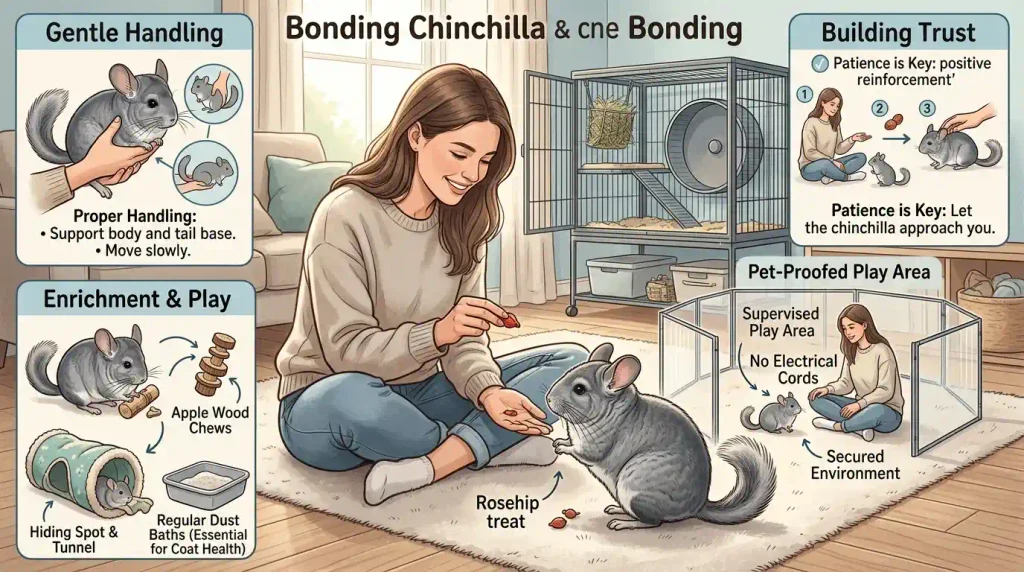
This is a wonderful way to build trust with a shy animal. Sit on the floor with your legs stretched out, creating a small barrier in their play area. Place a few treats on your legs and wait patiently for them to investigate.
Eventually, they will realize that your legs make an excellent bridge to hop over. As they get braver, they will start using you as a jungle gym, bouncing off your knees and shoulders. Remaining calm and still during this process teaches them that you are a safe, fun part of their environment.
Building a Cardboard Castle
You do not need to spend money to create an amazing obstacle course. Save your empty, clean cardboard boxes and cut various holes in the sides. Stack them together in the center of the room to create a temporary, explorable castle.
They love darting in and out of the dark tunnels and jumping on top of the boxes to get a better view of the room. Ensure the cardboard is free of heavy dyes, tape, or staples before letting them play. Since they will likely chew on the castle, you can just throw it in the recycling bin when it gets too destroyed.
The Gentle Art of Wall Surfing
When a chinchilla is extremely happy and energetic, they will perform a move owners call “wall surfing.” They will run at full speed toward a wall or a piece of furniture, kick off it with their back legs, and launch themselves in a new direction. It looks exactly like a tiny, furry action hero.
You can encourage this behavior by sitting on the floor and gently tapping the ground. Sometimes, they will even use your back or side to kick off during their zoomies. If you see them wall surfing, you can be absolutely certain they are having the time of their life.
Things to Completely Avoid During Playtime
While it is fun to spoil your pet, there are several popular pet store items that are highly dangerous for them. Manufacturers often market products for small animals without considering the specific needs of a chinchilla. Knowing what to avoid is just as important as knowing what to buy.
The Danger of Plastic Toys
Plastic has no place in a chinchilla’s cage or play area. Because they are such aggressive chewers, they will inevitably swallow small shards of plastic. Their digestive systems cannot process this material, leading to fatal intestinal blockages.
Replace any plastic food bowls, plastic hideouts, or plastic ramps with heavy ceramic, glass, or safe metal alternatives. If a toy has a small plastic bell or bead attached to it, remove it entirely before giving it to your pet. Sticking to natural materials is the easiest way to prevent emergency vet visits.
Why Exercise Balls Are a Big No-No
Those clear plastic running balls are incredibly dangerous and should never be used. First, the ventilation slits are far too small for an animal with such a thick coat, leading to rapid overheating. Second, the small size forces their spine into an unnatural, painful curve.
Furthermore, these prey animals rely on their whiskers and hearing to navigate the world. Trapping them inside a cloudy plastic sphere removes their ability to sense their environment, causing immense stress. Let them run freely in a safe room instead; they will be much happier and healthier.
Preventing Overheating
Temperature control is the most critical aspect of keeping these animals safe. Because they lack the ability to sweat and wear a permanent winter coat, they can easily overheat during rigorous play. The room temperature should never exceed 75°F (24°C), and humidity should stay below 50%.
If your pet’s ears turn bright red and you notice visible veins, they are getting too hot. Immediately end the play session, return them to their cool cage, and offer a chilling stone (a piece of granite kept in the fridge) for them to rest on. Never use a fan to cool them down, as moving warm air does not help lower their body temperature.
Understanding Their Social Dynamics
In the wild, these animals live in massive herds of up to a hundred individuals. They are highly social creatures that often thrive when they have a bonded cage mate of the same sex. Watching two bonded chinchillas play together is an absolute delight for any owner.
They will chase each other around the room, steal twigs from one another, and cuddle closely when they get tired. However, introducing a new companion must be done very slowly and carefully in neutral territory. If you only have one pet, you become their herd, which means you need to dedicate even more time to interacting with them daily.
Bonding Through Gentle Interaction
Building a lasting friendship with a prey animal requires extreme patience. You cannot simply scoop them up and cuddle them like a puppy. You have to earn their trust over weeks and months of gentle, consistent interaction.
Reading Their Body Language
Learning to speak their language helps you understand when they want to play and when they want to be left alone. If they push your hand away gently with their front paws, they are politely telling you to stop bothering them. Respecting this boundary builds massive trust over time.
Conversely, if they come up to the cage bars and gently nibble on your fingers, they are trying to groom you. In their world, grooming is a sign of deep affection and acceptance into their family. You can mimic this by gently scratching them under their chin or behind their ears.
What Does Popcorning Mean?
One of the most hilarious and adorable behaviors you will witness is called “popcorning.” When they are overwhelmed with joy, they will literally bounce straight up into the air with all four feet off the ground. They often shake their head or twist their body slightly at the peak of the jump.
This usually happens when you give them a brand-new toy, fill their food bowl, or open the cage door for playtime. If your pet is popcorning around the room, you are doing a fantastic job as an owner. It is the ultimate expression of chinchilla fun.
DIY Toy Ideas on a Budget
You can create amazing toys at home using items you would normally throw away. DIY toys are fantastic because you can replace them immediately when they get chewed to pieces. Always supervise your pet when introducing a new homemade toy to ensure it breaks apart safely.
The Hay-Stuffed Tube Puzzle
Take an empty, clean toilet paper roll and cut a few small holes in the sides. Stuff the tube tightly with their regular Timothy hay, and hide a few dried rosehips right in the middle. Your pet will have to chew through the cardboard and pull out the hay to reach the prize.
This simple puzzle mimics foraging behavior and keeps them occupied for hours. It is a fantastic boredom breaker for those nights when you cannot let them out of the cage. Plus, chewing the cardboard provides a safe, satisfying crunch.
Wooden Block Toss Toys
If you have safe applewood or kiln-dried pine scraps, you can make fun tossing toys. Drill a small hole through the center of several wood blocks and string them together using natural sisal or hemp rope. Tie thick knots at the ends so the blocks stay secure.
Chinchillas love picking up objects with their teeth and literally throwing them across the cage. A string of wooden blocks provides the perfect weight for this silly game. It is cheap to make and highly satisfying for them to destroy.
Making Cage Time Enjoyable
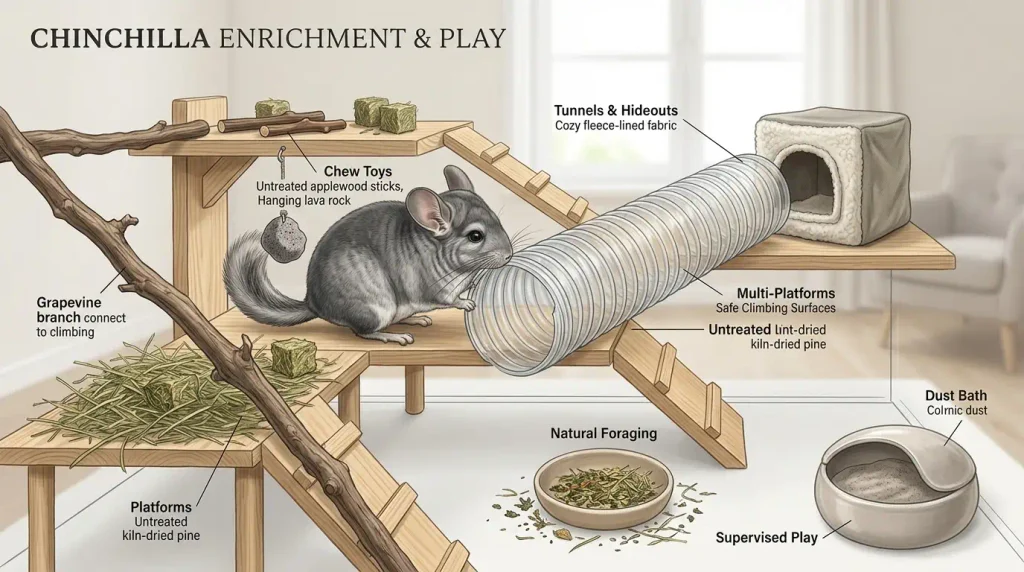
Your pet spends the majority of their life inside their cage, so it needs to be an exciting environment. A bare wire box will lead to severe depression and destructive behaviors like fur-chewing. You want to create a vertical playground that encourages jumping and exploring.
Adding Multi-Level Ledges
Ditch the cheap plastic ramps and invest in a variety of wooden ledges. Stagger these ledges around the cage so your pet has to hop from one to the next to reach the top. This mimics the rocky cliffs of their natural habitat and keeps their leg muscles strong.
You should rearrange these ledges every few months to keep the environment fresh and challenging. Waking up to a slightly altered cage layout provides fantastic mental stimulation. Just ensure the jumps are not too steep to prevent accidental falls.
Hammocks and Cozy Hideouts
After a long session of playing, they need a safe, dark place to sleep. Anti-pill fleece hammocks are incredibly popular because the fabric is safe; the threads do not easily unravel if chewed. Hanging a hammock near the top of the cage gives them a cozy, elevated sleeping spot.
Wooden hideout boxes placed on the bottom floor are also essential. They need a place to retreat if they feel startled by a loud noise outside. A happy pet is one that knows they always have a secure sanctuary waiting for them.
Vocalizations During Play
While they are generally quiet animals, they do have a specific vocabulary they use during playtime. Learning these sounds helps you gauge their mood and adjust your activities accordingly.
Happy Squeaks and Grunts
When they are exploring a new cardboard box or enjoying a great ear scratch, you might hear a series of soft, rhythmic grunts. This low-pitched sound is similar to a cat purring and indicates that they are perfectly content. If you hear this sound, keep doing exactly what you are doing.
Warning Sounds You Should Know
If you move too fast or startle them, they will emit a loud, sharp bark. It sounds incredibly similar to a squeaky toy being stepped on. This bark is their natural warning call to alert the rest of their herd about a potential predator.
If your pet barks during play, simply stop moving, speak to them in a soft voice, and let them calm down. If they start making an aggressive, clicking, or spitting sound, they are extremely angry or terrified. Back away immediately and give them space to cool off.
Practice Exercise
- What type of animal is a chinchilla?
A) Bird
B) Rodent
C) Reptile
D) Fish - What is a special feature of a chinchilla’s fur?
A) It is very thick and soft
B) It is covered with scales
C) It is completely hairless
D) It is waterproof like feathers - What do chinchillas mainly eat?
A) Hay and plant-based foods
B) Fish
C) Meat
D) Insects - When are chinchillas generally most active?
A) During the evening and night
B) Only at noon
C) Only in the morning
D) During the afternoon - What do chinchillas enjoy using for bathing?
A) Dust
B) Soap
C) Mud
D) Water - Where are wild chinchillas naturally found?
A) South America
B) Australia
C) Europe
D) North America - Why should chinchillas avoid getting wet?
A) Their dense fur can hold moisture
B) They cannot see water
C) They dislike drinking
D) Their ears stop working - What can chinchillas use their strong teeth for?
A) Gnawing
B) Flying
C) Swimming
D) Digging through ice - What is a fun way to keep a pet chinchilla active?
A) Providing safe toys and climbing areas
B) Keeping it without exercise
C) Giving it sugary foods
D) Leaving it outside unsupervised - What makes chinchillas interesting pets?
A) Their soft fur and playful behavior
B) Their ability to fly
C) Their ability to breathe underwater
D) Their large wings
Answer Key
- B
- A
- A
- A
- A
- A
- A
- A
- A
- A
FAQs
How do I know if my chinchilla is actually having fun?
You can tell they are enjoying themselves through their body language. Look for energetic behaviors like wall surfing, fast zooming around the room, and “popcorning” jumps into the air. If they are actively exploring, sniffing, and voluntarily interacting with you, they are having a great time.
Can I let my pet play outside in the grass?
No, you should never take your pet outside to play. The outdoors presents far too many fatal risks, including predators, toxic plants, chemical pesticides, and dangerous temperature fluctuations. Keep all playtime indoors in a thoroughly chinchilla-proofed, climate-controlled room.
How many toys should I put in their cage at once?
You should offer a wide variety of textures, including three or four different wooden chew toys, a pumice stone, and a shreddable loofah. Do not overcrowd the cage so much that they cannot jump freely, but provide enough variety to prevent boredom during the night.
Is it safe to play music for my chinchilla?
Yes, playing soft, calming music can actually be quite enjoyable for them. However, because they have incredibly sensitive hearing, you must keep the volume relatively low. Avoid loud, bass-heavy music, as the vibrations and noise will cause them severe stress and anxiety.
What should I do if they chew on something they shouldn’t during playtime?
If they grab something dangerous like a plastic pen or a wire, calmly but quickly intervene. Offer them a high-value, safe chew toy (like an applewood stick) to distract them, and immediately remove the dangerous item from the room. Never yell or punish them, as this only creates fear.
Conclusion
Providing daily chinchilla fun is the secret to unlocking your pet’s wonderful, quirky personality. When you take the time to set up safe play zones and offer the right enrichment, you get to watch them thrive. Their incredible acrobatics and gentle curiosity make every play session a highly rewarding experience.
Remember that patience and consistency are your best tools for building a lasting bond. Keep their environment cool, banish the dangerous plastic toys, and always keep a fresh supply of applewood on hand. The more effort you put into understanding their unique needs, the happier your little companion will be.
Why not start upgrading their play routine tonight? Grab a cardboard box, cut a few holes in it, and watch your fluffy friend turn it into their own personal castle!

Ethan Danial is the creator and lead writer behind FunWhirls.com, a fun-focused platform dedicated to entertaining ideas, fascinating facts, funny moments, creative lists, and content that sparks curiosity. With a genuine love for discovering interesting and unexpected topics, Ethan enjoys turning simple ideas into engaging content that readers can enjoy, learn from, and share. His approach is centered on making every article easy to read, enjoyable, and worth coming back to.
At FunWhirls.com, Ethan Danial explores the lighter and more entertaining side of everyday life. He creates content for readers who love discovering something new, having a quick laugh, or simply taking a break from the ordinary. From curious facts to playful ideas and entertaining discoveries, Ethan aims to keep the content fresh, positive, useful, and engaging for readers of all kinds.


