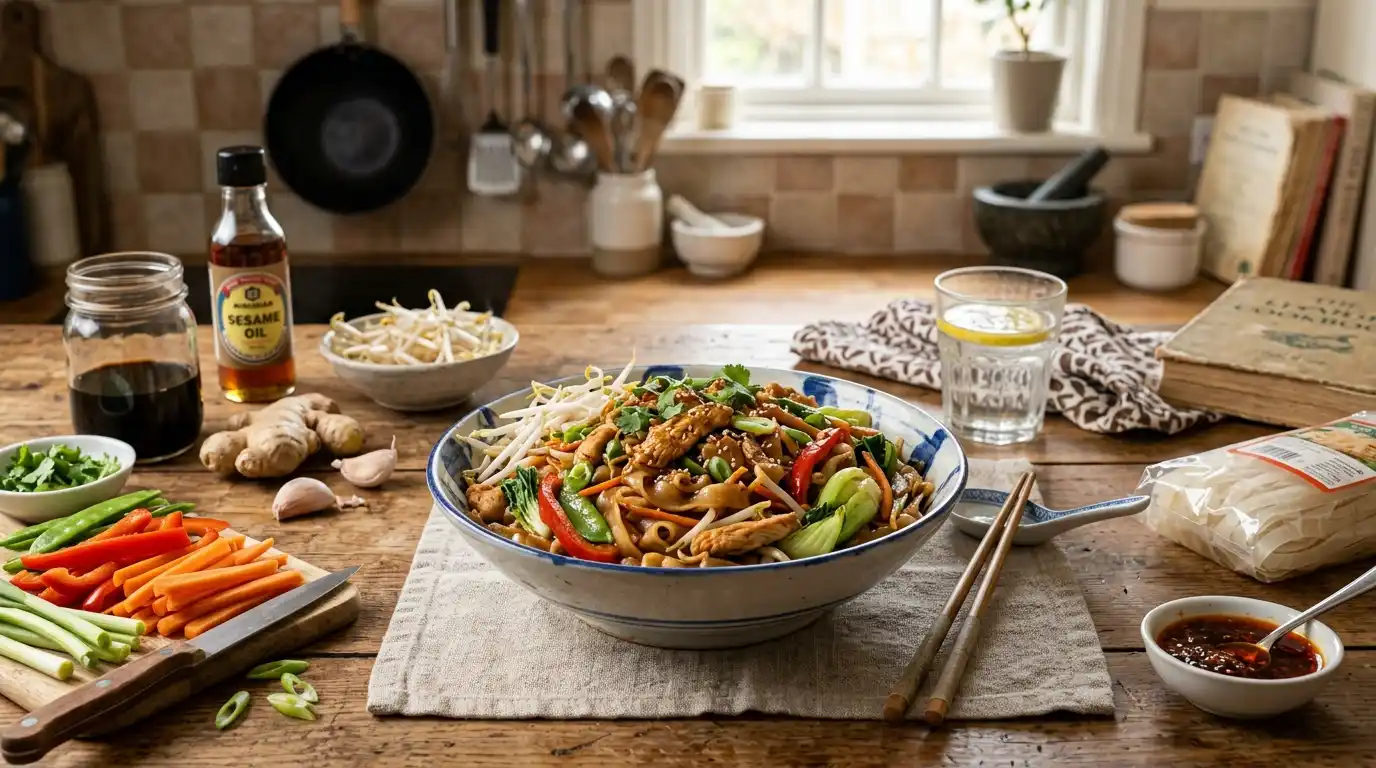
Chow mei fun is a classic Chinese stir-fry made with ultra-thin rice vermicelli noodles, tender proteins, crisp vegetables, and a light seasoning blend. Unlike heavy wheat noodle dishes, it offers a delicate texture, cooks rapidly in a hot wok, and easily absorbs rich, savory flavors.
Ever wondered why those thin, wispy noodles on your favorite Chinese takeout menu taste so incredible?
Learning how to order or cook chow mei fun transforms a simple takeout night into a delicious culinary journey.
This detailed guide breaks down everything you need to know about chow mei fun, from its humble rice origins to making a hot, smoky plate in your own kitchen.
Understanding Chow Mei Fun Basics
To truly appreciate this popular takeout staple, we need to look at what sets it apart from the dozens of other noodle options.
The name itself gives us our biggest clue about what is inside your container. In Cantonese, “chow” means stir-fried, “mei” means rice, and “fun” means noodles. Put it all together, and you have stir-fried rice vermicelli noodles.
These noodles are paper-thin, round strands crafted entirely from ground rice flour and pure water. They are naturally translucent, light on your stomach, and famous for soaking up sauces like a sponge.
Chow Mei Fun vs. Other Popular Noodle Dishes
It is remarkably easy to mix up traditional Asian noodle names when staring at a dense menu board.
- Chow Mein: Uses round wheat-flour egg noodles that are thick, chewy, and often fried until crisp.
- Chow Fun: Features wide, flat, ribbon-like rice noodles that are slippery, soft, and hearty.
- Lo Mein: Made with soft, thick wheat noodles that are boiled and tossed in heavy, dark soy sauces.
- Chow Mei Fun: Uses angel-hair-thin rice vermicelli that is quick-fried with minimal heavy oil and light seasonings.
The Cultural Roots and Origins of Rice Vermicelli
Long before takeout boxes became standard dinner fare, thin rice vermicelli was a prized invention in Southern China.
Legend tells us that northern Chinese soldiers migrated south thousands of years ago during ancient dynasties. They missed their traditional wheat noodles, but Southern China grew abundant rice instead of wheat.
Local cooks ingeniously ground white rice into flour, mixed it with water, and pressed it into long, delicate threads to mimic northern wheat pasta.
How Rice Noodles Conquered Global Menus
As southern families moved across Southeast Asia and eventually overseas, they took their delicate noodle recipes with them.
Different regions adapted the thin noodle stir-fry to match local ingredients and spice levels. Today, whether you visit a street cart in Hong Kong or a neighborhood spot in New York, you will find a version of this dish sizzling in a wok.
Key Ingredients That Make Chow Mei Fun Special
Creating an authentic batch requires just a handful of fresh, simple, and accessible ingredients.
The Foundation: Fine Rice Vermicelli
You can find dried rice vermicelli packages in almost any Asian grocery store or local supermarket aisle.
These dried noodle nests look white or slightly translucent before cooking. They do not require boiling water on the stove; simply soaking them in warm water for a few minutes softens them perfectly.
Protein Options for Every Preference
The beauty of this stir-fry lies in its complete adaptability to your diet.
- Chicken: Thinly sliced breast or thigh meat offers a lean, savory base that absorbs marinade quickly.
- Roast Pork (Char Siu): Sweet, reddish Cantonese barbecue pork adds authentic street-food flavor and color.
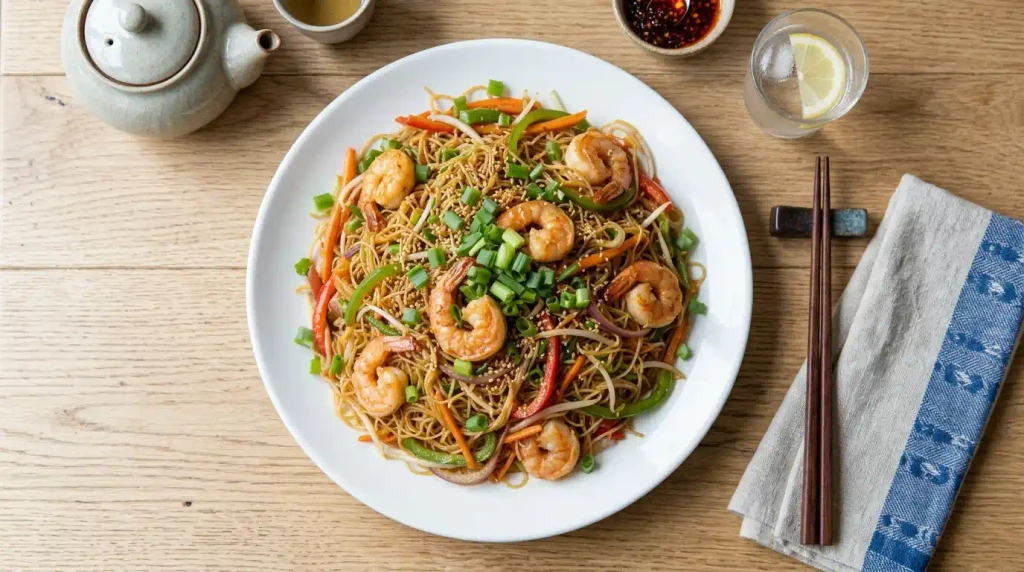
- Shrimp: Plump, small pink shrimp cook in seconds and add a sweet, seafood snap to every bite.
- Beef: Thinly sliced flank steak provides a rich, hearty taste that pairs beautifully with dark soy sauce.
- Tofu: Extra-firm pan-seared tofu cubes absorb all the aromatic garlic and ginger without breaking apart.
Crisp Vegetables for Texture and Color
Because the noodles are extremely soft, fresh vegetables are necessary to add satisfying crunch.
Napa cabbage, shredded carrots, green onions, and fresh bean sprouts are traditional choices. Some chefs like adding sliced red bell peppers or snow peas to give the plate a vibrant, colorful pop.
The Secret Aromatics and Sauces
A common mistake is overloading thin noodles with heavy, watery liquid sauces.
Instead, authentic stir-fries rely on a light touch of light soy sauce, dark soy sauce for color, aromatic sesame oil, minced garlic, and fresh grated ginger. A pinch of white pepper adds a warm, subtle kick without overpowering the dish.
Nutritional Comparison of Popular Stir-Fried Noodle Dishes
Understanding the nutritional profile of your meal helps you make smart dining decisions without giving up great taste.
Popular Regional Variations You Must Try
Chefs across the globe have developed unique spins on thin rice noodle stir-fries over time.
Singapore Mei Fun: The Curry Classic
This is arguably the most famous variation found on takeout menus worldwide.
Despite its name, it was actually popularized by Cantonese chefs in Hong Kong dim sum spots. The dish combines thin rice noodles with yellow curry powder, scrambled egg, char siu pork, shrimp, and bell peppers for a spicy, golden meal.
Amoy Street Mei Fun: Sweet and Savory Balance
Originating near Xiamen (formerly known as Amoy) in Fujian province, this regional style keeps things light and sweet.
It uses a gentle blend of tomato paste or sweet plum sauce alongside pork, shredded cabbage, and dried mushrooms. The resulting noodles have a beautiful reddish hue and a unique sweet-and-sour profile.
House Special Chow Mei Fun: The Ultimate Crowd Pleaser
When you cannot decide on just one protein, the House Special comes to the rescue.
This combination dish packs chicken, beef, shrimp, and roast pork into a single wok. It offers an incredible mix of flavors and textures in every single forkful or chopstick lift.
Essential Equipment for Cooking Noodles at Home
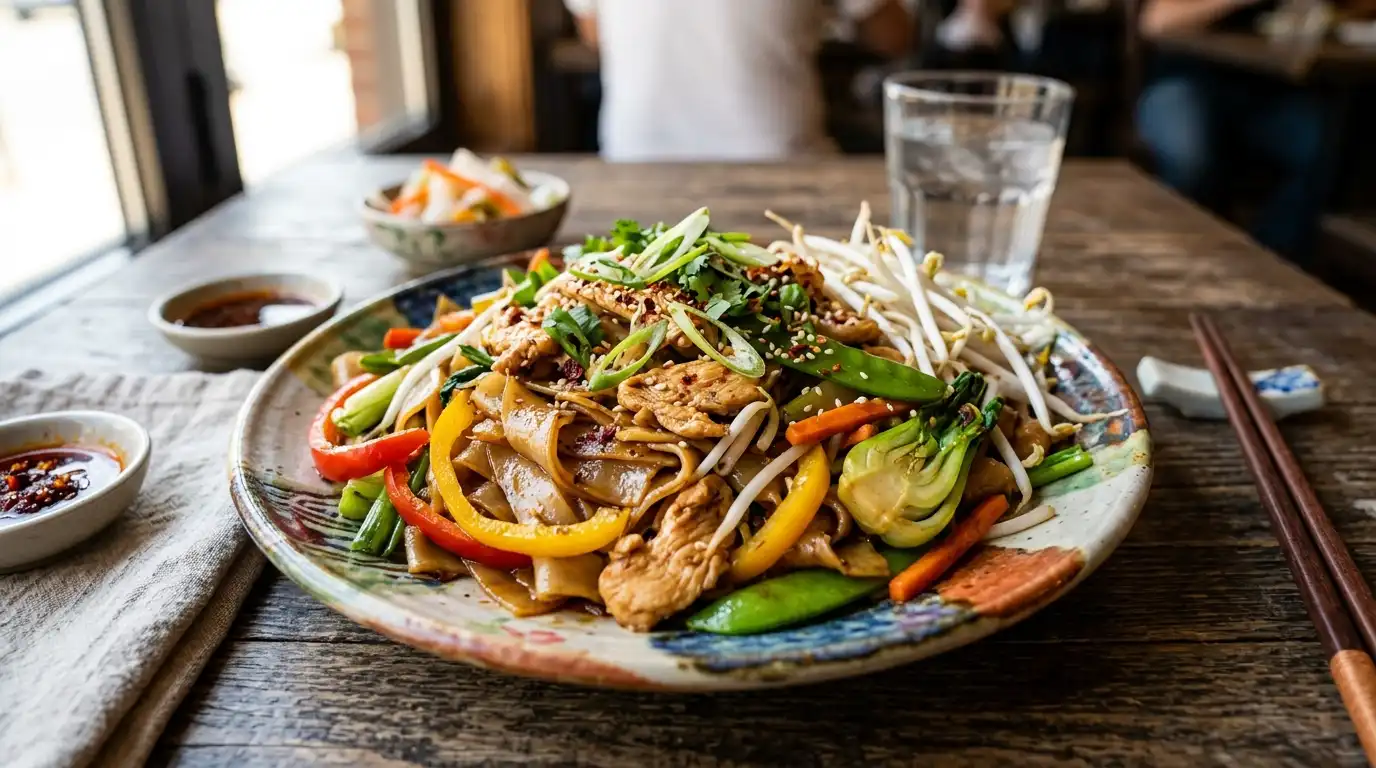
You do not need a commercial restaurant setup to make fantastic stir-fried noodles in your home kitchen.
Choosing the Right Pan: Wok vs. Skillet
A carbon steel wok is the golden standard because it heats up quickly and maintains intense temperatures evenly.
If you do not own a traditional wok, a large non-stick skillet or a heavy cast-iron pan works as a great substitute. Just ensure your pan has plenty of surface area so noodles do not pile up and steam instead of fry.
The Magic of High Heat and Wok Hei
Have you ever wondered why home stir-fries sometimes taste different than restaurant dishes?
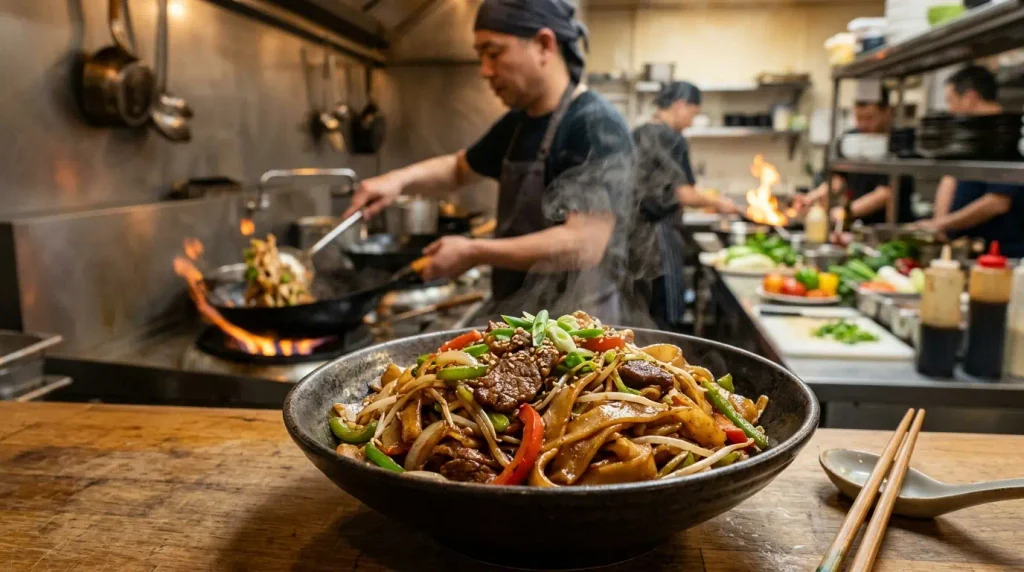
Restaurants cook on jet-engine burners that create a smoky chemical transformation known as “wok hei” or breath of the wok. You can recreate a similar effect at home by preheating your carbon steel pan until it lightly smokes before adding oil.
Step-by-Step Homemade Chicken Chow Mei Fun Recipe
Making this restaurant-quality dish at home takes less than 20 minutes from start to finish.
Ingredients Checklist
- 7 ounces dried thin rice vermicelli noodles
- 8 ounces chicken breast, thinly sliced into bite-sized strips
- 2 cups fresh bean sprouts
- 1 cup shredded Napa cabbage or carrots
- 3 green onions, sliced into two-inch pieces
- 2 cloves garlic, finely minced
- 1 teaspoon fresh ginger, grated
- 2 tablespoons vegetable oil (divided)
The Flavorful Seasoning Sauce
- 1.5 tablespoons low-sodium soy sauce
- 1 teaspoon dark soy sauce (for rich color)
- 1 teaspoon toasted sesame oil
- 1/2 teaspoon white pepper
- 1/2 teaspoon sugar or chicken bouillon powder
Preparation and Noodle Soaking
- Place dried rice vermicelli in a large bowl and cover fully with warm tap water.
- Let noodles soak for 6 to 8 minutes until soft and pliable, then drain completely in a colander.
- Cut noodles twice with kitchen shears to prevent super-long tangles in the pan.
- Whisk together soy sauces, sesame oil, white pepper, and sugar in a small bowl.
Searing and Stir-Frying
- Heat one tablespoon of oil in your wok over high heat until smoking hot.
- Add sliced chicken and sear for 2 to 3 minutes until cooked through, then remove and set aside.
- Pour remaining oil into the wok, adding minced garlic and grated ginger for 10 seconds.
- Toss in shredded cabbage, carrots, and green onions, stirring constantly for 1 minute.
- Add drained rice noodles to the hot pan, tossing rapidly using two spatulas or tongs to untangle.
- Pour prepared sauce evenly over noodles and toss vigorously for 90 seconds until color is uniform.
- Return cooked chicken and fresh bean sprouts to the wok, tossing for one final minute before serving hot.
Pro Cooking Tips to Avoid Soggy Noodles
Mushy noodles are the enemy of a great stir-fry. Follow these expert guidelines for crisp, separate strands every time.
Never Boil Your Rice Vermicelli
Plunging delicate rice noodles into boiling water turns them into starch mush instantly.
Always use warm or room-temperature water baths to rehydrate thin rice vermicelli gently. Draining them thoroughly before they hit the hot oil keeps their texture springy and pleasant.
Use Tongs or Chopsticks to Toss
Stirring delicate rice noodles with a solid wooden spoon can snap them into tiny, broken pieces.
Instead, use a pair of long kitchen tongs or large cooking chopsticks to lift, separate, and fluff noodles continuously while cooking over high heat.
Batch Cook Proteins First
Never crowd your hot pan by cooking raw meat, vegetables, and delicate noodles all at the same time.
Cook your proteins first to get a nice brown crust, remove them, stir-fry your veggies and noodles, and combine everything right at the end.
Health Benefits and Dietary Advantages
Eating delicious food should make your body feel vibrant, energized, and nourished.
Naturally Gluten-Free Meal Choice
Because traditional rice vermicelli contains zero wheat flour, this dish is a haven for people with gluten sensitivities or celiac disease.
Simply substitute standard soy sauce with tamari or certified gluten-free liquid aminos when ordering or cooking at home.
Lower Calorie and Fat Density
Thin rice noodles do not absorb as much cooking oil as thick, porous egg noodles or wide rice ribbons.
When cooked with lean chicken breast, shrimp, or fresh vegetables, a plate offers a balanced mix of clean carbohydrates and lean protein without heavy calorie overhead.
Smart Leftover Storage and Reheating Guide
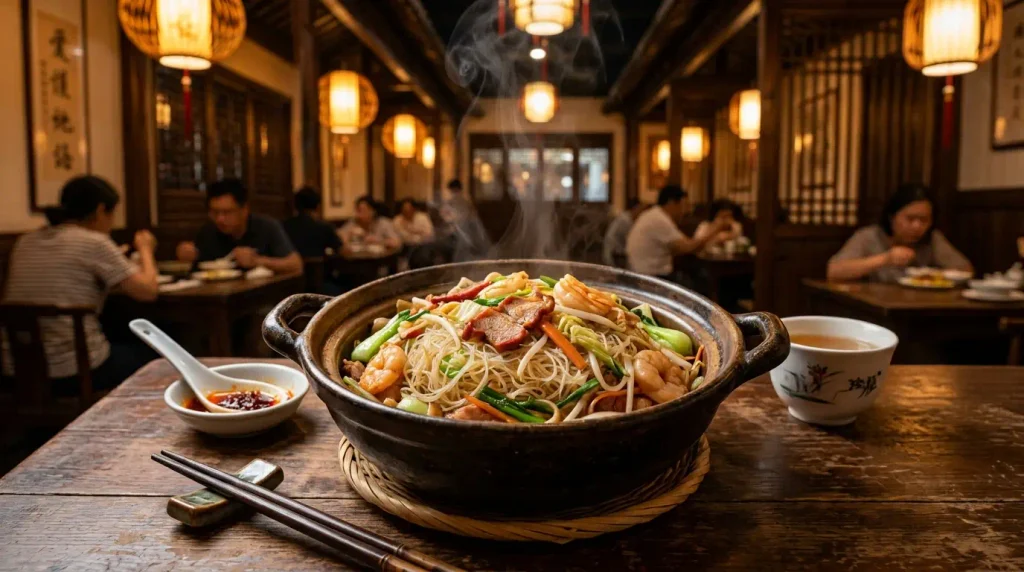
Stir-fried noodles make incredible next-day lunches if stored and reheated with proper care.
How to Store Safely
Allow cooked noodles to cool down to room temperature for no longer than 30 minutes after cooking.
Pack leftovers into airtight glass or plastic meal-prep containers and store them in the refrigerator for up to 3 to 4 days.
The Best Reheating Methods
- Skillet Method: Heat one teaspoon of oil or a splash of water in a skillet over medium heat. Toss leftovers for 2 minutes until hot and springy.
- Microwave Method: Place noodles in a microwave-safe bowl, cover with a damp paper towel to trap steam, and heat in 30-second bursts until warm.
MCQs
- What type of flour is primarily used to make noodles for chow mei fun?
A. Wheat flour B. Rice flour C. Almond flour D. Cornstarch flour - What does the Cantonese word “mei” mean in the context of noodle names?
A. Fried B. Soup C. Rice D. Spicy - How should thin dried rice vermicelli noodles be prepared before stir-frying?
A. Boiled vigorously in salted water for 10 minutes B. Baked in an oven until golden brown C. Soaked in warm water until soft and drained D. Deep-fried straight out of the package - Which ingredient gives Singapore Mei Fun its iconic yellow color and distinct flavor?
A. Turmeric powder B. Yellow mustard C. Curry powder D. Saffron threads - How does chow mei fun differ fundamentally from chow mein?
A. Chow mei fun uses thin rice noodles; chow mein uses wheat egg noodles B. Chow mei fun is baked; chow mein is boiled C. Chow mei fun is always spicy; chow mein is sweet D. Chow mei fun uses raw meat; chow mein uses cooked meat - What cooking technique term describes the distinct smoky flavor achieved in a blistering hot wok?
A. Dim Sum B. Wok Hei C. Char Siu D. Umami - Why is it recommended to cut soaked rice vermicelli noodles with kitchen shears before cooking?
A. To make them cook twice as fast To prevent long noodles from tangling into clumps during stir-frying C. To release hidden starches D. To change their taste profile - Which utensil combination is best suited for tossing delicate rice noodles in a wok?
A. Solid metal ladle B. Potato masher C. Two spatulas or kitchen tongs D. Flat wooden spoon - Is traditional chicken chow mei fun naturally suitable for a gluten-free diet if using gluten-free soy sauce?
A. Yes B. No C. Only when cold D. Only when made with beef - What is the primary reason for avoiding over-boiling rice vermicelli noodles?
A. They become too salty B. They turn mushy and break apart easily in the wok C. They change color to deep brown D. They double in calorie count
Answer Key
- B
- C
- C
- C
- A
- B
- B
- C
- A
- B
FAQs
What is chow mei fun made of?
It is made of thin rice vermicelli noodles stir-fried with vegetables, aromatics, light soy sauce, and proteins like chicken, pork, shrimp, or beef.
Is chow mei fun healthy?
Yes, it is generally a light and healthy option. It uses thin rice noodles that require minimal oil, providing lean protein, clear carbohydrates, and fresh vegetable fiber.
What is the difference between mei fun and ho fun?
Mei fun uses thin, thread-like rice vermicelli noodles. Ho fun uses wide, flat, ribbon-like rice noodles that are thick and soft.
Is chow mei fun gluten-free?
Rice vermicelli noodles are naturally 100% gluten-free. You must ensure that the soy sauce used during cooking is certified gluten-free or tamari-based.
Why are my mei fun noodles breaking into tiny pieces?
Noodles break when they are overcooked in hot water before frying or tossed using harsh, heavy spoons instead of gentle tongs or chopsticks in the wok.
What does Singapore Mei Fun taste like?
Singapore Mei Fun features a savory, warm, and mildly spicy curry flavor balanced by tender scrambled eggs, savory pork, sweet shrimp, and crisp vegetables.
Can I freeze leftover stir-fried rice noodles?
Freezing is not recommended because rice vermicelli loses its structural integrity when frozen and thawed, turning soft and grainy when reheated.
Conclusion
Mastering chow mei fun opens up a wonderful world of quick, light, and flavor-packed Asian cooking right in your home.
Whether you prefer the spicy yellow kick of Singapore style or a classic homemade chicken stir-fry, these thin rice noodles offer endless meal possibilities.
Grab a package of thin rice vermicelli from your local market today, heat your wok, and enjoy creating your own custom plate of chow mei fun!

Ethan Danial is the creator and lead writer behind FunWhirls.com, a fun-focused platform dedicated to entertaining ideas, fascinating facts, funny moments, creative lists, and content that sparks curiosity. With a genuine love for discovering interesting and unexpected topics, Ethan enjoys turning simple ideas into engaging content that readers can enjoy, learn from, and share. His approach is centered on making every article easy to read, enjoyable, and worth coming back to.
At FunWhirls.com, Ethan Danial explores the lighter and more entertaining side of everyday life. He creates content for readers who love discovering something new, having a quick laugh, or simply taking a break from the ordinary. From curious facts to playful ideas and entertaining discoveries, Ethan aims to keep the content fresh, positive, useful, and engaging for readers of all kinds.