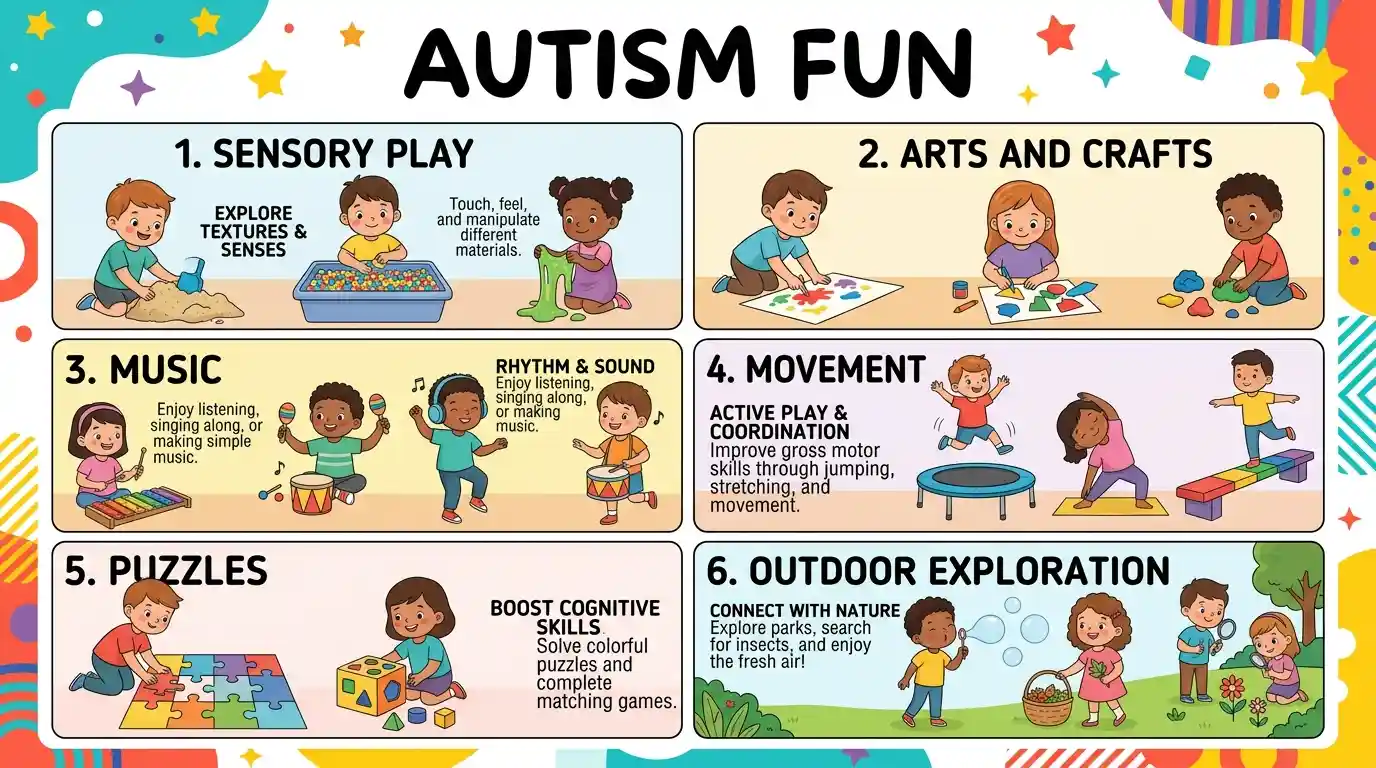
Finding the right autism fun activities means matching playful experiences with unique sensory profiles and interests. By blending sensory play, structured games, visual arts, and gentle outdoor exploration, you create joyful learning opportunities that boost confidence, support emotional regulation, and build meaningful social connections at a comfortable pace.
Every child and adult on the spectrum experiences the world in a vibrant, unique way. Finding great autism fun activities is all about discovering what sparks genuine joy, curiosity, and comfort.
Whether you are looking for soothing sensory setups, active indoor games, or creative artistic outlets, the goal remains the same. Play should always feel engaging, supportive, and completely stress-free.
When you tailor activities to individual strengths and preferences, incredible moments of connection happen naturally. Let us explore how simple, thoughtful adjustments can turn everyday playtime into an unforgettable adventure.
Understanding the Power of Autism Fun in Daily Life
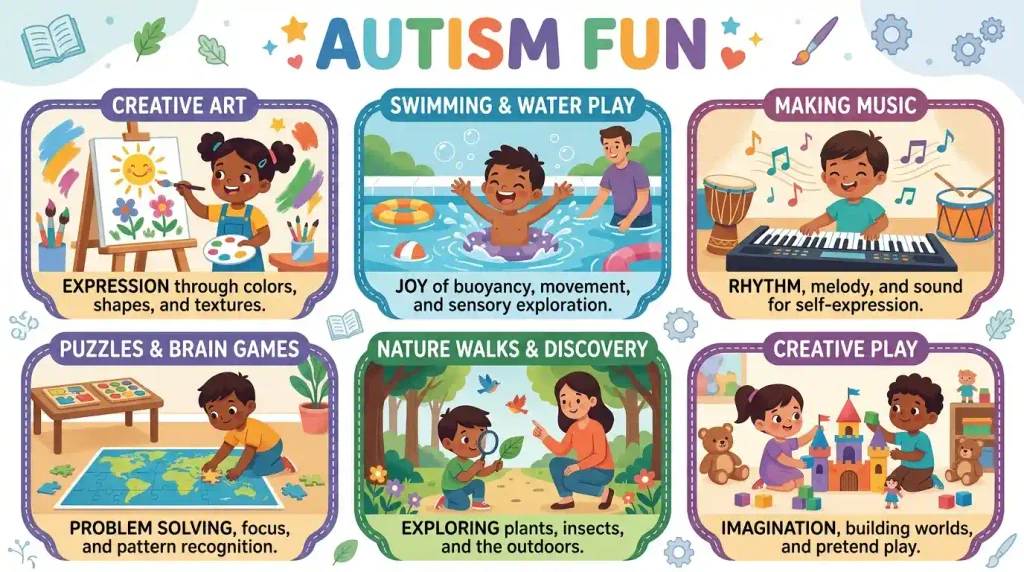
Play is far more than just a way to pass the afternoon. For autistic individuals, engaged play serves as a vital bridge for communication, sensory integration, and self-expression.
When play feels genuinely exciting, it helps regulate the nervous system and lowers anxiety. Creating moments of authentic enjoyment builds a foundation of trust and open exploration.
How Sensory Preferences Shape Play
Every person processes sights, sounds, textures, and movements differently. Some individuals constantly seek strong physical input, while others feel easily overwhelmed by bright lights or loud noises.
Understanding these sensory needs allows you to design playful environments that feel safe and inviting. When sensory needs are met, learning and interaction happen effortlessly.
- Sensory Seekers: Prefer high-energy activities like bouncing, spinning, firm hugs, and good visual effects.
- Sensory Avoiders: Thrive in quiet spaces, soft lighting, predictable textures, and calm, low-key interactions.
- Mixed Profiles: May enjoy deep pressure and physical movement but remain sensitive to sudden noises or wet textures.
The Role of Special Interests in Having Fun
Special interests are powerful drivers of happiness and focus. Whether someone loves trains, outer space, ocean wildlife, or specific cartoon characters, integrating these passions creates instant enthusiasm.
Instead of trying to redirect a passion, embrace it fully during recreation. Using favorite topics as themes transforms simple games into high-value bonding experiences.
Top Indoor Autism Fun Activities for Every Energy Level
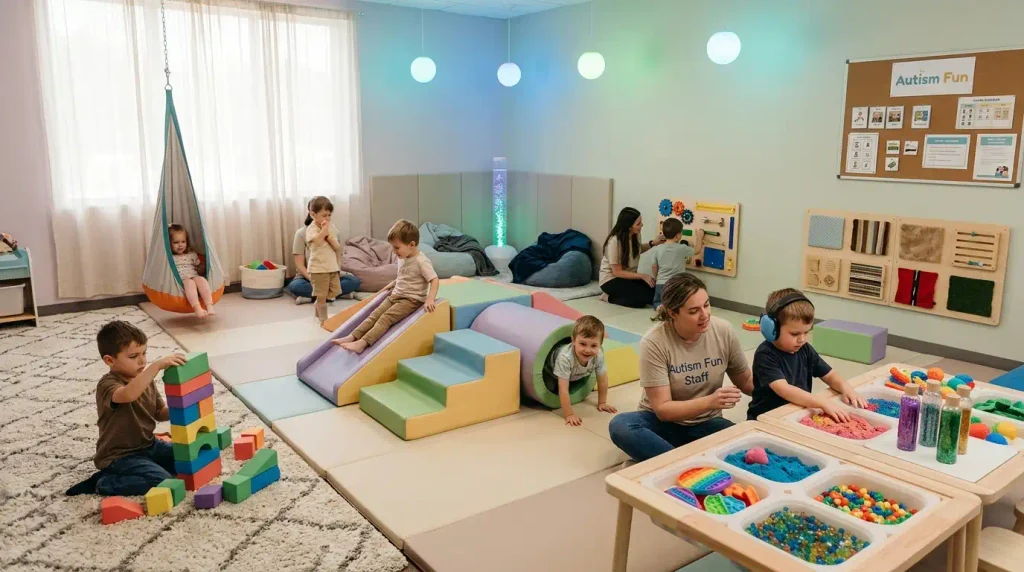
Indoor spaces offer total control over temperature, noise, lighting, and safety. You can easily adjust the room setting to create a perfectly balanced recreational zone.
Creative Sensory Bins and Tactile Stations
Sensory bins are simple to assemble and offer endless combinations of physical textures. They encourage fine motor skills, focus, and quiet self-soothing play.
- Rice and Pasta Digs: Fill a shallow plastic container with colorful uncooked rice or dried pasta shapes. Hide small plastic animals or puzzle pieces inside for a mini treasure hunt.
- Water Bead Discovery: Hydrate non-toxic water beads in a large bowl. Add scoops, cups, and strainers to let individuals pour, squeeze, and scoop the squishy beads.
- Shaving Cream Tracing: Spread clean shaving cream over a flat tray. Encourage finger-drawing, letter tracing, or squishing toy cars through the smooth foam.
Building Safe Indoor Obstacle Courses
Physical movement is fantastic for building balance and discharging excess energy. You can craft a custom obstacle course using common household items.
Start by placing plush couch cushions on the floor for jumping or balancing. Use masking tape on the carpet to create straight lines for dynamic balance walks.
Set up soft pop-up tunnels or blanket forts for cozy crawling paths. Keep instructions visual and simple so the activity stays cheerful and relaxed.
Rhythm, Music, and Dance Sessions
Music naturally stimulates multiple areas of the brain while offering a wonderfully predictable structure. It provides an avenue for emotional release without needing spoken words.
- Drumming Circles: Use plastic buckets, pots, and wooden spoons to tap along with a steady musical beat.
- Freeze Dance: Play favorite songs and pause the audio randomly. This excitingly builds focus and body control.
- Gentle Movement Videos: Follow simple interactive dance routines designed for kids and beginners on family-friendly streaming platforms.
Outdoor Autism Fun: Connecting with Nature and Movement
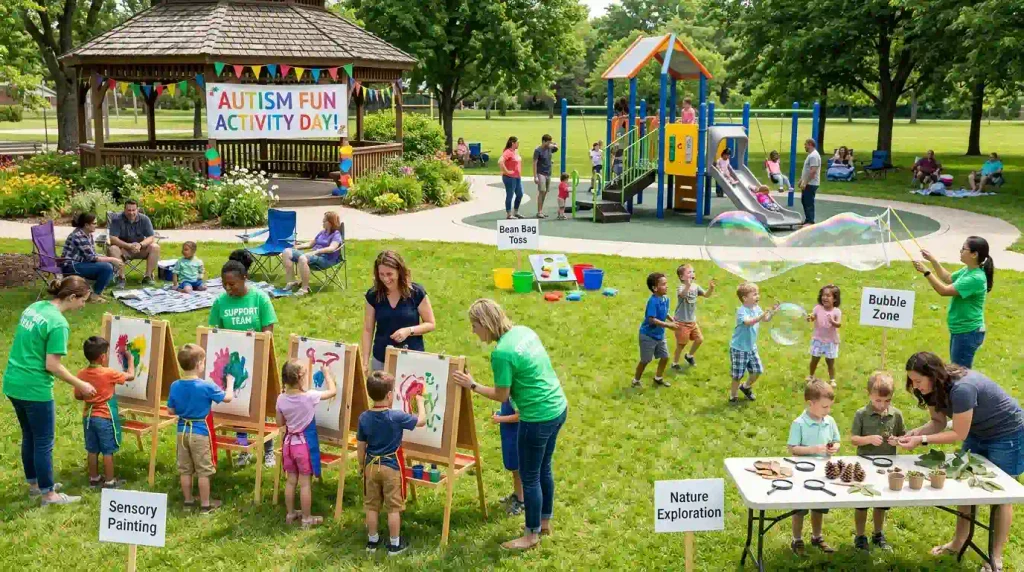
Stepping outside offers fresh air, natural sensory input, and broad open spaces to explore freely. Outdoor play helps improve gross motor skills while encouraging natural curiosity.
Nature Scavenger Hunts with Visual Cards
Nature provides a rich sensory landscape filled with natural colors, rustic textures, and pleasant outdoor sounds. Visual scavenger hunts keep the walk structured and engaging.
Create a simple card with pictures of items like pinecones, green leaves, smooth stones, and chirping birds. Hand out a small collection bucket and explore local parks at a leisurely pace.
Water Play and Bubble Magic
Water play provides instant tactile stimulation and soothing sensory feedback. It works brilliantly in backyards or community garden spaces during warm weather.
- Giant Bubbles: Mix dish soap, water, and a splash of glycerin to create massive, colorful bubbles that drift slowly through the air.
- Splash Trays: Fill shallow plastic tubs with water, plastic boats, and sponges for relaxed water splashing and floating experiments.
- Garden Hose Target Practice: Let kids aim a low-pressure garden hose spray at target cups placed on outdoor tables.
Gentle Playground Strategies
Public parks offer dynamic opportunities for climbing, swinging, and social interaction. However, crowded playgrounds can sometimes feel loud or unpredictable.
To keep park trips delightful, visit during off-peak hours like early morning or mid-afternoon. Bring familiar noise-canceling headphones and establish a clear, quiet resting spot nearby before play begins.
Artistic Outlets and Imaginative Play
Art offers a creative voice when spoken words feel challenging. Creative projects build spatial awareness, fine motor precision, and individual pride.
Hands-On Sculpting and Clay Modeling
Modeling clay and soft playdough offer rich tactile feedback that helps build hand strength. You can make homemade dough using flour, salt, warm water, and food coloring.
Provide rollers, cookie cutters, and plastic safety knives. Let the sculptor build anything from simple geometric shapes to imaginative creatures based on their favorite stories.
Mess-Free Finger Painting Alternatives
If squishy or sticky paint feels uncomfortable on bare hands, mess-free artistic methods offer a wonderful compromise.
- Ziploc Paint Bags: Squirt several colors of washable paint into a sealable plastic bag. Tape the bag securely to a bright window so fingers can press and blend colors cleanly.
- Water Painting on Slate: Give artists clean paintbrushes and a cup of fresh water. Let them paint temporary dark patterns onto outdoor brick walls or concrete sidewalks.
- Stamp Art: Use carved sponge blocks or rubber stamps paired with washable ink pads to create structured artwork patterns easily.
Structured Social Fun and Board Games
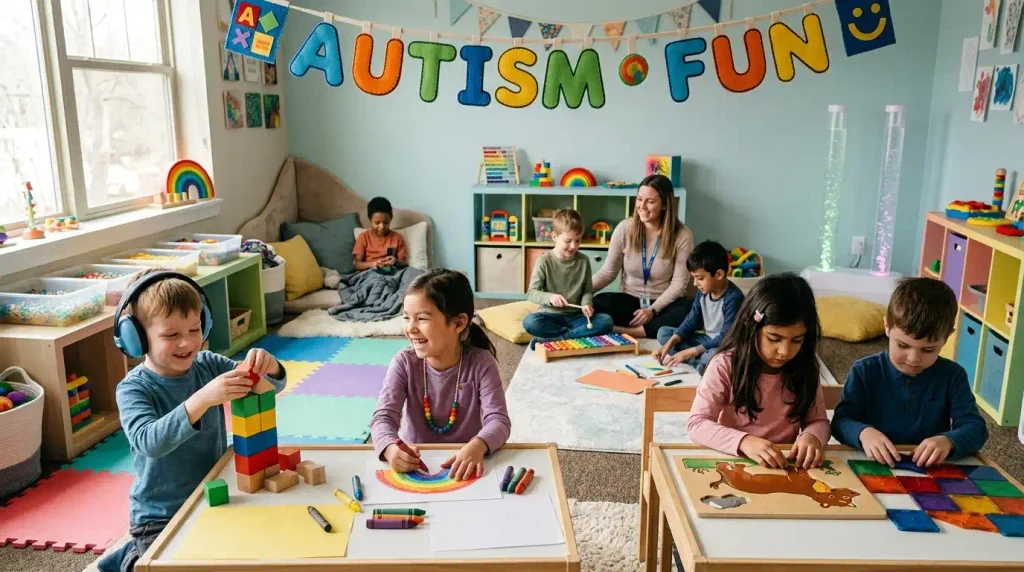
Social play works best when rules are clear, visual, and easy to follow. Game sessions should focus on cooperation, shared laughter, and fun interaction rather than intense competition.
Cooperative Board Games for Stress-Free Play
Cooperative games encourage players to work together as a united team toward a shared victory. This eliminates the pressure of losing to peers while building collaborative problem-solving skills.
Look for games featuring colorful boards, clear turn-taking steps, and physical pieces that feel pleasant to handle. Keep early game sessions short to preserve enthusiasm.
Simple Role-Playing and Puppet Theater
Puppets offer a comfortable, low-pressure barrier for communication. Expressing ideas through a friendly puppet character feels safe and delightfully silly.
- Sock Puppet Creation: Decorate clean athletic socks with button eyes, felt tongues, and yarn hair using safe craft glue.
- Pretend Storekeeper: Set up a pretend grocery counter using toy food items, play currency, and a plastic cash register.
- Story Reenactments: Use action figures or soft plushies to act out familiar scenes from favorite stories or animated shows.
Choosing the Right Activity by Sensory Needs
MCQs
Test your understanding of selecting, adapting, and supporting enjoyable recreation activities.
- Which activity can be enjoyable for some autistic children?
A) Drawing and coloring
B) Long exams
C) Heavy work
D) Loud arguments - What can sensory play include?
A) Textured toys
B) Office paperwork
C) Road construction
D) Factory machines - Which activity can encourage creativity?
A) Arts and crafts
B) Filing documents
C) Cleaning offices
D) Repairing cars - What type of environment may help some autistic children feel comfortable?
A) Calm and supportive
B) Extremely noisy
C) Crowded and stressful
D) Unpredictable - Which game can help develop problem-solving skills?
A) Puzzles
B) Sleeping
C) Watching traffic
D) Waiting in line - Which activity can involve music and movement?
A) Dancing
B) Typing reports
C) Gardening equipment repair
D) Driving - Why can outdoor activities be enjoyable?
A) They provide opportunities for movement and exploration
B) They require everyone to compete
C) They are always noisy
D) They eliminate the need for breaks - What is important when planning activities for autistic people?
A) Respecting individual preferences and needs
B) Making everyone do the same activity
C) Avoiding breaks
D) Creating unnecessary noise - Which activity can provide a sensory experience?
A) Playing with water or sand
B) Reading a tax report
C) Repairing machinery
D) Operating a factory - What is the main idea of autism-friendly fun activities?
A) Making activities enjoyable, comfortable, and inclusive
B) Making activities difficult
C) Encouraging competition at all times
D) Avoiding creative activities
Answer Key
- A
- A
- A
- A
- A
- A
- A
- A
- A
- A
FAQs
How do I introduce a new activity without causing stress?
Introduce new activities gradually by placing materials nearby without forcing immediate participation. Use visual picture cards or brief demonstrations so expectations feel completely clear, predictable, and reassuring.
What are the best low-cost sensory play ideas?
Uncooked rice, dried beans, shaving cream, and homemade flour playdough offer incredible sensory value for just a few dollars. Simple household items like plastic containers and spoons make perfect play tools.
How can I make outdoor play safer for a child who wanders?
Choose fully fenced parks and establish clear visual boundaries using brightly colored markers or cones. Always maintain close visual supervision and consider wearing matching bright clothing when exploring open nature spaces.
Can screen time be part of an engaging recreational routine?
Yes, screen time can offer meaningful value when used thoughtfully alongside interactive games. Interactive dance videos, drawing tutorials, and cooperative building games offer delightful digital fun when balanced with active physical play.
What should I do if an activity causes sudden overwhelm?
Pause the activity immediately, reduce surrounding noise or lighting, and offer access to a quiet comfort area. Reassure the individual calmly without pushing them to finish the game until they feel fully regulated.
How do I encourage turn-taking during group games?
Use a visual passing object like a soft ball or giant coin to show whose turn it is. Keeping turns quick and energetic prevents boredom while teaching social rhythm in a clear, logical way.
Conclusion
Finding the perfect balance of autism fun comes down to observing what truly brings smiles, relaxation, and enthusiasm to the individual. When you celebrate unique sensory preferences and embrace special interests, everyday play becomes a delightful opportunity for growth and genuine human connection.
Keep activities flexible, focus on shared joy rather than perfection, and celebrate every small spark of curiosity along the way. With a warm heart and creative tweaks, you can easily build an engaging, supportive environment where play always feels like a celebration.

Ethan Danial is the creator and lead writer behind FunWhirls.com, a fun-focused platform dedicated to entertaining ideas, fascinating facts, funny moments, creative lists, and content that sparks curiosity. With a genuine love for discovering interesting and unexpected topics, Ethan enjoys turning simple ideas into engaging content that readers can enjoy, learn from, and share. His approach is centered on making every article easy to read, enjoyable, and worth coming back to.
At FunWhirls.com, Ethan Danial explores the lighter and more entertaining side of everyday life. He creates content for readers who love discovering something new, having a quick laugh, or simply taking a break from the ordinary. From curious facts to playful ideas and entertaining discoveries, Ethan aims to keep the content fresh, positive, useful, and engaging for readers of all kinds.