
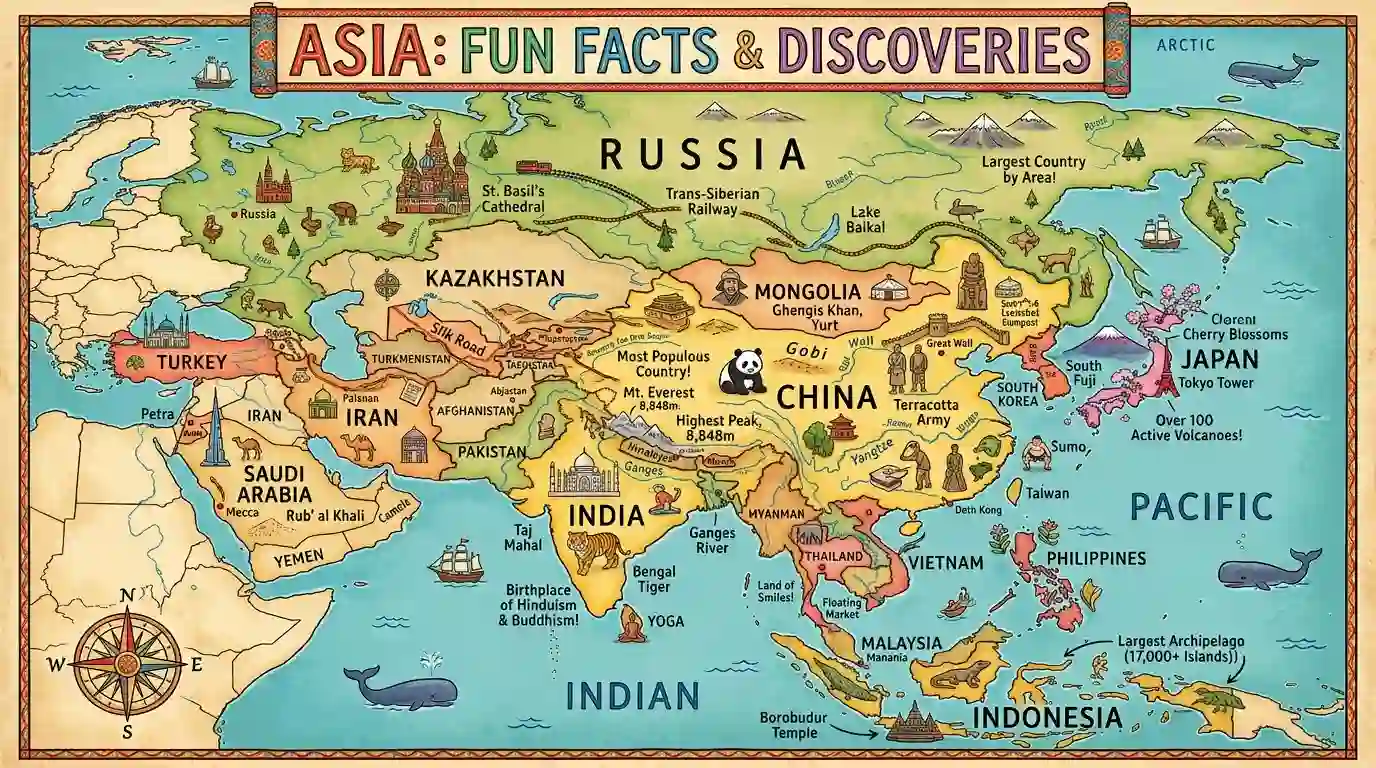
Asia fun facts highlight the continent’s incredible diversity, featuring the world’s highest peak, Mount Everest, over 2,300 spoken languages, and unique biodiversity like wild orangutans. Covering 30% of Earth’s land area, Asia blends ancient heritage with cutting-edge modern marvels.
Asia is a massive continent full of surprising secrets, incredible landscapes, and vibrant traditions. Discovering Asia fun facts helps you see how rich and diverse our world truly is.
Whether you love traveling or just enjoy learning quirky pieces of information, these Asia fun facts will change how you look at the map. Get ready to explore some truly mind-blowing details.
Mind-Blowing Geography and Nature Secrets
Asia covers about 30% of the world’s total land area, making it the largest continent on Earth. It is so huge that it spans eleven different time zones from west to east.
Because of its massive size, you can find almost every type of climate here. You can walk through freezing Arctic tundra in northern Siberia or explore lush tropical rainforests in Indonesia.
Mountains That Touch the Clouds
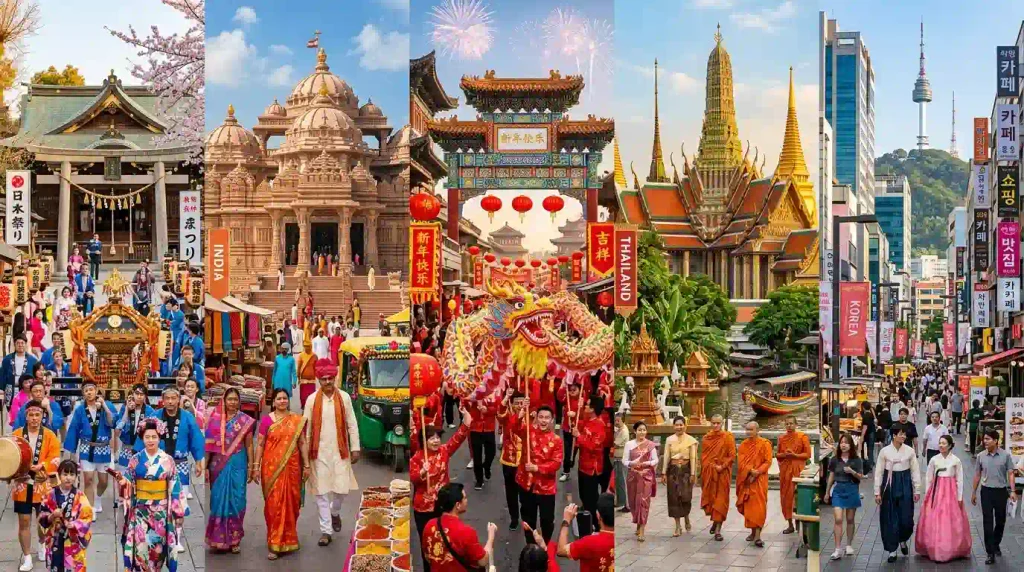
Asia is home to Mount Everest, the highest point above sea level on the planet. Standing in the Himalayas, it draws thousands of brave climbers every single year.
What many people do not realize is that the Himalayan range is still growing. Tectonic plates continue to push against each other, making the mountains slightly taller every year.
Lakes and Seas With Unique Superpowers
The Dead Sea, located between Jordan and Israel, is the lowest exposed land point on Earth. Its water is so salty that you can float effortlessly without even trying to swim.
In Russia, Lake Baikal holds about 20% of the world’s unfrozen fresh surface water. It is both the deepest and oldest freshwater lake anywhere on Earth.
Forests and Wildlife Found Nowhere Else
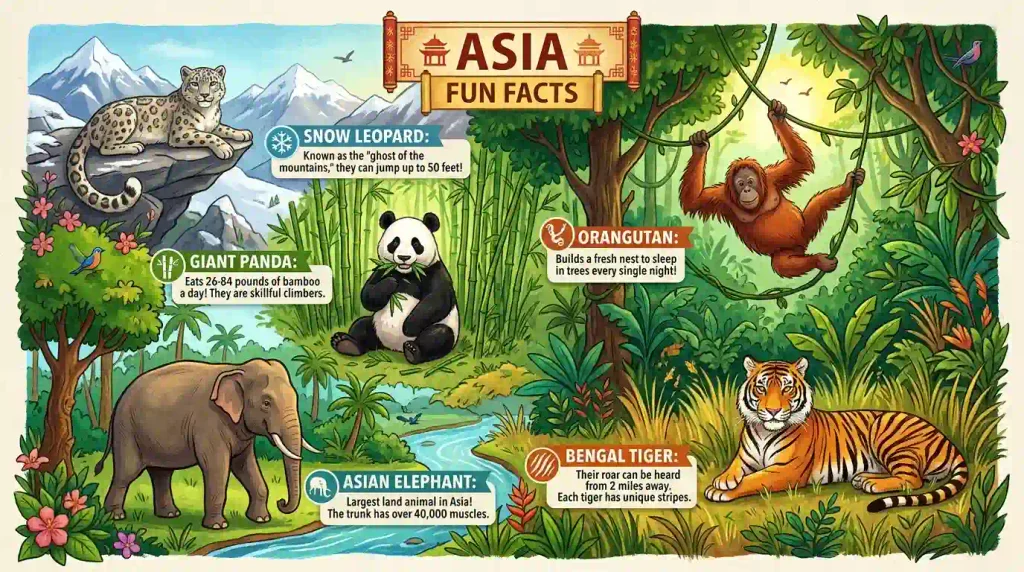
Asia boasts incredible biodiversity that you cannot see naturally in other parts of the world. Rainforests in Borneo and Sumatra are the only wild homes left for orangutans.
In India, the Gir National Park protects the world’s last remaining population of Asiatic lions. These majestic creatures are slightly smaller than their African cousins but just as impressive.
Incredible Cultural Traditions and History
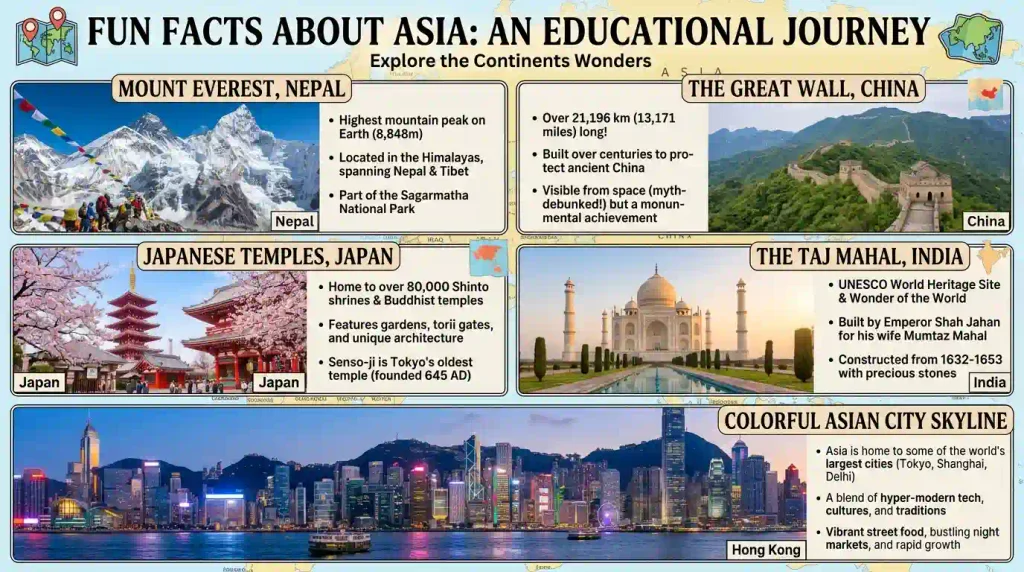
Asia is widely considered the cradle of human civilization. Ancient societies developed writing systems, complex mathematics, and farming techniques thousands of years ago.
When you dive into Asia fun facts, the deep history of these traditions becomes instantly clear. Every country offers custom habits refined over centuries.
The Land of Thousands of Languages
More than 2,300 living languages are actively spoken across Asia today. Papua New Guinea alone accounts for over 800 distinct native languages among its local communities.
Country borders often contain hundreds of regional dialects. This means neighboring villages can sometimes speak entirely different native languages.
Ancient Inventions That Shaped the World
Many everyday items you use right now were created in Asian countries. Paper, printing presses, compasses, and gunpowder were all invented in ancient China.
Umbrellas were designed thousands of years ago in Asia to protect people from both rain and sun. Tea brewing also originated in ancient China before spreading across the globe.
Unique Architectural Wonders
The Great Wall of China is one of the most famous structures humans have ever built. It stretches over 13,000 miles across northern borders and rugged mountain ridges.
Another famous landmark is the Taj Mahal in India, built entirely from white marble. It shifts subtle colors throughout the day as sunlight and moonlight reflect off it.
Surprising Daily Life and Modern Marvels
Modern Asian cities mix centuries-old traditions with futuristic technology. High-speed trains run right past ancient temples and quiet neighborhood street markets.
Daily routines in these places often feature unique cultural habits that surprise international travelers. Small everyday actions show deep values of respect and community.
Vending Machines for Almost Everything
Japan has one of the highest densities of vending machines anywhere in the world. You can buy hot coffee, warm meals, umbrellas, and fresh fruit right on the sidewalk.
These machines operate smoothly around the clock in major cities and quiet villages alike. They show how much local culture values convenience, safety, and modern automation.
Escalators and Public Transportation Rules
In cities like Hong Kong and Tokyo, public transit runs with incredible precision. Trains arrive on exact schedules down to the specific second of the day.
Commuters always stand on one designated side of escalators to let walking people pass. This unspoken rule keeps busy train stations flowing quickly during morning rush hours.
Colorful Festivals and Celebrations
Celebrations across Asia are famous for their vibrant colors and deep meaning. The Songkran festival in Thailand turns entire city streets into friendly, giant water fights.
In India, the festival of Holi marks the arrival of spring with bright colored powders. Families and friends gather outside to throw colors and share sweet celebratory treats.
Essential Summary of Asia’s Geography and Culture
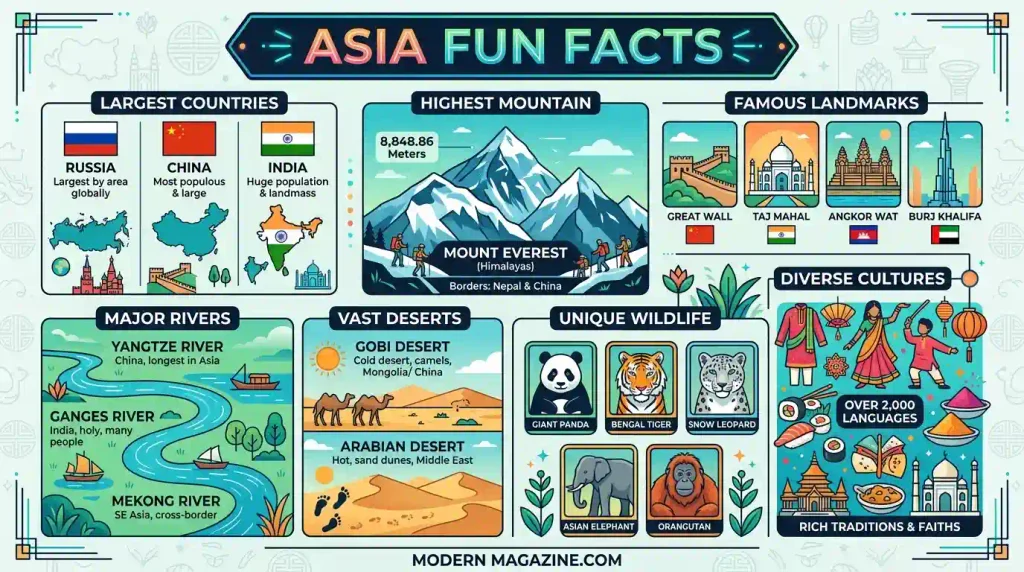
Asia is a continent of striking contrasts, holding both the highest peak on Earth, Mount Everest, and its lowest exposed point at the Dead Sea. Spanning roughly 30% of the world’s total land surface, its vast territory features diverse ecosystems ranging from freezing Siberian tundra to lush tropical rainforests. As the birthplace of major ancient civilizations, Asia combines millennia of rich history, thousands of distinct languages, and iconic inventions with cutting-edge modern innovation.
Extreme Geographical Features and Unique Biodiversity
Asia’s physical landscape is defined by massive natural barriers, including the soaring Himalayan mountain range and vast freshwater bodies like Lake Baikal, which contains a fifth of Earth’s unfrozen surface freshwater. These isolated habitats allowed unique wildlife species—such as wild orangutans in Borneo and the rare Asiatic lions in India—to evolve and thrive alongside vibrant human settlements.
Rich Cultural Tapestry and Ancient Heritage
With over 2,300 active languages spoken across 48 countries, Asia represents an exceptionally diverse cultural landscape. Pivotal ancient innovations like paper production, printing technology, and compass navigation laid the foundation for modern global society, while centuries-old traditions continue to shape daily habits, colorful regional festivals, and distinct lifestyle practices today.
MCQs
- Which lake holds roughly 20 percent of the world’s unfrozen freshwater?
A. Lake Superior B. Lake Baikal C. Lake Victoria D. Caspian Sea - Mount Everest is located in which mountain range?
A. The Andes B. The Alps C. The Himalayas D. The Rockies - Which nation is home to over 800 distinct native languages?
A. Japan B. Papua New Guinea C. Thailand D. Mongolia - What natural phenomenon makes floating effortless in the Dead Sea?
A. Cold water temperatures B. High salt concentration C. Strong underwater currents D. Deep volcanic trenches - Which ancient four great inventions originated in China?
A. Steam engine, telephone, lightbulb, paper B. Paper, gunpowder, compass, printing C. Telegraph, concrete, glass, clock D. Wheel, sail, iron furnace, mirror - What is the only natural wild habitat left for orangutans?
A. Borneo and Sumatra B. Madagascar and Sri Lanka C. Philippines and Vietnam D. Java and Bali - Which Asian festival celebrates spring with brightly colored powders?
A. Songkran B. Diwali C. Holi D. Tet - How much of Earth’s total land area does Asia cover?
A. About 10 percent B. About 20 percent C. About 30 percent D. About 50 percent - What is unique about the Gir National Park in India?
A. It holds the largest bamboo forest B. It is home to the last Asiatic lions C. It has the world’s deepest cave D. It receives no rainfall year-round - What country is famous for its dense network of street vending machines?
A. South Korea B. Japan C. Singapore D. Malaysia
Answer Key
- B
- C
- B
- B
- B
- A
- C
- C
- B
- B
FAQs
What makes Asia the largest continent on Earth?
Asia spans roughly 30 percent of the planet’s total land area. It connects to Europe in the west and extends all the way to the Pacific Ocean in the east.
How many countries are located in Asia?
There are 48 officially recognized independent countries in Asia according to the United Nations. The continent also includes several special territories and regions with unique cultural identities.
Why are there so many languages spoken across Asia?
Asia has vast geographical barriers like massive mountain ranges, deserts, and ocean islands. These physical borders allowed local communities to develop distinct languages and traditions independently over centuries.
What is the most famous ancient monument in Asia?
The Great Wall of China is widely considered the most famous historic monument in Asia. Built across centuries to protect borders, it stretches thousands of miles over mountains and hills.
Which wildlife species are native only to Asia?
Giant pandas, Asiatic lions, snow leopards, and wild orangutans are unique animals native to Asia. Protecting their natural forest and mountain habitats remains a major priority for global conservation.
How does climate vary across the Asian continent?
Climate ranges from freezing Arctic conditions in northern Siberia to hot tropical rainforests in Southeast Asia. Vast deserts like the Gobi lie in between these two temperature extremes.
Conclusion
Exploring these Asia fun facts shows just how diverse and fascinating our world can be. From record-breaking natural wonders to ancient traditions that live on today, Asia offers endless things to discover.
Learning about different places brings us closer together and inspires new curiosities. Share these fun facts with your friends or plan your own adventure to see these amazing sights in person!

Ethan Danial is the creator and lead writer behind FunWhirls.com, a fun-focused platform dedicated to entertaining ideas, fascinating facts, funny moments, creative lists, and content that sparks curiosity. With a genuine love for discovering interesting and unexpected topics, Ethan enjoys turning simple ideas into engaging content that readers can enjoy, learn from, and share. His approach is centered on making every article easy to read, enjoyable, and worth coming back to.
At FunWhirls.com, Ethan Danial explores the lighter and more entertaining side of everyday life. He creates content for readers who love discovering something new, having a quick laugh, or simply taking a break from the ordinary. From curious facts to playful ideas and entertaining discoveries, Ethan aims to keep the content fresh, positive, useful, and engaging for readers of all kinds.