
The Aztecs were an advanced Mesoamerican civilization famous for building Tenochtitlan, an extraordinary island city in Lake Texcoco. Beyond their popular reputation for warrior culture and magnificent stone pyramids, fascinating Aztec fun facts reveal their rich daily lives, mandatory universal schooling, innovative floating gardens, and pioneering creation of spicy hot chocolate.
Have you ever wondered what life was really like inside an ancient island metropolis? Exploring these extraordinary Aztec fun facts reveals a civilization far more creative, hygienic, and surprising than standard history lessons usually show.
When you look past the basic textbook summaries, the real story of the Mexica people comes alive through their daily habits, impressive engineering, and unique cultural traditions. You are about to discover how these ancient innovators shaped our modern world in ways you might never expect!
The Legendary Beginnings of Tenochtitlan

Imagine moving your entire community to a marshy island in the middle of a lake because a bird told you to! That is precisely how the Aztec Empire started back in 1325.
According to ancient legend, their chief god Huitzilopochtli gave the priests a very specific sign to look for. They needed to find an eagle perched on a prickly pear cactus while devouring a snake.
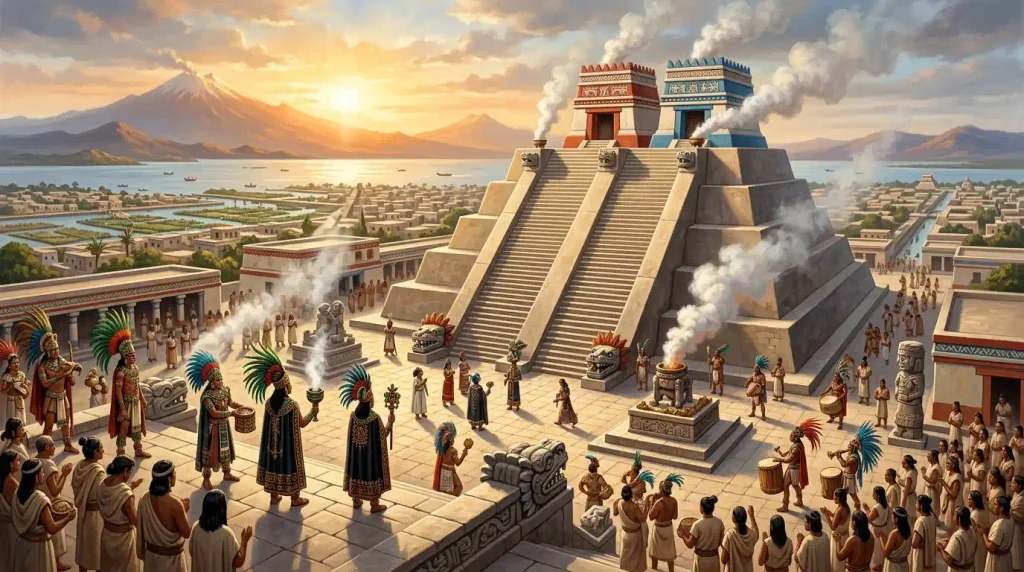
When they finally spotted this exact sign on a small swampy island in Lake Texcoco, they knew they had found their forever home. That tiny swampy outpost eventually grew into Tenochtitlan, one of the largest and most beautifully planned cities in the ancient world.
The Sacred Sign on the Cactus
This founding story was so powerful that it remains a core national symbol today. If you look closely at the center of the modern Mexican flag, you will see this exact eagle, snake, and cactus crest!
The settlers did not let the muddy island limit their architectural ambitions. Instead, they built wooden pilings deep into the lake bed to create stable bases for massive stone pyramids and palaces.
Building an Island Metropolis
Living on an island meant the Aztecs had to become master urban planners very quickly. They constructed long raised earthen roads, called causeways, to connect their island city to the mainland.
These causeways had built-in wooden bridges that could be pulled up in seconds if an enemy approached. This brilliant defense design made Tenochtitlan virtually unassailable for centuries.
Mind-Blowing Aztecs Fun Facts About Daily Life
Daily routine in the Aztec Empire was filled with surprising rules, cleanliness, and strict societal structures that might shock modern readers.
Bathing was a Daily Priority
While most European city dwellers in the fifteenth century rarely bathed, the average Aztec citizen cleaned themselves at least once or twice every single day.
In fact, the Aztec Emperor Montezuma II was known to take multiple steam baths every day to stay fresh and clean. They used lathering roots from soapberry trees and sweet-smelling herbs to wash their bodies and clothes thoroughly.
They Used Cocoa Beans as Money
In Aztec markets, money literally grew on trees! Roasted cacao beans were considered so valuable that people used them as physical currency to buy goods and pay taxes.
You could buy a fresh avocado for one bean, a small turkey for one hundred beans, and a good cotton robe for roughly thirty beans. Because chocolate was currency, counterfeiting was a real problem—clever fraudsters would sometimes fill empty cocoa shells with dirt to trick unsuspecting shoppers!
Universal Schooling for Every Child
Long before Europe or America made going to school mandatory, the Aztecs required every single child to receive a formal education regardless of their social standing or gender.
Starting around age twelve to fifteen, kids attended separate specialized academies. Boys learned trade skills, history, and military tactics, while girls learned leadership, weaving, priestess duties, and household management.
Ingenious Aztec Inventions and Architecture
When faced with tough environmental challenges, Aztec builders and scientists created solutions that continue to amaze modern engineers.
Floating Gardens Called Chinampas
How do you feed hundreds of thousands of people living on a lake? You invent chinampas, or magnificent artificial agricultural islands.
Farmers wove long reed fences on shallow lakebeds, layered them with mud and decomposing plant matter, and planted willow trees along the borders to anchor the soil. These “floating gardens” were so fertile that they produced up to seven harvests every single year!
Clean Water Aqueducts
Lake Texcoco was naturally salty and brackish, making it completely unfit for drinking or cooking. To solve this critical problem, Aztec engineers built miles of double-piped terracotta aqueducts that brought fresh water directly from mountain springs in Chapultepec.
One pipe was used continuously while the second pipe was cleaned and maintained. This twin design guaranteed a steady, uninterrupted flow of sparkling freshwater to the entire population.
Advanced Sanitation and Recycling Systems
Tenochtitlan was astonishingly clean for a city housing over two hundred thousand residents. Public sweepers cleaned every street daily, and waste was strictly collected for recycling.
Human waste was collected in special boats and used as rich fertilizer for crops. Meanwhile, urine was gathered to dye fabrics and tan animal hides, ensuring almost nothing went to waste.
Fascinating Foods and Aztec Culinary Habits
Your modern kitchen cabinet probably contains several items that originate directly from ancient Aztec dining tables.
The Original Spicy Hot Chocolate
The Aztecs loved chocolate, but they did not drink it sweet like we do today. They drank a frothy liquid called xocolatl, which means “bitter water.”
They ground cocoa beans together with chili peppers, vanilla, cornmeal, and aromatic herbs, pouring the mixture back and forth between tall cups until a thick foam formed. This energizing brew was reserved primarily for royalty, brave soldiers, and wealthy nobility.
Popcorn and Tamales
When Spanish explorers first encountered the Aztec people, they were amazed by crushed grains that popped into white flowers when tossed onto hot stones.
The Aztecs used popped corn not just as a delicious snack, but also as decorative garlands for ceremonial statues and dance costumes. They also enjoyed steaming seasoned meats and vegetables wrapped inside maize husks, creating the very first tamales!
Protein from Unexpected Sources
To meet their protein needs, Aztec cooks used every natural food source available in their lake environment. They collected protein-dense spirulina algae from the surface of Lake Texcoco and pressed it into green, cheese-like cakes that tasted like mild ocean salt.
They also gathered tiny water bug eggs, known as ahuautle, which they dried and fried into tasty cakes that resembled modern caviar omelets.
Aztec Empire Society and Cultural Overview
Warfare was an essential part of Aztec political life, social movement, and religious duty, shaping how their entire society operated.
The Fearsome Obsidian Sword
Aztec warriors did not use steel or iron weapons. Instead, they wielded a lethal wooden club called a macuahuitl, which had razor-sharp blades of volcanic obsidian stone embedded into its sides.
Obsidian can be sharpened to an edge finer than surgical steel scalpels. Historical accounts confirm that a single powerful strike from a macuahuitl could decapitate a horse!
Cotton Armor for Battle
Rather than wearing heavy metal suits, Aztec soldiers wore light armor made of thick, quilted cotton soaked in saltwater.
The salt dried inside the fibers, making the fabric surprisingly tough and stiff. This breathable armor could easily stop incoming arrows and thrown darts while keeping warriors cool in the tropical heat.
Elite Eagle and Jaguar Knights
The bravest and most successful soldiers could join prestigious elite military orders known as the Eagle and Jaguar Knights.
To gain entry, a warrior had to prove his skill by capturing enemy soldiers alive during battle rather than killing them. Members dressed in elaborate animal skins, bird feathers, and wooden helmets shaped like roaring jaguars or soaring eagles.
The Unique Aztec Religion and Worldview
The Aztec worldview was deeply connected to nature, seasonal cycles, and keeping balance across the cosmos.
Protecting the Sun Each Day
The Aztecs believed that the sun god, Huitzilopochtli, fought a dangerous battle against darkness and stars every single night.
To give the sun enough strength to rise again each morning and nourish their crops, humans had to offer vital energy back to the gods. This spiritual responsibility was the core motivation behind their famous religious ceremonies.
A Complex Calendar System
Aztec priests tracked time using two interconnected calendar wheels that worked together like gears in a clock.
The first calendar was a 365-day solar wheel used to track farming seasons. The second was a sacred 260-day ritual calendar used for prophecy and naming newborns. Every fifty-two years, these two calendars aligned, triggering a massive city-wide celebration called the New Fire Ceremony.
Aztec Games, Sports, and Entertainment

Life in Tenochtitlan was not all work and military training; citizens enjoyed competitive sports, board games, and music.
The High-Stakes Game of Ullamaliztli
Long before modern sports leagues existed, the Aztecs played a thrilling ball game called ullamaliztli on large stone courts.
Players bounced a heavy, solid rubber ball weighing up to nine pounds using only their hips, elbows, and knees. The goal was to pass the ball through high stone hoops mounted vertically on the court walls without letting it touch their hands or feet.
Board Games and Social Gambling
When relaxing at home, citizens loved playing a popular board game called patolli.
Players rolled small beans marked with dots to move colored pebbles across a cross-shaped board. The game was so addictive that players frequently gambled their belongings, clothes, and even their freedom on the outcome of a single match!
Surprising Language Facts: Words We Still Use Today
The language of the Aztecs, called Nahuatl, is far from extinct. Millions of people speak words derived from Nahuatl every day without realizing it!
How Nahuatl Shaped Modern English
When Spanish settlers encountered new foods and animals in Mexico, they adapted local Nahuatl words into Spanish, which eventually made their way into the English language.
Common Words with Aztec Origins
- Tomato: Derived from the Nahuatl word tomatl.
- Chocolate: Comes directly from chocolatl.
- Avocado: Originates from ahuacatl.
- Coyote: Adapted from coyotl.
- Guacamole: A combination of ahuacatl (avocado) and molli (sauce).
Medical Practices and Herbal Wisdom
Aztec doctors, or ticitl, possessed a sophisticated understanding of herbal medicine, surgery, and human anatomy.
Advanced Herbal Remedies
Aztec healers cataloged hundreds of local plants to treat various illnesses with impressive success.
They used passionflower as a natural muscle relaxant, agave sap as a sterile antiseptic salve for open wounds, and willow bark—which contains the active ingredient in modern aspirin—to soothe headache pain.
Setting Bones and Dentistry
When a warrior broke a bone, Aztec surgeons aligned the fracture and wrapped it in splints tied with tight cotton bands.
They also practiced advanced dentistry, using natural pine resins and mineral cements to fill dental cavities and decorate teeth with precious jade gemstones for aesthetic flair.
The Legacy of the Aztec Empire Today
Though the Aztec Empire fell in 1521, its artistic, culinary, and cultural contributions continue to influence global culture today.
Modern Mexico City Rises
After the conquest, Mexico City was built directly over the ruins of ancient Tenochtitlan.
Today, workers digging underneath the bustling streets of downtown Mexico City regularly discover magnificent stone statues, temples, and artifacts from the ancient Aztec capital!
Environmental Lessons for Today
Modern urban planners frequently look back at Aztec agricultural methods for green inspiration.
The sustainable design of chinampas is now studied by environmental scientists worldwide as a zero-waste, highly efficient way to grow food in crowded urban areas!
Practice Exercises
1. Where did the Aztec civilization develop?
A. Ancient Greece
B. Central Mexico
C. Northern Europe
D. Ancient Egypt
2. What was the capital city of the Aztec Empire?
A. Rome
B. Athens
C. Tenochtitlan
D. Babylon
3. Which lake was Tenochtitlan built on?
A.Texcoco
B.Victoria
C. Superior
D. Baikal
4. What was one important crop grown by the Aztecs?
A. Coffee
B. Potatoes only
C. Olives
D. Corn (maize)
5. Which language was widely spoken by the Aztecs?
A. Latin
B. Nahuatl
C. French
D. Sanskrit
6. What was cacao used for in Aztec society?
A. Making glass
B. Building houses
C. Preparing chocolate drinks and sometimes serving as currency
D. Producing paper
7. Which animal was especially important in Aztec religious symbolism?
A. Jaguar
B. Kangaroo
C. Polar bear
D. Penguin
8. What was a chinampa in Aztec agriculture?
A. A type of sword
B. A royal crown
C. A musical instrument
D. An artificial farming plot
9. In which year did the Spanish conquest of the Aztec capital occur?
A. 1492
B. 1521
C. 1607
D. 1776
10. Which Spanish conquistador led the expedition that defeated the Aztec Empire?
A. Christopher Columbus
B. Ferdinand Magellan
C. Hernán Cortés
D. Vasco da Gama
Answer Key
- B
- C
- A
- D
- B
- C
- A
- D
- B
- C
FAQs
What are some fun facts about the Aztecs?
The Aztecs built a massive island city, mandatory schooling existed for every child, and they washed daily. They also used chocolate beans as money and played a popular rubber ball game without using their hands.
Did the Aztecs really invent floating gardens?
Yes, the Aztecs perfected floating gardens called chinampas on Lake Texcoco. They created these fertile farming plots using layers of mud, reeds, and decaying plants to grow crops year-round.
What did the Aztecs drink chocolate for?
The Aztecs drank frothy cocoa mixed with spices for energy and ceremonial purposes. It was considered a sacred drink reserved mostly for soldiers, priests, nobles, and royalty.
How did the Aztecs keep their city clean?
Tenochtitlan had daily public street sweepers, twin aqueducts for freshwater, and a public recycling system. Citizens bathed daily in steam baths using natural plant soaps to stay clean.
What language did the Aztecs speak?
The Aztecs spoke Nahuatl, an indigenous language still spoken by over a million people today. Many English words like tomato, chocolate, and avocado come directly from Nahuatl roots.
What kind of weapons did Aztec warriors use?
Aztec warriors used the macuahuitl, a wooden club lined with razor-sharp obsidian blades. They also wore protective saltwater-soaked cotton armor that easily repelled enemy arrows during battle.
Conclusion
Uncovering these fascinating Aztec fun facts shows us just how advanced, creative, and hygienic this ancient civilization truly was. From building a thriving island capital on Lake Texcoco to developing universal public education and sustainable floating gardens, the Mexica people built an incredible legacy that continues to influence modern culture.
Next time you enjoy a fresh bowl of guacamole, sip a hot chocolate, or eat a ripe tomato, remember that you are enjoying the culinary traditions of Aztec innovators! Which of these amazing facts surprised you the most? Share this article with a friend and spread the wonder of history today!

Ethan Danial is the creator and lead writer behind FunWhirls.com, a fun-focused platform dedicated to entertaining ideas, fascinating facts, funny moments, creative lists, and content that sparks curiosity. With a genuine love for discovering interesting and unexpected topics, Ethan enjoys turning simple ideas into engaging content that readers can enjoy, learn from, and share. His approach is centered on making every article easy to read, enjoyable, and worth coming back to.
At FunWhirls.com, Ethan Danial explores the lighter and more entertaining side of everyday life. He creates content for readers who love discovering something new, having a quick laugh, or simply taking a break from the ordinary. From curious facts to playful ideas and entertaining discoveries, Ethan aims to keep the content fresh, positive, useful, and engaging for readers of all kinds.