Caterpillars are fascinating insects equipped with thousands of muscles, dozens of eyes, and unique survival tricks. From masquerading as bird droppings to eating thousands of times their body weight, these tiny crawlers undergo one of nature’s most incredible transformations before becoming butterflies or moths.
Imagine walking through your garden and spotting a tiny creature eating a leaf like a rapid lawnmower. These little crawlers seem simple on the outside, but they host some of nature’s most bizarre secrets. Exploring caterpillar fun facts reveals a world of biological wonders hiding in plain sight.
From having hundreds of hidden muscles to possessing an astonishing appetite, these insects are engineered for survival. Whether you love bugs or enjoy surprising trivia, these caterpillar fun facts will change how you see your backyard forever. Let’s look closely at these astonishing critters and uncover the secrets behind their daily lives.
The Physical Wonders of a Caterpillar
At first glance, a caterpillar looks like a soft, flexible tube crawling along a twig. Beneath that colorful exterior sits a complex machine designed entirely for growing.
A Body Made of Pure Muscle
Did you know that a human body has around 600 muscles? A caterpillar has over 4,000 muscles packed inside its tiny body! Most of these muscles sit within the head and body segments, giving them incredible flexibility.
This muscular system lets them stretch, twist, and grip onto vertical stems without falling. They can climb upside down on smooth leaves with absolute ease. Without a single bone in their body, their muscles work against internal fluid pressure to move them around.
Do Caterpillars Have Real Legs?
If you look closely at a caterpillar, you will count up to 16 legs, but not all of them are real. Only the front six legs attached to the thorax are true insect legs.
- Thoracic Legs: These six true legs near the head feature joints and small claws for gripping food.
- Prolegs: The rest of the legs along the abdomen are temporary structures called prolegs.
- Crochets: Prolegs have microscopic hooks called crochets that act like tiny Velcro strips.
When the caterpillar transforms into a moth or butterfly, it keeps only the six true thoracic legs. The soft abdominal prolegs completely vanish during the transformation process.
Super Sight or Total Blindness?
You might notice a caterpillar’s head turning toward a leaf, but it is not seeing the world as you do. Caterpillars do not have compound eyes like adult butterflies. Instead, they rely on small, simple eyes located on the sides of their head.
These simple eyes are called stemmata. Most species have six stemmata on each side of their head, giving them twelve eyes in total.
These eyes cannot focus or see sharp images or colors. They can only detect light levels, dark shadows, and basic movement. To figure out where food is, they sway their heads side to side to track light shifts.
The Epic Eating Machine
A caterpillar has one primary goal in life: to eat as much as humanly possible. This stage of an insect’s life exists almost entirely to gather fuel for adult life.
The Incredible Appetite
When a caterpillar hatches out of its egg, its very first meal is often its own eggshell. That tiny shell is packed with nutrients that jumpstart its growth.
After eating the shell, the crawler moves straight onto host leaves and starts munching nonstop. A caterpillar can grow up to 10,000 times its original size in just a few weeks. Imagine a human baby growing to the size of a fully grown elephant in a single month!
Because their outer skin does not stretch infinitely, caterpillars must shed their skin multiple times. Each stage between sheds is called an instar. Most species go through four to five instars before they are ready to pupate.
Specialized Diets and Picky Eaters
Not every caterpillar eats just any green plant in your yard. Many species are extremely picky eaters that depend on specific host plants.
Monarch caterpillars, for example, eat only milkweed leaves. Milkweed sap contains natural toxins called cardiac glycosides. The Monarch caterpillar absorbs these toxins without getting sick.
By storing these toxins inside their tissues, the caterpillars become poisonous to birds and other predators. Bright warning colors like yellow, black, and white tell animals to stay away.
Unexplainable Survival Tactics and Defenses
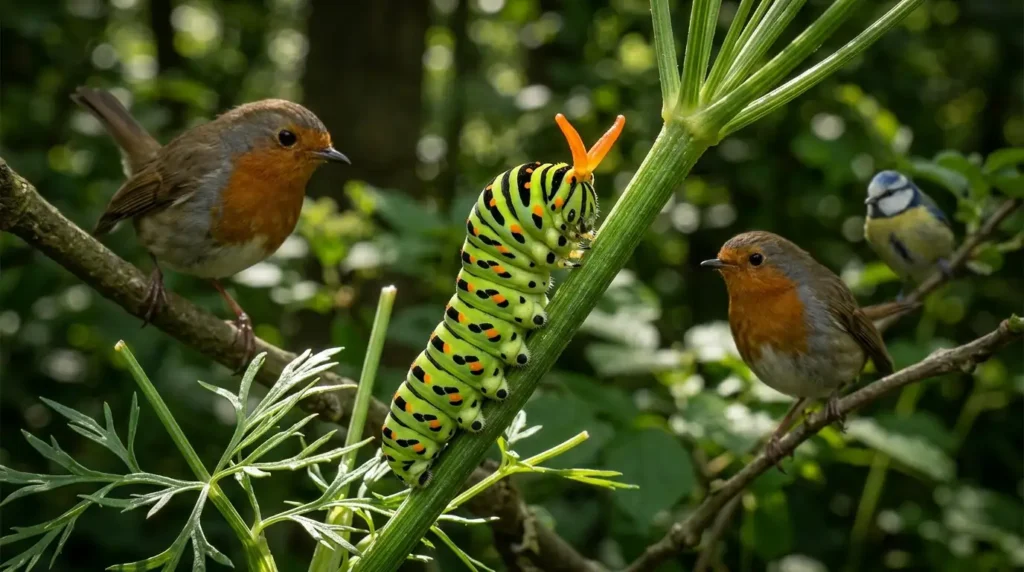
Being small and slow makes you an easy target for hungry birds, lizards, and frogs. To stay alive, caterpillars have evolved incredible defenses that seem like science fiction.
Masters of Camouflage
The best way to avoid getting eaten is to disappear into the scenery completely. Many caterpillars are true masters of disguise.
- Twig Mimics: Geometer moth caterpillars hold their bodies rigid to look exactly like dead twigs.
- Bird Dropping Mimics: Early stages of the Swallowtail caterpillar look like shiny bird droppings.
- Leaf Edge Mimics: Some species have jagged, green body borders that match chewed leaf edges perfectly.
By blending into their surrounding plants, they fool predators into walking right past them.
Chemical Warfare and Fake Eyes
If camouflage fails, caterpillars break out their secret weapons. Some species release foul-smelling sprays or pack venomous hairs that sting upon touch.
Swallowtail caterpillars possess a hidden Y-shaped organ behind their head called an osmeterium. When threatened, they push this bright red or orange organ out. It shoots out a chemical scent that smells like foul, rancid butter to scare off ants and spiders.
Other species sport giant, fake eyespots on their backs. These spots make the harmless crawler look like a dangerous snake or frog from a distance.
Stinging Hairs and Poisonous Spines
Never touch a fuzzy or spiky caterpillar unless you know what species it is. Those soft, fluffy hairs often conceal sharp, hollow spines connected to poison sacs.
The Saddleback caterpillar and the Flannel moth caterpillar carry spines that break off inside the skin. Contact with these venomous spines causes intense burning, rashes, and swelling.
Friendly Safety Tip: If you see a caterpillar with bright colors, spikes, or long hair, look with your eyes and not your hands!
The Miracle of Metamorphosis
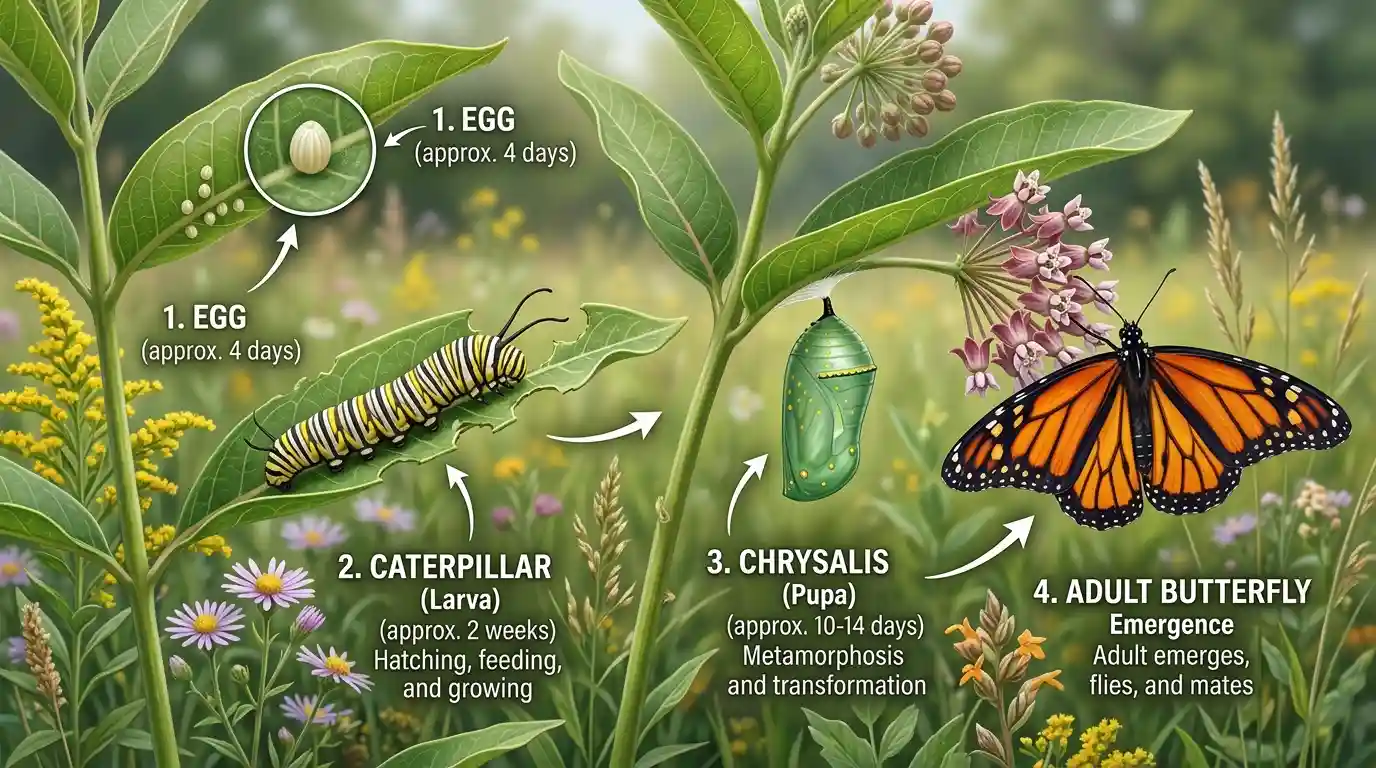
Once a caterpillar finishes growing, it undergoes one of nature’s most magical transformations. The transition from crawler to flyer involves a complete overhaul of body structures.
Chrysalis vs. Cocoon: What Is the Difference?
People often use the words chrysalis and cocoon interchangeably, but they describe two different things.
- Chrysalis: Formed by butterfly caterpillars, this is a hard skin layer produced right beneath their outer skin.
- Cocoon: Crafted by moth caterpillars, this is a protective outer shell woven using silk spun from special glands.
Inside both structures, the caterpillar releases digestive enzymes that dissolve almost its entire body. It turns into a liquid soup containing specialized stem cells that build wings, long legs, compound eyes, and antennae.
Common Caterpillar Types and Features
Different caterpillar species rely on unique host plants and survival traits:
- Monarch Caterpillar: Eats milkweed plants, uses toxic chemical storage for defense, and turns into a Monarch butterfly.
- Swallowtail Caterpillar: Prefers parsley and dill plants, uses a foul-smelling osmeterium scent gland for defense, and turns into a Swallowtail butterfly.
- Woolly Bear Caterpillar: Eats various grasses and herbs, uses a unique body-freezing mechanism to survive winters, and turns into an Isabella Tiger moth.
- Luna Moth Caterpillar: Feeds on walnut and birch trees, uses clicking jaws and green camouflage for defense, and turns into a giant Luna moth.
- Tomato Hornworm: Feeds on tomato and pepper plants, uses a soft tail horn and leaf-green camouflage for protection, and turns into a Five-Spotted Hawk moth.
Surprising Caterpillar Secrets
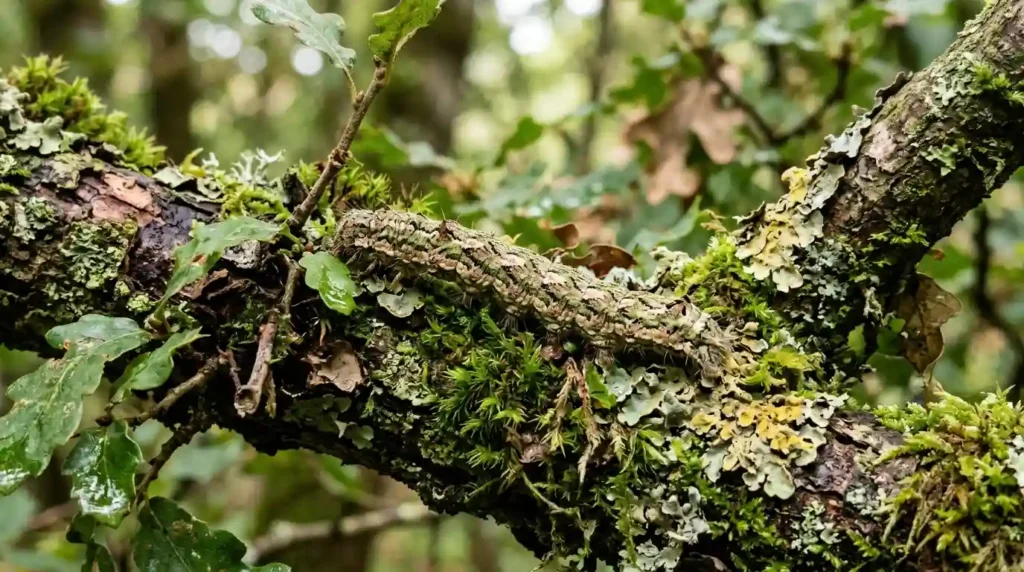
The insect world holds endless surprises, and caterpillars are full of unexpected biological traits.
They Can Survive Being Frozen Solid
The Woolly Bear caterpillar is famous for its fuzzy brown and black bands. According to folklore, its bands predict the harshness of coming winter weather.
While that weather myth is just a story, its cold survival ability is 100% real. Woolly Bear caterpillars produce a natural antifreeze compound called glycerol in their blood.
They can literally freeze solid during harsh winters underneath fallen leaves and logs. When warm spring weather arrives, their blood thaws out, and they simply crawl away to feed again!
Silk Spinners of the Animal World
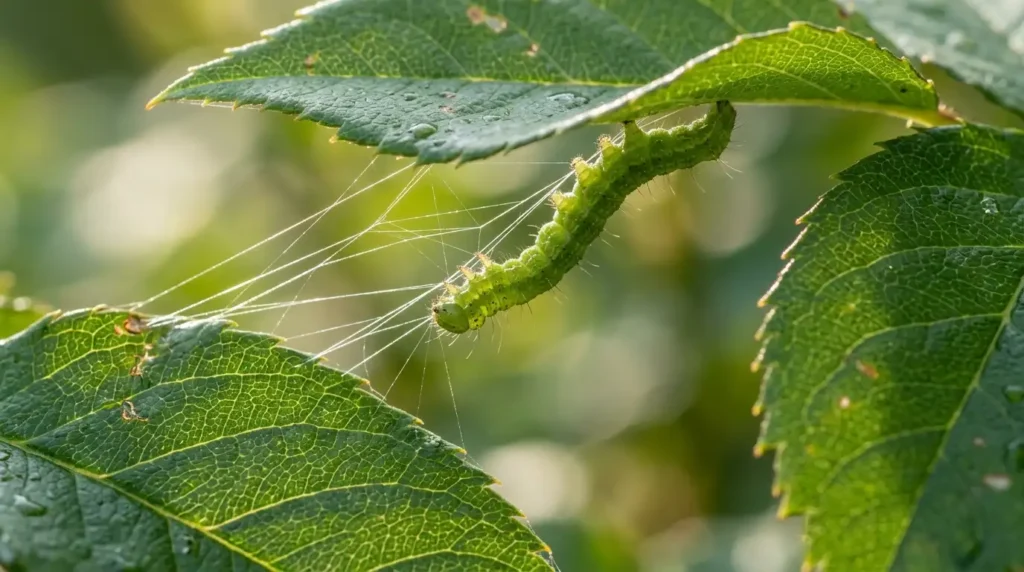
Caterpillars were masters of silk production long before humans built textile factories. Spindle-like glands near their mouthparts called spinnerets produce liquid silk.
When this liquid touches open air, it instantly hardens into strong silk threads. Caterpillars use silk for several survival tasks:
- Safety Lines: Dropping off a leaf on a silk line to escape hungry predators.
- Tents: Weaving webbed shelters to protect group colonies from bad weather.
- Anchors: Creating small silk pads to attach firmly to stems before pupating.
The famous Silkworm caterpillar produces silk strong and fine enough to be woven into expensive fabrics. A single silkworm cocoon can yield over 1,000 feet of usable silk thread!
How Caterpillars Help Our Ecosystem
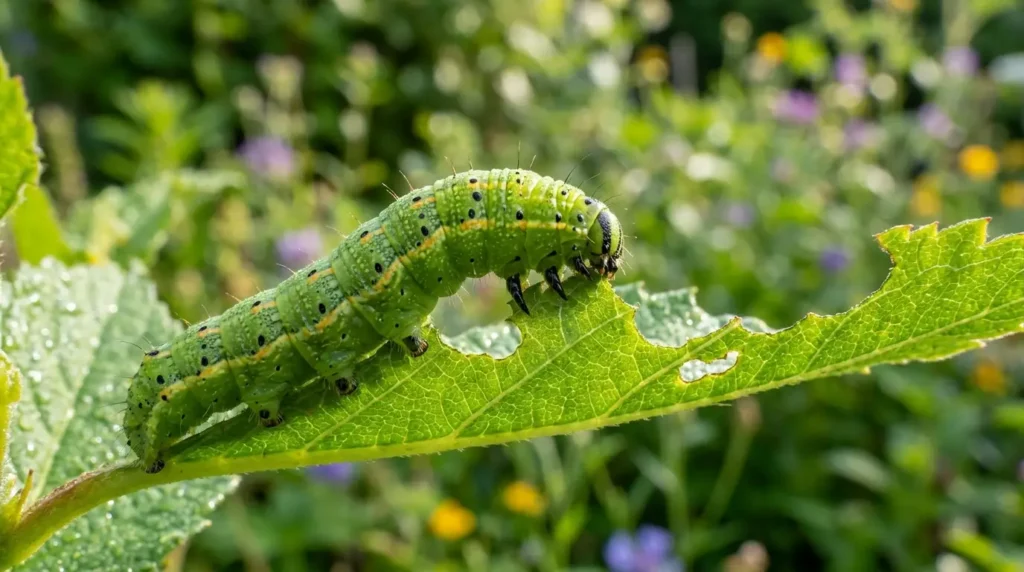
While garden enthusiasts sometimes view caterpillars as pests eating their prized plants, these crawlers are vital for healthy outdoor ecosystems.
Essential Food for Songbirds
Springtime brings an explosion of young songbird chicks waiting in nests for food. Baby birds cannot digest hard seeds or tough beetle shells.
They need soft, easily digestible food packed with proteins and healthy fats. Caterpillars are the absolute best food source for baby birds. A single pair of nesting chickadees must catch 6,000 to 9,000 caterpillars to raise just one nest of chicks!
Without a strong caterpillar population, bird numbers drop sharply across forests and suburban neighborhoods.
Pruning and Nutrient Recycling
As caterpillars chew through foliage, they act as natural leaf pruners in wild habitats. By clearing older leaves, they allow sunlight to reach lower branches and baby saplings on the forest floor.
Their droppings, known as frass, fall to the soil below. Frass is rich in nitrogen and organic matter, acting as a natural fertilizer for garden plants and trees.
MCQs
Test your newfound bug knowledge with this quick multiple-choice quiz!
- What does a caterpillar eventually become?
A) Beetle
B) Butterfly or moth
C) Spider
D) Bee - What do most caterpillars mainly eat?
A) Leaves
B) Stones
C) Fish
D) Seeds - How does a caterpillar grow?
A) By shedding its skin
B) By growing wings
C) By changing color only
D) By drinking water - What is the stage after the caterpillar in a butterfly’s life cycle?
A) Egg
B) Adult
C) Pupa
D) Larva - How many legs does a typical caterpillar have? Three pairs of true legs.
A) 2
B) 3
C) 5
D) 8 - Why do some caterpillars have bright colors?
A) To warn predators
B) To attract fish
C) To fly
D) To find water - What do caterpillars use silk for?
A) Making shoes
B) Creating shelters or attaching themselves
C) Catching fish
D) Making food - What is the caterpillar stage also called?
A) Larva
B) Pupa
C) Adult
D) Egg - What protects a caterpillar from some predators?
A) Camouflage or defensive features
B) Metal shells
C) Wings
D) Feathers - What does a caterpillar do before becoming an adult butterfly or moth?
A) Builds a nest and sleeps forever
B) Enters the pupal stage
C) Grows fins
D) Becomes a fish
Answer Key
- B
- A
- A
- C
- B
- A
- B
- A
- A
- B
FAQs
Do caterpillars have bones inside their bodies?
No, caterpillars have no internal bones or skeletons. They are invertebrates that rely on internal fluid pressure supported by thousands of flexible muscles to hold their shape and move around efficiently.
How long does a caterpillar stay in its crawler stage?
Most caterpillars stay in their feeding stage for two to five weeks. The exact length depends heavily on the species, local temperatures, and available food supplies during their growing season.
Are all bright or fuzzy caterpillars dangerous to touch?
No, not all fuzzy caterpillars are dangerous, but many carry protective stinging hairs. It is always best to avoid touching fuzzy or brightly colored caterpillars to prevent painful skin irritation.
What happens to a caterpillar’s brain during metamorphosis?
A caterpillar’s brain stays largely intact while the rest of its body dissolves into liquid inside the chrysalis. Studies show that adult butterflies can even remember memories learned during their caterpillar stage.
Why do caterpillars shed their skin so many times?
Caterpillars shed their outer skin because it cannot stretch enough to keep up with their rapid growth. They must shed their rigid outer layer four to five times to expand into larger body sizes.
Do caterpillars sleep as humans do?
Caterpillars do not sleep in long stretches like humans. Instead, they take short rest breaks throughout the day and night between long periods of continuous leaf eating to preserve energy.
Conclusion
Exploring caterpillar fun facts reveals just how complex and important these little crawlers really are. Far from being simple garden pests, caterpillars are engineering marvels packed with thousands of muscles, clever defenses, and essential ecological roles.
The next time you spot a caterpillar munching on a leaf, take a moment to admire its journey. These tiny creatures perform huge jobs in our backyards, fueling bird populations and transforming into beautiful pollinators. Keep your eyes open on your next walk, and share these surprising insect facts with your friends!

Ethan Danial is the creator and lead writer behind FunWhirls.com, a fun-focused platform dedicated to entertaining ideas, fascinating facts, funny moments, creative lists, and content that sparks curiosity. With a genuine love for discovering interesting and unexpected topics, Ethan enjoys turning simple ideas into engaging content that readers can enjoy, learn from, and share. His approach is centered on making every article easy to read, enjoyable, and worth coming back to.
At FunWhirls.com, Ethan Danial explores the lighter and more entertaining side of everyday life. He creates content for readers who love discovering something new, having a quick laugh, or simply taking a break from the ordinary. From curious facts to playful ideas and entertaining discoveries, Ethan aims to keep the content fresh, positive, useful, and engaging for readers of all kinds.