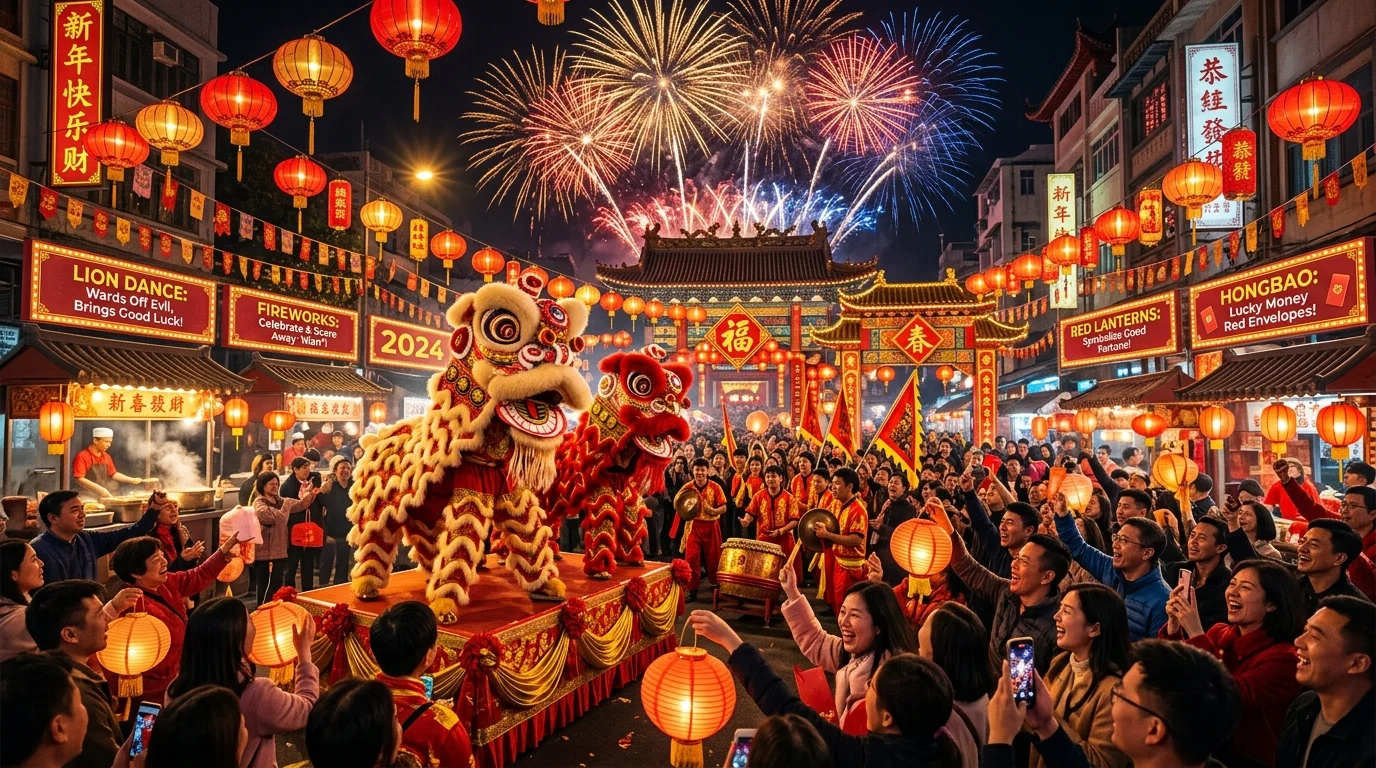
Chinese New Year, or Spring Festival, is a vibrant 15-day celebration filled with rich history, ancient customs, and joyful family gatherings. From cleaning houses to sweep away bad luck to handing out lucky red envelopes, exploring these cny fun facts reveals how billions of people worldwide welcome good fortune, health, and prosperity.
Ever wondered why red envelopes dominate the streets during Chinese New Year, or why firecrackers ring out at midnight? These fascinating cny fun facts reveal how centuries of tradition turn a simple seasonal change into the world’s grandest festival.
Whether you grew up celebrating the Spring Festival or you are simply curious about global traditions, there is always something new to learn. The holiday is packed with legendary monsters, lucky foods, and clever customs designed to bring good fortune.
Let us explore these awesome cny fun facts together so you can impress your friends and family during the next Lunar New Year celebration.
What Is Chinese New Year and Why Is It Celebrated?
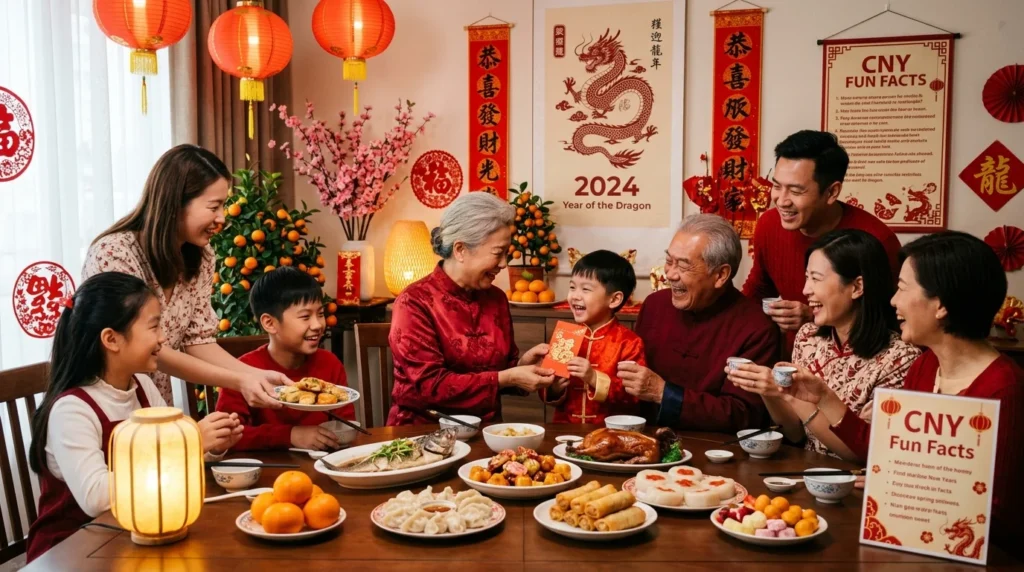
Chinese New Year, also known as the Spring Festival or Lunar New Year, marks the beginning of a new year on the traditional lunisolar Chinese calendar. It is a time for family reunions, honoring ancestors, and wishing for good health and prosperity in the months ahead.
The Origin of the Lunar Calendar
Unlike the Gregorian calendar that stays fixed, the Lunar calendar relies on the natural cycles of the moon. This means the festival date changes every single year.
It usually falls somewhere between late January and mid-February. Because it follows lunar phases, each month starts with a new moon, making the holiday dynamic and closely tied to nature.
The Spring Festival Meaning
Even though Chinese New Year takes place during winter in many regions, people call it the Spring Festival. This name marks the end of the coldest days and welcomes the coming of spring.
It symbolizes fresh starts, planting new seeds, and leaving past troubles behind. Farmers traditionally used this window to prepare their crops and offer thanks to heaven and earth.
The Myth of Nian: How the Festival Began
Ancient legends say that the festival did not start with a peaceful celebration, but as a clever defense plan against a terrifying mythical beast named Nian.
The Monster of the Mountains
According to Chinese folklore, Nian was a fierce creature with sharp horns that lived deep under the ocean or high in the mountains. Every New Year’s Eve, the monster would come down to villages to eat crops, livestock, and even villagers.
People used to flee into the hills every year to hide from Nian’s terrifying attacks.
Why Red and Firecrackers Saved the Day
One year, an old wise man discovered that Nian had three major weaknesses: it feared the color red, loud noises, and bright fire.
The villagers quickly covered their homes with red paper banners, lit noisy firecrackers, and burned bright torches. When Nian arrived, the sea of red and booming sounds scared the beast away forever.
Today, wearing red and lighting firecrackers remain essential cny fun facts that stem directly from this ancient tale.
Unbelievable CNY Fun Facts About Traditions
Beyond terrifying monsters, Chinese New Year is packed with unique daily habits and rules that aim to maximize good fortune.
1. The World’s Largest Annual Human Migration
During the holiday season, hundreds of millions of people travel across China and the globe to return home. This massive travel rush is officially called “Chunyun.”
For about forty days, trains, buses, planes, and roads handle over two billion total individual passenger trips. It is truly the biggest yearly human movement on Earth.
2. Cleaning House Sweeps Away Bad Luck
Before the New Year arrives, families clean their entire homes from top to bottom. This ritual cleanses the house of any bad luck accumulated over the past year.
However, once New Year’s Day hits, all brooms and dustpans are put away. Sweeping on New Year’s Day is considered a big taboo because you might accidentally sweep out your newly arrived good luck.
3. Hair Washing and Cutting Are Off-Limits
In the Chinese language, the word for hair sounds remarkably similar to the word for prosperity or wealth.
Because of this linguistic twist, cutting or washing your hair on the first day of the New Year is seen as washing away your wealth. People make sure to visit the hair salon days before the festival begins.
4. Red Envelopes Carry Secret Wealth
Giving red envelopes, known as “hongbao,” is one of the most beloved traditions of the holiday. Married adults and elders hand these red packets filled with money to children and unmarried young adults.
The red color of the envelope matters much more than the money inside. It symbolizes safety, protection, and good luck to shield youngsters from evil spirits.
5. Digital Red Packets Have Taken Over
While paper envelopes remain popular, digital red envelopes sent via mobile messaging apps have skyrocketed in popularity.
Billions of virtual red packets are swapped online during the holiday week. It allows people to send instant blessings and cash gifts across long distances with just a quick tap.
6. Single? You Can Hire a Rent-a-Date
Family reunions bring plenty of love, but they can also bring heavy pressure from elders asking about marriage.
To avoid uncomfortable questions, some young singles in China turn to specialized apps to hire temporary dates to bring home for dinner. It is a quirky modern solution to an age-old social dilemma.
7. Shoes and Books Stay on the Shelves
Buying new shoes or books during the New Year period is considered bad luck by some traditionalists.
In Cantonese, the word for shoes sounds like a sigh of disappointment, while the word for book sounds like losing. To keep positive vibes flowing, shoppers buy their footwear and reading materials well in advance.
Lucky Foods and Their Hidden Meanings
Food plays a central role in Chinese New Year celebrations, with every dish carrying a symbolic gift for the coming year.
Dumplings Shaped Like Ancient Gold
Dumplings are a staple food, especially in Northern China. Families gather on New Year’s Eve to wrap hundreds of them together.
Their traditional crescent shape resembles “sycee,” the silver and gold ingots used as currency in ancient China. The more dumplings you eat during the meal, the more wealth you are said to invite into your life.
Whole Fish for Endless Abundance
A traditional reunion dinner table almost always features a whole fish, complete with the head and tail attached.
The Chinese word for fish, “yu,” sounds identical to the word for surplus or abundance. Leaving a little bit of fish uneaten at the end of the meal symbolizes that you will always have extra resources left over every year.
Long Life Noodles Must Not Be Cut
Eating longevity noodles is a fun and delicious tradition that promotes a long, healthy life.
These noodles are significantly longer than normal ones, and the goal is to eat them without breaking or chewing them into small pieces. The longer the noodle stays intact in your mouth, the longer your life will be.
Sweet Rice Balls for Family Togetherness
Sticky rice balls called “tangyuan” are served in warm, sweet soup during the festival.
Their round shape and smooth texture represent harmony, unity, and complete family togetherness. Eating them reminds family members to stay closely connected through every season of life.
Lucky Fruits That Bring Wealth
Mandarin oranges, kumquats, and tangerines are displayed prominently in houses and offices.
Their bright orange skin looks like pure gold, and the word for tangerine sounds like luck in Chinese. Greet your hosts with a pair of fresh oranges to show respect and share blessings of fortune.
Chinese Zodiac Secrets and Fun Facts
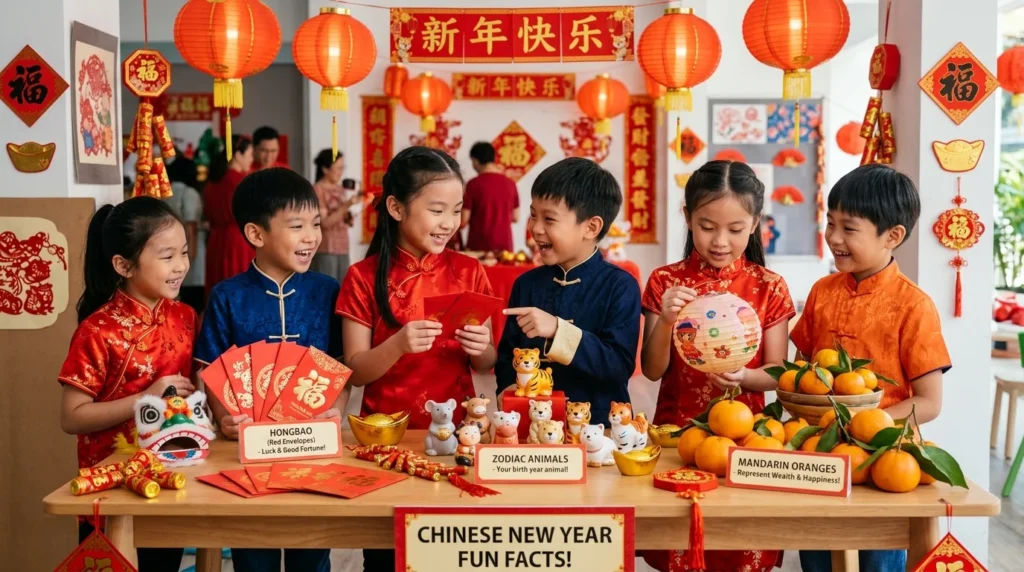
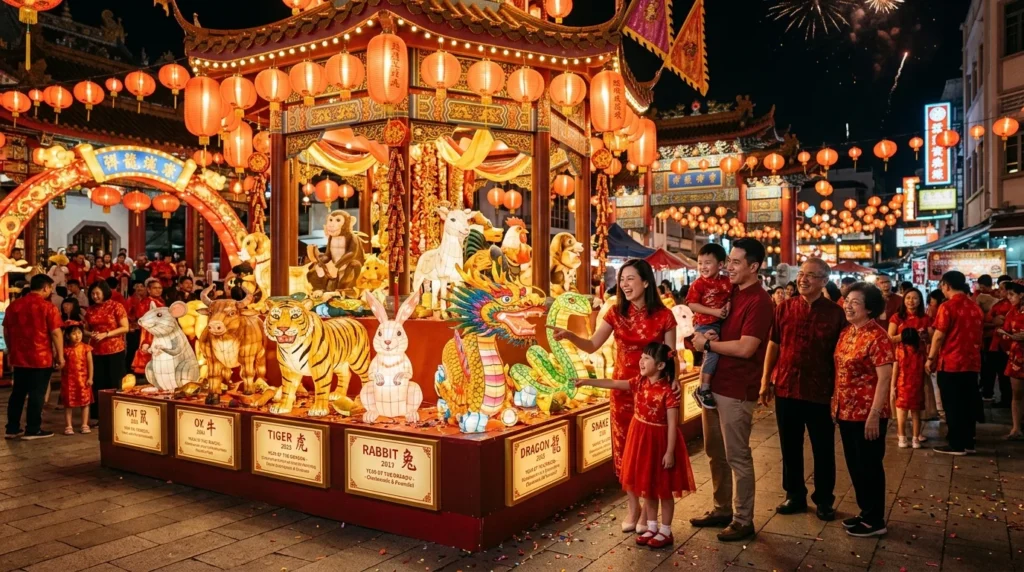
The Chinese Zodiac is an ancient 12-year cycle where each year is represented by a specific animal. Understanding these animal signs adds an entertaining layer to all cny fun facts.
The Great Race of the Animals
Legend has it that the Jade Emperor hosted a grand swimming race across a wide river to decide which animals would join the zodiac calendar.
The clever Rat hitched a ride on the back of the hardworking Ox, jumped off right at the finish line, and took first place. The gentle Pig came in last because it stopped to eat a feast and took a nap along the way.
Ben Ming Nian: Why Your Zodiac Year Can Be Unlucky
You might think that when your zodiac animal year comes around every 12 years, it brings non-stop good fortune. However, traditional belief states the exact opposite.
Your zodiac year, known as “Ben Ming Nian,” is actually considered a challenging year full of potential hurdles. To ward off bad vibes during your zodiac year, elders recommend wearing bright red clothing or red underwear every day.
How Different Regions Celebrate Around the World
While the core themes remain consistent, Chinese New Year traditions adapt beautifully across different regions and cultures.
Lion and Dragon Dances in Chinatown
From London to San Francisco, Chinatowns across the globe host energetic street parades featuring lion and dragon dances.
Dancers maneuver giant, colorful costumes to the rhythmic beating of drums, gongs, and cymbals. The loud music and athletic movements are designed to chase away evil spirits and bring prosperity to local businesses.
The Spring Lantern Festival Finale
The 15-day Chinese New Year celebration concludes with the stunning Lantern Festival.
People hang thousands of glowing paper lanterns in parks, light riddle cards attached to their bases, and solve fun puzzles together. It creates a magical, illuminated end to weeks of joyful festivities.
Unique Regional Delicacies
In Singapore and Malaysia, families gather to toss a colorful raw fish salad called “Yusheng” or “Lo Hei.”
Everyone stands around the plate with chopsticks, tossing ingredients high into the air while shouting out loud wishes for wealth and success. The higher you toss the ingredients, the greater your good luck will be for the year.
Modern Innovations in New Year Celebrations
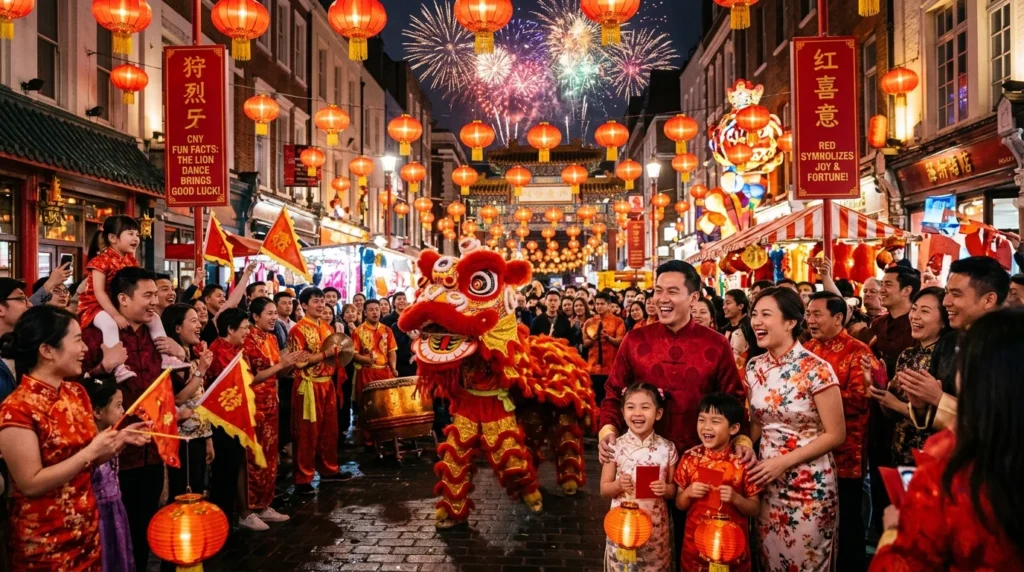
As technology evolves, classic Chinese New Year traditions continue to transform for modern generations.
Eco-Friendly Firecrackers and Drones
To reduce air pollution and fire risks, many major cities now ban traditional noise-making firecrackers.
In their place, cities light up the night sky with stunning light shows featuring hundreds of synchronized drones forming giant glowing dragons in the sky. Electronic firecrackers that make loud sounds without smoke have also gained massive popularity.
Global Online Celebrations
Families separated by long distances now host virtual reunion dinners using video conferencing tools.
Relatives across continents can toast each other, watch televised New Year galas together, and swap digital blessings in real-time, proving that distance cannot weaken family ties.
MCQs
Test your knowledge on these cny fun facts with a quick multiple-choice quiz!
- What does CNY usually stand for?
A) Chinese New Year
B) City New Year
C) Cultural New Year
D) Colorful New Year - Which color is strongly associated with Chinese New Year?
A) Blue
B) Red
C) Purple
D) Green - What do people often give during Chinese New Year?
A) Red envelopes
B) School books
C) Hats
D) Maps - What animal is part of the Chinese zodiac?
A) Penguin
B) Tiger
C) Dolphin
D) Zebra - What are commonly used to decorate homes during CNY?
A) Red lanterns
B) Snowflakes
C) Beach balls
D) Umbrellas - Which activity is a popular part of Chinese New Year celebrations?
A) Lion dance
B) Ice skating
C) Surfing
D) Skiing - What do fireworks traditionally help create during CNY celebrations?
A) A festive atmosphere
B) Rain
C) Snow
D) Fog - Which food is commonly enjoyed during Chinese New Year?
A) Dumplings
B) Ice cream cones
C) Popcorn
D) Sandwiches - How long is the Chinese zodiac cycle?
A) 5 years
B) 10 years
C) 12 years
D) 20 years - What is one common CNY greeting?
A) Happy Chinese New Year
B) Good Summer
C) Happy Monday
D) Welcome Winter
Answer Key
- A
- B
- A
- B
- A
- A
- A
- A
- C
- A
FAQs
Why is red the main color for Chinese New Year?
Red represents good fortune, joy, and protection in Chinese culture. Legend says the color scared away the mythical monster Nian, so people decorate with red to keep evil away.
Can you sweep your house during Chinese New Year?
You should clean your house before the holiday, but avoid sweeping on New Year’s Day. Sweeping on the first day is believed to sweep away all your freshly arrived good luck.
How do you wish someone a Happy New Year in Mandarin?
You can say “Xin Nian Kuai Le” to wish someone a happy new year. Another popular greeting is “Gong Xi Fa Cai,” which wishes the person great wealth and prosperity.
What happens if you break a dish during the festival?
Breaking a dish can symbolize a break in wealth or good fortune. If it happens, people immediately say lucky phrases like “Sui Sui Ping An” to turn the accident into a blessing for peace.
Why do people give red envelopes instead of gift boxes?
Red envelopes keep the focus on sharing good fortune rather than material items. The red paper protects the recipient, while the money inside symbolizes a prosperous start to the new year.
Is Chinese New Year celebrated on the same date every year?
No, the date changes every year because it follows the lunar calendar. It typically falls on the date of the second new moon after the winter solstice, between January 21 and February 20.
Conclusion
Exploring these cny fun facts reveals that Chinese New Year is much more than a simple holiday calendar flip. It is a rich, joyful mix of ancient myths, cozy family traditions, mouth-watering foods, and heartwarming wishes for a bright future.
Whether you are enjoying delicious dumplings, wearing red for good fortune, or sharing digital red packets with loved ones, these customs remind us of the value of family and new beginnings.
Now that you are an expert on these cny fun facts, share them with your friends and join in the festive spirit! How will you celebrate your next Lunar New Year?

Ethan Danial is the creator and lead writer behind FunWhirls.com, a fun-focused platform dedicated to entertaining ideas, fascinating facts, funny moments, creative lists, and content that sparks curiosity. With a genuine love for discovering interesting and unexpected topics, Ethan enjoys turning simple ideas into engaging content that readers can enjoy, learn from, and share. His approach is centered on making every article easy to read, enjoyable, and worth coming back to.
At FunWhirls.com, Ethan Danial explores the lighter and more entertaining side of everyday life. He creates content for readers who love discovering something new, having a quick laugh, or simply taking a break from the ordinary. From curious facts to playful ideas and entertaining discoveries, Ethan aims to keep the content fresh, positive, useful, and engaging for readers of all kinds.