
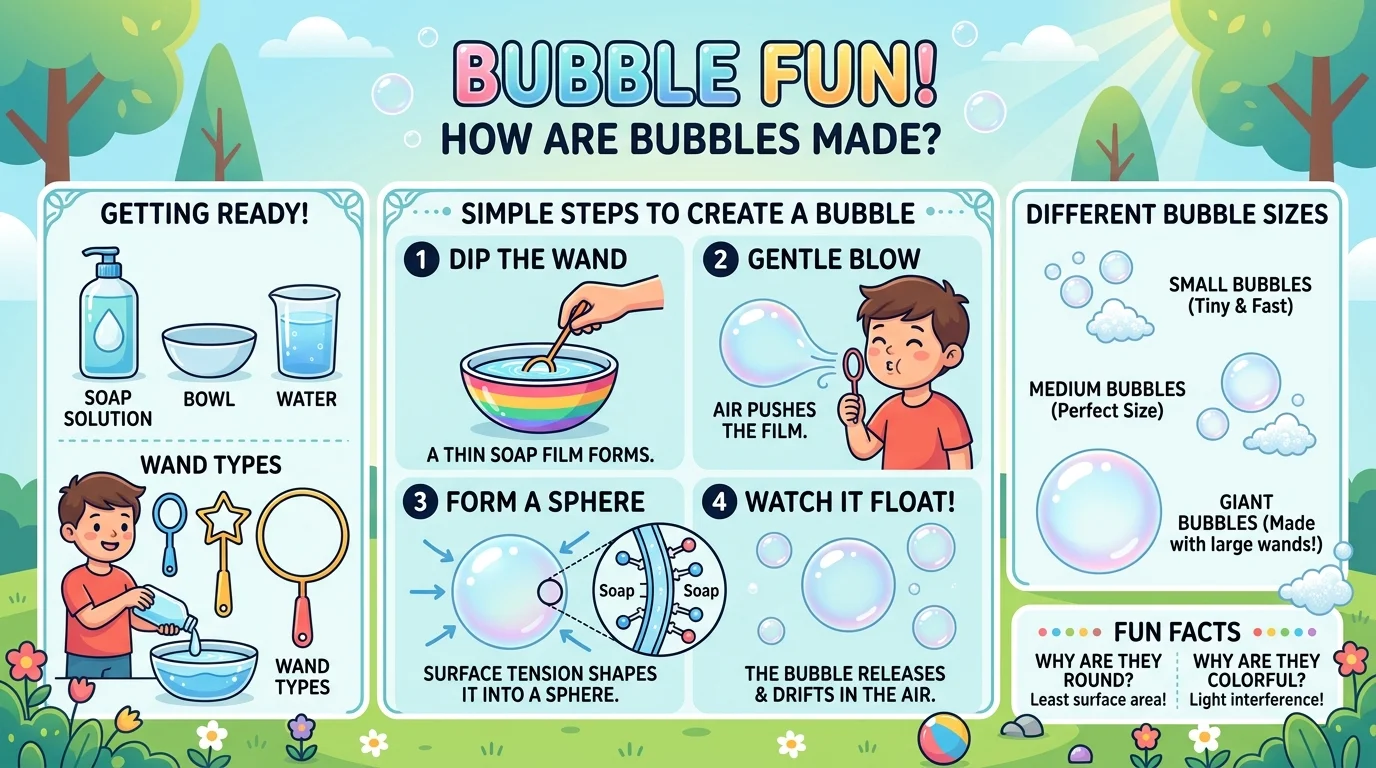
Bubble fun involves creating, chasing, and experimenting with soap bubbles using customized solutions and wands. You can mix water, dish soap, and glycerin to make massive, long-lasting bubbles for outdoor games, indoor crafts, and scientific learning that entertains both kids and adults alike.
Do you remember the pure joy of watching a shimmering sphere float through the sky on a breezy day? Creating genuine bubble fun is one of the easiest ways to bring smiles to people of all ages.
Whether you are planning a backyard party or looking for a rainy day activity, the right bubble fun transforms an ordinary afternoon into something magical. You do not need expensive toys to create these floating rainbows right in your own home.
By mastering a few simple recipes and tricks, your bubble fun will reach a whole new level of excitement. Let us explore the best ways to mix, blow, and play with these fragile wonders today.
The Science Behind a Perfect Soap Bubble
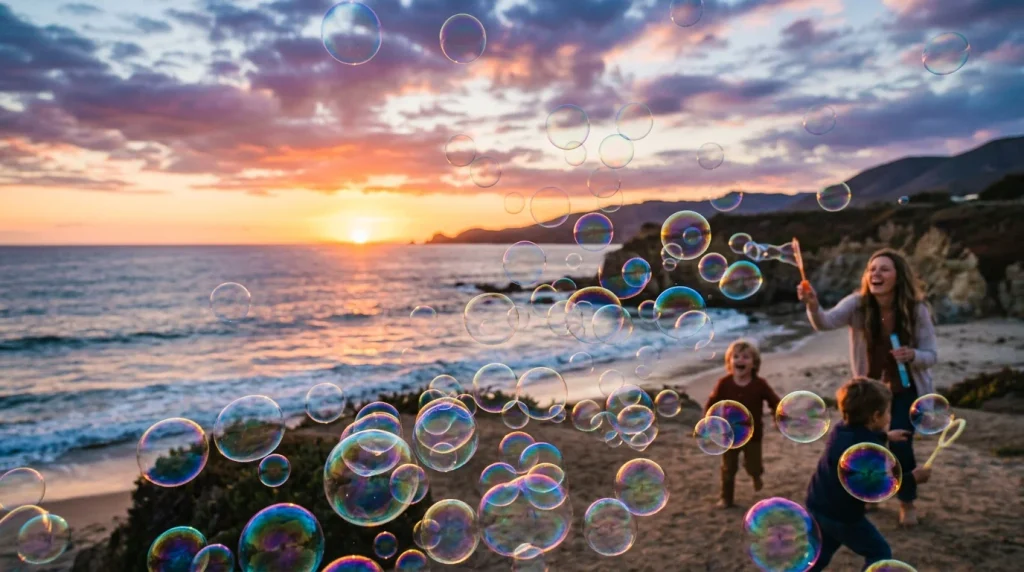
Let us talk about what actually holds a bubble together before we start making them. A bubble is simply a very thin layer of water trapped between two layers of soap molecules.
The soap reduces the surface tension of the water. This allows the water to stretch out into a thin film instead of gathering into a single heavy drop.
When you blow air into this soapy film, it wraps around the air to form a sphere. This delicate balancing act is the basic foundation of all your upcoming backyard experiments.
Why Do They Pop So Quickly?
Water evaporation is the biggest enemy of a long-lasting bubble. As the water layer between the soap molecules dries up, the outer walls become too thin and eventually shatter.
Dry air, bright sunlight, and strong winds speed up this evaporation process significantly. This is why you often see the best results on humid, overcast days or right after a summer rainstorm.
Dust floating in the air or touching a dry surface will also cause an instant pop. If you want to catch a bubble in your hand, always make sure your fingers are wet with the soapy mixture first!
The Physics of the Sphere Shape
Have you ever wondered why bubbles are always round, no matter what shape your wand is? This happens because nature always looks for the easiest, most energy-efficient shape to hold the trapped air.
A sphere requires the least amount of surface area to hold a specific volume of air. The soap film pulls tight around the air pocket, naturally forming a perfect globe every single time.
Even if you blow through a square or triangle wand, the film quickly snaps into a round shape as soon as it releases. It is a wonderful, real-life demonstration of simple physics in action.
Crafting Your Own Solution at Home
Store-bought bottles are great, but mixing your own liquid gives you complete control over the results. Making your own batch is cheaper and often produces much stronger, larger spheres.
You probably already have the most important ingredients sitting in your kitchen right now. Let us look at how to mix up a batch that will impress everyone in your neighborhood.
The Basic Recipe for Everyday Play
The most reliable basic recipe uses just clean water and standard liquid dish soap. You want to use a ratio of roughly six parts water to one part dish soap for the best consistency.
Gently stir the mixture in a large bowl, being careful not to create too much foam on the top. Foam actually gets in the way of forming clean, clear films when you dip your wand into the bowl.
For the absolute best results, let this simple mixture sit overnight before using it. This resting period allows the soap and water molecules to bond completely, creating a much stronger liquid.
The Secret Ingredients for Giant Bubbles
If you want to create those massive, car-sized bubbles you see at public parks, you need to add a thickening agent. Plain soap and water will simply pop before getting big enough to impress anyone.
Glycerin is the most popular additive for creating super-sized spheres. It slows down the evaporation of the water, giving your creations time to stretch and float across the yard.
You only need about one tablespoon of glycerin for every cup of dish soap in your recipe. You can usually find small bottles of liquid glycerin at your local pharmacy or craft store.
Using Corn Syrup as a Cheap Alternative
If you cannot find glycerin easily, light corn syrup works as an excellent substitute. It similarly thickens the water and adds wonderful strength to the outer walls.
Mix a quarter cup of light corn syrup into your standard soap and water batch. Make sure to stir it thoroughly so the thick syrup dissolves evenly into the liquid base.
Your homemade solution will feel slightly sticky to the touch. However, this mild stickiness is exactly what allows the liquid to stretch into massive shapes without breaking.
The Magic of Baking Powder
Some professional entertainers add a tiny pinch of baking powder to their custom liquid. This changes the pH balance of the water, making the outer skin slightly more flexible.
You only need a very small amount, perhaps half a teaspoon for an entire gallon of liquid. Too much baking powder will make the liquid cloudy and heavy, which ruins the floating effect.
Experimenting with these different kitchen ingredients is a great way to learn basic chemistry. Be sure to write down your favorite recipes so you can recreate them later!
Tools of the Trade: Creating the Best Wands
You do not have to rely on the tiny plastic circles that come with cheap store-bought bottles. Making your own tools is a huge part of the experience and allows for endless creativity.
Almost anything with a hole in it can be used to blow a beautiful bubble. Let us explore some items you can repurpose from around your house.
Household Items You Can Use Right Now
Go to your kitchen and look for items like plastic funnels, apple corers, or slotted spatulas. Dipping a large plastic funnel into your solution creates amazingly thick, slow-moving spheres.
Plastic strawberry baskets or slotted spoons create hundreds of tiny bubbles all at once. You simply dip the entire basket into a shallow pan of liquid and swing it quickly through the air.
Even a simple plastic drinking straw works perfectly for blowing small, precise shapes. If you cut the tip of the straw into four small flaps, it holds the liquid much better.
DIY Giant Wands with String and Sticks
To make giant outdoor creations, you need a special tool called a tri-string wand. You can make one using two wooden dowels, a metal washer, and some absorbent cotton string.
Tie a short piece of string between the tips of the two sticks. Then, tie a longer piece of string to the same tips, adding a metal washer to the middle of the long string so it hangs down in a triangle shape.
When you dip the string into your bucket and pull the sticks apart, you create a massive triangular window of soap film. Walking backward slowly will pull the air through the string, creating breathtaking giant tubes.
The Fun of Multi-Wand Makers
You can build a tool that makes ten bubbles at once using just drinking straws and rubber bands. Take seven to ten plastic straws and bundle them tightly together.
Wrap two rubber bands around the bundle to hold them securely in a circle. When you dip the flat end of this bundle into your liquid and blow, a massive cloud of tiny bubbles will emerge.
This is a fantastic project for younger children because it requires very little breath control. It guarantees a successful, exciting result on the very first try.
Indoor Activities for Rainy Days
You do not have to cancel your plans just because it is raining outside. There are plenty of wonderful ways to enjoy this activity inside the house without making a massive mess.
You just need to prepare your play area by putting down a few old towels or a plastic tablecloth. This keeps your floors safe from slippery soap spills.
Bubble Painting Art Projects
Bubble painting is a wonderful way to combine science and messy art. Add a generous squirt of liquid food coloring or washable watercolor paint to a small cup of your soap mixture.
Have your child use a straw to blow gently into the cup until colorful foam rises over the top. Then, carefully press a blank piece of thick paper onto the colorful foam.
When the foam pops against the paper, it leaves behind beautiful, abstract circular patterns. You can use different cups with different colors to create amazing greeting cards or refrigerator art.
Creating Fog-Filled Spheres with Dry Ice
If you want to create something truly magical, try adding dry ice to your experiments. When dry ice drops into warm water, it creates a thick, safe, white fog.
Place a piece of dry ice in a plastic bowl of warm water. Dip a strip of soapy cloth and drag it smoothly across the rim of the bowl to trap the fog inside a giant soap dome.
As the fog expands, the dome will grow larger and larger until it finally bursts. When it pops, the heavy white fog spills beautifully over the edges of the bowl like a waterfall.
The Science of Static Electricity
You can use standard balloons to bend and pull bubbles without ever touching them. This is a fascinating way to teach kids about the invisible power of static electricity.
Blow a medium-sized bubble and let it rest gently on a wet countertop. Next, rub a standard party balloon on your hair or a wool sweater for about ten seconds to build up a static charge.
Bring the balloon close to the resting dome without actually touching it. You will see the soap film stretch and lean toward the balloon, pulled by the invisible electrical charge!
Outdoor Games for Sunny Afternoons
When the weather is beautiful, taking your soapy experiments outside provides hours of healthy physical activity. Running, jumping, and playing in the fresh air is wonderful for both kids and adults.
The open space allows you to create much larger shapes without worrying about hitting furniture. Here are some engaging outdoor games to try this weekend.
Chasing Giant Tubes in the Park
Creating giant tubes of soap requires open space and a gentle, consistent breeze. Stand with your back to the wind and let nature do the hard work of filling the wand.
Once the tube is long enough, gently bring the tips of your wand together to close the sphere. It will detach and float away, looking like a floating jellyfish.
Kids absolutely love chasing these massive creations across a grassy park. Trying to pop them before they hit the ground is a fantastic way to burn off extra weekend energy.
Catching Without Popping
Is it possible to hold a bubble in your hand without breaking it? Yes, but you need to eliminate the natural oils and dryness found on human skin.
The secret is to wear simple winter gloves made of soft cotton or wool. The soft fabric does not break the surface tension of the soap film like dry skin does.
You can bounce a small soap sphere lightly on your gloved hands several times. You can even pass it back and forth with a friend if they are wearing the same type of gloves.
Hosting a Themed Backyard Party
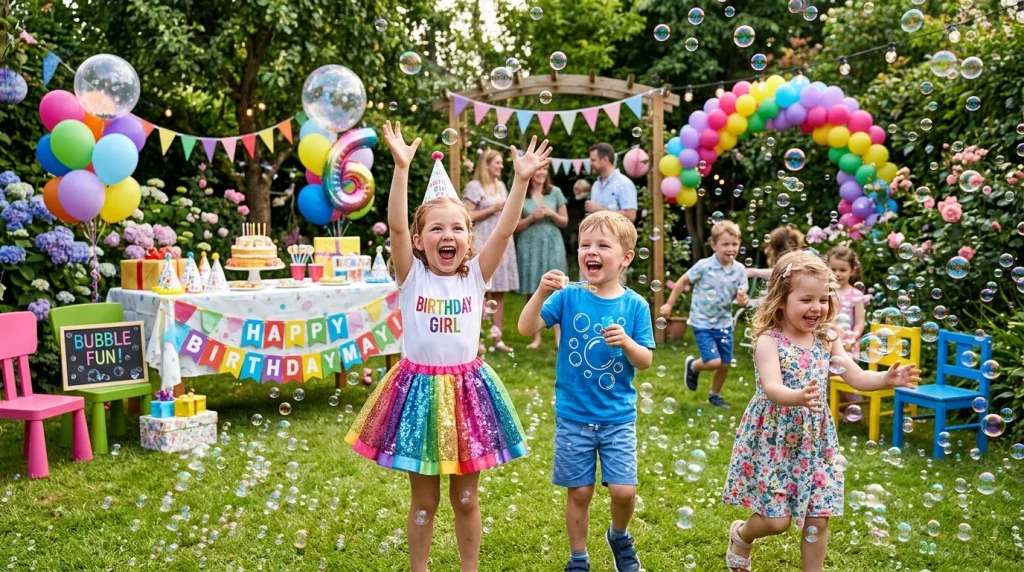
If you are planning a summer birthday party, making it a soapy theme is cheap and unforgettable. Set up different “stations” around your yard with different tools and liquids.
Have one station for giant wands, one for painting crafts, and one with an automatic blowing machine. This keeps children engaged and moving constantly between different activities.
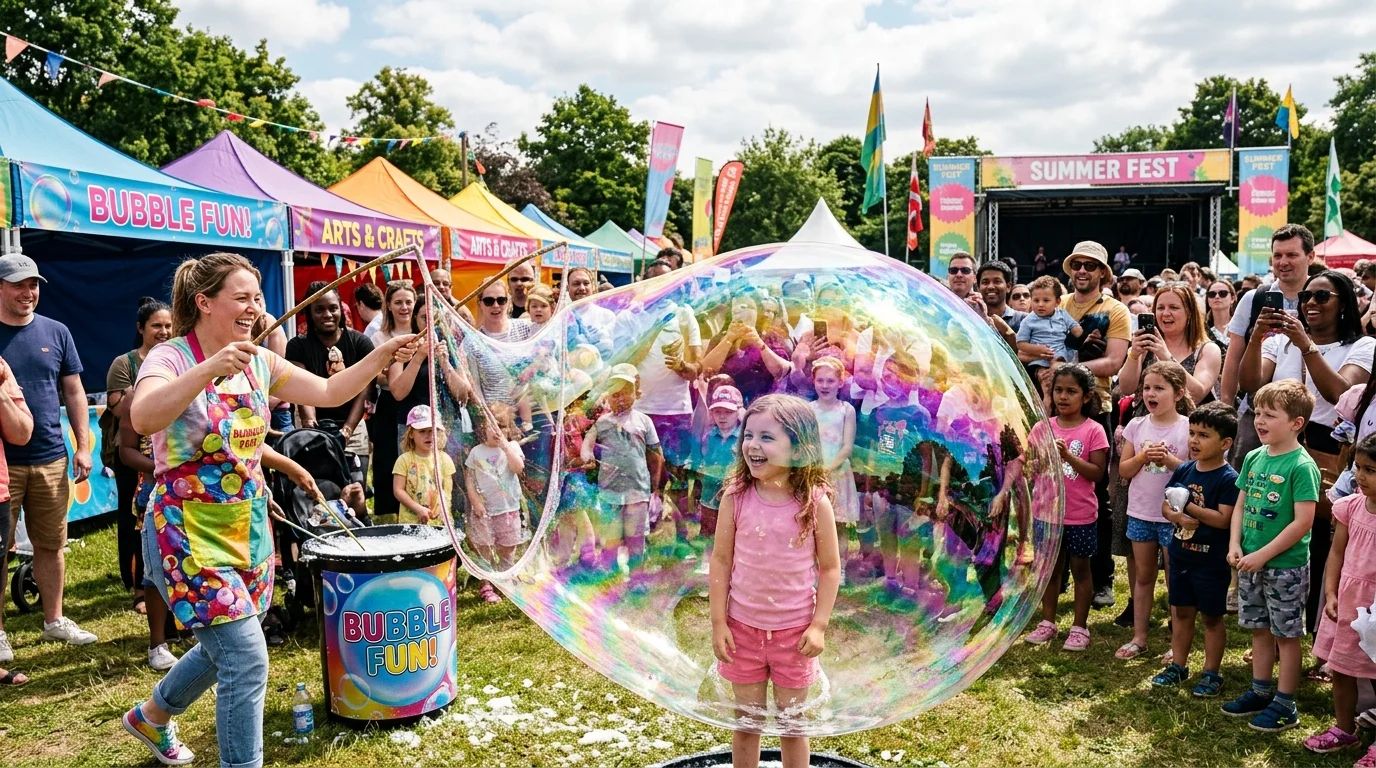
You can even hire professional entertainers who specialize in this specific type of performance. They can put the birthday child inside a giant soap tube for a memorable photograph!
The Fascinating Science of Colors

Have you ever noticed the beautiful rainbow swirls spinning on the surface of a soap film? These colors are not actually in the soap; they are a trick of the light.
Understanding how these colors form adds a wonderful layer of appreciation to your backyard play. It is a fantastic introduction to the science of light waves.
How Light Creates Rainbow Reflections
The skin of a bubble is actually made of two incredibly thin layers of soap with water trapped in between. When sunlight hits the surface, some light reflects off the outside layer, and some reflects off the inside layer.
These two reflections travel back to your eyes and crash into each other. Scientists call this specific crashing process “thin-film interference.”
When the light waves interfere with each other, they cancel out certain colors and amplify others. This process is what creates the stunning pinks, greens, and blues you see swirling around.
Watching the Swirls Before the Pop
Gravity pulls the liquid downward constantly while the sphere is floating in the air. This makes the bottom of the film thicker and the top of the film incredibly thin.
As the top gets thinner, the colors you see will actually change from green to blue to yellow. Right before it pops, the top will turn completely black or invisible!
If you see a black spot forming at the very top of your creation, you know it is about to shatter. It is a fun game to try and guess exactly when it will finally burst based on the colors.
Winter Magic: Freezing Your Creations
Most people think of this activity as a summer hobby, but winter offers a unique experience. Freezing soap films creates delicate, crystallized structures that look like fragile glass ornaments.
You just need a very cold day, a little patience, and some warm clothes. The results are absolutely worth standing out in the cold for a few minutes.
The Right Temperature for Ice Bubbles
To successfully freeze a soap film, the outside temperature needs to be below freezing. The ideal temperature is actually around 14°F (-10°C) or even colder.
If the air is too warm, the soap will just pop normally before the ice crystals have time to form. You also need a morning with very little wind, as heavy breezes will destroy the film instantly.
You should store your liquid mixture in the refrigerator before taking it outside. Cold liquid freezes much faster than room-temperature liquid, increasing your chances of success.
How to Blow Bubbles in the Snow
Do not try to blow them into the air, as they will pop when they hit the cold ground. Instead, use a straw to blow them gently onto a soft pile of fresh snow or a freezing metal railing.
Once the dome rests on the cold surface, watch the bottom edge very closely. You will see beautiful fern-like ice crystals begin to grow upward across the curved surface.
Within seconds, the entire dome will freeze solid, looking like a tiny snow globe. If you poke it gently, it will not pop like a liquid; it will actually crack and shatter like thin glass!
Capturing Frozen Magic on Camera
Photographing these frozen structures requires a steady hand and good lighting. The best time to take photos is early in the morning when the sun is sitting low on the horizon.
Position yourself so the rising sun is shining directly through the frozen crystal from behind. This backlighting highlights the intricate, feathery details of the ice patterns beautifully.
Use the macro setting on your smartphone or camera to get as close as possible. Taking a video of the freezing process in time-lapse mode is also a wonderful project to share online.
Advanced Tricks to Impress Your Friends
Once you master the basics of making and blowing, it is time to learn some professional tricks. These simple illusions require a bit of practice but will definitely amaze your friends and family.
Patience is key when learning these techniques. Expect to pop quite a few before you finally get the technique down perfectly.
Blowing a Sphere Inside a Sphere
This trick looks completely impossible, but it is actually very easy once you know the secret. First, blow a large, resting dome onto a wet countertop or a wet dinner plate.
Next, take a standard drinking straw and dip it deeply into your soap mixture so it is completely wet. Carefully push the wet straw directly through the wall of your resting dome.
Because the straw is wet, it will not break the surface tension of the outer wall. You can then gently blow a second, smaller dome completely trapped inside the first one!
The Caterpillar Chain Technique
Creating a long chain of connected spheres looks just like a floating glass caterpillar. You need a small circular wand and a very steady breath to make this work.
Blow a medium-sized sphere, but do not let it detach from the wand. Quickly take a breath and blow a second one directly into the side of the first one, allowing them to stick together.
Keep repeating this process quickly to add more links to your floating chain. With practice, you can link four or five together before the weight pulls them down to the ground.
Juggling with Cotton Gloves
We mentioned earlier that cotton gloves prevent the surface tension from breaking. You can use this scientific fact to actually juggle a soap sphere in the air.
Wear two soft cotton winter gloves and blow a medium-sized sphere. Gently tap it upward with your right hand, then tap it upward with your left hand.
If you are very gentle, you can bounce it back and forth a dozen times. It feels like you are playing volleyball with a fragile cloud!
Fun for Pets: Dogs and Cats
Humans are not the only ones who enjoy chasing floating objects around the backyard. Many dogs and cats find this activity stimulating.
It triggers their natural hunting instincts in a safe, healthy, and exhausting way. However, you need to make sure you are doing it safely for your furry friends.
Are the Liquids Safe for Animals?
You should never use standard dish soap if you are playing with pets. If a dog bites a standard dish soap bubble, it can upset their stomach and cause diarrhea.
Always buy non-toxic, pet-safe liquids specifically designed for animals. These special formulas are made from mild ingredients that will not harm your dog if they accidentally swallow some.
You should also avoid letting the liquid get directly into their sensitive eyes. Blow the spheres high into the air so your pet has to jump up to catch them safely.
Flavored Excitement for Dogs
To make the game even better, you can buy pet liquids that are actually flavored. The most popular options smell and taste like peanut butter, bacon, or roasted chicken.
When your dog snaps at the air, they are rewarded with a delicious, savory taste on their tongue. This keeps them highly engaged and prevents them from losing interest in the game.
It is a fantastic way to tire out a highly energetic puppy without having to run miles around the neighborhood yourself. Ten minutes of jumping for bacon spheres will usually lead to a very long afternoon nap.
Setting Up a Pet Machine
If your arm gets tired of blowing, an automatic machine is a wonderful investment. You can set the machine on a high table and let it shower the yard with fun.
Make sure the machine is placed somewhere sturdy where an excited dog cannot accidentally knock it over. Always clean the machine thoroughly with warm water after using sticky, flavored pet liquids.
Recipe and Usage Comparison
Here is a simple summary of the different ingredients and what they do for your mixtures.
Practice Exercise
- What is Bubble Fun mainly associated with?
A) Playing with bubbles
B) Building houses
C) Cooking pasta
D) Studying planets - What makes bubbles float in the air?
A) Their light structure
B) Heavy stones
C) Metal pieces
D) Wooden blocks - Which activity is popular with children during Bubble Fun?
A) Chasing bubbles
B) Painting walls
C) Washing cars
D) Fixing bicycles - What tool is commonly used to create bubbles?
A) Bubble wand
B) Hammer
C) Ruler
D) Spoon - What colors can bubbles sometimes appear to show?
A) Rainbow-like colors
B) Only black
C) Only brown
D) Only gray - Where can Bubble Fun take place?
A) Park
B) Library shelf
C) Office desk only
D) Garage roof - What happens when a bubble touches a sharp object?
A) It may pop
B) It becomes a rock
C) It turns into ice
D) It grows into a tree - Which activity can make Bubble Fun exciting?
A) Making giant bubbles
B) Folding clothes
C) Writing receipts
D) Cleaning windows - What is usually inside a soap bubble?
A) Air
B) Sand
C) Soil
D) Metal - Why do people enjoy Bubble Fun?
A) It is playful and entertaining
B) It requires heavy machinery
C) It is a type of cooking
D) It involves driving
Answer Key:
1-A, 2-A, 3-A, 4-A, 5-A, 6-A, 7-A, 8-A, 9-A, 10-A
FAQs
How long does homemade solution last in storage?
Homemade solutions can easily last for several months if stored correctly in a cool, dark place. Be sure to keep the mixture in a sealed plastic or glass container to prevent any water evaporation while it sits.
Why is my homemade mixture not making good bubbles?
Your mixture might be too weak, or you might have created too much foam when stirring. Try adding a little more dish soap or a splash of glycerin, and use a spoon to scoop off any thick white foam from the surface.
Can I use any brand of dish soap for my recipes?
While most brands work, the classic, non-concentrated blue dish soaps generally provide the most reliable results. Avoid using natural or environmentally friendly soaps, as they often lack the strong chemical surfactants needed to stretch the water properly.
How do I clean up the sticky mess on my patio?
Soap and glycerin can leave a slippery residue on concrete and wooden decks after a long day of play. Spray the area thoroughly with a garden hose to wash away the slick residue and prevent slips.
Do automatic machines need special liquid?
Most automatic machines work perfectly fine with standard homemade or store-bought liquids. However, avoid using ultra-thick giant bubble formulas in small machines, as the heavy syrup can clog the delicate plastic spinning wands.
Is it safe to do bubble painting indoors?
Yes, bubble painting is very safe indoors as long as you use washable, non-toxic watercolors or basic food coloring. Always place a plastic protective cloth under the paper and have young children wear old clothes to prevent permanent stains.
Conclusion
Creating your own bubble fun is a timeless, inexpensive way to spark imagination, encourage outdoor play, and learn a little bit of science along the way. By understanding the basics of surface tension and utilizing simple kitchen ingredients, you have the power to create massive, colorful floating art whenever you please. Experimenting with different wand shapes and specialized recipes ensures that every single play session offers something uniquely exciting.
Do not be afraid to step outside and try something new, whether it is blowing frozen crystals in the snow or hosting a bacon-flavored catching contest for your dog. The simple joy of watching a shimmering sphere float across the sky truly never gets old.
Now that you know all the secrets, it is time to gather your supplies and get outside. Mix up a fresh batch of soapy liquid tonight, grab some old cotton gloves, and get ready for a weekend filled with amazing backyard magic!
Ethan Danial is the creator and lead writer behind FunWhirls.com, a fun-focused platform dedicated to entertaining ideas, fascinating facts, funny moments, creative lists, and content that sparks curiosity. With a genuine love for discovering interesting and unexpected topics, Ethan enjoys turning simple ideas into engaging content that readers can enjoy, learn from, and share. His approach is centered on making every article easy to read, enjoyable, and worth coming back to.
At FunWhirls.com, Ethan Danial explores the lighter and more entertaining side of everyday life. He creates content for readers who love discovering something new, having a quick laugh, or simply taking a break from the ordinary. From curious facts to playful ideas and entertaining discoveries, Ethan aims to keep the content fresh, positive, useful, and engaging for readers of all kinds.