
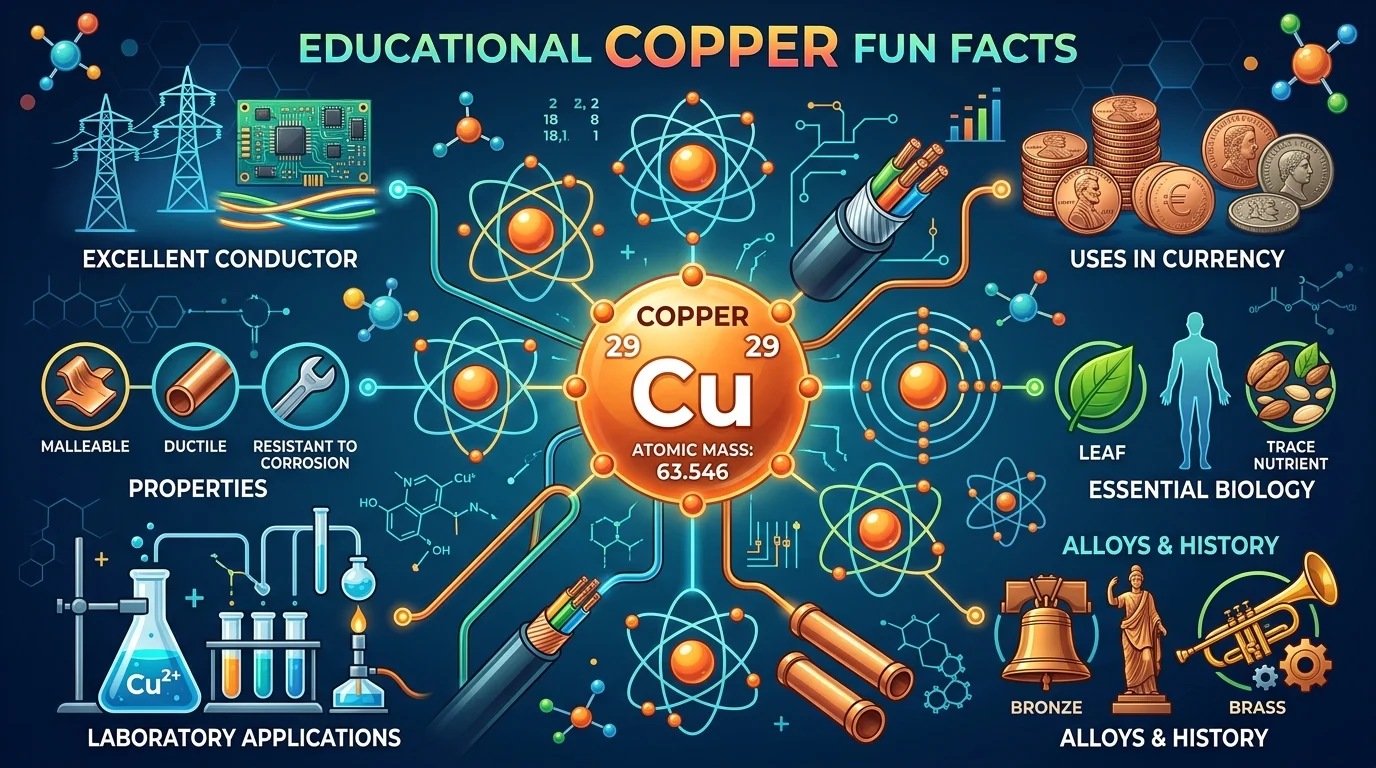
Copper is one of humanity’s oldest metals, discovered over 10,000 years ago. Famous for its bright reddish shine, high conductivity, natural antibacterial properties, and endless recyclability, copper plays a vital role in everything from modern electronics and green energy technology to space exploration and human health.
Have you ever wondered why the Statue of Liberty is green when it is actually made of metal? Or why ancient coins still look so remarkably intact after thousands of years buried underground?
The answer lies in one of the most fascinating elements on Earth. These copper fun facts will completely change how you view this humble reddish metal that powers your modern life.
From ancient tools to modern space travel, copper has quietly shaped human history for thousands of years. Let’s explore the incredible secrets, science, and strange trivia behind this amazing element.
The Shiny Basics: What Makes Copper So Special?
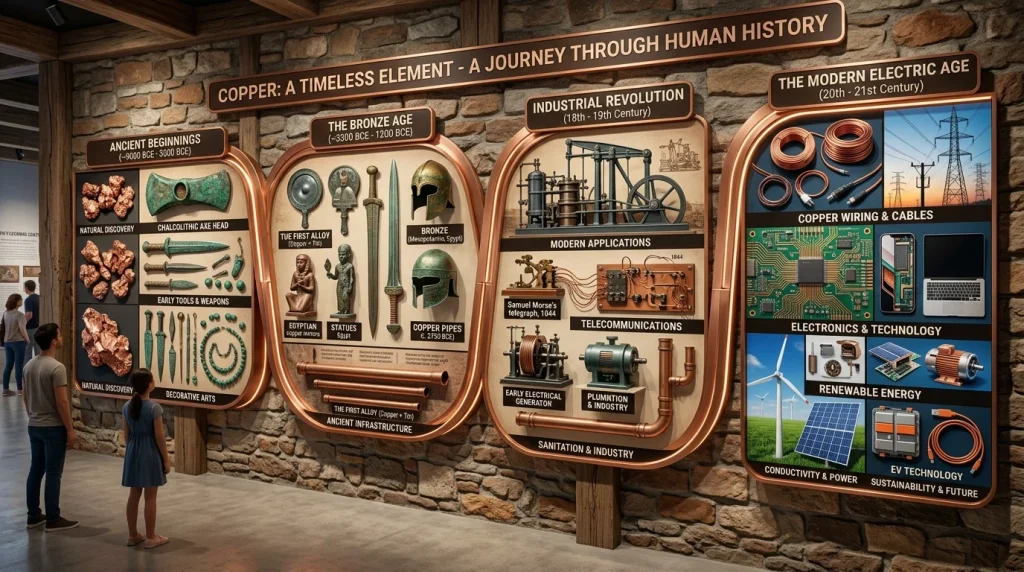
Copper is a chemical element with the symbol Cu and atomic number 29. It belongs to the group of metals known for high electrical and thermal conductivity.
Unlike most metals that look silver or grey, copper has a distinct reddish-orange color. It is one of the very few metallic elements found naturally in a usable metallic form, rather than locked inside an ore.
Why Is Copper Reddish-Orange?
Most metals reflect all visible light wavelengths equally, giving them a shiny silver appearance. Copper absorbs blue and green light while reflecting red and orange wavelengths to your eyes.
This unique atomic structure gives raw copper its warm, coppery glow. Gold is the only other pure metal on the periodic table with a distinct non-silver color.
Nature’s Native Metal
Long before humans learned how to smelt ore in hot fires, they found chunks of copper lying on the ground. This raw form is known as native copper.
Ancient people could pick up these shiny rocks and hammer them into basic tools or jewelry without heating them. It was the ultimate plug-and-play material for early human civilization.
Surprising Historical Copper Fun Facts
The relationship between humans and copper goes back further than almost any other metal. It marked the end of the Stone Age and launched humanity into a new era of technology.
The Oldest Copper Artifacts
Archaeologists have discovered copper beads in northern Iraq that date back to around 8700 BCE. That means humans have been using copper for nearly 11,000 years!
These early artifacts were decorative, but people quickly realized that copper could be shaped into sharp blades, sturdy pins, and durable fishhooks.
The Copper Age Came First
Before the famous Bronze Age, there was the Chalcolithic Period, commonly called the Copper Age. During this time, humans transitioned from using shaped stones to working with soft metals.
- Timeline: Roughly 5000 BCE to 3000 BCE.
- Key Innovation: Learning to melt native copper over hot campfires.
- Impact: Creation of stronger farm tools, heavy axes, and specialized weapons.
Ötzi the Iceman’s Prized Possessions
When researchers found Ötzi, a naturally preserved mummy from 3300 BCE, he was carrying a remarkably intact axe. The blade of this axe was made of 99.7% pure copper.
This discovery proved that copper smiths thousands of years ago possessed advanced smelting techniques. Owning a copper axe back then was a major symbol of power and wealth.
Science and Nature: Mind-Blowing Copper Secrets
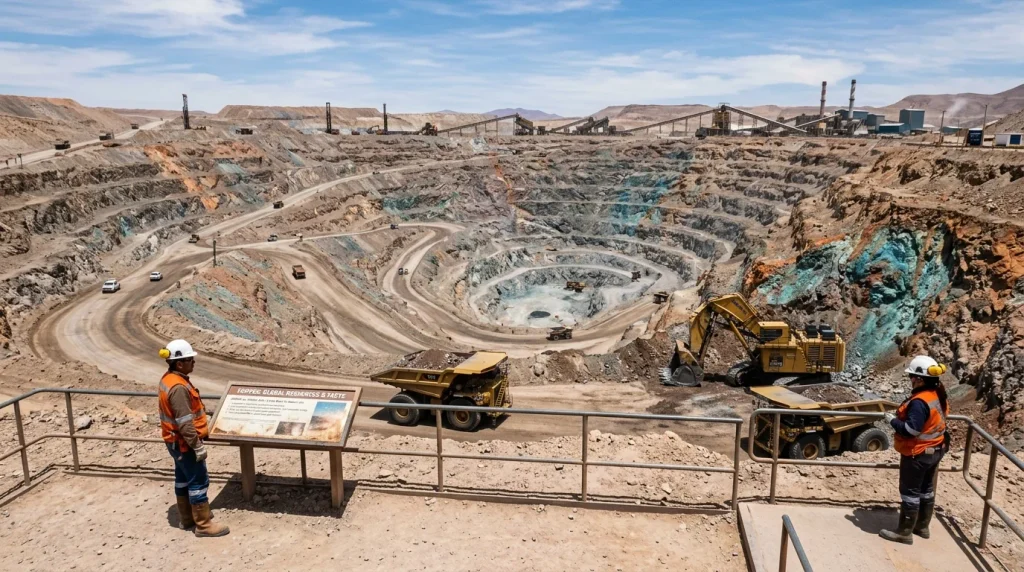
Copper is not just an industrial material; it plays a giant role in physical science and biological life across our planet.
Copper Is 100% Recyclable.
One of the coolest copper fun facts is its incredible longevity. Copper can be recycled over and over again without losing any of its strength, quality, or electrical performance.
Around 80% of all the copper ever mined throughout human history is still in active use today. That copper pipe in your house might contain atoms used in an ancient Roman bathhouse!
Animals with Blue Blood
Human blood is red because it uses iron to carry oxygen through hemoglobin. However, some creatures use copper instead!
- Horseshoe Crabs: Use hemocyanin, a copper-based protein, to transport oxygen, giving their blood a bright blue color.
- Octopuses and Squids: Rely on copper-rich blood to survive in cold, low-oxygen ocean waters.
- Snails and Slugs: Also possess blue, copper-basedbloodstreamm systems.
Natural Antibacterial Properties
Copper is inherently antimicrobial. When bacteria, viruses, or fungi land on a solid copper surface, the metal breaks down their outer membranes and destroys their DNA within hours.
This natural self-sanitizing feature is called the oligodynamic effect. Hospitals are now replacing stainless steel doorknobs and bed rails with copper alloys to reduce dangerous infections.
Copper Around the House and in Daily Life
You interact with copper every single day, even if you never see it directly. It works quietly behind the walls and inside your favorite devices.
The Truth About the Statue of Liberty
When France gifted the Statue of Liberty to the United States in 1886, she was a bright reddish-brown color. Over two decades exposed to air and rain created a thin protective layer called a patina.
This green coating, made of copper carbonate, shields the underlying copper sheets from rusting away. Her outer skin contains over 179,000 pounds of pure copper.
Why American Pennies Aren’t Pure Copper
Did you know that modern U.S. pennies are barely coppery at all? Before 1982, pennies were made of 95% real copper.
Today, due to rising metal costs, pennies consist of 97.5% zinc coated with a microscopic shell of real copper. A modern penny actually weighs less than older pre-1982 coins!
Essential for Human Health
Your body needs trace amounts of copper to build strong bones, support immune function, and create red blood cells. You cannot produce copper internally, so you must get it from your diet.
- Rich Food Sources: Dark chocolate, sunflower seeds, cashews, shellfish, and mushrooms.
- Daily Need: Adults only need about 0.9 milligrams of copper every day.
- Storage: Your liver stores excess copper safely until your body needs it.
High-Tech and Space: Copper in the Modern World
Without copper, the digital world would instantly grind to a halt. It is the invisible backbone supporting modern computing and space travel.
The Ultimate Electrical Conductor
Copper is the gold standard for electrical wiring because electrons move through it with minimal resistance. Silver conducts electricity slightly better, but copper is far more affordable and flexible.
An average modern car contains roughly 50 pounds of copper wiring. An electric vehicle uses up to four times that amount to power its heavy battery systems!
Cooling Down Supercomputers
High-performance gaming PCs and massive internet data centers generate immense heat. Because copper transfers heat rapidly, manufacturers build cooling pipes and heat sinks out of solid copper.
It absorbs heat from running microprocessors much faster than aluminum, keeping systems from overheating and crashing.
Copper Exploring Outer Space
Spacecraft exposed to intense solar radiation rely heavily on copper shields and heat exchangers. Space agencies use copper alloys in rocket engine nozzles where temperatures exceed thousands of degrees.
Copper’s stability under extreme temperature shifts makes it an essential material for exploring Mars and deep space.
Key Properties of Copper at a Glance
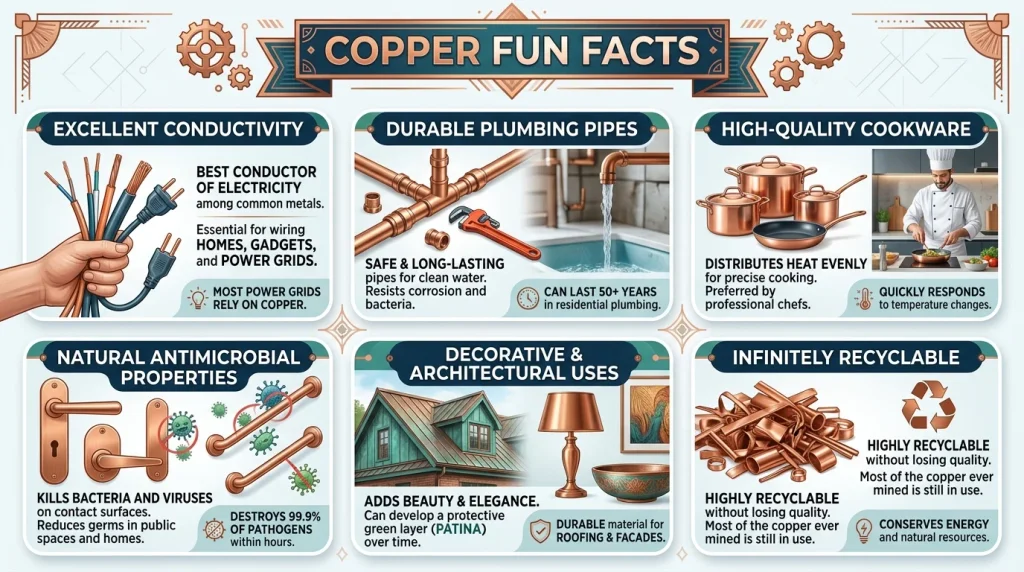
To truly appreciate why copper plays such a massive role in our everyday lives, it helps to look at its unique physical and chemical characteristics. Unlike many ordinary metals that quickly rust or resist the flow of power, copper possesses a special mix of traits that make it both tough and adaptable. From its bright metallic shine to its ability to shape-shift under heat, these key properties explain why human civilization has relied on copper for over 10,000 years.
Incredible Electrical and Thermal Conductivity
Copper is one of nature’s absolute best conductors of both electricity and heat. Electrons move through copper’s atomic structure with minimal friction, allowing power to flow smoothly without wasting energy. It also absorbs and spreads heat remarkably fast, which is why it is the go-to material for everything from kitchen cookware to cooling systems in high-speed supercomputers.
Exceptional Flexibility and Malleability
Despite being a strong and durable metal, copper is surprisingly soft and easy to work with. Metalworkers can stretch it into razor-thin electrical wires or hammer it into smooth sheets without it cracking or snapping. This flexibility makes copper incredibly versatile, allowing it to be crafted into complex engine parts, detailed sculptures, and seamless plumbing pipes.
Infinite Recyclability and Corrosion Resistance
Unlike iron, which oxidizes and crumbles into rust over time, copper naturally defends itself against the elements. When exposed to air and water, it forms a protective outer layer that stops deep decay in its tracks. Best of all, copper can be melted down and recycled over and over again without losing a single bit of its original strength, performance, or quality.
Fun Trivia and Bizarre Copper Facts
Here are a few quick, astonishing facts about copper that make for great party trivia!
- Musical Sounds: Brass instruments like trumpets, saxophones, and trombones are made from a rich alloy of copper and zinc.
- Ancient Anti-Fouling: Ancient sailors nailed copper sheets to ship hulls to stop barnacles and algae from growing on wood.
- Massive Natural Nuggets: The largest single piece of native copper ever found weighed over 420 tons in Michigan, USA.
- Pipes That Last: Egyptian pharaohs used copper pipes inside temples over 4,500 years ago that still work today.
- Name Origin: The English word “copper” comes from the island of Cyprus, where ancient Romans mined most of their metal supply.
Why Copper Is Essential for a Green Future
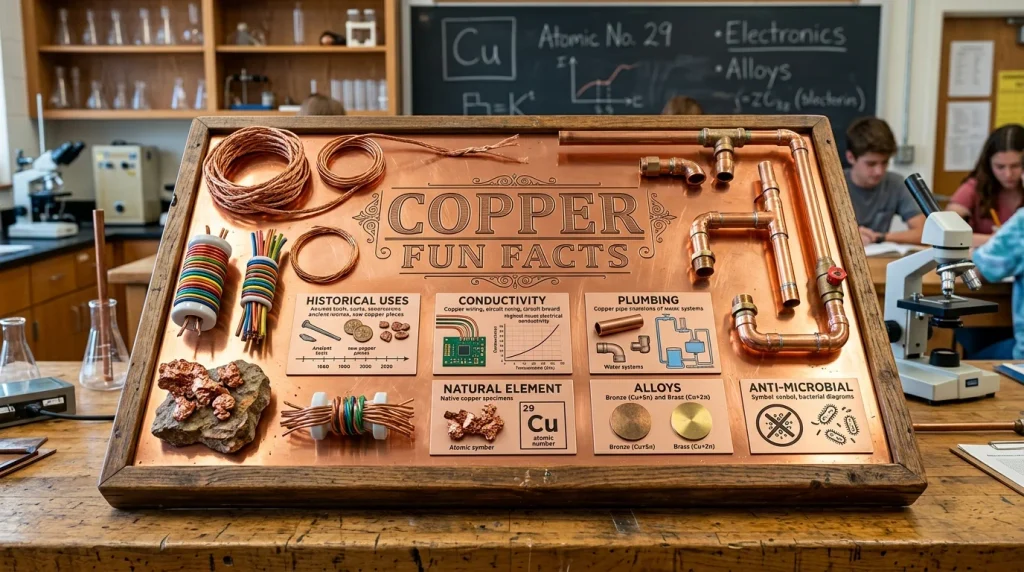
As the world transitions toward renewable energy, copper demand is skyrocketing. Solar panels, wind turbines, and energy storage banks require massive amounts of copper to move clean electricity smoothly.
A single industrial wind turbine requires up to 4.7 tons of copper to function efficiently. Choosing recycled copper reduces mining pollution and conserves energy for future generations.
MCQs
Test your knowledge of these incredible copper fun facts with this quick multiple-choice quiz!
- What is the chemical symbol for copper?
A) Cu
B) Co
C) Cp
D) Cr - What is the atomic number of copper?
A) 12
B) 29
C) 47
D) 64 - What color is copper naturally?
A) Reddish-orange
B) Bright blue
C) White
D) Black - Which property makes copper useful in electrical wires?
A) Good electrical conductivity
B) It is very light
C) It is transparent
D) It is magnetic - Which of these commonly uses copper?
A) Electrical wiring
B) Glass windows
C) Paper books
D) Cotton clothes - Copper is a type of what?
A) Metal
B) Gas
C) Plastic
D) Wood - What can happen to copper when it is exposed to air and moisture for a long time?
A) It can develop a green patina
B) It turns into glass
C) It disappears
D) It becomes paper - Where is copper commonly obtained from?
A) Copper ores
B) Clouds
C) Trees
D) Ice - Which item can contain copper?
A) Coins
B) Rubber balls
C) Wooden chairs
D) Paper plates - Copper has been used by humans for thousands of years. What does this show?
A) Copper is an important useful metal
B) Copper is a plant
C) Copper is a gas
D) Copper cannot be shaped
✅ Answer Key
- A
- B
- A
- A
- A
- A
- A
- A
- A
- A
FAQs
Why does copper turn green over time?
Copper turns green because of chemical reactions with oxygen, water, and carbon dioxide in the air. This process creates a thin protective coating called copper carbonate patina. This layer seals the metal inside and stops deeper rust or destruction.
Is copper safe for humans to handle every day?
Yes, copper is completely safe and non-toxic to touch daily. Touching copper coins, cookware, or doorknobs poses no risk to your health. Your body naturally controls copper levels and uses small amounts to keep your organs working properly.
Why is copper used so widely in home electrical wiring?
Copper is used for wiring because it conducts electricity better than almost any other common metal. It is flexible, bends easily without snapping, and handles high heat safely. This minimizes fire hazards while saving electrical power inside your walls.
Can copper be recycled forever without losing quality?
Yes, copper can be melted and recycled endlessly without losing its structural strength or high electrical conductivity. Recycled copper performs identically to freshly mined copper. This makes it one of the most sustainable and eco-friendly industrial materials available today.
What is the main difference between copper, bronze, and brass?
Pure copper is a natural elemental metal found in nature. Bronze is an alloy made by mixing pure copper with tin. Brass is created by mixing copper with zinc. Both alloys offer unique strength and color characteristics for different tools.
Do human bodies need copper to survive?
Yes, humans require trace amounts of copper in their regular diets. It helps build strong bones, maintains healthy blood vessels, supports immune systems, and creates red blood cells. You can easily get copper from foods like dark chocolate, nuts, and seeds.
Conclusion
From powering complex space vehicles to protecting public health through self-sanitizing surfaces, the world relies heavily on this versatile reddish element. Understanding these coppery secrets helps us appreciate the humble materials driving human civilization forward every single day.
Whether you are looking at the Statue of Liberty or charging your smartphone, copper is hard at work around you. Its unique blend of recyclability, high conductivity, and natural beauty ensures it will remain vital for thousands of years to come.
Which of these coppery surprises amazed you the most? Share these coppery tidbits with a friend today, or inspect a pre-1982 coin to feel history right in your hands!

Ethan Danial is the creator and lead writer behind FunWhirls.com, a fun-focused platform dedicated to entertaining ideas, fascinating facts, funny moments, creative lists, and content that sparks curiosity. With a genuine love for discovering interesting and unexpected topics, Ethan enjoys turning simple ideas into engaging content that readers can enjoy, learn from, and share. His approach is centered on making every article easy to read, enjoyable, and worth coming back to.
At FunWhirls.com, Ethan Danial explores the lighter and more entertaining side of everyday life. He creates content for readers who love discovering something new, having a quick laugh, or simply taking a break from the ordinary. From curious facts to playful ideas and entertaining discoveries, Ethan aims to keep the content fresh, positive, useful, and engaging for readers of all kinds.