
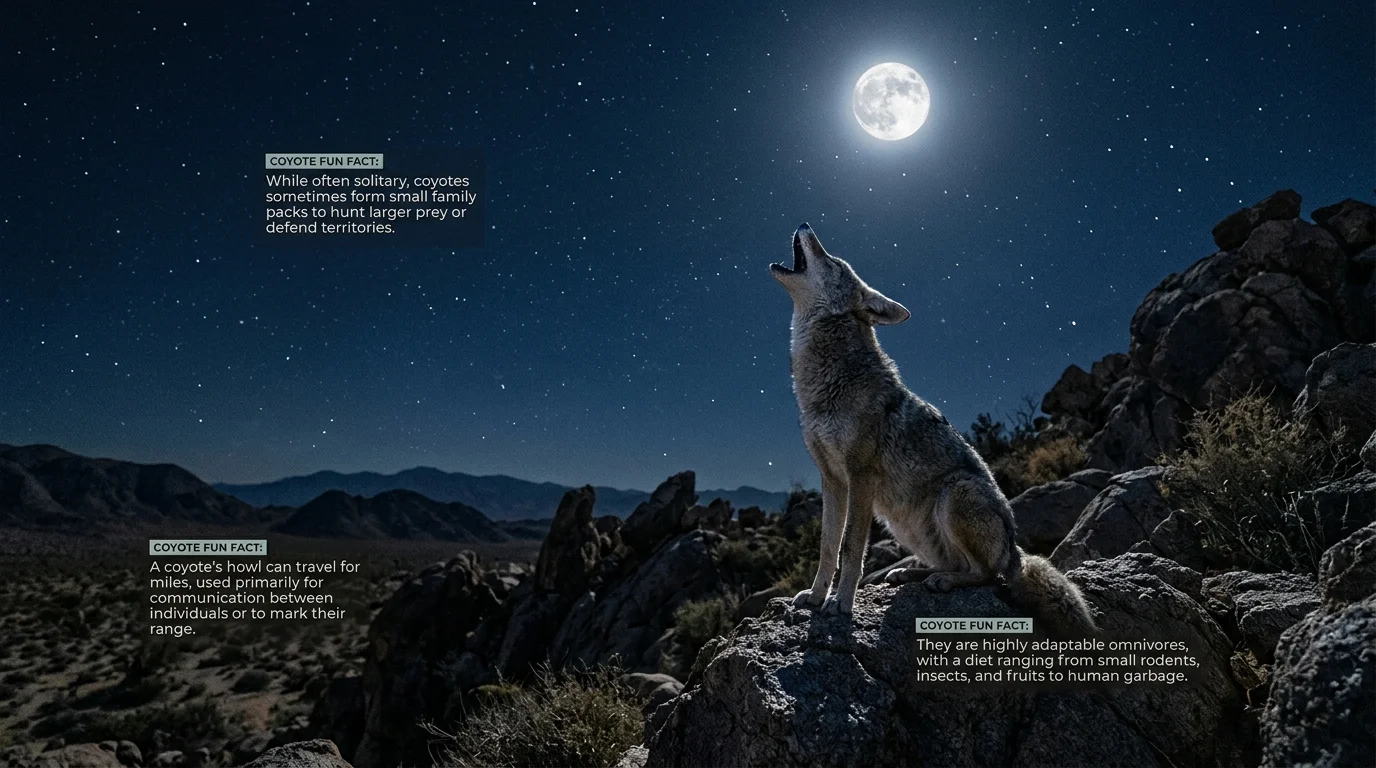
Coyotes are highly intelligent North American wild canines known for reaching running speeds of up to 43 mph, communicating through complex vocalizations, raising close-knit families, and adapting to virtually any environment—from wide-open prairies to dense urban cities across the continent.
Have you ever heard a high-pitched howl echoing across the night sky and wondered which creature made that sound? Or maybe you spotted a bushy-tailed animal slipping through a city park just before dawn.
Chances are, you were looking at one of North America’s most adaptable and misunderstood wild animals. These coyote fun facts show why this clever wild dog deserves a lot more credit than it gets.
From impressive top speeds to surprisingly sweet family habits, coyotes possess incredible survival skills. Let’s look at the fascinating world of coyotes and see what makes them thrive.
The Wild Basics: What Exactly Is a Coyote?
Coyotes belong to the Canidae family, making them close cousins to domestic dogs, wolves, and foxes. Their scientific name, Canis latrans, translates directly to “barking dog.”
Unlike wolves, coyotes are smaller, leaner, and feature larger pointed ears relative to their head size. They usually weigh between 20 and 50 pounds, depending on their region.
How Coyotes Got Their Famous Name
The word “coyote” comes from the Nahuatl word coyōtl, which was used by the Aztecs. Spanish explorers later adapted the word into Spanish, and it eventually entered the English language.
Indigenous cultures across North America often featured the coyote in folklore as a clever trickster figure. These stories highlighted the animal’s sharp intelligence and ability to outsmart obstacles.
Telling a Coyote Apart from a Wolf or Fox
It is easy to mix up wild canines, but a few quick physical details set coyotes apart from their relatives.
- Tail Position: Coyotes run with their bushy, black-tipped tails held low toward the ground. Wolves usually carry their tails flat out or pointed upward.
- Snout Shape: A coyote has a narrow, pointed muzzle compared to the broad, blocky snout of a wolf.
- Overall Size: Coyotes are roughly half the size of a gray wolf, making them much lighter on their feet.
Mind-Blowing Speed and Physical Ability
When it comes to raw athleticism, coyotes are true outdoor champions. They possess remarkable speed, stamina, and jumping power that allow them to hunt effectively.
Blazing Fast Top Speeds
Can you imagine an animal running fast enough to keep up with highway traffic? A coyote can reach sprinting speeds up to 43 miles per hour (69 km/h) when chasing prey or escaping danger.
This high speed makes coyotes one of the fastest land mammals in North America. They can also maintain a steady trot for miles without showing signs of fatigue.
High Jumps and Strong Swimming
Fences do not pose much of a barrier for a hungry coyote. They can clear vertical jumps of up to 8 feet in a single bound.
- Super Swimmers: Coyotes do not hesitate to enter lakes or rivers to cross to islands or catch waterfowl.
- Keen Hearing: A coyote can hear sounds up to several hundred yards away, including rodents moving under thick snow.
- Sharp Sight: Their eyes are tuned to detect even subtle movements in low-light conditions.
The Secret Language of Coyote Howls
If you have ever listened to a group of coyotes at night, you know their calls sound wild and unpredictable. That sound is not just random noise; it is a complex communication network.
Why Do Coyotes Howl at Night?
Coyotes do not howl at the moon despite what cartoons suggest. Instead, they howl to communicate with family members, defend territory, and announce their location.
A single howl can carry for several miles across open terrain. It acts like a long-distance check-in for pack members scattered across the landscape.
The Auditory Illusion Effect
Have you ever thought a dozen coyotes were yipping outside your window, only to find out it was just two? Wildlife biologists call this phenomenon the “beau geste” or auditory illusion effect.
By rapidly changing pitch and combining yips, barks, and howls, two coyotes can sound like an entire pack. This trick helps them protect their territory by convincing rival animals that the area is heavily guarded.
Surprising Family Values and Pack Life
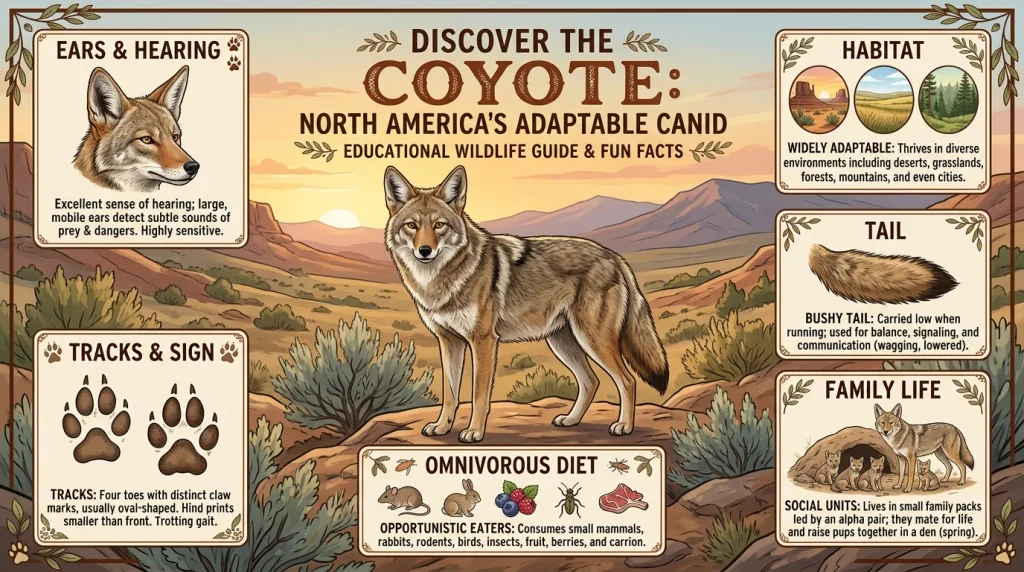
Media depictions often portray coyotes as lonely wanderers, but their social structure tells a very different story. Family bonds play a vital role in their survival strategy.
Mating for Life
Unlike many wild mammals, coyotes are largely monogamous. A breeding pair usually stays together for multiple years, and often for life, until one partner dies.
This strong partnership ensures that both parents share the heavy work of raising offspring. They hunt together, defend their den, and keep their territory secure.
How Coyotes Raise Their Pups
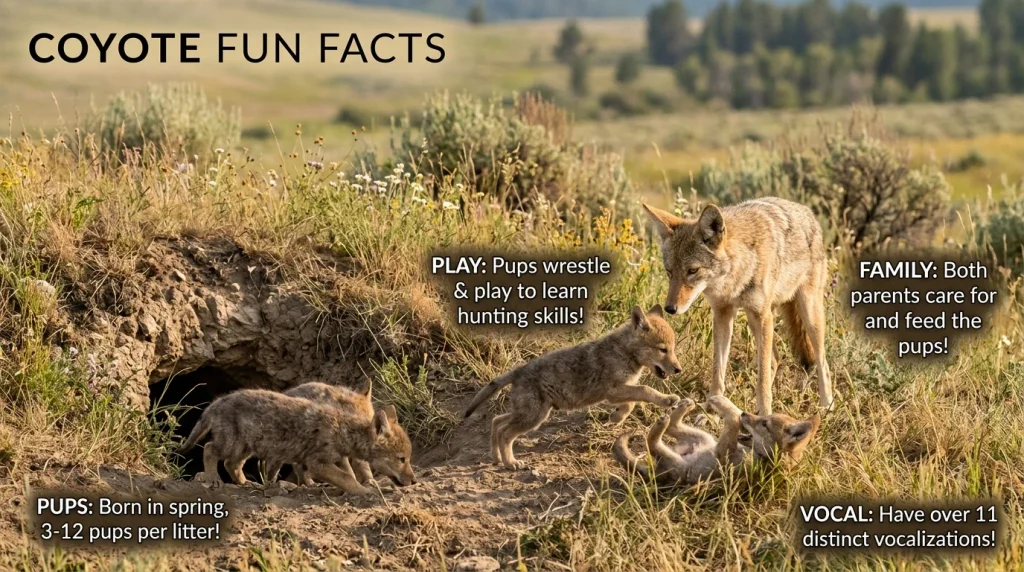
Coyote pups are born in spring inside underground dens, hollow logs, or rock crevices. A typical litter contains four to seven pups, born blind and helpless.
- Both Parents Help: The father brings food to the mother while she stays in the den with the newborn pups.
- Older Siblings Step Up: Pups from the previous year’s litter often stay with the family to help feed and guard their new younger brothers and sisters.
- Learning to Hunt: By autumn, young coyotes begin joining adult family members on hunting trips to learn essential survival skills.
The Ultimate Urban Survivors
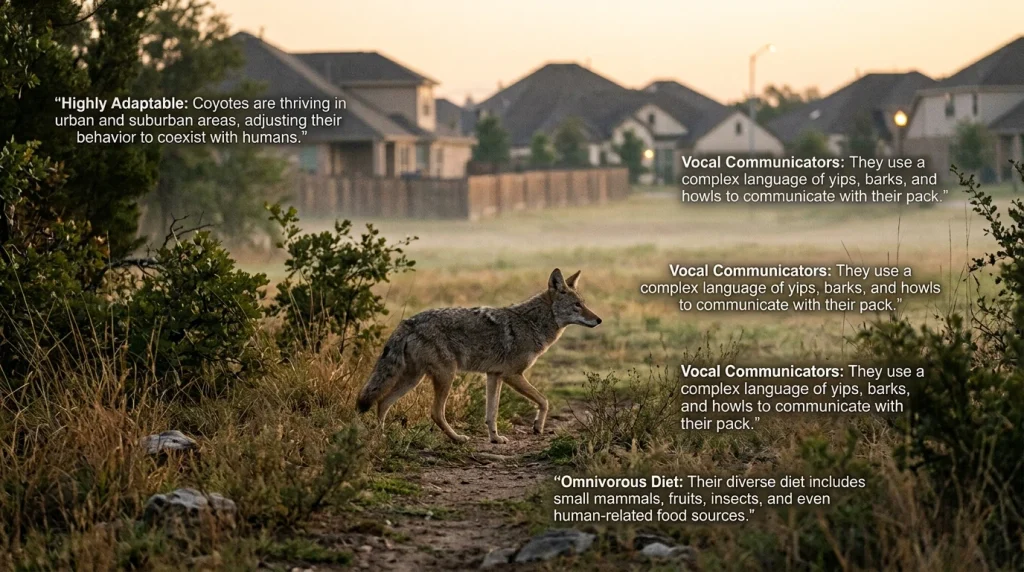
While many wild species struggle when human cities expand, coyotes have done the exact opposite. They have expanded their range across nearly the entire North American continent.
Expanding Across the Map
Historically, coyotes lived primarily in open prairies and deserts of the central and western United States. Over the past century, their range expanded into eastern forests, Arctic regions, and Central America.
Today, coyotes live in every U.S. state except Hawaii. They thrive in snowy Alaskan tundras, hot Mexican deserts, and dense tropical forests alike.
Living in Big Cities
Coyotes now inhabit major metropolitan areas like Los Angeles, Chicago, and New York City. They adapt to urban life by turning nocturnal, moving quietly through parks, railway corridors, and golf courses while city residents sleep.
- Flexible Schedules: Urban coyotes shift their activity to late-night hours to avoid human contact.
- Clever Navigation: City-dwelling coyotes have been spotted using pedestrian crosswalks and traffic bridges to move safely across busy roads.
- Resourceful Dining: They help keep urban pest populations down by hunting rats, mice, and squirrels.
What Do Coyotes Eat? The Ultimate Omnivore Diet
One reason coyotes survive almost anywhere is their extremely varied diet. They are true generalists who eat whatever food is available in their immediate environment.
A Flexible Menu
While coyotes belong to the carnivore order, their actual diet classifies them as opportunistic omnivores. Their food choices change drastically depending on the season and location.
- Small Mammals: Rabbits, voles, mice, and gophers make up the main portion of their year-round diet.
- Fruit and Vegetables: In summer and fall, coyotes regularly eat berries, fallen apples, melons, and peaches.
- Insects: Grasshoppers, beetles, and crickets provide easy protein during warmer months.
- Carrion: They clean up natural environments by feeding on deer that died from natural causes or road accidents.
Unusual Hunting Partnerships
One of the most fascinating coyote fun facts involves their friendship with another wild animal: the American badger. These two different species sometimes hunt together in an unlikely team-up.
When chasing underground prey like ground squirrels, the badger digs into burrows while the coyote waits above ground. If the squirrel runs out of an escape hole, the coyote catches it; if it stays underground, the badger gets the meal. Both animals increase their success rate by working side-by-side.
Key Attributes of the Coyote at a Glance
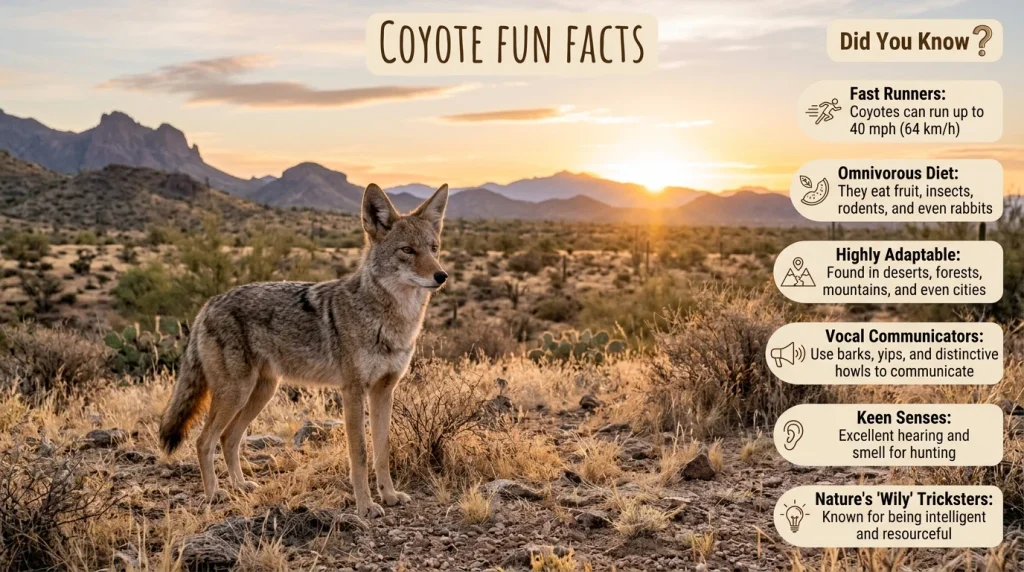
To truly understand how coyotes survive in so many different environments, it helps to take a closer look at their physical traits and natural abilities. Unlike many animals that depend on a very specific habitat or diet to survive, coyotes possess a uniquely adaptable set of physical tools. From their lean athletic frames to their wide-ranging diets, these core characteristics explain how this wild canine continues to thrive across North America.
Sleek Athletic Build and High Speed
A coyote’s body is built for efficiency, endurance, and fast movement across rough terrain. Weighing between 20 and 50 pounds, they have a slender frame, long legs, and a narrow chest that allows them to run without wasting energy. This athletic build helps them reach sprinting speeds of up to 43 miles per hour, making it easy to catch fast prey like wild rabbits or outrun potential danger.
Unmatched Environmental Adaptability
One of the most impressive traits of the coyote is its ability to make a home almost anywhere. Whether living in scorching deserts, freezing Arctic tundras, dense forests, or busy urban neighborhoods, coyotes adjust their behavior quickly. Their thick fur coat changes with the seasons to regulate body temperature, and their sharp senses of hearing and smell keep them aware of their surroundings at all times.
Versatile Omnivorous Diet and Foraging Habits
Coyotes are opportunistic feeders, meaning they eat whatever food is easiest to find in their immediate area. While they are skilled hunters that target small mammals like mice and ground squirrels, they also regularly eat insects, fallen fruit, berries, and plant material. This incredibly flexible diet prevents them from starving when traditional prey is scarce, making them one of the ultimate survival experts in the animal kingdom.
Surprising Trivia and Unusual Coyote Facts
Here are a few unexpected facts about coyotes that show just how unique these wild canines really are:
- Coydogs Are Real: Coyotes can occasionally mate with domestic dogs, producing hybrid offspring known as coydogs.
- Coywolves Exist: In eastern North America, many coyotes carry wolf DNA due to historical interbreeding, making them slightly larger than western coyotes.
- Shedding Coats: Coyotes shed their thick winter coats every spring, looking remarkably skinny during warm summer months.
- Expressive Tails: A coyote uses its tail to signal emotions to pack members, wagging it during friendly greetings or tucking it when nervous.
- Pest Control Powerhouses: A single coyote family can consume hundreds of rodents every month, acting as natural pest control for agricultural farmers.
How Humans and Coyotes Can Coexist Peacefully
Because coyotes live near residential communities, learning how to share space safely helps protect both pets and wildlife.
Simple Tips for Homeowners
Coyotes naturally fear humans, but accessible food sources can cause them to grow bold. Taking a few proactive steps keeps wild animals wild.
- Secure Trash Cans: Use tight-fitting lids on outdoor garbage bins to avoid attracting hungry wildlife.
- Feed Pets Indoors: Never leave dog or cat food outside overnight where wild scent trails can form.
- Keep Pets Supervised: Walk dogs on short leashes and keep domestic cats indoors, especially between dusk and dawn.
- Practice Hazing: If a coyote enters your yard, make loud noises, wave your arms, or spray water to reinforce their natural fear of humans.
MCQs
Test your knowledge of these coyote fun facts with this quick multiple-choice review!
- What type of animal is a coyote?
A) Mammal
B) Bird
C) Reptile
D) Fish - What is the scientific name of the coyote?
A) Canis latrans
B) Canis lupus
C) Vulpes vulpes
D) Ursus arctos - What does a coyote mainly eat?
A) Small animals and other foods
B) Grass only
C) Fish only
D) Fruits only - Where can coyotes commonly be found?
A) North America
B) Antarctica
C) Australia only
D) Europe only - What sound is a coyote famous for making?
A) Howling
B) Roaring
C) Trumpeting
D) Croaking - What are young coyotes called?
A) Pups
B) Calves
C) Chicks
D) Foals - Which animal is a close relative of the coyote?
A) Wolf
B) Elephant
C) Horse
D) Rabbit - What helps coyotes move quietly while hunting?
A) Their paws
B) Their wings
C) Their fins
D) Their scales - Coyotes are known for being highly ______ animals.
A) Adaptable
B) Slow
C) Aquatic
D) Flightless - What is one habitat where coyotes can live?
A) Desert
B) Ocean
C) Coral reef
D) Arctic ice only
✅ Answer Key
- A
- A
- A
- A
- A
- A
- A
- A
- A
- A
FAQs
Are coyotes dangerous to humans?
Coyotes rarely pose a threat to humans. They naturally fear people and try to avoid contact whenever possible. Bites are extremely rare and almost always happen because someone deliberately tried to feed the wild animal.
Why do coyotes yip and howl at night?
Coyotes howl to communicate locations with family members, defend territory boundaries, and locate pack mates. The high-pitched yips sound loud and scattered to make a small group sound much larger to potential rivals.
How can you tell a coyote apart from a stray dog?
Coyotes have longer legs, larger pointed ears, and narrower snouts than most dogs. They run with their bushy tails held low, whereas domestic dogs usually hold their tails flat or curled upward.
What should you do if you encounter a coyote?
Stand tall, make loud noises, wave your arms, and never run away from the animal. Running can trigger their chase instinct, so slowly back away while maintaining eye contact until the coyote leaves.
Do coyotes live in packs or alone?
Coyotes live in close family packs centered around a breeding male and female. While they often hunt small prey alone, family members share territory, defend dens, and raise young pups together.
How long do coyotes live in the wild?
In the wild, coyotes live between 10 and 14 years on average. Hazards like vehicle traffic, habitat loss, and disease can lower their lifespan, but healthy adults thrive for over a decade.
Conclusion
Coyotes are remarkable creatures that highlight the beauty of wildlife adaptation. From their swift speeds to their complex howls, exploring coyote fun facts reveals an animal far more intelligent and social than most people realize.
Their ability to thrive alongside growing cities shows just how resilient nature can be when given a chance. By understanding their habits and practicing simple wildlife safety, we can appreciate these vocal wild dogs from a safe distance.
Did any of these wild facts surprise you? Share your favorite coyote trivia with friends, or keep your ears open for those fascinating evening howls next time you spend a night under the stars!

Ethan Danial is the creator and lead writer behind FunWhirls.com, a fun-focused platform dedicated to entertaining ideas, fascinating facts, funny moments, creative lists, and content that sparks curiosity. With a genuine love for discovering interesting and unexpected topics, Ethan enjoys turning simple ideas into engaging content that readers can enjoy, learn from, and share. His approach is centered on making every article easy to read, enjoyable, and worth coming back to.
At FunWhirls.com, Ethan Danial explores the lighter and more entertaining side of everyday life. He creates content for readers who love discovering something new, having a quick laugh, or simply taking a break from the ordinary. From curious facts to playful ideas and entertaining discoveries, Ethan aims to keep the content fresh, positive, useful, and engaging for readers of all kinds.