
Crow fun refers to the surprisingly playful, intelligent, and mischievous behaviors exhibited by crows and other corvids. From sliding down snowy roofs and playing catch to solving complex puzzles, these smart birds create their own entertainment, showcasing advanced cognitive abilities, social bonding, and a unique capacity for joy.
Have you ever looked out your window and watched a crow sliding down a snow-covered rooftop just for the thrill of it? It sounds almost human, but playful bird behavior is a real and fascinating phenomenon.
Exploring crow fun opens up an amazing window into the minds of some of the smartest animals on Earth. Let us dive into what makes these clever creatures tick and how they turn everyday moments into games.
Understanding Corvids and Play
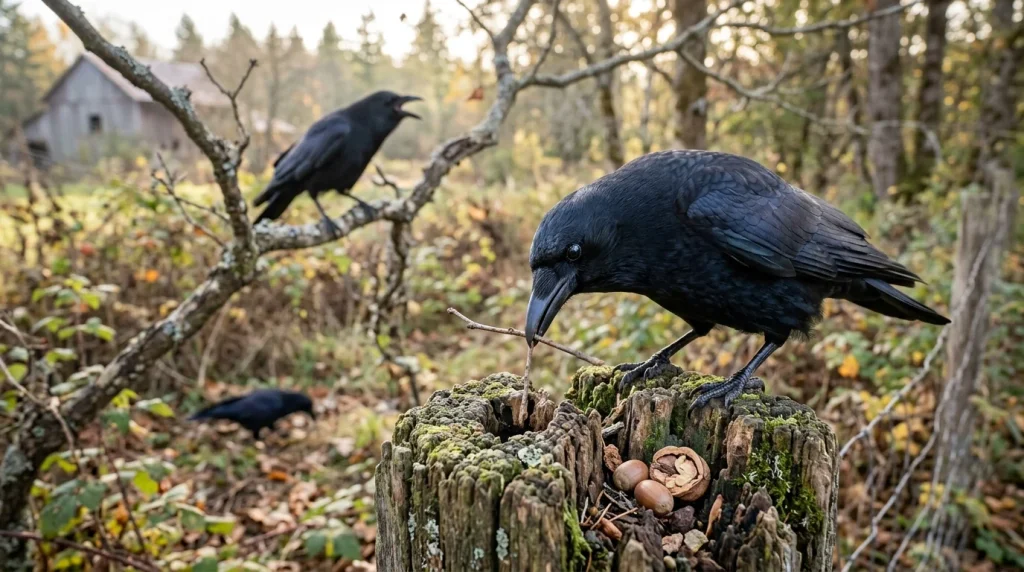
Crows belong to the corvid family, which also includes ravens, jays, and magpies. Scientists used to think play was reserved mostly for mammals like dogs and monkeys. Today, researchers recognize that smart birds play regularly, and crows lead the pack.
Why Do Crows Play?
Play is not just about passing time for crows. It helps them build crucial life skills, strengthen social bonds, and test their physical limits. Young crows use games to learn how to fly, hunt, and evade predators.
- Skill development: Aerial acrobatics teach young birds precise flight control.
- Social bonding: Group games reinforce flock hierarchies and friendships.
- Stress relief: Play helps reduce tension within the flock after a conflict.
The Evolutionary Benefits of Joy
When animals play, they burn energy that could be used for foraging. Evolution keeps this behavior alive because the mental and physical benefits outweigh the costs. Smart brains need stimulation, and crows actively seek out challenges to keep their minds sharp.
Types of Crow Fun and Games
Crows invent an impressive variety of games that will make you smile. Their playful repertoire ranges from solo stunts to elaborate group interactions with other species.
Aerial Acrobatics and Stunts
If you watch a flock of crows on a windy afternoon, you might spot them showing off. They love riding thermal gusts, doing mid-air barrel rolls, and chasing each other in playful dogfights. Sometimes, a crow will drop a stick mid-air, dive down, and catch it before it hits the ground.
Object Play and Toy Interaction
Crows treat almost any loose item as a potential toy. Bottle caps, pinecones, shiny foil wrappers, and twigs often become props in their games. They carry items around, hide them, and retrieve them in elaborate treasure hunts.
- Tug-of-war: Two crows will grab opposite ends of a stick and pull.
- Solo juggling: Tossing small objects in the beak and catching them.
- Rolling items: Pushing balls or round stones down slanted surfaces.
Interspecies Mischief
Crows have a famous sense of humor that often targets other animals. They love teasing neighborhood cats and dogs by pulling their tails or swooping down just out of reach. This is not always malicious; it is often a playful test of boundaries and reflexes.
The Remarkable Intelligence Behind the Play
What makes crow fun so fascinating is the high level of brainpower driving it. Crows possess problem-solving skills comparable to a seven-year-old human child.
Tool Making and Using
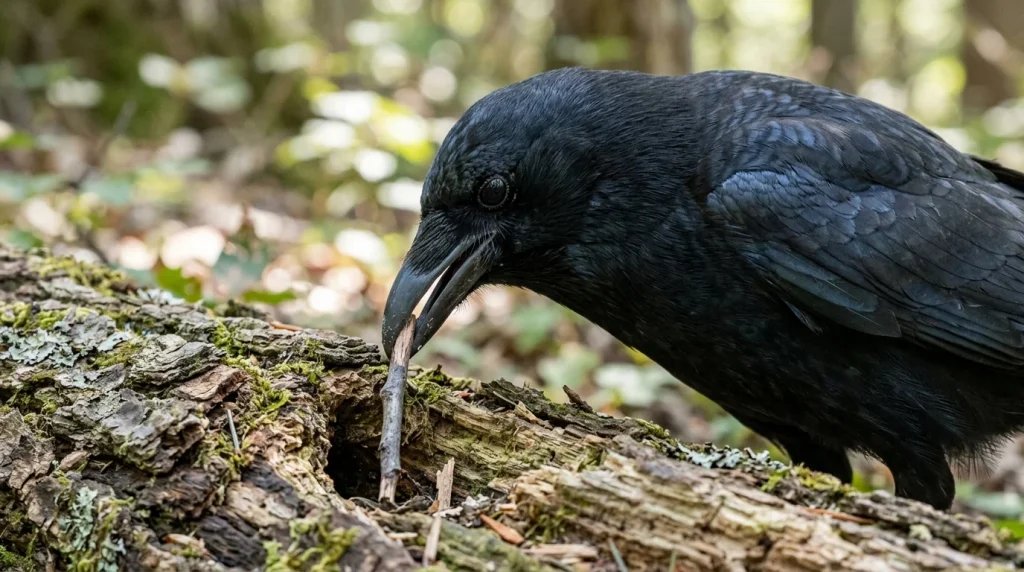
Crows do not just play with existing objects; they modify them to create tools. In experimental settings, crows bend wire into hooks to fish out food from tubes. This inventive mindset spills over into their games, where they constantly test new ways to manipulate their environment.
Recognizing Human Faces
Crows remember individual human faces for years. If you treat a local crow flock kindly, they will recognize you on the street. Some people build long-term friendships with local corvids by offering small snacks and watching them perform tricks.
Safely Observing and Engaging with Crows

If you want to experience crow fun firsthand, you can safely attract and observe them in your backyard. Patience and respect are the keys to building trust with these cautious birds.
Setting Up a Friendly Space
Create an inviting environment in your yard where crows feel safe from predators. Place a sturdy birdbath and a clean feeding platform in an open area so they can spot approaching cats.
Choosing the Right Treats
Crows love high-energy foods that reward their foraging efforts. Avoid processed junk food and stick to wholesome options that support their health.
- Unsalted whole peanuts in the shell
- Small chunks of hard-boiled eggs
- Plain cooked meat or unseasoned kibble
- Fresh berries and seeds
Ethical Guidelines for Bird Watching
Never feed crows harmful processed foods, chocolate, or salty snacks. Keep your distance, especially during nesting season in the spring when parents become fiercely protective. Let them set the pace for any interaction.
How to Document and Study Crow Behavior
Watching crows can turn into a rewarding backyard science hobby. You do not need expensive gear to start tracking local bird habits.
Keeping a Bird Journal
Note the times of day when crows visit your yard, the types of games they play, and the objects they carry. Tracking these patterns reveals fascinating insights into their daily routines and seasonal behavior.
Using Simple Photography
Capture your local flock using a smartphone or a basic camera. Photographing their interactions helps you spot subtle behaviors, such as posture changes and feather fluffs, that signal playfulness versus aggression.
- Shoot during golden hour for clear, beautiful lighting.
- Keep a safe distance using a zoom lens to avoid startling them.
- Focus on group dynamics rather than single birds.
FAQs
Do crows actually play or are they just foraging?
Crows do engage in genuine play, distinct from foraging. While foraging is driven by hunger, play behaviors like sliding down snowbanks, dropping sticks and catching them, or mock-fighting serve no immediate survival need. Researchers classify these activities as pure play, driven by curiosity and joy.
Can crows become attached to humans who feed them?
Crows can recognize individual humans and form associative bonds. They learn to associate specific people with safety and food rewards. While they may not show affection like a pet dog, they display distinct trust behaviors, such as approaching you closely and bringing gifts like shiny trinkets.
Is it legal to keep a wild crow as a pet?
It is illegal in most countries and states to keep wild crows as pets. Corvids are protected migratory or native birds under wildlife laws. Furthermore, they are highly social, intelligent animals that suffer immensely in captivity, making backyard observation a much better alternative.
Why do crows mob larger birds like hawks?
Crows mob larger birds to defend their territory and protect their nests. This behavior, called mobbing, involves noisy group harassment that drives predators away. While it looks aggressive, it is a crucial defensive strategy that also doubles as a high-stakes group coordination exercise for the flock.
What should you never feed wild crows?
You should never feed wild crows chocolate, avocado, caffeine, raw meat with harmful bacteria, or heavily salted foods. These items can be toxic or fatal to birds. Stick to natural, wholesome foods like unsalted nuts, whole grains, and hard-boiled eggs to keep your local flock healthy.
MCQs
- What type of bird is a crow?
A) Mammal
B) Bird
C) Reptile
D) Fish - What is a crow known for?
A) Intelligence
B) Swimming
C) Hibernation
D) Producing milk - What do crows commonly eat?
A) A wide variety of foods
B) Only grass
C) Only fish
D) Only flowers - Which color are many crows?
A) Black
B) Pink
C) Purple
D) Orange - Crows can use some objects as:
A) Tools
B) Shoes
C) Nests only
D) Musical instruments - What sound is commonly associated with crows?
A) Caw
B) Roar
C) Moo
D) Neigh - Crows are often seen in:
A) Cities and rural areas
B) Deep oceans
C) Underground caves only
D) Polar ice only - What can crows remember?
A) Faces and places
B) Phone numbers only
C) Recipes only
D) Weather forecasts - Crows belong to which bird family?
A) Corvidae
B) Penguinidae
C) Anatidae
D) Strigidae - Why are crows interesting to study?
A) Their intelligence and adaptability
B) Their ability to breathe underwater
C) Their colorful feathers
D) Their ability to fly without wings
Answer Key:
1-B, 2-A, 3-A, 4-A, 5-A, 6-A, 7-A, 8-A, 9-A, 10-A
Conclusion
The vibrant world of crow fun reveals that intelligence and joy extend far beyond the human experience. Watching these clever birds play, solve problems, and interact with their environment adds a wonderful spark of wonder to any backyard.
By understanding their behaviors and offering a safe, welcoming space, you can appreciate the rich social lives of your feathered neighbors. Take some time tomorrow to look up, watch the sky, and enjoy the playful spirit of the corvid world.
Ready to attract your local flock? Set out a handful of unsalted peanuts today and start observing the amazing games unfold in your own backyard.

Ethan Danial is the creator and lead writer behind FunWhirls.com, a fun-focused platform dedicated to entertaining ideas, fascinating facts, funny moments, creative lists, and content that sparks curiosity. With a genuine love for discovering interesting and unexpected topics, Ethan enjoys turning simple ideas into engaging content that readers can enjoy, learn from, and share. His approach is centered on making every article easy to read, enjoyable, and worth coming back to.
At FunWhirls.com, Ethan Danial explores the lighter and more entertaining side of everyday life. He creates content for readers who love discovering something new, having a quick laugh, or simply taking a break from the ordinary. From curious facts to playful ideas and entertaining discoveries, Ethan aims to keep the content fresh, positive, useful, and engaging for readers of all kinds.